 Bellingham
 Silver Beach's Exterior Challenge
Silver Beach sits in one of Bellingham's more exposed pockets when it comes to weather. Homes here deal with a combination that's tough on exteriors: salt-laden air drifting in off the water, driving rain that comes sideways in winter storms, and a moss season that can stretch nearly half the year in the shaded, damp corners of a lot. Any one of these on its own is manageable. Together, over years, they're what separates a siding job that looks good for a decade from one that looks tired in three years.
We've worked on homes throughout Whatcom County long enough to know that Silver Beach isn't a place where you can install a generic siding product and expect generic results. The microclimate here rewards materials and installation details that hold up to repeated wet-dry cycling, and it punishes anything that doesn't.
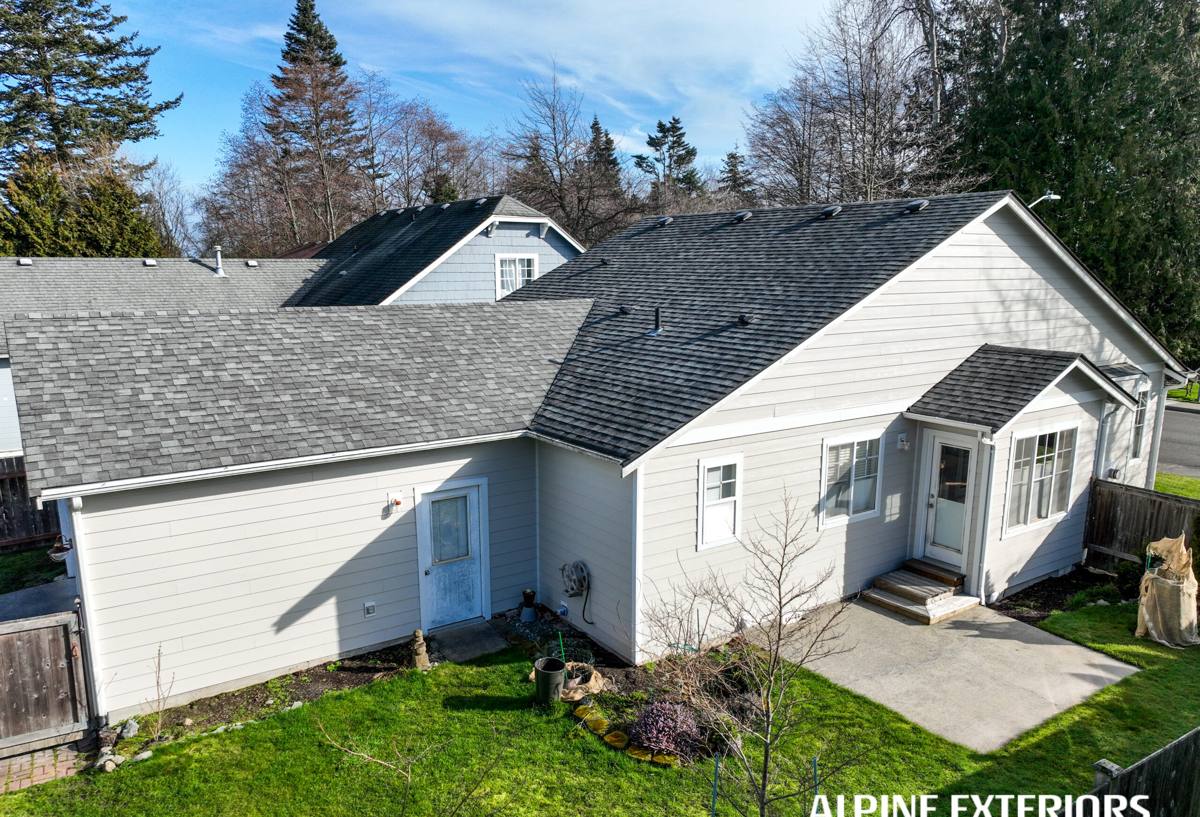
What Salt Air, Rain, and Moss Actually Do to a House
Salt Air
Airborne salt is corrosive to fasteners, flashing, and any metal trim on a home's exterior. It also accelerates the breakdown of certain paints and coatings, especially where a film-based finish is applied over a porous substrate. Over time, homeowners in salt-exposed areas notice chalking, fading, and rust bleed at nail heads well before a home further inland shows the same wear.
Driving Rain
Bellingham's storms don't always fall straight down. Wind-driven rain gets pushed sideways and upward into laps, seams, and butt joints — the exact spots where water intrusion starts. This is why lap orientation, caulking practices, and the water-resistive barrier behind the siding matter as much as the siding material itself. A product that performs fine in a light, vertical rain can still fail in a horizontal storm if it wasn't installed with that reality in mind.
Moss and Sustained Moisture
Whatcom County's tree cover and cloud cover mean long stretches where exterior surfaces simply don't dry out. Moss and algae need exactly that — shade and standing moisture — to take hold. Once organic growth establishes itself on a siding surface, it holds moisture against the substrate longer, which is where rot and delamination problems tend to start, especially on wood-based products.
Why We Only Install James Hardie Fiber Cement
We made a decision as a company to install one siding system: James Hardie fiber cement. Not vinyl, not LP SmartSide, not Cemplank or Allura, not primed spruce or cedar. That's not a marketing position — it's a practical one, built on what we've seen these products do (and not do) on homes in exactly this kind of climate.
- Non-combustible core: Fiber cement doesn't feed a fire the way wood-based siding can, which matters increasingly for insurance and building code considerations in the Pacific Northwest.
- Factory-applied ColorPlus finish: Baked-on in a controlled environment rather than field-applied, which gives more even coverage and better long-term color retention than job-site paint.
- Engineered for wet climates: Hardie's HZ10 product line is specifically formulated for regions like ours — cold, wet winters and moisture that doesn't let up for months.
- Rot resistance: Being cement-based rather than wood-based, it doesn't feed the fungal growth that causes rot the way engineered wood products can if moisture gets behind them.
- Long, transferable warranty: Backed by a manufacturer warranty structure that's meaningful if the home changes hands.
We're not going to tell you every other product on the market is worthless — some of them are reasonable choices in the right circumstances. But we've built our business around one system we can stand behind fully, install correctly every time, and warranty with confidence. That's Hardie.
How This Plays Out for a Silver Beach Home Specifically
When we bid a siding job in this neighborhood, a few things get extra attention that might get glossed over elsewhere:
- Flashing details at every window, door, and roof intersection — the places wind-driven rain finds first.
- Fastener selection and spacing to resist the corrosive effects of salt-influenced air over the life of the siding.
- Ventilation behind the cladding so moisture that does get in has a path to dry out rather than sit against the wall assembly.
- Lap and joint sealing practices matched to Hardie's published installation specs, not shortcuts.
- Site-specific attention to shaded, low-airflow areas of the home where moss and algae are most likely to take hold.
None of this is exotic. It's just paying attention to the parts of an installation that matter most in this specific climate, instead of installing the same way regardless of where the house sits.
Siding, Roofing, Windows, and Decks — Why the Whole Envelope Matters
Siding doesn't work in isolation. Water that gets past a bad roof edge, an old window flashing, or a rotting deck ledger board will find its way into a wall assembly no matter how good the siding is. Because we handle siding, roofing, windows, and decks, we look at a Silver Beach home's exterior as one connected system rather than four separate projects.
This matters most at transitions: where a deck ledger meets the wall, where a window opening meets the siding, where a roof edge meets a wall below it. These are the spots that fail first when different trades don't coordinate, and they're the spots we pay closest attention to.
Roofing Considerations
A roof in poor condition sends water down onto siding it was never designed to handle — extra runoff, ice buildup at the eaves in a hard freeze, or debris that holds moisture against the wall. If your roof is due for attention, it's worth addressing before or alongside a siding project rather than after.
Windows
Old or poorly flashed windows are one of the most common sources of hidden water intrusion we find when we open up a wall during a siding job. Replacing failing windows at the same time as siding is often more efficient than doing them as separate projects later.
Decks
Deck ledger connections are a frequent trouble spot on homes with mature landscaping and persistent shade — exactly the conditions that show up around Silver Beach. A deck that wasn't properly flashed where it meets the house can be feeding moisture into the wall for years before it's visible from outside.
Comparing Common Siding Options for This Climate
| Material | Moisture Behavior in Wet Climates | Maintenance Burden | Typical Longevity |
|---|---|---|---|
| James Hardie Fiber Cement | Engineered for wet regions; resists moisture-driven failure when installed correctly | Low — factory finish, occasional wash | Multiple decades with proper install |
| Vinyl | Doesn't rot, but can warp and lets water track behind panels at seams | Low, but limited repair options once damaged | Variable, shorter in harsh sun/wind cycles |
| LP SmartSide (engineered wood) | Vulnerable at cut edges and seams if moisture gets in | Moderate — edge sealing and inspection needed | Depends heavily on installation and upkeep |
| Cedar / Primed Spruce | Absorbs moisture, prone to rot and moss growth in shaded, damp areas | High — repainting, staining, moss treatment | Shorter without diligent maintenance |
What Drives the Cost of a Siding Project Here
Every home is different, but a few factors consistently move the price on a Silver Beach siding project:
- Extent of existing damage: Rot or moisture intrusion found once old siding comes off adds repair scope.
- Home size and complexity: More corners, gables, and trim details mean more labor and material.
- Siding profile and color: Hardie offers multiple plank widths, shingle-style options, and a range of ColorPlus finishes, which affect material cost.
- Access and site conditions: Steep lots, mature landscaping, or limited equipment access can add time.
- Scope beyond siding: Bundling window, roofing, or deck work with a siding project can improve overall efficiency versus doing each separately.
Why a Local Crew Matters
A crew that works throughout Whatcom County sees how the same siding product performs across dozens of different microclimates — shaded lots, waterfront exposure, wind corridors, and everything in between. That's different from a crew parachuting in for one job. We know what to look for the moment old siding comes off a Silver Beach home, and we know how to install so the next few decades go well, not just the next photo.
We stand behind our installation because we control every variable in it — one product line, installed to spec, by people who've done it enough times in this exact climate to know where the trouble spots are before they show up.
A Simple Homeowner Checklist
- Check siding for chalking, fading, or visible fastener rust — early signs of coating breakdown.
- Look at shaded, low-airflow sections of the exterior for moss or algae buildup.
- Inspect where the deck ledger, window trim, and roofline meet the siding for gaps or staining.
- Note any soft spots or discoloration near ground level, a common sign of moisture wicking.
- Ask any contractor bidding your siding job which single product they'd put on their own home, and why.
If you're noticing any of these signs on your Silver Beach home, or you're just planning ahead, we're glad to take a look. Estimates are free, there's no pressure, and you'll get a straight answer about what your home actually needs — use the form below to get started.