 Bellingham
 Lynden's Weather Doesn't Forgive Cheap Materials
Lynden sits in the Nooksack River valley, close enough to Bellingham Bay and the Strait of Georgia that the same marine air pattern that soaks the rest of Whatcom County settles in here too. Winters bring long stretches of steady rain rather than hard downpours, and that low, persistent moisture is actually harder on a house than an occasional storm. It gets into seams, behind trim, and under siding that isn't sealed and installed correctly, and it stays there.
Add in the moss and algae that thrive in this kind of shaded, damp climate, and you've got a recipe for exterior materials that look tired years before they should. Farmhouses and newer developments alike around Lynden deal with the same combination: driving rain off the valley, salt-tinged air drifting in from the bay, and a green film that creeps across north-facing walls and rooflines every fall through spring. Whatever goes on the outside of a Lynden home has to handle all three, year after year, without constant upkeep.
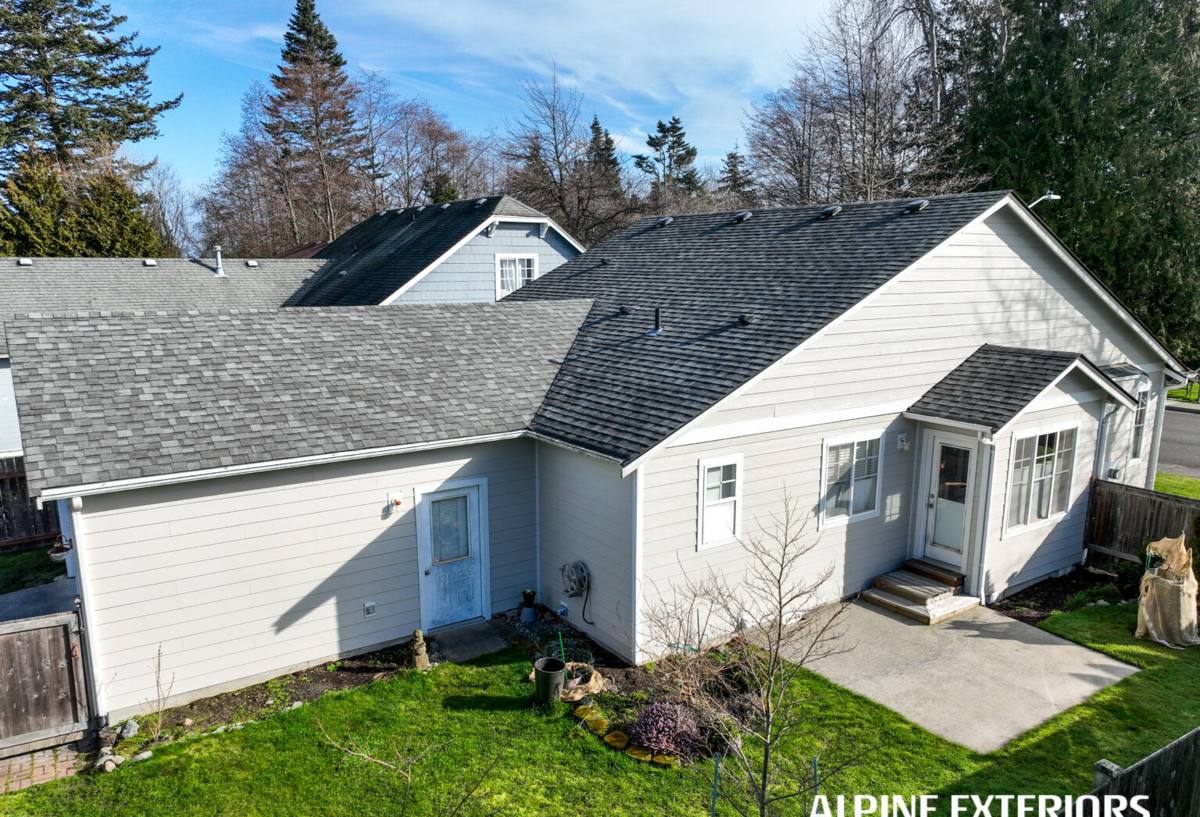
Why We Install Only James Hardie Fiber Cement
We made a decision a long time ago to install one siding system: James Hardie fiber cement. Not because it's the cheapest option on the shelf, but because it's the one product we've found that consistently holds up to the specific abuse Whatcom County weather delivers.
What Fiber Cement Gets Right for This Climate
- It's non-combustible, which matters more each year as wildfire smoke and dry spells become a bigger part of Pacific Northwest summers.
- It doesn't absorb moisture the way wood-based products do, so it resists the swelling, cupping, and rot that show up on homes exposed to constant valley rain.
- The factory-applied ColorPlus finish is baked on under controlled conditions, so it holds color and resists the fading and chalking that moss, algae, and UV exposure cause on field-painted siding.
- James Hardie makes climate-specific HZ product lines engineered for exactly this kind of wet, coastal-influenced weather, rather than a one-size-fits-all board.
It's also backed by a strong, transferable manufacturer warranty — a real advantage if a Lynden homeowner sells within the next decade or two, which is common in a growing area like this one.
Siding Options We Don't Install — and Why
Homeowners researching siding will run into several other products, and it's worth being straight about why they're not part of what we offer.
Vinyl Siding
Vinyl is inexpensive and easy to install, and for some budgets and climates it's a reasonable choice. But it's a thin plastic product that expands and contracts with temperature swings, can crack in cold snaps, and tends to look visibly dated faster than fiber cement. In a marine climate with moss and algae pressure, vinyl's seams and lap joints also give organic growth places to take hold.
LP SmartSide
LP SmartSide is an engineered wood product, and engineered wood is still wood at its core. Wood-based siding is more vulnerable to moisture intrusion at cut edges and fastener penetrations than fiber cement is, and in a region where homes see months of steady rain, that's a real long-term risk we're not willing to install and stand behind.
Cemplank, Allura, and Other Fiber Cement Alternatives
These are legitimate fiber cement competitors to James Hardie, and the raw material category is sound. Our reason for standardizing on Hardie specifically is consistency — of the factory finish, the climate-engineered product lines, the warranty terms, and the installation specifications our crews are trained on. One system, installed the same correct way every time, is how we keep our workmanship warranty meaningful.
Primed Spruce and Cedar
Natural wood siding has real charm, and cedar in particular has a long history in this region. But both require ongoing maintenance — recoating, caulking, monitoring for rot — that most homeowners underestimate when they choose it. In Lynden's damp, moss-prone climate, that maintenance burden is higher than in drier parts of the state, and we've seen too many wood exteriors fail early because the upkeep schedule slipped.
More Than Siding: The Whole Exterior Envelope
Siding doesn't work in isolation. Roofing, windows, and siding all interact to keep water out of a house, and treating them as separate problems is how leaks and rot get started.
Roofing
A roof that's shedding granules, growing moss, or has failing flashing sends water down behind the siding it meets. We look at roof condition as part of any siding conversation, because fixing the walls while ignoring a failing roofline just delays the real problem.
Windows
Old or poorly flashed windows are one of the most common places water gets behind siding, especially in a climate where wind-driven rain is normal. When we replace siding around existing windows, proper flashing and sealing at those transitions is not optional — it's where most exterior failures actually start.
Decks
Outdoor living space matters in the Pacific Northwest precisely because good weather is limited. Decks here face the same moisture and moss exposure as siding, and we build and repair them with materials and detailing suited to Whatcom County's wet season, not a dry-climate spec sheet.
What a Local Crew Actually Means for Lynden
A lot of exterior contractors work from a regional or even national playbook. A crew that works Whatcom County regularly knows things a spec sheet doesn't cover: how far to hold siding off grade given local drainage patterns, which wall orientations get hit hardest by driving rain in this valley, and how much clearance to leave for the moss and algae growth that's just part of living this close to the water.
It also means someone answers the phone if a warranty question comes up five years from now, and someone local stands behind the installation — not a subcontractor crew that moved on to the next county.
Signs a Lynden Home Needs Exterior Attention
| What You Notice | What It Usually Means |
|---|---|
| Dark streaking or green film on siding | Moss and algae growth typical of shaded, damp exposures — a maintenance issue now, a moisture risk if ignored |
| Soft or bubbling spots on wood or engineered wood siding | Moisture intrusion, often starting at seams or fastener points |
| Cracked or warped vinyl panels | Temperature-cycle damage or impact damage — vinyl doesn't flex back once cracked |
| Fading or chalky color on painted siding | UV and moisture breaking down a field-applied paint or coating |
| Gaps or separation at trim and window edges | A common entry point for water behind the siding plane |
Cost Factors for a Siding Project
Every home is different, but a few things consistently drive the price of a siding job in this area:
| Factor | Why It Matters |
|---|---|
| Home size and complexity | More corners, gables, and trim details mean more labor and material |
| Current siding removal | Tear-off and disposal of old material adds cost versus new construction |
| Underlying sheathing condition | Rot or water damage found once old siding comes off needs repair before new siding goes on |
| Product line and profile | Hardie offers multiple plank widths, textures, and panel styles at different price points |
| Window and trim work | Proper flashing and trim replacement around openings adds labor but protects the investment |
We give straightforward, itemized estimates so homeowners can see exactly what's driving the number, not a vague lump sum.
What the Installation Process Looks Like
- On-site assessment of existing siding, trim, and any signs of water damage or rot
- Review of product options — plank style, texture, and ColorPlus color — suited to the home and its exposure
- Written estimate covering materials, labor, tear-off, and any sheathing or trim repair
- Removal of old siding and repair of any damaged sheathing found underneath
- Installation to James Hardie's fastening, clearance, and flashing specifications
- Final walkthrough and warranty documentation
Maintaining Fiber Cement Siding in a Damp Climate
- Rinse siding annually with a garden hose to knock down early moss and algae growth before it sets in
- Keep gutters clear so overflow doesn't run directly down wall surfaces
- Trim back shrubs and trees so siding gets airflow and some sun exposure, which slows organic growth
- Check caulking at trim, window, and door edges every couple of years and recaulk as needed
- Walk the exterior after major windstorms to check for loose trim or debris damage
Fiber cement needs far less of this than wood or engineered wood siding, but no exterior material in Whatcom County is entirely maintenance-free.
If your Lynden home's siding, roof, windows, or deck are showing their age, we're happy to take a look and walk through honest options — no pressure, no hard sell. Use the form below to request a free estimate.