 Bellingham
 Exterior Work for the Puget Area, Done by People Who Live With This Weather Too
If you own a home in the Puget area of Bellingham, you already know the exterior of a house here doesn't get an easy ride. Between the salt air coming off the water, the driving rain that seems to find every gap in a wall, and a moss season that can stretch for most of the year, Whatcom County exteriors are working hard every single day just to keep the house dry and looking decent. We handle siding, roofing, windows, and decks for homes in this area, and everything we do is built around one idea: the exterior has to actually perform in this climate, not just look good on installation day.
We are a local crew. That matters more here than in a lot of places, because coastal Bellingham weather is not generic Pacific Northwest weather — it has its own combination of salt exposure, wind-driven rain, and shade-driven moss growth that punishes shortcuts. A crew that installs the same way in Puget as they would in a dry inland climate is setting a homeowner up for problems in five to ten years, not thirty.
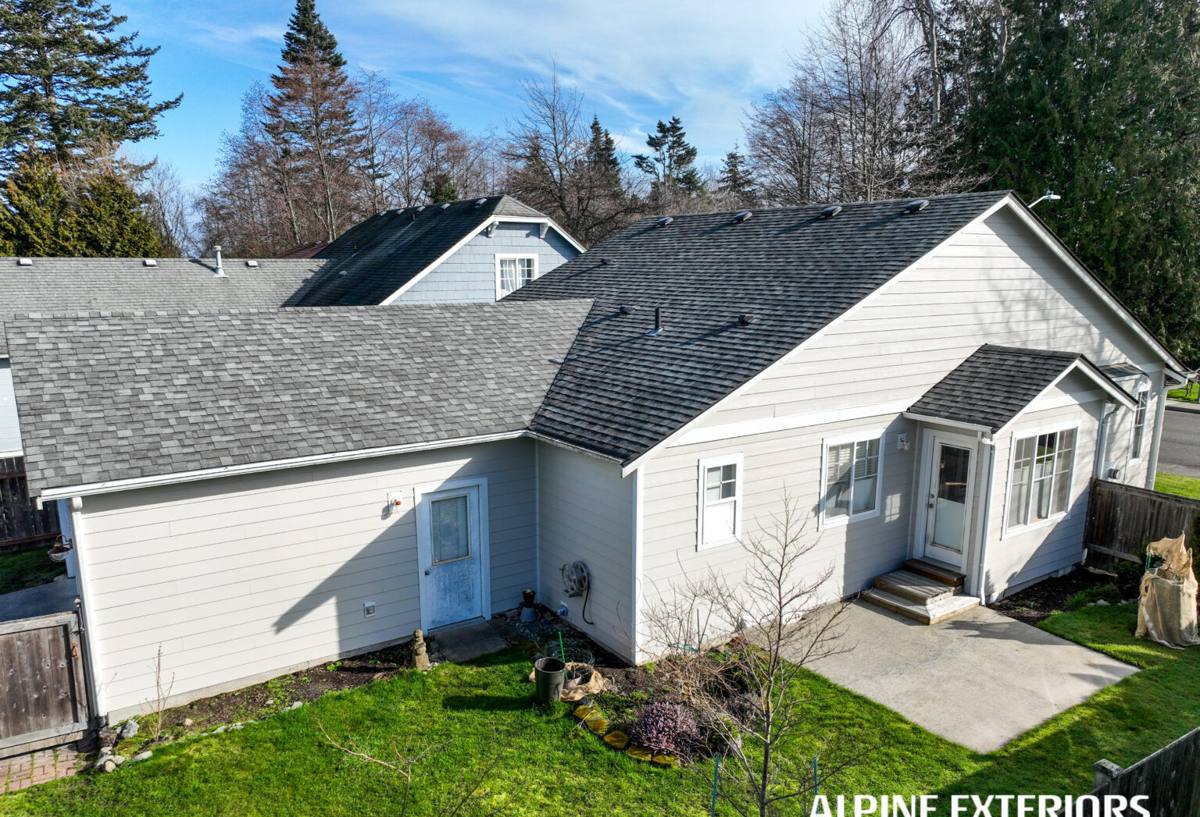
What Whatcom County's Coastal Climate Actually Does to a House
Salt Air and Coastal Exposure
Homes near the water in Whatcom County are exposed to salt-laden air more or less constantly. Salt accelerates corrosion on fasteners, flashing, and any metal trim that isn't rated for coastal exposure. It also breaks down cheap paint films and can leave chalky residue on siding that isn't factory-finished to hold up outdoors. Over years, this is one of the quiet reasons some exteriors look tired well before they're actually worn out structurally — the finish gives up before the material does.
Driving Rain and Wind-Driven Moisture
Bellingham gets a lot of rain, but the bigger issue for siding is wind-driven rain — moisture pushed sideways and upward into laps, seams, and trim joints instead of just running down the face of the wall. This is a different (and harder) problem than straight-down rain. It's why flashing details, caulking choices, and lap spacing matter so much more here than in drier regions. A siding job that looks fine in July can start showing staining, swelling, or soft spots at the bottom courses within a few winters if those details were rushed.
Moss, Shade, and the Long Wet Season
Puget's tree cover and the region's long wet season create ideal conditions for moss and algae growth on roofs, siding, and decking. Moss holds moisture against the surface it's growing on, which is a problem for wood-based products in particular — it keeps material wet far longer than it would otherwise stay, which is exactly the condition that leads to rot. Shaded north- and west-facing walls tend to show this first.
Why We Install Only James Hardie Fiber Cement Siding
We get asked fairly often why we don't offer vinyl, LP SmartSide, cedar, or other fiber cement brands like Cemplank or Allura. It's a fair question, and the honest answer is that we made a standard for ourselves based on what actually holds up around here, not on what's cheapest to install or easiest to sell.
Vinyl siding is affordable and low-maintenance in the sense that it doesn't need repainting, but it's a plastic product — it expands and contracts significantly with temperature swings, it can crack in cold snaps, and it's not the product to reach for on a home that's going to take direct wind-driven rain for decades. LP SmartSide and cedar are wood-based (engineered strand or solid wood), and wood-based siding depends entirely on an unbroken paint or finish film to keep moisture out. In a climate with this much rain and this much moss-holding shade, that's a maintenance commitment we don't think most homeowners want to sign up for indefinitely. Other fiber cement brands may be reasonable products, but we've standardized on James Hardie specifically because of its factory-applied ColorPlus finish, its climate-engineered HZ product lines, and the strength of its transferable warranty.
None of this means those other products are junk — they're just trade-offs we're not willing to make on a house that has to survive this specific coastline. James Hardie fiber cement is non-combustible, it doesn't swell or rot the way wood-based products can, and it's manufactured with regional moisture and temperature performance in mind. That's the case for why it's the only siding we put on homes.
How the Options Compare
| Factor | James Hardie Fiber Cement | Vinyl | LP SmartSide / Wood |
|---|---|---|---|
| Moisture behavior | Resists swelling and rot; engineered for wet climates | Doesn't rot, but can trap moisture behind it if installed poorly | Wood-based; depends on paint film staying intact |
| Salt air / coastal exposure | Factory finish holds color and resists chalking | Can fade and become brittle over time | Finish breaks down faster near salt air |
| Fire performance | Non-combustible | Combustible (melts, can contribute to fire spread) | Combustible |
| Maintenance | Occasional wash; repaint not required for warranty life | Low, but limited repair options if damaged | Repainting/recaulking on a recurring schedule |
| Typical warranty | Long transferable material warranty | Varies widely by manufacturer | Shorter, finish-dependent |
The James Hardie Product Lines We Use
For this part of Whatcom County, we typically specify Hardie's HZ5 zone products, which are engineered for regions with more moisture cycling and temperature swings than the milder HZ10 zone. Depending on the home's architecture and the homeowner's preference, that usually means one of the following:
- HardiePlank lap siding — the most common choice, available in several exposure widths and textures (smooth or cedar-like woodgrain)
- HardiePanel vertical siding — often used for board-and-batten looks or as an accent on gables and entries
- HardieShingle siding — for homes going for a shingle-style look without the maintenance burden of real cedar shakes
- HardieTrim — matched trim boards for a consistent, factory-finished look around windows, corners, and fascia
All of these come with the ColorPlus finish option, which is baked on at the factory under conditions a job-site paint job can't replicate. That matters directly for salt air exposure — a factory finish resists fading and chalking far longer than field-applied paint, and touch-up product is available for the rare nick or scratch instead of a full repaint.
How We Install for This Specific Climate
Fiber cement siding is only as good as its installation, and this is where a lot of the real-world failures actually come from — not from the material itself. A few things we hold to on every Puget-area job:
- Proper flashing at every window, door, and horizontal trim transition, sized and lapped to shed wind-driven rain rather than just vertical rain
- Correct fastener spacing and type — coastal exposure calls for fasteners rated to resist corrosion, not just whatever's fastest to gun in
- Manufacturer-specified gaps and clearances at the ground, roofline, and decks so the siding isn't sitting in standing water or trapped moisture
- Rain screen or drainage plane detailing behind the siding where the wall assembly calls for it, so any incidental moisture has somewhere to go
- Caulking only where Hardie's specifications call for it — over-caulking can trap moisture just as badly as under-caulking
None of this is exotic. It's just the difference between an installation that's rushed to get the crew to the next job and one that's built to actually survive a Whatcom County winter for decades.
Roofing, Windows, and Decks — The Rest of the Exterior
Siding doesn't work in isolation. A roof that's shedding granules or holding moss, windows with failing seals, or a deck that's staying wet under tree cover all put extra load on the siding around them, and vice versa. Because we handle all four — siding, roofing, windows, and decks — we look at the whole exterior as one system rather than quoting a single component and hoping the rest holds up.
Roofing
In a moss-prone area like Puget, roof condition affects far more than curb appeal. A roof holding moisture against the deck sheathing for months at a time is a slow path to bigger problems, and roof drainage that isn't working properly often shows up first as staining or damage on the siding directly below it.
Windows
Old or poorly sealed windows are one of the most common sources of water intrusion around siding, especially under wind-driven rain conditions. Replacing siding without addressing failing window flashing just moves the problem, not solves it — which is why we flag window condition during any siding estimate.
Decks
Decks in shaded, damp parts of Puget deal with the same moss and moisture issues as roofs and siding. Ledger board flashing where a deck meets the house is a common weak point that, if neglected, can cause moisture problems in the siding and wall assembly right above it.
What a Project Looks Like
Every home is different, but most projects follow a similar arc:
- An on-site inspection where we look at existing siding condition, trim, flashing, roofline, and any moisture or moss issues already showing
- A written estimate that spells out product, scope, and any repair work uncovered along the way
- Scheduling that accounts for Whatcom County's wetter months — some work is best timed around drier stretches
- Installation, with attention to flashing, fastening, and drainage detail as described above
- A final walkthrough covering care and what to expect from the finish over time
Living With Coastal Siding: Maintenance That Actually Matters
One of the real advantages of James Hardie fiber cement in this climate is how little maintenance it demands compared to wood-based siding — but "little" isn't "none." A short, honest list of what actually helps:
| Task | Why it matters here | Rough frequency |
|---|---|---|
| Rinse siding with a garden hose | Removes salt residue and organic buildup before it stains | 1-2x per year |
| Check for moss/algae at shaded walls | Moss holds moisture against the surface longer | Seasonally, especially fall/winter |
| Inspect caulking at trim joints | Cracked caulk lets wind-driven rain behind the siding | Annually |
| Clear debris from the base of walls | Standing leaves/debris trap moisture against the bottom course | Seasonally |
| Check gutters and roof drainage | Overflow often lands directly on siding below | Before/after wet season |
Why a Local Crew Is Worth the Difference
A crew that works this specific stretch of Whatcom County coastline day in and day out learns things that don't show up in a manufacturer's install manual — which walls in a neighborhood like Puget tend to take the worst wind-driven rain, which roof lines hold onto moss longest, where salt exposure hits hardest. That local knowledge shapes real decisions on your project: where we add extra flashing attention, which side of the house gets priority during scheduling, what maintenance advice actually applies to your specific lot and tree cover. It's the difference between a generic install and one built for the house you actually own, in the place you actually live.
If your Puget-area home needs new siding, a roof that's past its best years, tired windows, or a deck that's seen better winters, we're happy to come take a look. Estimates are free and there's no pressure — just an honest read on where your exterior stands and what it would take to get it right for this climate. Use the form below to get started.