 Bellingham
 Why "How Much Does Siding Cost?" Doesn't Have a One-Line Answer
Every homeowner asking about siding replacement wants a number. That's fair — it's a big purchase. But anyone who gives you a firm price before seeing your house, measuring the walls, and checking what's underneath the old siding is guessing. Siding pricing depends on the size and shape of the house, how many stories it has, what's currently on the walls, how much of the sheathing underneath has water damage, and which material you choose. Two houses on the same Bellingham block can have a $10,000 spread between them for reasons that have nothing to do with the contractor's markup.
What we can do is walk through the real cost drivers, give you honest ranges for the materials homeowners in Whatcom County actually consider, and point out the costs that tend to catch people off guard. That's more useful than a fake quote.
The Factors That Actually Set the Price
Labor and Tear-Off
Labor is usually the largest single line item on a siding job — often more than the material itself. Removing old siding, dealing with whatever is discovered underneath, and installing the new system correctly (proper flashing, house wrap, fastening pattern, caulking at penetrations) takes skilled hands and time. A crew that rushes tear-off or skips flashing details to save labor hours is the crew whose work fails in five years, not twenty-five.
House Complexity
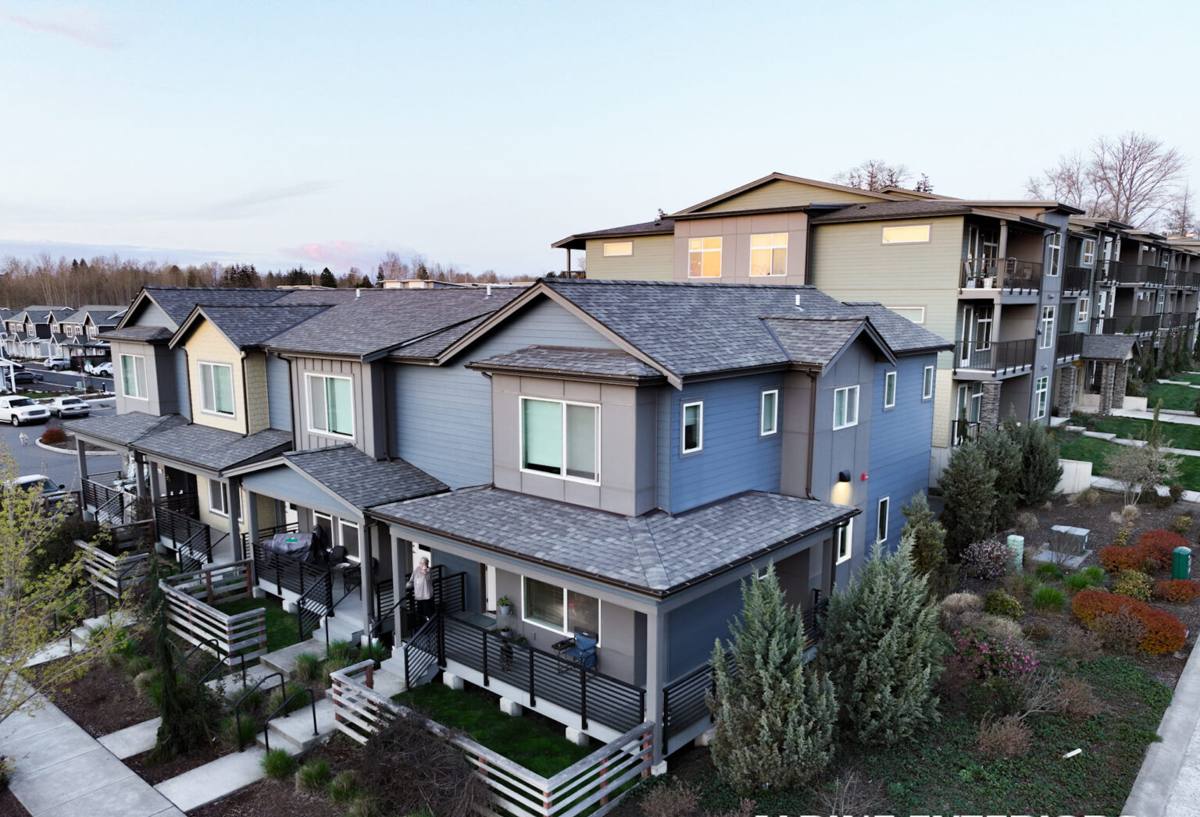
A simple one-story rectangle costs less per square foot to side than a two-story home with dormers, bump-outs, multiple gables, and lots of trim transitions. Cutting board and batten or lap siding around a lot of corners, windows, and roof intersections takes more time and generates more waste material.
What's Underneath
This is the variable that surprises the most homeowners. Once the old siding comes off, we sometimes find soft, rotted sheathing — usually around windows, at the bottom few feet of walls, or anywhere flashing was missing or failed years ago. In a climate that gets as much driving rain as Bellingham does, hidden moisture damage behind old siding is common, not rare. Sheathing repair is priced separately because it can't be known until the walls are open.
Material Choice
This is the variable homeowners have the most control over, and it's where the long-term cost story really diverges.
What Different Siding Materials Typically Cost, Installed
These are broad, general ranges — not a quote for your house — and they reflect installed cost (material plus labor), which is what actually matters for budgeting.
| Material | Typical Installed Cost | What Drives the Range |
|---|---|---|
| Vinyl siding | Lower end of the market | Thickness/gauge, insulated vs. hollow-back, trim detailing |
| LP SmartSide (engineered wood) | Mid-range, close to fiber cement | Panel vs. lap, prefinished vs. field-painted |
| Cedar (real wood) | Mid to upper range, plus ongoing maintenance | Grade of cedar, clear vs. knotty, finish system |
| James Hardie fiber cement | Mid to upper range | ColorPlus prefinished vs. field-painted, plank vs. panel, trim package |
Vinyl usually shows the lowest sticker price, which is exactly why it gets sold so hard. But sticker price and lifetime cost aren't the same thing, and that gap matters more in a marine climate than almost anywhere else in the country.
Why Bellingham's Climate Changes the Math
Whatcom County isn't a neutral backdrop for a siding decision — it's an active participant. Bellingham sits close enough to salt water that airborne salt accelerates corrosion on fasteners and hardware. Winter and spring bring long stretches of driving rain, often pushed sideways by wind off the bay, which tests every seam, joint, and piece of flashing on a house. And the wet, shaded conditions common in this area create a moss season that can run most of the year on north-facing walls and anything under tree cover.
Those three conditions together punish materials that absorb moisture, that need a perfect paint film to stay protected, or that use fasteners not rated for coastal exposure. A siding choice that performs fine in a dry inland climate can underperform here. This is why we ask about material, not just style, before anything else.
The Costs Homeowners Forget to Budget For
- Permits: Most jurisdictions in Whatcom County require a permit for siding replacement, especially if sheathing or house wrap is being replaced.
- Disposal: Tear-off generates a dumpster's worth of old material that has to be hauled and disposed of.
- Hidden repair: Rotted sheathing, damaged framing, or old inadequate flashing found once the walls are opened.
- Trim and accessory work: Fascia, soffits, window and door trim, and corner boards often need attention at the same time — doing it separately later costs more in mobilization and matching.
- Paint or finish touch-up: Relevant for field-painted materials; less of an issue with factory-finished products.
- Gutters and downspouts: Sometimes removed and reset during the job; sometimes replaced if they're failing.
None of these are upsells — they're real parts of a correctly done job. A quote that doesn't account for the possibility of hidden repair isn't more honest, it's just incomplete.
The Cost of Cutting Corners
The cheapest bid on a siding job is cheap for a reason, and it's worth knowing what that reason usually is before you sign. Common shortcuts include skipping proper flashing at windows and doors, reusing old house wrap that's already failing, using undersized or wrong-material fasteners, and installing siding tight to the ground or to roof lines without the clearances the manufacturer requires. None of these show up on inspection day. They show up in three to eight years as bubbling paint, soft spots, staining, or siding that's visibly pulling away from the wall.
In a climate that drives rain sideways into walls for months at a time, installation quality is not a minor variable — it's often the difference between siding that lasts two decades and siding that needs replacing again in one.
Why We Only Install James Hardie
We made the decision years ago to install one siding system: James Hardie fiber cement. Not because it's the cheapest option on the table — it isn't — but because it holds up to exactly the conditions Bellingham throws at a house. Fiber cement doesn't absorb water the way wood-based products can, it's non-combustible, and Hardie's ColorPlus factory finish is baked on under controlled conditions rather than applied on a ladder in variable weather, which means more consistent, longer-lasting color. Hardie also engineers regional HZ5 products specifically for climates with heavy moisture exposure, which describes Whatcom County well.
We're not going to tell you every other product is bad — vinyl, engineered wood, and cedar all have legitimate uses and loyal customers. But we've seen enough call-backs and failures in this specific climate to draw a line on what we're willing to put our name behind. Hardie backs its ColorPlus products with a strong, transferable warranty, which matters both for your own peace of mind and for resale.
Getting an Accurate Number for Your House
Because so much depends on your specific walls, the only way to get a real number is an in-person look. Here's what a fair, useful estimate should include:
- A physical inspection of the current siding and an assessment of visible moisture damage
- Accurate measurements of wall area, not a rough guess from the street
- A clear material and product line recommendation, with reasons tied to your house and site
- Line items for tear-off, disposal, and any known trim or flashing work
- A written allowance or process for handling hidden sheathing damage if it's found
- A realistic timeline, including how weather may affect scheduling
If a bid is missing most of these, it's not really an estimate — it's a placeholder number that will change once the job starts.
Budgeting Realistically
The most useful thing a homeowner can do before calling contractors is walk their own house and note problem areas: cracked or bubbling paint, soft spots near the bottom of walls, gaps at trim, or persistent moss and staining on north-facing sides. That gives a contractor a head start on where hidden damage is likely, and it gives you a more grounded sense of whether you're looking at a straightforward re-side or one that will need real sheathing repair. Either way, budgeting with a range rather than a single number, and asking every bidder to itemize rather than lump-sum, is the best protection against surprises.
If you'd like an honest, no-pressure look at what your specific house needs and what it would cost to do right, we're happy to come take a look and walk you through it — no obligation, just straight answers.