 Bellingham
 Siding Replacement for Silver Beach Homes
Silver Beach is one of Bellingham's older, well-established residential neighborhoods, and a lot of the housing stock reflects that — homes built decades ago, many with mature tree cover, sitting in a part of Whatcom County that sees more than its share of wet weather. That combination is hard on exterior siding. Trees mean shade and slower drying after rain. Age means the siding on a lot of these houses is either original or a prior replacement that's now due for a look. If you're noticing panels that feel soft, paint that won't hold, or streaks of green creeping up from the bottom of the wall, you're not imagining it — it's the climate doing exactly what it does here.
This page is about siding replacement specifically for this neighborhood: what the local conditions demand, what a correct installation actually involves, and why a crew that already works in Silver Beach is worth choosing over one that doesn't know the area.
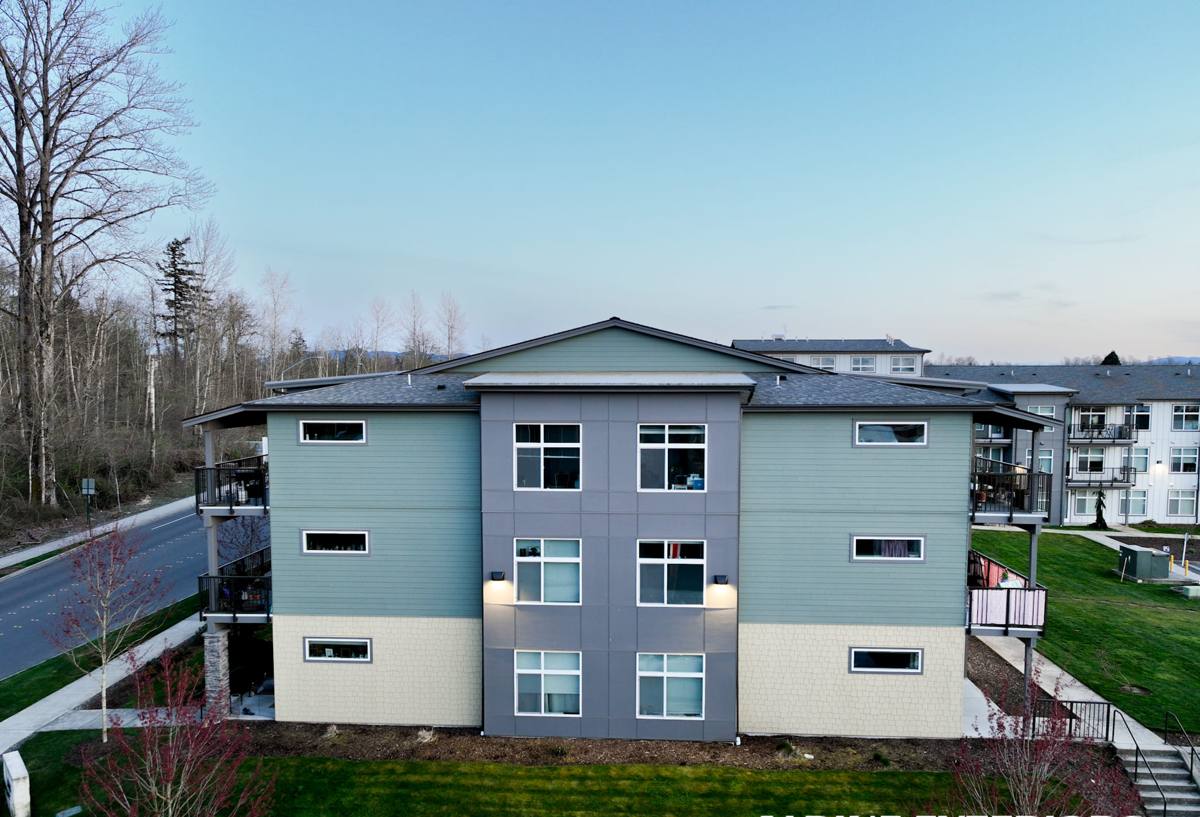
What Bellingham's Climate Does to Siding Over Time
Whatcom County sits right where Pacific storm systems come ashore, and Bellingham gets the full package: long stretches of driving rain, moist salt-tinged air off the Sound, and short winter days that don't give wet siding much chance to dry out. In a shaded neighborhood like Silver Beach, that moisture problem gets worse — tree canopy blocks sun and wind, so walls that would dry out in an afternoon in an open lot can stay damp for days.
Add it up over a full moss season — which here runs most of the fall through spring — and you get a slow, steady attack on anything not built to shed water and resist rot:
- Wood-based products (cedar, primed spruce, LP SmartSide) absorb moisture at cut edges, fastener holes, and seams, which is where rot typically starts.
- Vinyl siding doesn't rot, but it flexes and gaps over time, and gaps are exactly what wind-driven rain needs to get behind the wall.
- Paint and caulk on any porous material break down faster under repeated wet-dry cycling and salt air, which means more frequent touch-up work just to keep water out.
- Moss and algae take hold anywhere shade and moisture combine, and they hold water against the surface even longer once established.
None of this means every house needs new siding immediately — but it does mean siding decisions in Silver Beach should be made with this specific climate in mind, not a generic national average.
Signs a Silver Beach Home Needs Siding Replacement
Some damage is obvious from the ground; some isn't. A few things worth checking, especially on the shaded or north-facing sides of the house:
- Soft or spongy spots when you press on a panel or trim board — a sign of moisture already inside the material
- Visible cracking, bubbling, or peeling paint that keeps coming back after repainting
- Persistent moss or dark staining that returns within a season of cleaning
- Gaps, warping, or panels that have pulled away from the wall
- Rising energy bills or drafts that suggest the weather barrier behind the siding has failed
- Visible rot at butt joints, corners, or anywhere siding meets trim, windows, or the foundation
Any one of these is worth a look. Several together usually means the siding — and possibly what's behind it — has been letting water in for a while, and patching individual boards won't fix the underlying problem.
Why We Install Only James Hardie Fiber Cement
We made a decision a while back to standardize on James Hardie fiber cement siding and stop installing everything else — vinyl, LP SmartSide, Cemplank, Allura, primed spruce, cedar. That's not a marketing position, it's a practical one, built around exactly the climate problems described above.
Fiber cement is non-combustible and doesn't rot the way wood-based products can, because it isn't wood — it's cement, sand, and cellulose fiber, engineered specifically to hold up in wet climates. Hardie's HZ5 product line, which is what this region calls for, is formulated for the freeze-thaw and heavy-moisture conditions found in the Pacific Northwest. The factory-applied ColorPlus finish is baked on under controlled conditions rather than field-painted, which matters a lot in a place like Silver Beach where humidity and shade make on-site paint jobs harder to get right and faster to fail. And because Hardie backs the product with a long, transferable warranty when it's installed to their specification, it's a product we can stand behind without hedging.
We're not going to tell you vinyl or wood siding is worthless — plenty of it is out there performing fine. But we've seen enough of it fail early in this specific climate, in these specific shaded, wet neighborhoods, that we stopped offering it. If you want those products, there are contractors who install them. We install Hardie, and we install it correctly.
What a Correct Siding Replacement Actually Involves
Siding replacement isn't just removing old panels and nailing up new ones. Done right, especially in a climate like this, the work happens in layers:
1. Tear-off and inspection
Old siding comes off and the sheathing underneath gets inspected. This is often the first time anyone's seen the actual wall in years, and it's where hidden rot, insect damage, or failed flashing gets found — before it's covered up again.
2. Repair before cover-up
Any damaged sheathing or framing gets repaired or replaced. Covering rot with new siding just hides the problem for a few more years; it doesn't solve it.
3. Weather-resistive barrier
A correctly lapped and sealed weather barrier goes over the sheathing. In a wet, shaded neighborhood, this layer is doing a lot of the real work — the siding sheds most of the water, but this barrier handles what gets past it.
4. Flashing at every penetration
Windows, doors, vents, and anywhere else that breaks the wall plane need proper flashing, installed in the correct order relative to the weather barrier and siding. This is one of the most common places installation shortcuts show up later as leaks.
5. Correct fastening and clearances
Hardie siding has specific fastening patterns, gap requirements, and ground-clearance rules. Installing it outside those specs voids the warranty and undermines the product's actual performance — the material can be excellent and still fail if it's put on wrong.
6. Trim, caulking, and finish details
The last details — trim boards, corner treatments, caulking at joints — are what make the finished wall actually watertight, not just good-looking.
Our Process for Silver Beach Projects
The steps above are the technical side. In practice, a Silver Beach siding replacement with us looks like this:
- On-site assessment — we walk the house, check the siding and, where accessible, what's underneath it, and talk through what we're seeing.
- Written estimate — a clear scope and price, no vague allowances that turn into surprise add-ons later.
- Product and color selection — choosing the right Hardie line and ColorPlus color for the home and its exposure.
- Tear-off and repair — removing old material and fixing anything underneath before new siding goes up.
- Installation to Hardie spec — weather barrier, flashing, fastening, and finish work done in the correct order.
- Final walkthrough — going over the finished job together before we consider it done.
Matching the Product to the Neighborhood
Not every Hardie option fits every house the same way. In a shaded, moisture-heavy neighborhood like Silver Beach, a few things matter more than they would in a drier, sunnier part of town:
| Factor | Why it matters in Silver Beach |
|---|---|
| HZ5 climate formulation | Engineered for the Pacific Northwest's wet, freeze-thaw conditions rather than a generic national spec |
| ColorPlus factory finish | Reduces reliance on field painting, which is harder to get right in shaded, humid conditions |
| Panel vs. lap profile | Lap siding sheds water well on exposed walls; panel systems suit certain architectural styles but need careful detailing at seams |
| Trim and fascia coordination | Matching trim material and finish keeps water management consistent around the whole envelope, not just the field of the wall |
We walk through these choices with the homeowner rather than defaulting to one option — the right call depends on how much sun and wind a given wall actually gets, not just the neighborhood in general.
What Affects the Cost of a Siding Replacement
Every house is different, so we're not going to put a number here that doesn't mean anything without seeing your home. What we can do is lay out the factors that actually move the price, so an estimate makes sense when you get one:
| Factor | How it affects cost |
|---|---|
| Extent of hidden damage | Rot or sheathing damage found during tear-off adds repair work beyond the siding itself |
| Home size and wall complexity | More corners, dormers, and trim detail mean more labor and material cutting |
| Siding profile and accessories | Lap width, trim style, and corner treatments vary in material cost |
| Access and site conditions | Mature landscaping, slopes, or tight lot lines common in older neighborhoods can affect scaffolding and staging |
| Scope | Full replacement versus partial (single elevation or storm-damaged section) changes both cost and logistics |
The only way to get real numbers is a walkthrough — which is what the free estimate below is for.
Why a Crew That Already Works Silver Beach Matters
There's a real difference between a contractor who's driven through a neighborhood once and one who's worked in it repeatedly. A crew familiar with Silver Beach knows what the tree cover and lake-adjacent moisture tend to do to older siding, roughly what to expect when tear-off starts on a house of a given age, and how the local permitting and inspection process actually runs for Bellingham. That familiarity doesn't replace a proper on-site assessment of your specific home, but it does mean fewer surprises and a crew that isn't learning the neighborhood on your dime.
It also means accountability. A crew that works this area regularly has a reputation to protect with the same neighbors, year after year — which is a good incentive to do the job right the first time.
Get a Free Estimate
If your Silver Beach home is showing signs of siding wear — soft spots, recurring moss, peeling paint, or just age — we're happy to come take a look. The estimate is free, there's no pressure, and you'll get a straight answer about what your siding actually needs, not an upsell. Fill out the form below to get started.