 Bellingham
 Exterior Work Built for York's Bellingham Climate
York is one of Bellingham's older, established neighborhoods, and that means a housing stock with real range: early-to-mid-century homes with decades of siding history, alongside newer infill and remodels. Whatever era a home falls into, it's sitting in the same weather pattern as the rest of Whatcom County — and that pattern is hard on exteriors. Salt-laden air off Bellingham Bay, long stretches of driving rain through fall and winter, and a moss season that seems to start earlier every year all put steady pressure on siding, roofing, windows, and trim. We work throughout Bellingham and York is squarely in our regular service area, so we're not guessing at what these conditions do to a house over time — we see it on every job.
This page covers how we approach siding, roofing, windows, and decks for York-area homes, what the local climate actually does to exterior materials, and why we've standardized on one siding system rather than offering a menu of products with very different long-term outcomes.
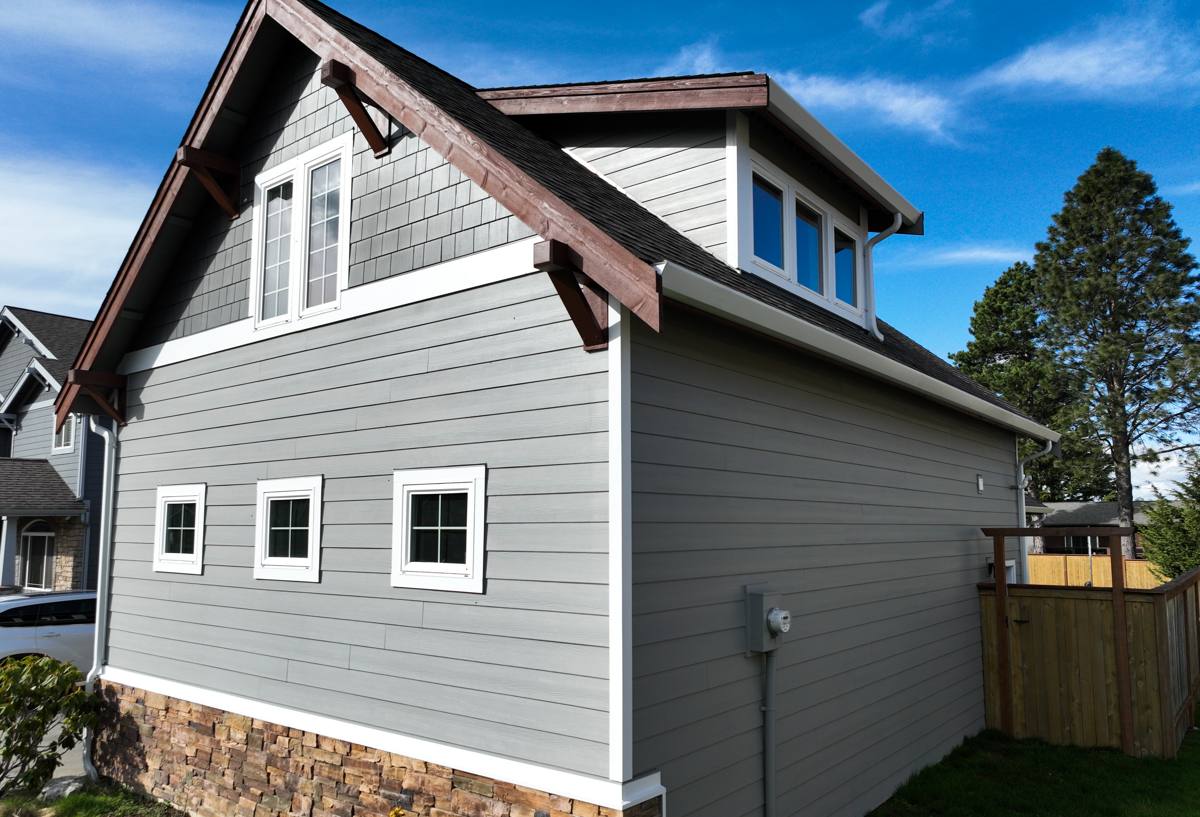
What the Climate Does to a York Home
Salt Air and Moisture
Proximity to Bellingham Bay means airborne salt is a real factor, even a few miles inland. Salt air accelerates corrosion on fasteners, flashing, and any metal components on a home's exterior, and it works alongside moisture rather than separately from it. Wood-based siding products are especially vulnerable here — repeated wetting and drying cycles, combined with salt exposure, break down paint film and open the door to rot faster than in a dry inland climate.
Driving Rain
Whatcom County doesn't just get a lot of rain — it gets a lot of wind-driven rain, which behaves differently than a straight-down shower. Driving rain gets forced sideways into laps, seams, and butt joints that would stay dry in calmer weather. That makes water-resistive barriers, proper flashing details, and correctly lapped siding courses far more important here than in milder climates. A siding job that looks fine on a dry day can still be letting water in if the details underneath weren't done right.
Moss and Shade
York's tree cover is part of what makes the neighborhood pleasant to live in, but it also means shaded roof and wall sections that stay damp longer after every rain. Moss and algae take hold fastest in those shaded, slow-to-dry areas, and once established they hold moisture against the siding or roofing surface underneath — which is a slower, quieter form of damage than a single storm, but just as real over a decade.
Siding: Why We Only Install James Hardie
We get asked fairly often why we don't offer vinyl, LP SmartSide, primed wood, or other fiber cement brands alongside James Hardie. The honest answer is that we used to see enough of these products fail early, or need more maintenance than homeowners expected, that we stopped installing them — not because every job goes bad, but because the failure modes are common enough in this climate that we don't want to put our name on the install.
Vinyl Siding
Vinyl is inexpensive and low-maintenance in the sense that it doesn't need painting, but it's a thin plastic product that expands and contracts with temperature swings, can crack in impacts, and fades unevenly over years of UV exposure. It also isn't fire-resistant, and in a wind-driven-rain climate, the seams and laps on vinyl are a common water-entry point if installation isn't precise.
LP SmartSide and Other Engineered/Primed Wood
Engineered wood siding has improved over the years, but it's still a wood-based product with a factory or field-applied coating that needs to stay intact to protect the substrate. Any breach in that coating — a nail pop, a scuff, a poorly sealed cut edge — gives moisture a path into the wood fiber, and in a climate this wet, that path gets used. Primed spruce and cedar carry the same basic risk, just closer to raw wood.
Other Fiber Cement Brands (Cemplank, Allura, etc.)
These are legitimate fiber cement products, and fiber cement as a category is the right call for this region. Our reason for sticking with James Hardie specifically comes down to their factory-applied ColorPlus finish, their HZ5 product engineering for wet Pacific Northwest climates, and a warranty structure we trust to actually back the product. We'd rather install one system well and stand behind it fully than juggle several with different specs and different failure points.
What James Hardie Gets Right for This Climate
- Fiber cement composition doesn't rot, and it isn't a food source for moss or algae the way wood is
- Non-combustible material — a genuine advantage in a state that takes wildfire risk seriously
- ColorPlus factory finish is baked on under controlled conditions, holding color and resisting the chip/peel issues that come with field-applied paint
- HZ5 product line is engineered specifically for cold, wet climates like ours
- Strong transferable warranty backed by a manufacturer with decades in fiber cement
Correct Installation Matters as Much as the Product
Every siding failure we get called out to inspect has a material component and an installation component, and in our experience the installation side is usually the bigger factor. James Hardie itself will say the same thing — their warranty has installation requirements attached to it. In a driving-rain climate like York's, the details that matter most include:
- Correct water-resistive barrier installation behind the siding, lapped properly with flashing
- Proper clearance between siding and grade, decks, and roof lines to avoid wicking
- Manufacturer-specified nailing patterns and fastener types to avoid splitting and blow-off
- Sealed and back-primed field cuts, since factory finish doesn't extend to a cut edge
- Proper flashing at windows, doors, and any wall penetration
Skipping any of these doesn't usually show up as a problem on day one — it shows up two, five, or ten years later as a soft spot, a stain, or a section that needs to come off and be redone. That's a big part of why we treat installation quality as inseparable from the product decision.
Roofing: The First Line of Defense
Roofing takes the brunt of Whatcom County's rain and moss pressure before it ever reaches the siding. A roof with failing flashing, aging shingles, or moss buildup in shaded valleys sends water somewhere — often down behind trim and into the wall assembly below. We handle roof replacement and repair alongside siding work because the two systems have to work together at every transition point: eaves, valleys, and wall intersections are exactly where roofing and siding problems tend to show up first.
Windows: Where Leaks Actually Start
Window flashing is one of the most common sources of hidden water intrusion in older Bellingham-area homes, York included. As homes settle and original flashing and caulk age out, driving rain finds its way in around the window frame — often invisibly, for years, before it shows up as interior damage or rot in the surrounding wall. When we replace siding around existing windows, we check flashing and integration at the same time, because reinstalling siding around a window with failed flashing just repeats the same problem under new material.
Decks: Built to Handle Standing Season
A Bellingham deck spends a good chunk of the year wet, and shaded decks under tree cover — common in a neighborhood like York — stay damp even longer between rains. Proper decking material, fastener choice, and drainage/ventilation underneath the deck all affect how long it lasts before boards cup, fasteners corrode, or ledger connections start to fail. We build and repair decks with those conditions in mind rather than treating them as a dry-climate product installed in a wet one.
Cost Factors for York-Area Exterior Projects
| Factor | Why It Matters Here |
|---|---|
| Home size and complexity | More corners, gables, and trim details mean more cuts, flashing, and labor time |
| Existing siding removal | Older wood or vinyl siding often needs full tear-off, plus inspection of sheathing underneath |
| Moisture damage found underneath | Rot or soft sheathing discovered mid-project needs repair before new siding goes on |
| Access and site conditions | Mature trees, tight lots, or sloped grade common in older neighborhoods can affect staging and labor |
| Siding profile and trim choice | Lap width, shingle-style panels, and trim detailing affect material and labor costs |
| Roofing/window coordination | Bundling roofing or window flashing repair with a siding job can reduce redundant labor |
Why a Local Crew Matters
A contractor working across Whatcom County day in and day out knows what this specific climate does to a house — not in the abstract, but from opening up walls and seeing which details held up and which didn't. That local pattern recognition is hard to substitute with a national franchise or an out-of-town crew unfamiliar with Pacific Northwest wet-climate building practices. It also means we're around after the job is done, not just for the install.
What to Look for in a York Exterior Contractor
- Manufacturer certification for the specific siding product being installed
- A clear explanation of flashing and water management details, not just the finished look
- Local references and a track record of work in Whatcom County's climate specifically
- Proper licensing, bonding, and insurance
- A written scope that spells out tear-off, sheathing inspection, and disposal — not just "new siding"
- Willingness to walk you through why they use the materials they use, not just what's cheapest
If you're weighing a siding, roofing, window, or deck project for a home in York, we're happy to take a look and give you a straightforward, no-pressure estimate — including an honest read on what your current exterior is dealing with and what it would take to fix it right.