 Bellingham
 Cordata: A Growing Corner of North Bellingham
Cordata sits in north Bellingham, one of the areas of the city that has seen the most residential and commercial growth over the past couple of decades. It's a mix of newer subdivisions, multi-family housing, and commercial development, with a range of home ages and construction types. That mix matters for exterior work — a home built in the last ten years and one built in the 1990s can have very different siding, flashing, and moisture-management needs, even sitting a few blocks apart.
Whatcom County's climate doesn't discriminate by neighborhood, though. Whether a home sits close to Bellingham Bay or further inland near the airport, it's dealing with the same fundamental exposure: salt-tinged marine air moving in off Puget Sound, long stretches of driving rain through fall and winter, and a moss and algae season that can run most of the year on shaded or north-facing walls.
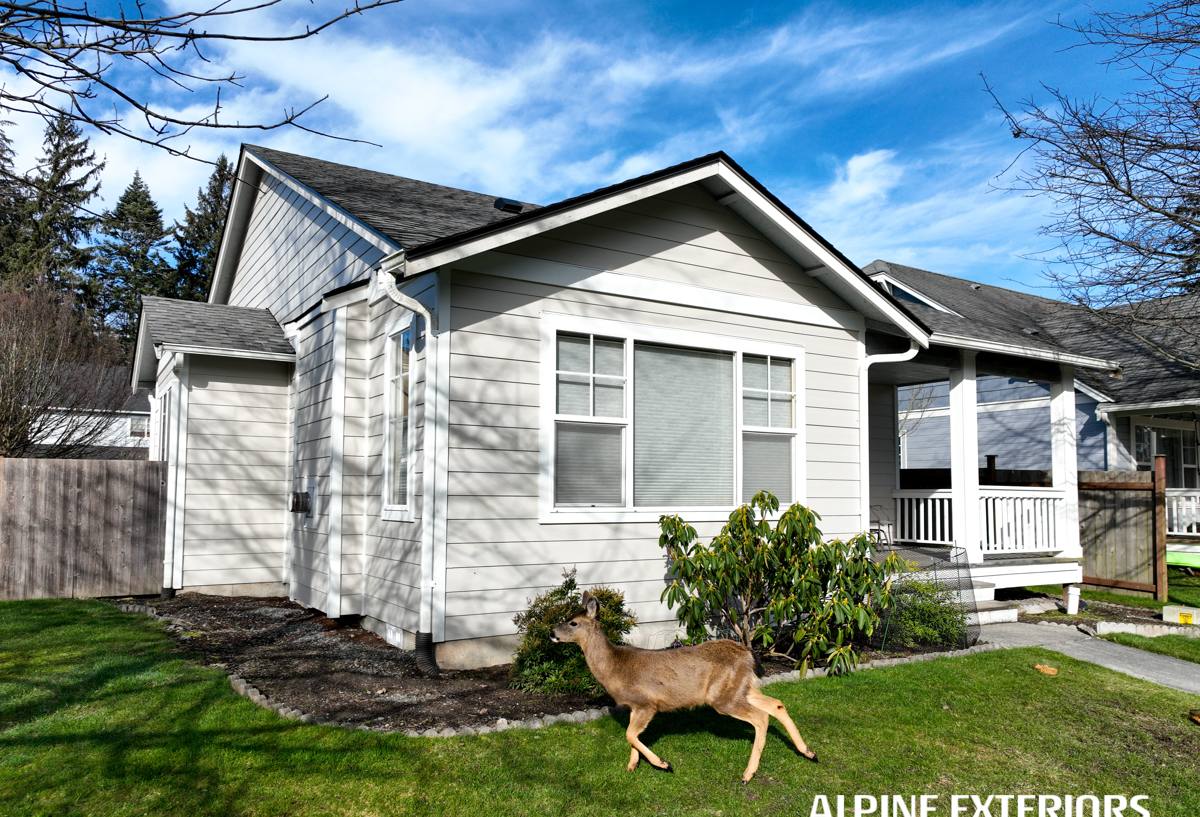
What the Climate Does to Exterior Materials Here
Bellingham's weather is temperate compared to a lot of the country, but "mild" doesn't mean "easy" on a building envelope. A few things are consistently at work on Cordata homes:
- Salt air: Even well inland from the water, airborne salt accelerates corrosion on fasteners, trim, and metal flashing, and it interacts poorly with materials that aren't engineered to resist it.
- Driving rain: Wind-driven rain doesn't just wet a wall surface — it pushes moisture into seams, laps, and butt joints, which is where most siding failures actually start.
- Moss and algae: Shaded elevations, especially north and east-facing walls under mature trees, stay damp long after the rain stops. Organic growth holds moisture against the surface and can degrade paint film and substrate over time.
- Temperature swings: Not extreme by national standards, but enough freeze-thaw cycling and daily humidity swings to matter over 20-30 years, especially for materials that expand, contract, or absorb water unevenly.
None of this is unique to Cordata — it's the reality across most of Whatcom County. But it's worth saying plainly, because a lot of siding, roofing, and window products sold in this region were never actually engineered with this specific combination of moisture and salinity in mind.
Full Exterior Protection: Siding, Roofing, Windows, and Decks
We work on siding, roofing, windows, and decks because these systems don't function independently — they're all part of the same building envelope. A siding job done without attention to the roof's drip edge and flashing detail, or window installation that doesn't tie properly into the water-resistive barrier, can undermine otherwise good work. When one crew handles the full exterior, the transitions between systems get treated as what they are: the most vulnerable points on the house.
For a Cordata home, that usually means:
- Siding that sheds and resists moisture at seams, corners, and penetrations.
- Roofing with flashing and underlayment sized for sustained wet-season exposure, not just code minimums.
- Windows installed with proper flashing tape and sill pans so water that reaches the opening gets directed back out, not into the wall cavity.
- Decks built and finished to handle standing moisture, ledger board rot risk, and UV exposure through the drier months.
Why We Only Install James Hardie Fiber Cement
We install James Hardie fiber cement siding exclusively. We don't install vinyl, LP SmartSide, Cemplank, Allura, or primed wood species like spruce or cedar. That's a deliberate standard, not a lack of options.
Fiber cement is non-combustible and dimensionally stable — it doesn't expand and contract with moisture the way wood-based products do, which matters directly for a climate with this much sustained damp exposure. James Hardie also builds region-specific product lines (their HZ5 formulation is engineered for climates with more moisture and freeze-thaw cycling), and their ColorPlus factory finish is baked on under controlled conditions rather than field-applied, which reduces the number of ways a paint film can fail against salt air and UV over time.
We're not going to tell you every alternative product is worthless — some perform reasonably well when installed and maintained correctly. But we've made a professional call that the maintenance burden, moisture sensitivity, and inconsistent field performance we've seen from other materials in this specific climate isn't something we're willing to put our name behind. James Hardie, installed correctly, is what we're confident standing behind for decades, not just through the warranty period.
What "Installed to Spec" Actually Means
Fiber cement's real-world performance depends heavily on installation detail — proper clearances, correct fastener pattern, caulking only where Hardie's specs call for it, and flashing at every horizontal joint and penetration. A poorly installed Hardie job can still trap moisture; a well-installed one is what earns the product's reputation. This is a big part of why the crew doing the work matters as much as the material itself.
Siding Material Comparison for Whatcom County Conditions
| Material | Moisture Behavior in Marine Climate | Maintenance | Typical Lifespan |
|---|---|---|---|
| James Hardie fiber cement | Dimensionally stable, resists water absorption when sealed correctly | Occasional wash; factory finish holds color | 30-50 years with correct install |
| Vinyl | Doesn't absorb water but can warp/gap, letting moisture behind panels | Low, but seams and J-channels trap debris/moss | 20-30 years, fades over time |
| LP SmartSide (engineered wood) | Treated wood strand product; vulnerable at cut edges and seams if moisture intrudes | Requires vigilant caulk/paint upkeep | Highly install-dependent |
| Cedar / primed spruce | Natural wood movement; absorbs moisture, prone to rot in shaded/damp areas | Regular refinishing, higher upkeep | Variable, often shorter in wet shade |
This table reflects general material behavior, not a guarantee of performance for any specific product or installation — actual results always depend on installation quality and ongoing maintenance.
Signs a Cordata Home's Exterior Needs a Closer Look
- Dark streaking, green film, or moss buildup on north- or east-facing walls
- Paint that's peeling, bubbling, or chalking, especially near seams and trim
- Soft or spongy spots when you press on siding near the bottom of walls or around window sills
- Visible gaps, warping, or separation at siding joints and corners
- Water staining on interior walls near exterior corners, which often points to a flashing failure outside
- Roof shingles that are curling, losing granules, or showing moss growth at the ridge and valleys
- Windows that fog between panes or feel drafty even when closed
Any one of these on its own might be minor. Several together, especially on the same elevation, usually points to a moisture pathway that's worth having a professional look at before it becomes a larger repair.
Why a Local Crew Matters in a Neighborhood Like This
A crew that works throughout Bellingham and Whatcom County day to day has a working sense of which elevations in a given neighborhood tend to hold moisture longest, how local permitting and inspection tends to go with the City of Bellingham, and what tends to fail first on homes of a certain age or construction style in this specific area. That's different from a crew flown in for a regional push, or one working off a generic install manual with no feel for the local weather pattern.
It also means accountability. If something needs a warranty follow-up in year eight or year fifteen, a local company is still local — not a franchise that's moved on or a name that's changed hands.
What to Expect From an Estimate and Installation
A typical process starts with an on-site walkthrough where we look at the current siding, roofing, window condition, and any moisture signs, not just the surface appearance. From there we'll talk through what actually needs attention versus what's cosmetic, give you a straightforward scope and cost range, and — if siding is part of the plan — walk through James Hardie's board and panel options, color choices, and what correct installation involves for your specific home.
During installation, the details that matter most are the ones you won't see once the job is done: proper weather-resistive barrier, correct flashing at every window, door, and horizontal joint, and fastener patterns that meet manufacturer spec. That's where the long-term performance of the whole system gets decided.
If you're in Cordata or elsewhere in north Bellingham and want an honest look at where your siding, roofing, windows, or deck actually stand, we're happy to come take a look. The estimate is free, there's no pressure, and you'll get a straight answer about what's worth doing now versus what can wait — just fill out the form below to get started.