 Bellingham
 Edgemoor's Climate Is Harder on Siding Than It Looks
Edgemoor sits close to the water, with wooded lots, mature tree canopy, and enough elevation change that homes catch weather differently from block to block. That mix is part of what makes the neighborhood desirable, and it's also exactly what wears out exterior siding faster than homeowners expect. Proximity to Bellingham Bay means a steady dose of salt-laden air moving through the trees. Add Whatcom County's long, wet fall-through-spring stretch of driving rain, and a shaded, tree-covered lot that rarely dries out, and you've got a recipe for siding stress that a home twenty miles inland simply doesn't deal with in the same way.
None of this means Edgemoor is a bad place to own a home — it means the exterior materials on that home need to be chosen for the actual conditions, not for what looks good in a showroom. That's the lens we use on every siding, roofing, window, and deck project we take on in this part of Bellingham.
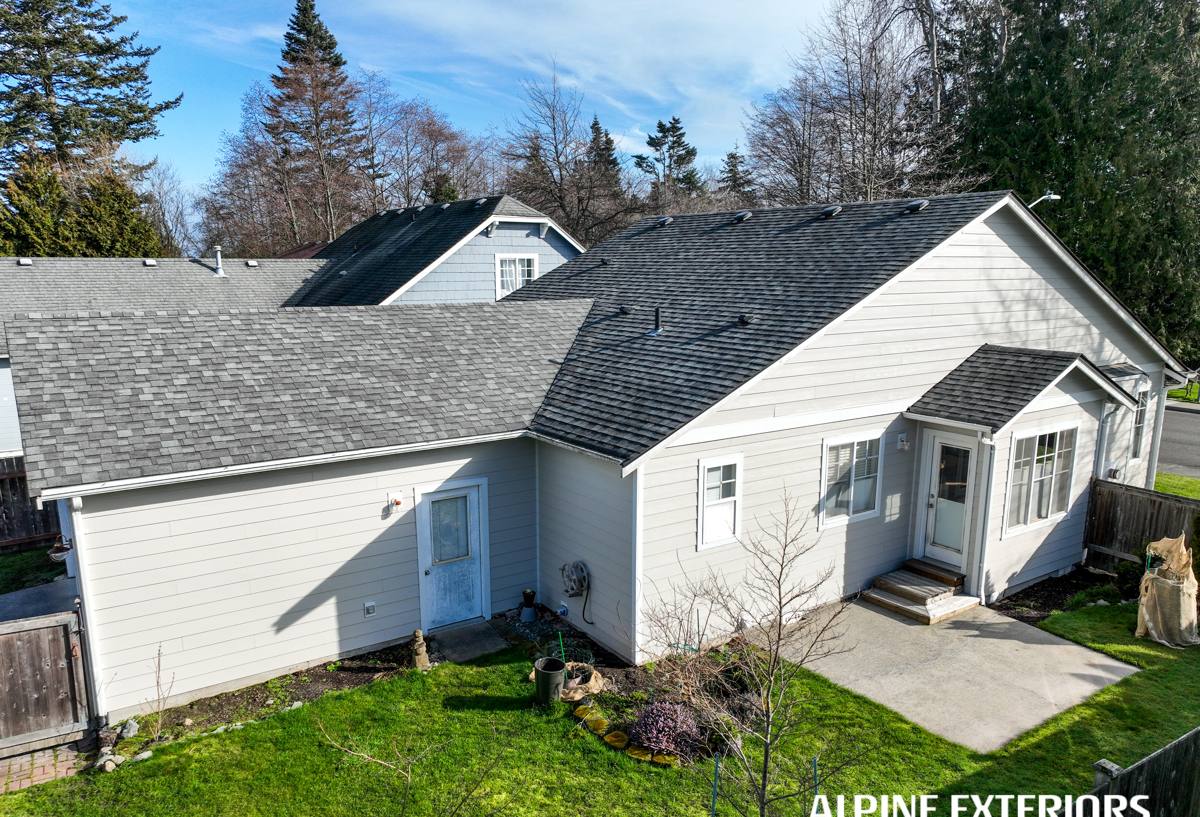
What Salt Air, Rain, and Moss Actually Do to a House
Salt Air and Metal Fasteners
Salt-laden air accelerates corrosion on anything metal — fasteners, flashing, trim screws, even some finish coatings. On homes closer to the bay, we pay close attention to fastener spec and flashing details, because a siding job that looks fine on day one can start showing rust streaks and loosening trim within a few seasons if the wrong hardware went into it.
Driving Rain and Wind-Driven Moisture
Bellingham's weather doesn't just rain straight down — storms off the water push rain sideways into wall assemblies, especially on exposed elevations. Siding systems that rely on tight seams, paint film, or edge sealing to stay watertight are the ones that struggle here. Once moisture gets behind a wall covering in a marine climate like this, it doesn't dry out quickly, and that's when rot and mold problems start.
Moss, Algae, and the Shade Factor
Wooded lots and long overcast stretches mean siding in Edgemoor spends a lot of the year damp and shaded. That's ideal growing conditions for moss and algae, which hold moisture against the wall surface and can slowly degrade materials that aren't built to shrug it off. A siding product's real test in this neighborhood isn't how it looks installed in July — it's how it looks after its fifth wet, mossy winter.
Why We Only Install James Hardie Fiber Cement
We made a decision to stop installing anything other than James Hardie fiber cement siding, and Edgemoor-type conditions are a big part of why. Fiber cement doesn't absorb moisture the way wood-based products can, it won't rot, and it's non-combustible — a real consideration anywhere with tree-heavy lots and wildfire smoke seasons. James Hardie also engineers specific product lines (HZ5 for the Pacific Northwest, for example) around regional moisture and temperature patterns rather than selling one generic board nationwide.
The factory-applied ColorPlus finish matters here too. It's baked on under controlled conditions and backed by its own finish warranty, which holds up far better against UV, salt air, and repeated wet-dry cycling than field-applied paint. On a shaded, damp lot, that finish durability is the difference between repainting every several years and going a long stretch without touching the exterior at all.
We're upfront that other products — vinyl, LP SmartSide, cedar, primed spruce — all have legitimate uses and loyal installers elsewhere. Vinyl is inexpensive and low-maintenance in mild, dry climates but can warp under heat and doesn't hold up as well to impact or long-term UV exposure. Engineered wood siding performs well when installation and caulking are perfect and stays perfect for the life of the house — a big ask in a wet marine climate. Cedar is genuinely beautiful but needs ongoing maintenance to resist moisture and insects. We simply decided that for the climate we work in, fiber cement's moisture resistance and finish durability made it the only product we're willing to put our name behind.
How We Approach a Siding Project in Edgemoor
Every job starts with a look at the specific lot — sun exposure, tree cover, elevation, and which walls take the worst weather. That assessment shapes decisions on flashing, house wrap, fastener type, and where extra moisture management is worth the investment. A south-facing wall exposed to open water views gets treated differently than a shaded north wall tucked under trees, even on the same house.
Correct installation is where most siding failures actually originate — not the material itself. Fiber cement installed with the wrong fasteners, insufficient clearance from grade or roofing, or gaps in the water-resistive barrier will fail early regardless of how good the board is. We follow James Hardie's published installation specifications because they're written specifically to prevent the failure modes common in wet climates like ours.
What Correct Installation Involves
- Proper house wrap or weather-resistive barrier installed and lapped correctly before siding goes on
- Corrosion-resistant fasteners, sized and spaced to manufacturer spec
- Flashing at every window, door, and roof-to-wall intersection, not just caulk
- Correct clearance between the bottom of the siding and grade, decks, and roof lines
- Tight, properly caulked joints using compatible sealants at butt joints and trim
- Ventilation gap behind siding where the assembly calls for it, to let incidental moisture escape
- Final inspection of caulk lines, trim, and touch-up paint before the crew leaves the site
Roofing, Windows, and Decks Work as a System
Siding doesn't perform in isolation. A roof with worn flashing will send water down behind otherwise perfectly installed siding. Windows with failed seals let moisture into the wall cavity right where fiber cement meets the frame. Decks attached to the house create a ledger connection that, done wrong, is one of the most common sources of rot in the Pacific Northwest. Because we handle siding, roofing, windows, and decks, we look at a home's exterior as one connected system rather than four separate trades that don't talk to each other. On a bay-adjacent, tree-shaded property like you'll find in Edgemoor, that coordination matters more than it does on a simple, exposed, single-story lot.
Comparing Siding Options for a Coastal, Wooded Lot
| Factor | James Hardie Fiber Cement | Vinyl | Engineered Wood (LP-type) | Cedar |
|---|---|---|---|---|
| Moisture resistance | Does not rot or absorb water | Water-resistant, but seams can trap moisture | Vulnerable if seals or paint fail | Needs ongoing sealing/maintenance |
| Finish durability | Factory-baked ColorPlus, separately warrantied | Color molded in, can fade/chalk | Field-painted, repaint on a cycle | Stain or paint, frequent upkeep |
| Fire resistance | Non-combustible | Melts/deforms under heat | Combustible | Combustible |
| Maintenance in a wet, shaded climate | Low — occasional wash | Low, but prone to moss buildup in seams | Moderate to high | High |
| Typical lifespan when correctly installed | Multiple decades | 15-25 years | Varies with maintenance | Varies widely with upkeep |
What Drives Project Cost
Every Edgemoor property is different, so we don't quote sight-unseen numbers, but a few things consistently move the price on a siding project here:
| Cost Factor | Why It Matters |
|---|---|
| Home size and wall complexity | More corners, gables, and dormers mean more cutting, flashing, and labor time |
| Existing siding removal | Tear-off and disposal of old material adds time versus a clean substrate |
| Access and site conditions | Sloped, wooded, or tight-access lots common in Edgemoor can add setup and staging time |
| Moisture damage found during tear-off | Rotted sheathing or framing behind old siding has to be repaired before new siding goes on |
| Trim and detail level | Board-and-batten accents, shakes-style panels, and custom trim add labor beyond flat lap siding |
Why a Local Crew Matters in a Neighborhood Like Edgemoor
A crew that only works occasionally in Whatcom County will spec a house the same way they'd spec one in a dry inland climate — because that's what they know. A crew based here and working Bellingham neighborhoods regularly has already seen what salt air does to fasteners over five winters, which walls in a shaded, wooded lot hold moss longest, and how wind off the bay finds the weak points in a wall assembly. That local pattern recognition shows up in the small decisions — flashing details, fastener choice, where to add extra moisture protection — that determine whether a siding job is still performing well in fifteen years or starting to show problems in five.
We also don't disappear after installation. If a warranty question or a maintenance question comes up down the road, you're calling a crew that's still working in Bellingham, not chasing down a contractor who moved on to another region.
Keeping Your Siding Looking Good Between Projects
Fiber cement is low-maintenance, not zero-maintenance. A periodic gentle wash to knock off moss and algae buildup, especially on shaded walls, keeps the surface clean and keeps organic growth from holding moisture against the siding long-term. Keeping gutters clear and trimming back vegetation that holds branches or foliage against the wall also goes a long way in a lot as tree-covered as many in Edgemoor are.
If you're weighing a siding, roofing, window, or deck project on an Edgemoor home, we're happy to take a look and talk through what your specific lot and exposure actually need — no pressure, no generic sales pitch. Use the form below to request a free estimate.