 Bellingham
 Siding in Sunnyland: What Bellingham's Climate Does to a Home
Sunnyland is one of Bellingham's established residential neighborhoods, with a mix of older homes and newer infill construction sitting close enough to Bellingham Bay that salt-laden air is a constant factor in how exteriors age. Add Whatcom County's long, wet winters and the shaded, moisture-holding conditions common under mature trees, and you have a climate that is genuinely hard on siding, trim, and roofing. This page covers what we see on Sunnyland homes specifically and how our approach to exterior work is built around those conditions.
The Local Climate Challenge
Salt Air and Driving Rain
Bellingham sits on Bellingham Bay, and prevailing weather systems push moist, salt-influenced air inland across neighborhoods like Sunnyland. That air carries fine salt particulate that settles on exterior surfaces, and combined with wind-driven rain, it accelerates the breakdown of paint films, caulking, and any siding material that isn't dimensionally stable when wet. Homes on more exposed lots or higher ground tend to take the brunt of this, but even sheltered streets see steady exposure over the decades.
The Long Moss Season
Whatcom County's wet season stretches from fall through spring, and Sunnyland's tree cover means many homes stay shaded and damp for long stretches at a time. That's ideal growing conditions for moss and algae on roofing, siding, decking, and anywhere water sits without a chance to dry. Moss isn't just cosmetic — it holds moisture against the surface underneath it, which is exactly the condition that causes rot, coating failure, and premature material breakdown.
What This Means for Material Choice
Any material that swells, cups, or delaminates when it takes on repeated moisture is going to struggle in this environment. That's true of wood-based siding products and it's part of why we don't install several common alternatives on the market — more on that below. It's also why gutter performance, roof drainage, and proper flashing details matter as much as the siding material itself.
Why We Only Install James Hardie Fiber Cement
We made a decision as a company to install James Hardie fiber cement siding exclusively. We don't install vinyl, LP SmartSide, Cemplank, Allura, primed spruce, or cedar. That's not a marketing angle — it's a standard we hold because of what we've seen play out on homes in this specific climate over time.
The Honest Trade-offs With Other Products
- Vinyl siding is inexpensive and low-maintenance in mild climates, but it can warp or become brittle over time, and its seams and J-channels give wind-driven rain more places to work behind the surface.
- Wood-based composite siding (LP SmartSide) uses engineered wood strand with a resin coating. It performs reasonably when installation and caulking are kept up perfectly, but any breach in that protective layer exposes wood fiber to moisture, and in a climate with this much sustained dampness, that margin for error is thin.
- Primed spruce and cedar are real wood, and real wood moves — it expands, contracts, and eventually checks or cups when it cycles through wet and dry repeatedly. Cedar has a longer track record and a look many homeowners love, but it demands a maintenance schedule (staining, sealing, inspection) that most homeowners underestimate.
- Cemplank and Allura are also fiber cement products, and fiber cement as a category is the right material for this climate. Our decision to standardize on Hardie specifically comes down to their factory-applied ColorPlus finish, their HZ5 product engineering for wet climates, and the strength of their transferable warranty.
What Hardie Gets Right for This Area
Fiber cement doesn't absorb water the way wood does, doesn't expand and contract the way vinyl does, and isn't a food source for moss and algae the way untreated wood can be. James Hardie's HZ5 line is specifically engineered for regions with sustained moisture exposure like ours, and their ColorPlus factory finish is baked on under controlled conditions rather than field-applied, which gives more consistent coverage and a longer service life before repainting is needed.
James Hardie Product Lines We Install
| Product | Common Use | Notes for This Climate |
|---|---|---|
| HardiePlank Lap Siding | Most common full-home siding | Available in smooth or cedar-textured finish; standard choice for Sunnyland homes |
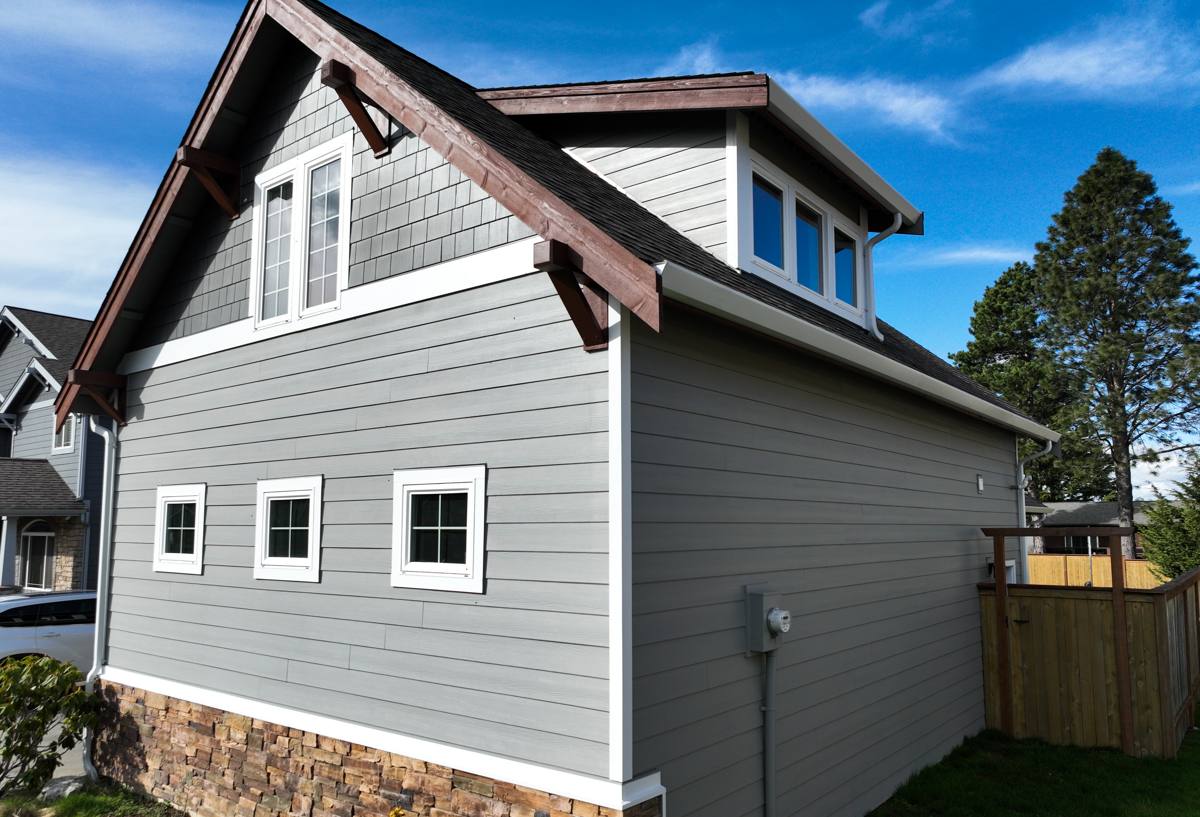
| HardieShingle | Accent gables, dormers | Cedar-shake look without the moisture maintenance |
| HardiePanel | Vertical board-and-batten accents | Popular on modern-style remodels and additions |
| HardieTrim | Corner boards, fascia, window trim | Matches siding durability at high-exposure edges |
How We Approach a Sunnyland Siding Project
Assessment Before Anything Else
We start by looking at the whole exterior system, not just the siding surface. That means checking for moisture intrusion at window and door flashing, evaluating what's happening behind the current siding where accessible, and looking at how water moves off the roof and away from the walls. In a neighborhood with this much moisture exposure, a siding replacement that ignores drainage and flashing details will fail again regardless of the material used.
Installation Details That Matter Here
- Correct fastener placement and spacing per James Hardie's published installation specifications
- Proper rain-screen or drainage plane behind the siding where the wall assembly calls for it
- Flashing integration at every window, door, and roof-to-wall transition
- Factory-cut and painted edges wherever possible to reduce field-cut exposure of raw material
- Correct caulking and sealant selection rated for sustained wet-climate performance
Why the Installer Matters as Much as the Material
Fiber cement is a forgiving material in terms of longevity, but it's not forgiving of poor installation. Manufacturer warranties on Hardie products are tied to installation per their specifications — gaps in fastening, missing flashing, or improper clearances can void coverage and shorten real-world performance regardless of what the material is rated for. This is a big part of why we treat installation training and detail work as seriously as material selection.
Beyond Siding: Roofing, Windows, and Decks in Sunnyland
We handle more than siding, and in this climate the systems are connected. A roof shedding water improperly can soak siding from above; failing window flashing can rot wall framing behind new siding; a deck built without the right ledger flashing and gap spacing will trap moisture against the house. When we look at a Sunnyland home, we're looking at how these systems work together, not treating each as a separate sales conversation.
Roofing Considerations
Moss growth on roofing is one of the most common issues we see locally, along with granule loss on aging asphalt shingles from years of moisture cycling. Roof condition also directly affects how long new siding will perform, since poor drainage at the roofline is a common cause of premature siding failure at the top courses.
Windows and Decks
Older single-pane or early dual-pane windows in Sunnyland's older housing stock often show fogging or seal failure, and replacing them alongside a siding project lets us integrate flashing correctly in one continuous effort rather than patching around old windows later. Decks in this climate need materials and fastening details that account for standing water and freeze-thaw cycling, even though Bellingham's freezes are typically mild.
What to Budget For
| Factor | How It Affects Cost |
|---|---|
| Home size and stories | More square footage and multi-story access increase labor and material |
| Existing wall condition | Rot or moisture damage found during tear-off adds repair scope |
| Trim and detail complexity | Multiple gables, dormers, and accents add labor time |
| Product line selection | Lap siding vs. shingle accents vs. panel systems price differently |
| Color and finish | ColorPlus factory finishes vs. field-painted options affect long-term cost |
We don't quote from a distance — every estimate is based on an actual look at your home's condition, size, and detail work, because the variables above shift the number significantly from house to house.
A Local Crew That Knows This Neighborhood
Working regularly in Bellingham and across Whatcom County means we're familiar with the specific conditions Sunnyland homes face — the salt exposure off the bay, the shaded lots that hold moisture longer, and the drainage patterns common to the area's older housing stock. That local familiarity shapes real decisions on a project: where extra flashing attention is warranted, which sides of a home take the worst weather exposure, and how to sequence a project around our wet season so materials aren't compromised before installation.
If you're weighing a siding, roofing, window, or deck project on your Sunnyland home, we're glad to take a look and walk you through what we see — no pressure, no obligation. Reach out for a free estimate and we'll give you a straight assessment of your home's condition and options.