 Bellingham
 Deck Repair Built for Silver Beach's Climate
Silver Beach is one of Bellingham's older, established residential neighborhoods, with a mix of mature tree cover, mixed-age housing, and decks that have seen a lot of Whatcom County weather over the years. Wood and composite decking here don't fail because of one bad storm — they fail slowly, from repeated cycles of wet and dry, shade and sun, freeze and thaw, until a homeowner notices a soft board, a wobbly rail, or a green film that won't scrub off.
Bellingham sits in a marine climate zone, and that reach extends well past the waterfront. Salt-tinged air off Bellingham Bay, long stretches of driving rain from October through May, and a moss season that can run most of the year under tree cover don't stop at the shoreline — they show up in inland and near-lake neighborhoods like Silver Beach too, just in slightly different forms. The result is decks that hold moisture longer than they should, hardware that corrodes faster than manufacturers' warranties assume, and surfaces that grow slick well before most homeowners think to check.
Deck repair in this environment isn't just about swapping a bad board. It's about understanding why that board failed in the first place, and fixing the actual cause so the same problem doesn't reappear in two years.
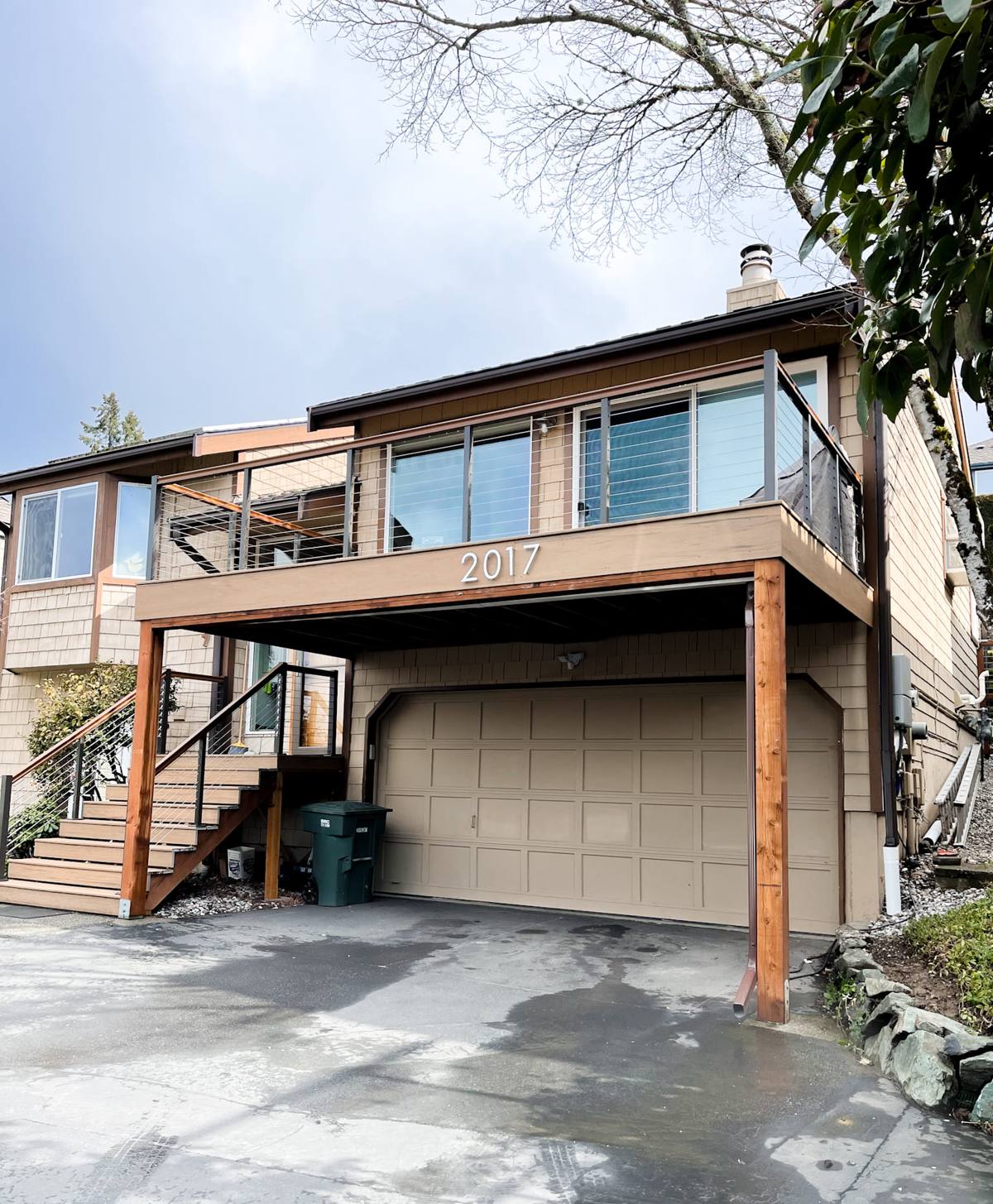
The Repair Issues We See Most Often in This Neighborhood
Ledger Board and Framing Rot
The ledger board — where the deck attaches to the house — is the single most safety-critical part of most decks, and it's also the part most exposed to trapped moisture. Older flashing details, or ledgers installed without any flashing at all, let water run behind the board and sit against the house rim joist. Over years, that hidden rot can weaken the connection that holds the entire deck to the structure. This is never a cosmetic fix; it has to be opened up, inspected, and rebuilt to current standards.
Corroded Fasteners and Hardware
Nails, screws, and joist hangers that aren't rated for damp, marine-influenced air will corrode well ahead of schedule. Corroded fasteners lose their holding strength quietly — the board can look fine while the connection underneath it is failing. We see this most in decks built or last repaired more than 10-15 years ago, before corrosion-resistant hardware was standard practice.
Moss, Algae, and Slippery Surfaces
Shaded decking, north-facing decks, and boards under overhangs hold moisture longer and grow moss and algae readily in this climate. Beyond the appearance issue, a mossy deck surface is a genuine slip hazard, and moss holds water against the wood grain, accelerating rot underneath the growth. Pressure washing alone doesn't solve this — it treats the symptom without addressing drainage, airflow, or board spacing that's letting moisture linger in the first place.
Loose or Failing Railings and Guardrails
Railing posts that were under-attached from the start, or that have loosened as the wood around their fasteners softened, are one of the more dangerous deferred-maintenance items on a deck. A rail that feels solid when you lean on it lightly can still fail under real load. We treat guardrail integrity as a priority repair, not something to bundle in "eventually."
Post Base and Footing Deterioration
Wood posts that sit in or near standing water, or footings that have settled or heaved with freeze-thaw cycles, undermine the whole structure from the ground up. This is often the least visible problem and the most expensive to ignore, since it usually isn't discovered until someone notices the deck has developed a slight lean or bounce.
Repair or Replace? How We Help You Decide
Not every damaged deck needs to come down. The right call depends on how much of the structure is affected, how old the deck is, and what it would cost to keep patching versus rebuilding sections properly. We walk every homeowner through this honestly rather than defaulting to the bigger job.
| Factor | Leans Toward Repair | Leans Toward Replacement |
|---|---|---|
| Extent of rot/damage | Isolated to a few boards, one rail section, or one post | Widespread across framing, multiple posts, or the ledger connection |
| Age of deck | Under 15 years, built to a reasonable standard | 20+ years old, or built with materials no longer up to code |
| Structural framing condition | Joists and beams test sound; surface issues only | Joists, beams, or ledger show soft spots or active rot |
| Code compliance | Guardrails, stair rise/run, and attachment already meet current standards | Railing height, baluster spacing, or ledger flashing doesn't meet current code |
| Cost over time | Repair cost is a small fraction of rebuild cost | Repeated repairs are starting to add up to near-rebuild pricing |
When a deck is close to the line, we'll usually recommend the more conservative option and explain our reasoning — including what we'd expect to find once we open things up, and what happens if that turns out worse than expected.
What a Correct Deck Repair Actually Involves
A repair that just replaces the visibly bad boards and calls it done tends to resurface the same problem within a season or two. A repair done right addresses the moisture path, not just the symptom.
- Identify and correct the water source — poor flashing, missing kickout flashing, inadequate slope, or gaps that funnel rain into the structure
- Probe surrounding framing for hidden rot, not just the obviously damaged board
- Rebuild ledger connections with proper flashing and code-compliant fasteners where that connection is compromised
- Replace corroded hardware with fasteners and hangers rated for exterior, damp-climate use
- Restore guardrail and baluster attachment to current safety standards, not just to "how it was"
- Address drainage and airflow under and around the deck so moisture doesn't pool against new material
Depending on the scope, structural repairs to framing, footings, or attachment points can require a permit from the City of Bellingham or Whatcom County, even when the finished surface work doesn't. We handle that determination and the paperwork rather than leaving it for the homeowner to sort out.
Our Process for Silver Beach Deck Repairs
- On-site assessment. We inspect the full structure — surface, framing, ledger, posts, and footings — not just the area you called about, since deck problems rarely stay isolated.
- Honest scope and pricing. You get a clear written explanation of what's actually wrong, what needs to be repaired versus what can wait, and a price before any work starts.
- Permit handling, if needed. If the scope touches structural elements, we take care of the permit process so the repair is documented and code-compliant.
- Repair, not patchwork. We fix the moisture source and the damage together, using fasteners and materials suited to this climate.
- Final walkthrough. We show you exactly what was done and what to watch for going forward, including simple maintenance that extends the life of the repair.
Wood, Composite, and What We Recommend
Repair material choice matters as much as the repair itself. For wood decks, we typically match or upgrade to a rot-resistant species and treat cut ends properly at every connection point — a step that's easy to skip and is usually where the next rot problem starts. For composite decking, repair is more about correct fastening and proper hidden-fastener spacing than about the board material itself, since most composite failures we see trace back to installation details rather than the product.
We're selective about products with a track record of moisture-related callbacks in wet marine climates like ours — not because a product is inherently bad everywhere, but because our standard is picking materials and details that hold up specifically to Whatcom County's rain and humidity pattern, not just to a manufacturer's general-climate spec sheet.
Keeping a Repaired Deck From Needing Repair Again
Good repair work extends a deck's life significantly, but this climate doesn't give any deck a free pass. A short seasonal routine goes a long way:
- Clear leaves and debris from between boards before fall rains set in — trapped debris is where moss gets its start
- Rinse shaded or north-facing sections periodically through the wet season to slow moss and algae growth
- Check railings and stair connections for any looseness once or twice a year
- Keep nearby vegetation trimmed back so the deck surface gets some airflow and sun exposure
- Reseal or refinish wood decking on the schedule the product calls for — skipping this is the single biggest driver of repeat repairs we see
Why a Crew That Already Works Silver Beach Matters
Deck problems in this neighborhood tend to follow patterns — the same rot points, the same drainage issues, the same aging hardware — because homes here share a lot of the same age, construction era, and exposure to Bellingham's marine weather. A crew that's already worked on decks in Silver Beach and the surrounding area recognizes these patterns quickly instead of treating every job as a first guess. That familiarity translates into faster, more accurate assessments, fewer surprises mid-repair, and repair decisions grounded in what actually holds up here, not just what a general spec sheet says should work.
If your deck has soft spots, a wobbly rail, persistent moss, or you're just not sure whether it needs a repair or a rebuild, we're happy to take a look. Reach out for a free, no-pressure estimate — we'll tell you honestly what we find and what we'd recommend.