 Bellingham
 Exterior Work Built for Fairhaven's Marine Climate
Fairhaven sits close enough to Bellingham Bay that salt-laden air, wind-driven rain, and long stretches of shade and moisture are simply part of living there. Homes in this part of Whatcom County take on a different kind of weathering than a house twenty minutes inland — the exterior gets tested by salt air corrosion on metal fasteners and flashing, moss and algae growth on anything that stays damp too long, and rain that doesn't just fall straight down but gets pushed sideways into walls, trim, and window frames. None of that is unusual for this stretch of the Pacific Northwest coastline, but it does mean the materials and installation details matter more here than they would in a drier climate.
We work across Bellingham and the surrounding county, and Fairhaven's homes — from older character homes near the historic district to newer builds up the hillside — tend to share the same exposure profile: exterior walls that face prevailing weather off the water, deck and porch structures that see near-constant damp shade for parts of the year, and roofs that accumulate moss faster than homes further from the marine layer. Understanding that pattern is the starting point for doing exterior work that actually holds up here, not just work that looks good on installation day.
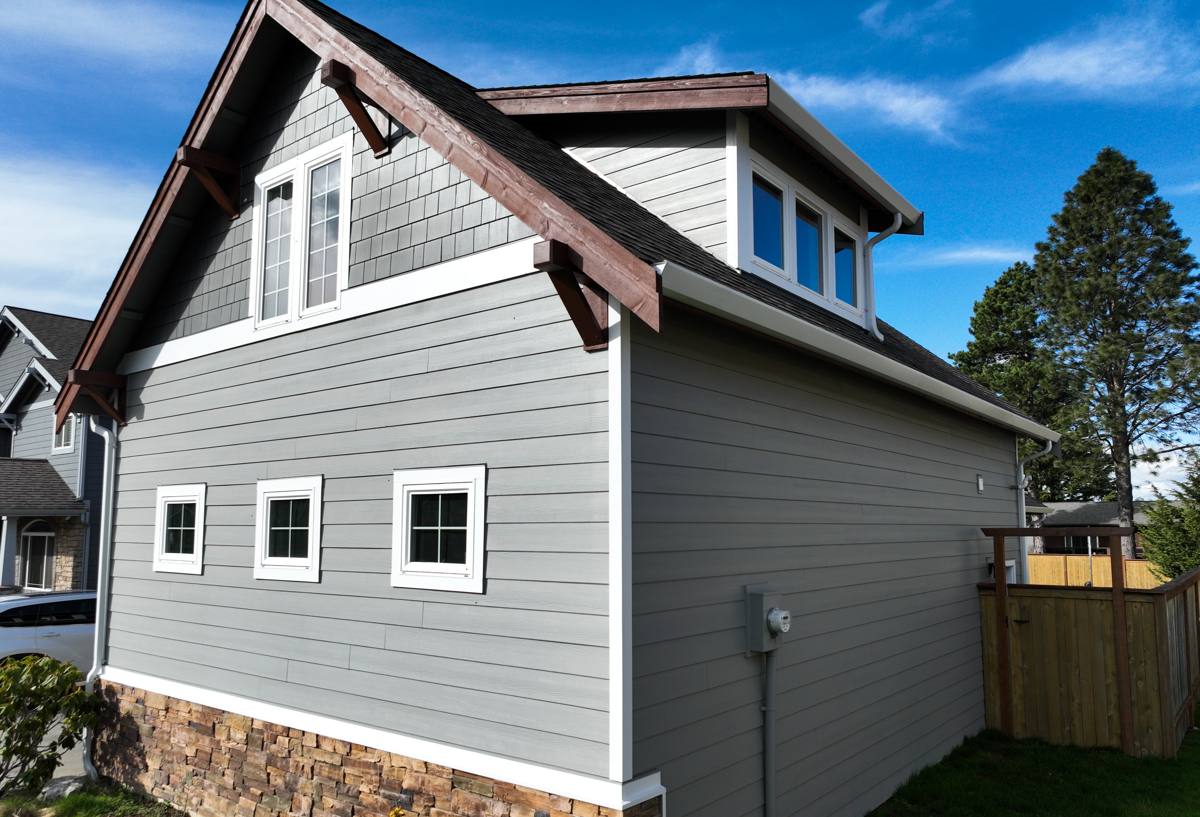
What Salt Air and Driving Rain Do to a House Over Time
Moisture Intrusion Is the Real Enemy
Wind-driven rain doesn't behave like ordinary rainfall. It gets forced under lap siding, around poorly sealed window and door trim, and into any gap in the building envelope that wouldn't normally see water. Over years, that kind of intrusion is what causes rot in wall sheathing and framing — not a single storm, but repeated small amounts of moisture that never fully dry out between events. A house near Fairhaven's exposed slopes or close to the water gets more of this than a home tucked into a sheltered inland lot, which is why flashing details, house wrap integration, and proper caulking matter more here than in milder microclimates.
Salt Air Accelerates Corrosion
Metal components — nails, screws, flashing, gutter hardware — corrode faster when they're regularly exposed to salt-laden air. That's a straightforward materials-science reality, not a scare tactic. It's part of why fastener selection and flashing material matter as much as the siding or roofing product itself. Corroded fasteners loosen over time, and loose fasteners are how water starts finding its way behind the exterior cladding.
Moss and Algae Thrive in Shade and Damp
Whatcom County's long wet season, combined with tree cover common in Fairhaven's older neighborhoods, creates ideal conditions for moss and algae on roofs, north-facing siding, and deck surfaces. Beyond the appearance issue, moss holds moisture against the surface it's growing on, which shortens the useful life of roofing materials and can trap dampness against siding and trim longer than it would otherwise sit.
Siding: Why We Install Only James Hardie Fiber Cement
We install James Hardie fiber cement siding exclusively. We don't install vinyl, LP SmartSide, Cemplank, Allura, primed spruce, or cedar, and that's a deliberate standard, not a lack of options. In a climate like this one, the trade-offs of those other materials show up faster and more visibly than they would somewhere drier.
- Vinyl siding can warp or become brittle over decades of temperature swings and UV exposure, and its seams give wind-driven rain more opportunities to find a way behind the cladding.
- Wood-based products (cedar, primed spruce) require ongoing maintenance — repainting, sealing, and vigilance against rot — that's harder to keep up with in a climate that stays damp for long stretches of the year.
- LP SmartSide, Cemplank, and Allura are engineered wood or fiber cement competitors with their own installation tolerances and warranty structures; we've simply standardized on one product system we trust completely rather than juggling several.
James Hardie fiber cement is non-combustible, holds its factory-applied ColorPlus finish far longer than field-applied paint, and is manufactured in climate-specific HZ formulations engineered for exactly the moisture and humidity conditions the Pacific Northwest sees. It doesn't rot, it resists moisture intrusion at the material level, and it carries a strong transferable warranty that reflects the manufacturer's confidence in the product when installed to spec. For a Fairhaven home facing salt air and driving rain, that combination is what actually holds up.
Fiber Cement vs. Other Siding Materials in a Coastal Climate
| Factor | James Hardie Fiber Cement | Vinyl | Wood (Cedar/Primed Spruce) |
|---|---|---|---|
| Moisture resistance | Engineered for climate zone, doesn't rot | Water-resistant but seams can leak | Vulnerable to rot without upkeep |
| Salt air durability | Non-organic, doesn't corrode | Can become brittle over time | Needs frequent resealing near coast |
| Finish longevity | Factory ColorPlus finish, long-lasting | Color can fade with UV exposure | Repainting/staining every few years |
| Fire resistance | Non-combustible | Combustible | Combustible |
| Maintenance burden | Low | Low, but limited repair options | High — ongoing sealing/painting |
Roofing: Managing Moss and Moisture in a Long Wet Season
Roofs in Fairhaven earn their keep. Between the extended damp season and tree cover in many of the neighborhood's older streets, moss growth is one of the most common issues we see on inspections. Left unaddressed, moss holds water against shingles and underlayment, which shortens roof life and increases the odds of water finding its way into the attic or wall cavities below the roofline. Proper roofing work here means getting ventilation, underlayment, and flashing details right — not just laying down shingles — because those details are what actually determine how well a roof sheds moisture over its lifespan. We also pay close attention to valleys, chimney flashing, and any roof-to-wall transitions, since those are the spots where driving rain and accumulated debris cause the most long-term damage.
Windows: Sealing Out Wind-Driven Rain
Windows are one of the most common places water intrudes on a coastal-exposed home. Old or poorly installed window units develop gaps around the frame that wind-driven rain will exploit over time, especially on walls that face the water or prevailing weather. Replacing aging windows with properly flashed, well-sealed units improves comfort and energy performance, but just as important, it closes off a common entry point for the kind of slow moisture intrusion that causes hidden rot in wall framing. Window replacement is also a natural pairing with a siding project, since both involve opening up the same wall assembly and getting the flashing details right the first time.
Decks: Built for Shade, Damp, and Constant Exposure
Decks in Fairhaven's shadier, tree-covered lots deal with near-constant dampness for parts of the year, which accelerates wear on framing, ledger boards, and decking material alike. Proper ledger board flashing — where the deck attaches to the house — is one of the most critical and most commonly overlooked details in deck construction, since a poorly flashed ledger is a direct path for water into the home's structure. Composite and properly treated decking materials handle sustained damp shade better than untreated wood, and correct spacing and drainage beneath the deck surface make a real difference in how long the structure lasts before framing issues show up.
Why a Local Crew Matters Here
Exterior work in Fairhaven isn't generic Pacific Northwest work — it's shaped by this specific combination of marine exposure, tree cover, and the housing stock that's actually built here, from older homes near the historic core to newer construction up the hillside. A crew that works across Bellingham and Whatcom County regularly sees how these homes actually perform over years, not just how a job looks on completion day. That local pattern recognition shows up in the small decisions: where to add extra flashing, which details need extra attention on a water-facing wall, and how to size a project so it matches what a specific home actually needs rather than applying a one-size-fits-all approach.
What to Ask Before Hiring for Exterior Work in a Coastal Climate
- Does the contractor install fiber cement siding to the manufacturer's documented installation specifications, including clearances and fastener requirements?
- Are corrosion-resistant fasteners and flashing materials used, given the salt air exposure common to this area?
- Does the roofing scope address ventilation and underlayment, not just surface shingles?
- Is window replacement paired with proper flashing integration into the existing wall assembly?
- Does deck work include proper ledger flashing and drainage detailing, not just surface decking replacement?
- Is the contractor familiar with this specific neighborhood's housing stock and exposure conditions?
Get a Straightforward, No-Pressure Estimate
If you're weighing siding, roofing, window, or deck work on a Fairhaven property, we're happy to take a look and give you a straightforward assessment of what your home actually needs — no pressure, no inflated scope. Use the form below to request a free estimate and we'll go from there.