 Bellingham
 What Board and Batten Actually Is
Board and batten is one of the oldest siding patterns in American building — wide vertical boards with narrow strips (battens) covering the seams between them. It started as a practical way to keep weather out of gaps in barn and farmhouse walls, and it's stuck around because the look works: strong vertical lines, a clean shadow pattern, and a style that reads as both classic farmhouse and modern craftsman depending on how it's detailed.
On a lot of Bellingham streets you'll see board and batten used as a full house treatment, as an accent on a gable end or dormer, or mixed with horizontal lap siding to break up a facade. It's a design choice first — but the material behind it determines whether that clean vertical line still looks sharp in fifteen years or whether the seams have started telegraphing moisture problems.
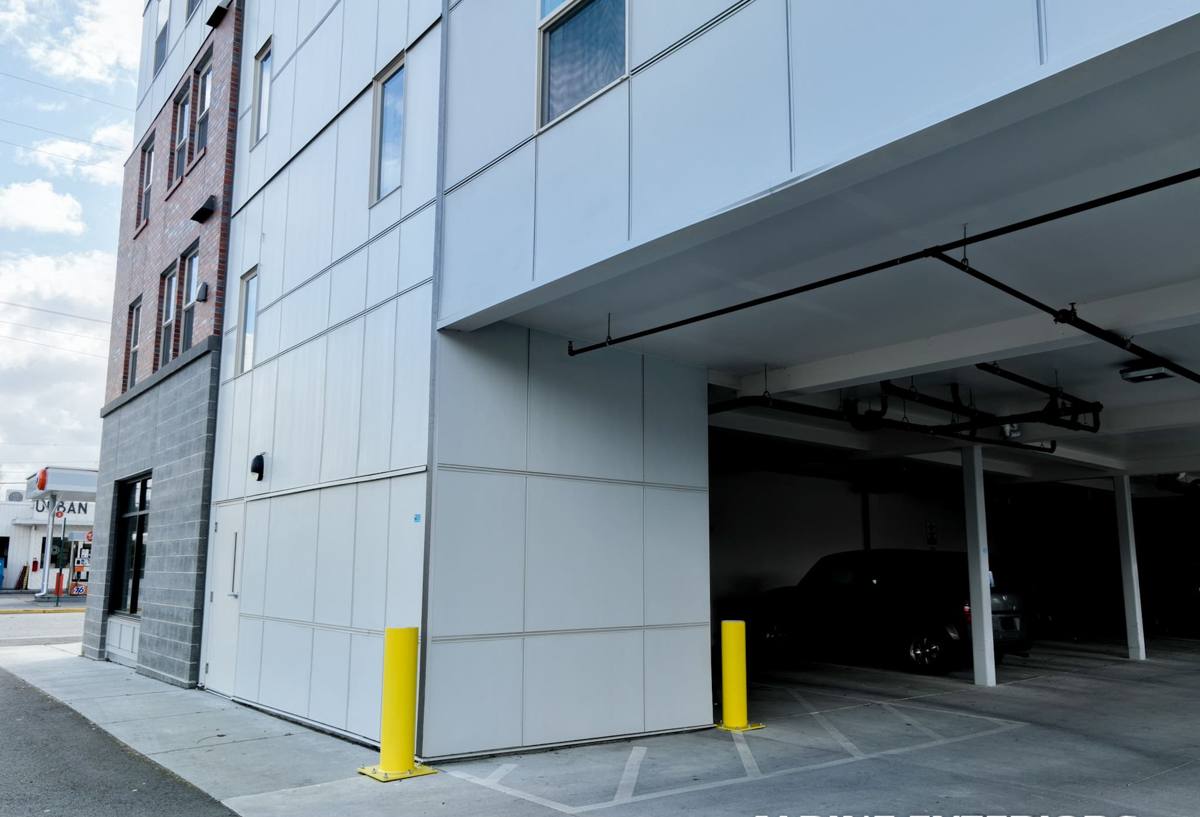
How We Build It With Hardie
We install board and batten using James Hardie's engineered fiber cement system, not site-cut lumber or panel product. There are two common approaches, and which one fits depends on the look you want:
- HardiePanel vertical siding with HardieTrim battens — a solid fiber cement panel as the "board," with trim boards fastened over the seams. This is the traditional look and the most common request.
- Artisan V-Groove or Reveal panel systems — a more refined, tighter-reveal version for a contemporary farmhouse or modern look, with less visible batten profile.
Both are manufactured, not hand-cut on site, which matters more than it sounds like. The panels come dimensionally consistent, primed or factory-finished, and engineered for the Pacific Northwest climate zone (HZ5), which means the product itself is formulated to handle sustained moisture exposure rather than just tolerate it.
Why the Seam Detail Matters
Board and batten lives or dies at the seams. Every vertical joint where a batten covers a board edge is a place water can find its way behind the cladding if it's not built correctly. This is the single biggest reason we're particular about what material goes into this style — more on that below.
Style Considerations Before You Commit
Board and batten is a strong visual statement, and it doesn't suit every house. A few things worth thinking through before you settle on it:
Full House vs. Accent Application
Full board and batten works well on farmhouse, craftsman, and modern designs with simple massing. On a house with a lot of roof lines, dormers, and wall breaks, it can look busy. A common compromise we see requested a lot is board and batten on gable ends and dormers with horizontal lap siding on the main body — it gives you the texture contrast without covering the whole house in vertical lines.
Batten Spacing and Reveal
Spacing changes the whole character of the wall. Wider board spacing (say 16"–24" on center) reads more rustic and barn-like. Tighter spacing (8"–12") reads more refined and modern. There's no single correct answer — it should match the rest of the house's proportions, especially window and door trim width.
| Batten Spacing | Visual Effect | Best Fit |
|---|---|---|
| 8"–12" on center | Tight, formal, modern | Contemporary farmhouse, craftsman |
| 16" on center | Balanced, traditional | Classic farmhouse, cottage |
| 20"–24" on center | Bold, rustic | Barn-style, ranch, large gables |
Color and Finish
Board and batten's strength is its shadow lines, so color choice matters more here than on flat lap siding. Hardie's ColorPlus factory finish is baked on and warrantied against fade and peel separately from the substrate warranty — which matters on a style where you're staring at long, unbroken vertical planes that show fading unevenly if the finish isn't consistent.
What we see requested most in this area: warm whites and off-whites for classic farmhouse looks, charcoal and deep navy for a more modern statement, and muted greens or grays that sit well against the evergreen backdrop common around Whatcom County. Dark colors on south- and west-facing walls do run hotter and can accelerate wear on lesser products — it's a smaller concern with Hardie's fiber cement base, but still worth factoring into where you place your boldest color choice.
Why We Don't Build This Style Out of Everything
Board and batten is exactly the style where material choice shows up fastest, because of how much seam and edge exposure the pattern creates compared to overlapping lap siding. This is our honest reasoning for standardizing on Hardie fiber cement for this application specifically:
- Vinyl board and batten profiles exist, but vinyl expands and contracts significantly with temperature swings — over long vertical runs that movement is more visible, and vinyl can't be painted to match a custom palette without voiding warranty coverage on most product lines.
- Primed wood or spruce board and batten looks great on day one but is exactly the assembly most vulnerable to moisture wicking up through end grain at batten seams — and Bellingham's driving rain and long moss season give that a lot of opportunities to find a way in.
- LP SmartSide and other engineered wood products hold up better than raw lumber but still rely on field-applied caulking and paint at every seam to stay sealed, which means the seams are only as good as the maintenance schedule behind them.
Hardie fiber cement doesn't rot, doesn't support moss and algae growth the way wood substrates can, and is non-combustible — which matters on a style with this much vertical seam and trim detail. That's the trade-off we made: fewer product options, more confidence in what's behind the wall.
Installation Details That Actually Matter
Board and batten done wrong looks identical to board and batten done right — for the first year or two. The difference shows up later, at the seams. Correct installation includes:
- A proper drainage plane and rainscreen gap behind the panel, so any moisture that does get past the surface has somewhere to go besides your sheathing.
- Battens fastened independently of the board beneath them where the system calls for it, so movement doesn't telegraph as cracking at the seam.
- Manufacturer-specified fastener spacing and type — under-fastening is one of the most common corner-cutting mistakes on vertical siding.
- Correct flashing at every horizontal transition (window heads, water tables, roof lines) since vertical siding channels water downward along the whole wall face.
- Factory-cut and factory-primed panel edges kept intact — field-cutting exposed edges without resealing them is a common shortcut that undercuts the product's own moisture resistance.
This is installation-sensitive work. A crew that treats board and batten like lap siding with a different profile will miss the details that keep this style performing over decades rather than years.
What It Costs Relative to Other Siding Styles
Board and batten generally costs more than standard horizontal lap siding in the same material, mainly due to labor — more individual pieces, more precise layout, and batten installation as a separate step.
| Factor | Impact on Cost |
|---|---|
| Full-house vs. accent application | Full coverage costs more but avoids transition trim between styles |
| Batten spacing | Tighter spacing = more battens = more labor |
| Wall complexity (gables, dormers) | More cuts and flashing details increase labor time |
| Color | Factory ColorPlus finish avoids on-site painting costs and repaint cycles |
| Accent-only application | Lower material cost, but adds a transition detail to plan for |
Living With It: Maintenance in This Climate
Whatcom County's combination of salt air off the Sound, driving rain much of the year, and a long moss season is a real test for any exterior cladding, and board and batten's vertical seams give it more edges to prove itself on than a flat lap wall. Fiber cement handles this well because it doesn't feed moss and algae growth the way bare or lightly primed wood does, and it holds its shape and finish without warping or splitting at the seams. That doesn't mean zero maintenance — you'll still want to keep gutters clear so runoff doesn't sheet down the wall face, and an occasional gentle wash keeps moss from getting a foothold in shaded, north-facing sections. But you're not repainting or recaulking every few years to keep the seams sealed, which is the maintenance cycle wood and some engineered wood products carry.
Quick Checklist Before You Decide
- Decide full-house vs. accent application based on your home's roofline complexity
- Pick batten spacing that matches your window and trim proportions, not just personal taste
- Choose a factory-finished color rather than planning for field paint
- Ask any contractor bidding the job how they handle rainscreen/drainage plane behind vertical siding
- Confirm fastener spacing and flashing details are called out in the written scope, not left to the crew's judgment
- Factor in Bellingham's rain and moss exposure when choosing wall orientation for your boldest color
Board and batten is a striking style when it's built right, and a maintenance headache when it's not — the material and the installation details behind those clean vertical lines matter more than they do on almost any other siding pattern. If you're weighing board and batten for a full home or as an accent, we're happy to walk your property, talk through spacing and color options, and give you a straightforward, no-pressure estimate.