 Bellingham
 Siding Installation Built for Silver Beach's Climate
Silver Beach is one of Bellingham's older residential neighborhoods, and homes here face a specific mix of weather that's harder on siding than people expect. Whatcom County sits in a marine climate zone — salt-tinged air moving in off Bellingham Bay, driving rain that comes in sideways during fall and winter storms, and a moss season that can stretch from October well into spring on shaded lots and tree-lined streets. None of that is unusual for this part of Washington. But it means siding installed without the right materials, flashing details, and drainage plane gets tested constantly, not occasionally.
This page covers what a proper siding installation looks like specifically for Silver Beach conditions — what the climate does to different materials over time, what correct installation actually involves, and why we install exclusively James Hardie fiber cement siding rather than the vinyl, LP SmartSide, or cedar products still common on older homes in the neighborhood.
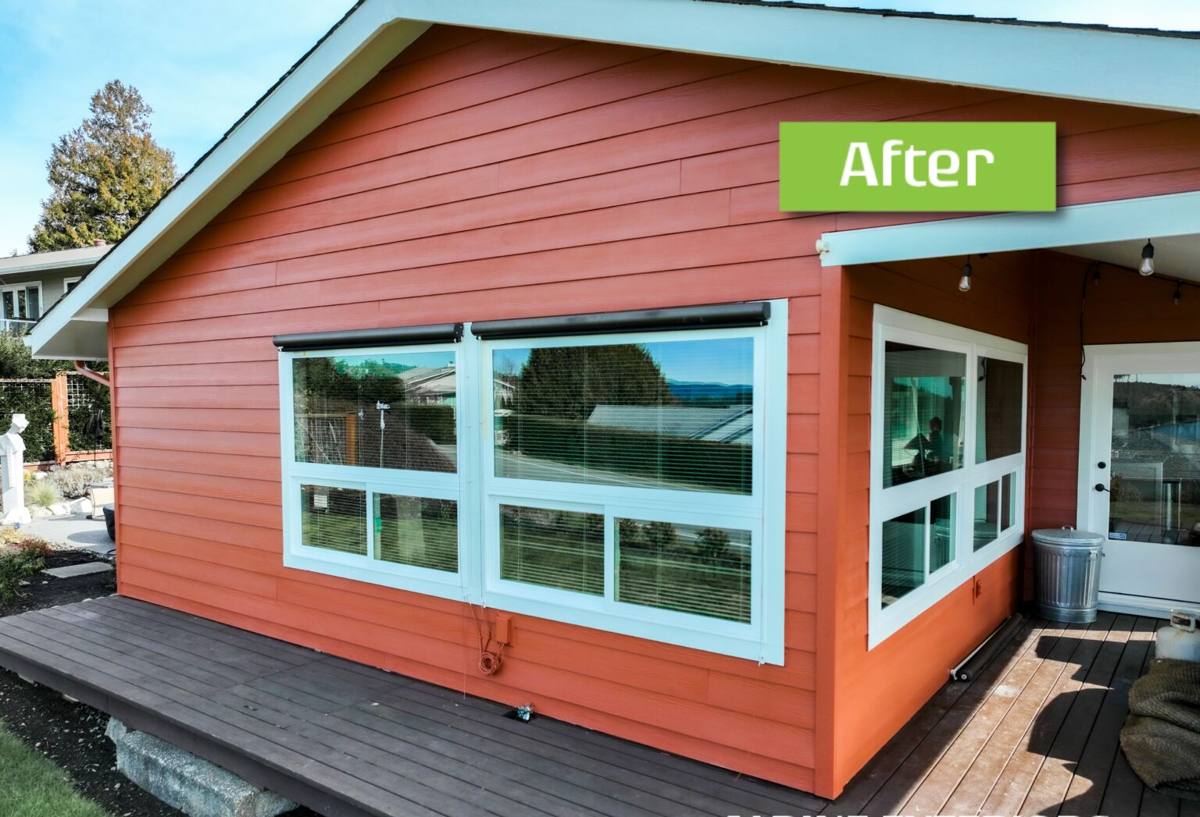
What Driving Rain, Salt Air, and Moss Season Do to Siding
Every siding material handles moisture differently, and in a neighborhood like Silver Beach, moisture is the constant variable. A few things happen repeatedly to homes here that don't show up as often in drier inland climates:
Driving Rain and Wind-Driven Moisture
Wind off the bay pushes rain horizontally against exposed walls, especially on the west and south sides of a house. Siding systems rely on lapped joints, proper flashing, and a drainage plane behind the cladding to shed that water before it reaches the sheathing. When those details are done poorly — or skipped to save labor — water finds its way behind the siding and stays there, since it has nowhere to drain or dry out.
Salt Air and Coastal Corrosion
Salt in the air accelerates corrosion on exposed metal — nails, fasteners, trim flashing, and hardware. Over years, corroding fasteners can loosen siding panels or stain the face of the material. It also degrades certain paint and coating systems faster than an inland climate would, which is part of why factory-applied, baked-on finishes hold up better here than field-applied paint.
Moss, Algae, and Prolonged Dampness
Shaded lots, mature trees, and long stretches of overcast, damp weather give moss and algae plenty of time to establish on north-facing walls and anywhere airflow is limited. Moss holds moisture against the siding surface far longer than open sun and wind would allow, and on materials that absorb water — untreated wood, some engineered wood products, and even certain fiber cement products without a factory finish — that sustained dampness is where rot, swelling, and coating failure start.
What Correct Siding Installation Actually Involves
Siding is a system, not just a surface material. A correct installation in a climate like this one includes several layers most homeowners never see once the job is finished:
- Water-resistive barrier: A continuous, properly lapped weather barrier behind the siding that sheds any water that gets past the cladding.
- Rainscreen or drainage gap: A small air gap behind the siding lets any incidental moisture drain and dry out instead of sitting against the wall assembly.
- Flashing at every penetration: Windows, doors, vents, hose bibs, and roof-to-wall transitions all need properly integrated flashing — these are the spots where most siding failures actually start.
- Correct fastening: Fastener type, spacing, and depth matter — over-driven or under-driven nails compromise both the seal and the material around them.
- Manufacturer-specified clearances: Gaps at trim, corners, and grade level that allow the material to perform as engineered and keep standing water away from the bottom edge.
Skipping or rushing any one of these doesn't usually show up right away. It shows up in three to seven years, as staining, soft spots, or paint failure at the seams and penetrations — which is often when homeowners first call a contractor to ask what went wrong.
Why We Install Only James Hardie Fiber Cement
We don't install vinyl, LP SmartSide, cedar, or primed wood siding. That's a deliberate standard, not a sales preference, and it's worth explaining honestly rather than just asserting it.
Vinyl siding is inexpensive and low-maintenance in mild conditions, but it's a thin material that can warp in temperature swings and doesn't hold up structurally the way fiber cement does under wind-driven rain. Engineered wood products like LP SmartSide perform reasonably well when installation and maintenance are perfect, but they're wood-based, and wood-based siding depends on an intact factory coating and diligent caulking to keep moisture out over the long run — a demanding standard to maintain in a neighborhood with this much rain and shade. Cedar and primed wood siding are attractive but require the most ongoing maintenance of any option — regular repainting, caulking, and moisture monitoring — and are the most vulnerable to the rot and moss issues described above.
James Hardie fiber cement is engineered specifically to resist what this climate does to a house:
- Non-combustible material that doesn't rot, warp, or swell from moisture the way wood-based products can.
- ColorPlus factory-applied finish — baked on in a controlled environment rather than field-painted, which holds color and resists the fading and peeling that salt air and UV exposure accelerate.
- HZ5 product line, engineered for the freeze-thaw and moisture demands of climates like Whatcom County's.
- A strong, transferable warranty when installed to Hardie's specifications — which is precisely why installation detail matters as much as the product choice itself.
A great product installed poorly still fails. That's why our process focuses as much on the flashing, drainage, and fastening details as it does on the siding itself.
Our Installation Process for Silver Beach Homes
- On-site assessment: We walk the exterior, check the current siding and sheathing condition, and note problem areas — shaded walls with moss, west- and south-facing exposure, drainage around the foundation, and existing trim or flashing condition.
- Tear-off and sheathing check: Old siding comes off and we inspect the sheathing underneath for hidden rot or moisture damage before anything new goes up — this step catches problems that a surface-level look never would.
- Weather barrier and drainage plane installation: A continuous water-resistive barrier goes on first, with a drainage gap behind the siding so any moisture that gets past the cladding can drain and dry.
- Flashing at every opening: Windows, doors, and other penetrations get properly integrated flashing before trim and siding go on around them.
- Hardie panel or plank installation: Installed to manufacturer specification for fastening, spacing, and clearance — the details that determine both performance and warranty coverage.
- Final trim, caulking, and walkthrough: We finish the trim details, seal where the manufacturer calls for it, and walk the finished job with the homeowner.
Comparing Siding Options for a Marine Climate
| Material | Moisture Resistance | Maintenance Level | Typical Longevity |
|---|---|---|---|
| James Hardie fiber cement | High — non-combustible, engineered for wet climates | Low — factory finish, periodic cleaning | Decades with correct installation |
| Vinyl siding | Moderate — can allow moisture behind panels in wind-driven rain | Low, but prone to warping and cracking over time | Shorter functional lifespan in this climate |
| LP SmartSide (engineered wood) | Moderate — depends on intact coating and caulking | Moderate — coating and joints need monitoring | Shorter than fiber cement if maintenance lapses |
| Cedar / primed wood | Lower — absorbs moisture, vulnerable to rot and moss | High — repainting and caulking on a regular cycle | Shortest without diligent upkeep |
This isn't a claim that other materials can't be installed correctly and maintained well — it's why we've chosen not to install them ourselves. In a climate that gives siding this little downtime between rain events, we'd rather stand behind one system we trust than offer several and hope maintenance keeps pace.
Cost Factors for Silver Beach Siding Projects
Every home is different, but a few factors consistently move the price of a siding installation in this neighborhood:
| Factor | Why It Matters |
|---|---|
| Home size and wall complexity | More corners, gables, and trim detail mean more labor and material cuts |
| Sheathing condition | Hidden rot found during tear-off requires repair before new siding goes on |
| Number of window and door penetrations | Each one needs individual flashing work |
| Siding profile and finish selection | Panel vs. lap siding, and standard vs. premium ColorPlus finishes, affect material cost |
| Site access | Sloped lots, tree cover, or tight setbacks common in older Bellingham neighborhoods can affect staging and labor time |
We won't quote a number without seeing the home, but these are the variables that separate one project's cost from another's, and we'll walk through them plainly during your estimate.
Why Hiring a Crew That Works Silver Beach Already Matters
A siding contractor who regularly works older Bellingham neighborhoods already knows what to expect from homes of this era and this exposure — where moss tends to build up, which wall orientations take the worst of the driving rain, and where sheathing damage is most likely to be hiding under old siding before tear-off even starts. That familiarity shows up in fewer surprises mid-project and a more accurate estimate up front, rather than change orders once the old siding comes off.
It also matters for accountability. A crew installing one product system, to one standard, on homes throughout the same climate zone has a direct incentive to get the flashing and drainage details right every time — because that's the same standard their own warranty depends on.
After Installation: What to Keep an Eye On
James Hardie siding is low-maintenance, not zero-maintenance. A short annual checklist keeps it performing the way it's designed to:
- Rinse siding annually to clear dust, pollen, and early moss or algae growth before it takes hold.
- Keep gutters clear so overflow doesn't run down the wall face during heavy rain.
- Trim back tree branches and shrubs that keep siding shaded and damp longer than necessary.
- Re-caulk trim joints if you notice gaps or cracking over time.
- Watch for staining or discoloration near windows, doors, or the bottom edge of the siding — early signs of a flashing issue worth checking.
If you're weighing a siding replacement or planning ahead for one, we're happy to take a look at your Silver Beach home and walk you through what we'd recommend and why. Reach out for a free, no-pressure estimate — there's a short form below to get started.