 Bellingham
 Happy Valley's Exterior Challenge: Salt Air, Rain, and Moss
Happy Valley sits close enough to Bellingham Bay that homes here deal with a steady mix of moist marine air and salt exposure carried in off the water, layered on top of the driving rain that defines a Whatcom County winter. Add the tree cover that gives the neighborhood its character — mature conifers and deciduous trees shading yards and rooflines much of the year — and you get long stretches of shade, slow-drying surfaces, and a moss season that can run from fall through spring. None of that is unusual for Bellingham. But it does mean exterior materials on a Happy Valley home are working harder, more often, than the same materials would on a house in a drier inland climate.
Salt-laden air accelerates corrosion on fasteners, flashing, and any metal trim that isn't properly rated for coastal exposure. Constant moisture cycling — wet, then briefly dry, then wet again — is what breaks down materials that can't shed water fast or that swell and shrink with every cycle. And moss, once it gets a foothold on a roof or in a shaded siding joint, holds moisture against the surface long after the rain has stopped, which is exactly the condition that rot, mold, and coating failure need to take hold.
Why Siding Choice Matters More Here Than You'd Think
A lot of siding problems in this climate don't show up in year one or two — they show up in year eight or ten, after repeated wet-dry cycles have worked on caulked joints, painted surfaces, and any material that absorbs water rather than resisting it. Wood-based products, including primed spruce and cedar, look good going up, but they depend on paint film integrity and diligent, ongoing maintenance to keep moisture out. In a neighborhood with this much shade and this much rain, that paint film is under constant stress, and maintenance intervals tend to shrink instead of stretch.
Vinyl siding handles moisture differently — it doesn't rot — but it's a thin material that expands and contracts with temperature swings, can crack in impact-prone spots, and fades unevenly over time, especially on sun-exposed elevations that see the most UV even in a cloudy climate. It also isn't fire-resistant, which matters more each year as regional wildfire smoke and ember exposure become a bigger part of Pacific Northwest summers.
Engineered wood products like LP SmartSide perform better than raw wood in some respects, but they're still a wood-strand product with a resin binder, and any breach in the factory coating — a deep scratch, a poorly sealed cut edge, a fastener driven wrong — gives moisture a path into the substrate. In a climate that stays damp as long as this one does, that's a real vulnerability, not a theoretical one.
Our Standard: James Hardie Fiber Cement, and Only James Hardie
We install James Hardie fiber cement siding exclusively. We don't offer vinyl, LP SmartSide, Cemplank, Allura, primed spruce, or cedar, and that's a deliberate standard, not a limitation in what we're capable of installing. Fiber cement is made from cement, sand, and cellulose fibers — it doesn't rot, it isn't attractive to insects, and it's non-combustible, which is worth something in a region where wildfire smoke and ember risk are now a normal part of summer planning.
James Hardie's ColorPlus finish is baked on in a factory-controlled process rather than field-applied, which gives it more consistent coverage and a longer service life than site-painted siding — important in a neighborhood where shaded, damp walls are hard on any painted finish. Hardie also engineers specific product lines (their HZ5 line, for example) for wetter, more variable climates, which is the category the Bellingham area falls into. The company backs installations with a strong, transferable limited warranty, provided the siding goes on to spec — which is where a lot of the real-world performance difference between a good installation and a mediocre one actually shows up.
None of this means other products are junk. It means that after years of installing exteriors in this specific climate, fiber cement is what we're willing to warranty our work behind, and it's what we'd put on our own homes.
Correct Installation Matters as Much as the Product
Fiber cement performs the way it's rated to only when it's installed correctly — proper clearances above grade and roof lines, correctly lapped and sealed joints, the right fasteners, and flashing detailed to shed water away from the wall assembly rather than trap it. In a shaded, high-moisture neighborhood like Happy Valley, sloppy flashing or a gap left at a butt joint is exactly the kind of detail that turns into a moisture problem two or three winters down the road.
Roofing for Happy Valley Homes
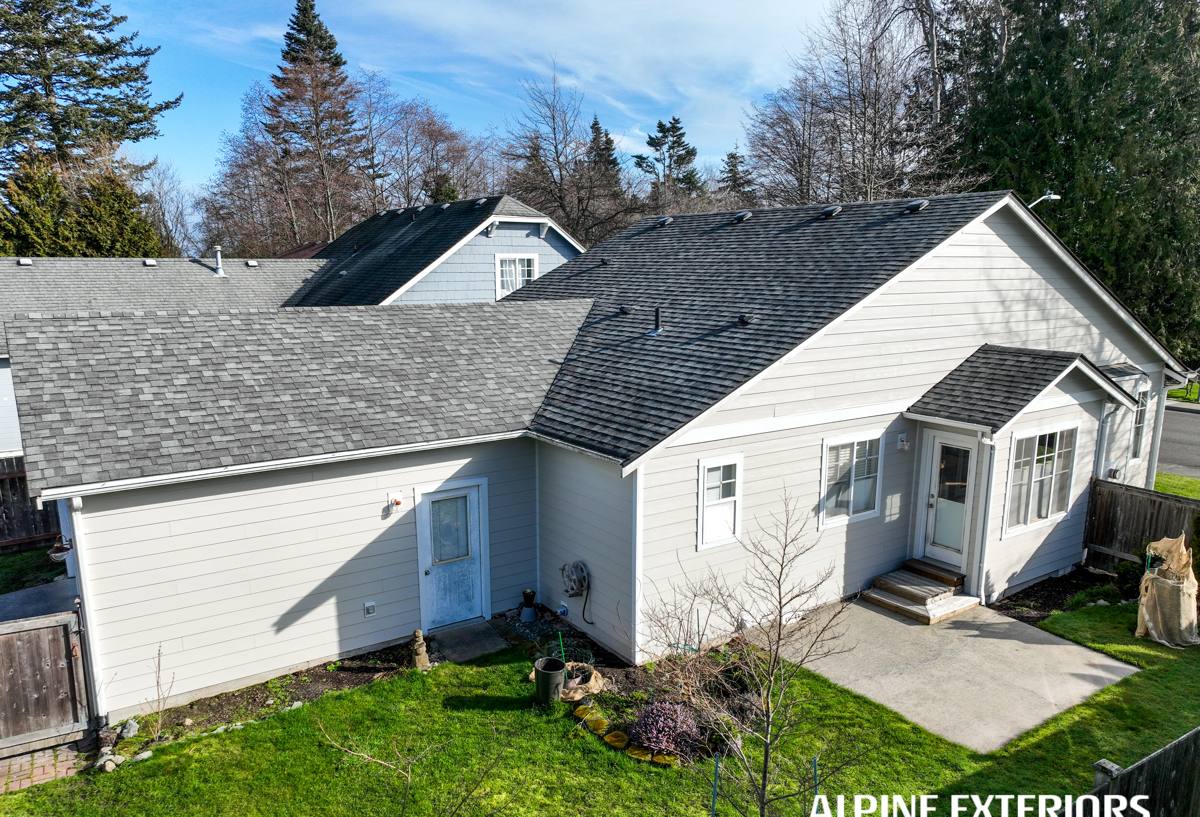
Roofs in this part of Bellingham take a beating from the combination of shade, moisture, and moss growth. A roof that stays damp under tree cover for weeks at a time ages faster than the same roof in full sun, and moss left unaddressed works its way under shingle edges and lifts them, giving wind-driven rain a way in. We handle roof repair and full roof replacement, and part of doing that job right in this neighborhood is thinking about ventilation, ice-and-water shield at vulnerable areas, and moss-resistant strategies — not just laying new shingles over the same conditions that caused the last roof to fail early.
Windows That Hold Up to Driving Rain
Windows are one of the most common places water actually gets into a house, and driving rain off the bay makes wind-driven water intrusion a real consideration for window selection and installation here — not just the glass itself, but the flashing and sealant details around the opening. We install replacement windows with an eye toward proper flashing integration with the surrounding siding, since a window and the wall around it need to work as one water-management system, not two separate jobs done by two different standards.
Decks Built for Wet-Season Durability
A deck in Happy Valley spends a good part of the year wet, often in the shade of surrounding trees, which means standing water, slow drying, and — again — moss and algae growth on horizontal surfaces are a bigger factor than they'd be in a drier, sunnier location. We build and repair decks with attention to drainage, board spacing, and structural materials that hold up under sustained moisture exposure, rather than just replicating whatever was there before regardless of how it performed.
What a Local Crew Brings to the Job
Working in Bellingham and Whatcom County day in and day out means we're not guessing at how a product performs here — we're watching it happen on houses a few miles from the last one. A crew that only occasionally works this far north, or that mostly does jobs in drier parts of the state, doesn't have the same accumulated sense of which details matter most in a marine, shade-heavy climate like this one. That local track record shapes everything from how we sequence a siding job around the weather to which flashing details we won't skip, even when they add a little time to the schedule.
Comparing Siding Materials for This Climate
| Material | Moisture Resistance | Maintenance | Fire Resistance | Typical Lifespan |
|---|---|---|---|---|
| James Hardie Fiber Cement | Excellent — does not rot or absorb water like wood | Low — factory-baked ColorPlus finish | Non-combustible | 30+ years, strong transferable warranty |
| Vinyl | Good, but seams and gaps can trap moisture | Low, but cracks and fades over time | Not fire-resistant; can soften/melt | 20-30 years, variable |
| LP SmartSide / Engineered Wood | Moderate — vulnerable at cut edges and coating breaches | Moderate — coating and caulking upkeep | Combustible substrate | 20-25 years with diligent upkeep |
| Cedar / Primed Spruce | Poor to moderate — depends entirely on paint film | High — repainting and caulking on a recurring cycle | Combustible | 15-25 years with heavy maintenance |
Maintenance Checklist for Happy Valley Homeowners
Whatever your current siding, roof, or deck, a few habits go a long way in this climate:
- Keep tree branches trimmed back from the roofline and siding to reduce shade, debris, and moss buildup
- Clear gutters and downspouts at least twice a year — clogged gutters send water straight down the wall
- Check caulked joints around windows, doors, and siding seams annually for cracking or gaps
- Rinse moss and algae off decks, walkways, and roof surfaces before it has a chance to establish
- Watch for soft spots, discoloration, or bubbling paint on wood-based siding — early signs of moisture intrusion
- Have flashing and roof penetrations inspected periodically, since these are the most common leak points
Signs It's Time to Talk About Replacement
Not every issue means a full siding or roof replacement, but a few signs are worth taking seriously rather than patching year after year: siding that's soft or spongy to the touch, paint that won't hold no matter how often it's redone, persistent moss or algae that returns within weeks of cleaning, or a roof that's losing granules and showing curled or lifted shingle edges. In a climate this wet, deferred maintenance compounds faster than in drier parts of the state, and an honest look sooner often costs less than a reactive fix later.
If you're in Happy Valley and dealing with any of this — or just want a straight answer on where your siding, roof, windows, or deck actually stand — we're happy to take a look. The estimate is free, there's no pressure, and you'll get a clear read on what needs attention now versus what can wait.