 Bellingham
 Siding Built for Ferndale's Climate
Ferndale sits close to the water, surrounded by farmland and the lower Nooksack River valley, in a part of Whatcom County that gets more of everything western Washington is known for: more rain, more wind off the strait, more months where a house never fully dries out between storms. Homes here don't just get wet — they stay damp, and that changes what siding material actually holds up versus what just looks good on the day it's installed.
We're a local exterior contractor working throughout Bellingham and Whatcom County, including Ferndale, and we install one siding product: James Hardie fiber cement. This page explains why that choice matters specifically for homes in this area, and what our process looks like when we work on a Ferndale property.
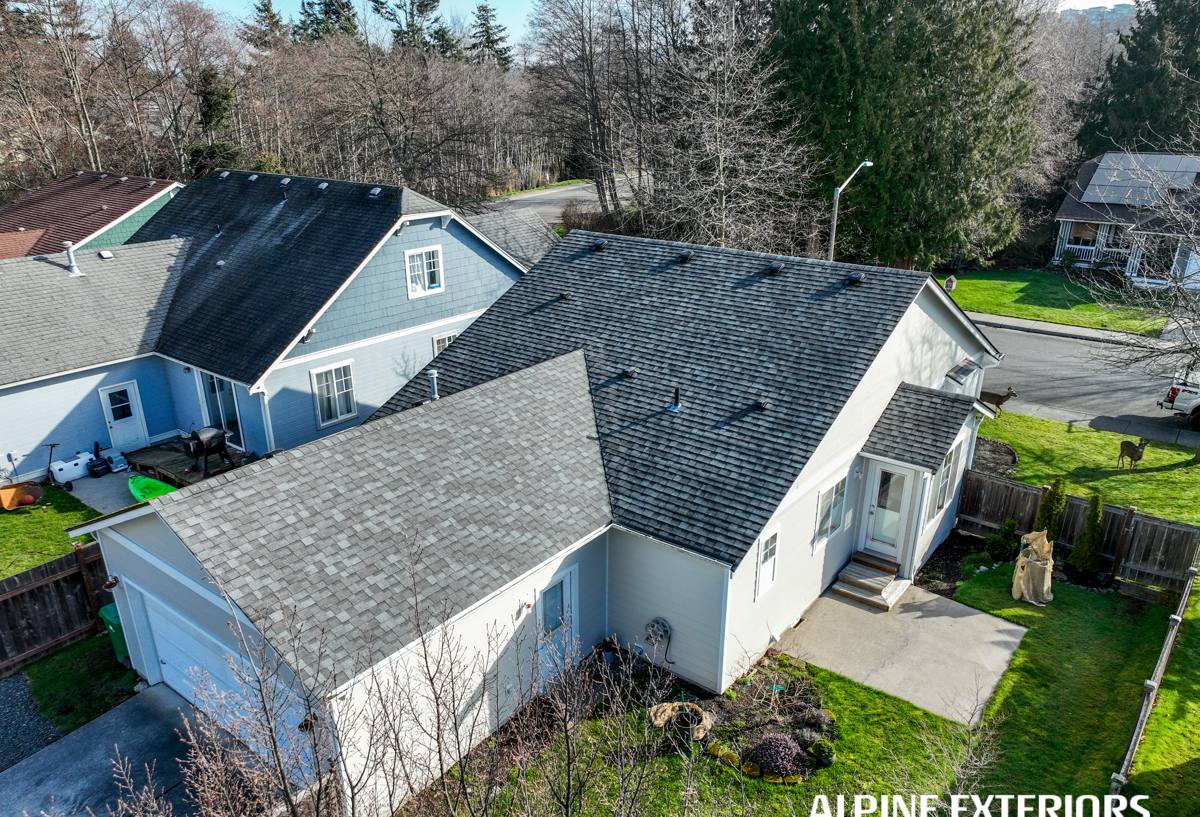
What Ferndale Homes Are Up Against
Salt Air and Coastal Moisture
Proximity to Bellingham Bay and the Strait of Georgia means homes in and around Ferndale deal with salt-laden air more than inland Whatcom County properties do. Salt air accelerates corrosion on fasteners, flashing, and any exposed metal trim, and it works its way into porous or poorly sealed siding materials over time. Wood-based products and some engineered products are more vulnerable to this kind of slow moisture intrusion than a cement-based product is.
Driving Rain
Storms coming off the water don't just fall straight down — wind-driven rain gets pushed sideways into wall assemblies, lap joints, and window trim. This is one of the toughest conditions for siding to handle well, because it tests not just the material but the installation: how laps are shingled, how flashing is integrated, and how water is directed away from the wall rather than into it.
A Long Moss and Mildew Season
Cool, wet, and shaded conditions for much of the year make Whatcom County prime territory for moss, algae, and mildew growth on exterior surfaces. North-facing walls, areas under tree cover, and anywhere siding stays shaded and damp are especially prone to green and black staining. Some siding materials resist this better than others, and some finishes make it easier to clean off without damaging the surface underneath.
Why We Standardized on James Hardie
We install James Hardie fiber cement siding exclusively. We don't install vinyl, LP SmartSide, Cemplank, Allura, primed spruce, or cedar. That's not a marketing position — it's a decision based on what holds up in this specific climate over decades, not just years.
Non-Combustible Material
Fiber cement is made primarily from cement, sand, and cellulose fiber. It doesn't burn, which matters in Washington's increasingly active wildfire seasons and is a genuine, verifiable difference from wood-based and most engineered wood siding products.
Climate-Engineered Product Lines
Hardie manufactures different formulations (their "HZ" system) engineered for different climate zones — some optimized for moisture and humidity, others for freeze-thaw cycling. We spec the product line appropriate for Pacific Northwest conditions, not a generic version of the product.
Factory-Applied ColorPlus Finish
Rather than field-painted siding, Hardie's ColorPlus finish is baked on at the factory under controlled conditions, which gives more consistent coverage and better long-term color retention than paint applied on-site — especially useful in a climate where fresh paint doesn't always get ideal curing weather.
A Material That Doesn't Feed Moisture Problems
Wood and wood-composite sidings are organic materials — moisture intrusion can lead to rot, swelling, and a host for mold and moss growth. Fiber cement is inorganic. It doesn't rot, and it doesn't provide the same food source for the moss and mildew that thrive in this climate. That single difference matters more here than in drier parts of the state.
A Strong, Transferable Warranty
Hardie backs its products with a substantial manufacturer warranty that's transferable to a new owner if the home sells — a real factor for resale in a market where buyers are increasingly asking what siding a house has and when it was last replaced.
What Correct Installation Actually Involves
Fiber cement siding performs the way it's rated to perform only when it's installed to manufacturer specification. A large share of the siding failures we get called out to inspect — on any brand — trace back to installation shortcuts, not the material itself. For a wind-driven-rain climate like Ferndale's, the details matter more than usual.
- Proper starter strip and clearance from grade, decking, and roof lines so the bottom edge of the siding isn't sitting in standing water or splash-back
- Correct lap and fastening per Hardie's published install guide, not a generic "close enough" approach
- Weather-resistant barrier and flashing integration at every window, door, and penetration — this is where wind-driven rain finds its way in if it's done wrong
- Rain screen or drainage gap where conditions call for it, giving any moisture that does get behind the siding a path to drain and dry
- Sealed and primed cut edges, since exposed raw edges are the most common point of moisture absorption on any fiber cement job
- Corrosion-resistant fasteners appropriate for a coastal-influenced, salt-air environment
Roofing, Windows, and Decks — Same Climate Logic
Siding doesn't work in isolation, and we don't treat it that way. We also handle roofing, windows, and decks, because on a coastal Whatcom County home these systems all interact:
Roofing
A roof that's shedding water properly, with clean flashing at valleys and wall intersections, keeps water from being redirected down onto siding it was never meant to handle. Moss on a roof is also a strong predictor of moss pressure on the walls below it.
Windows
Window flashing is one of the most common failure points behind siding, whether the siding is new or old. When we replace windows, we make sure the flashing integrates correctly with the wall assembly — and when we install new siding around existing windows, we check that the existing flashing is actually doing its job before we close the wall back up.
Decks
Ledger boards and deck-to-house connections are another common water-intrusion point, especially on homes where the deck was added or rebuilt after the original siding job. We build and flash these connections so they don't become the reason a wall rots from the inside.
Why a Local Crew Matters in Ferndale
A crew that works Whatcom County regularly knows the practical realities that don't show up in a generic install manual: how to sequence a job around the region's rain patterns, what Whatcom County and City of Ferndale permitting and inspection actually require, and how homes in this area — often older farmhouses, ranch homes, and newer developments alike — tend to be built and where they tend to show weather damage first. That local familiarity shows up in scheduling, in how we protect a job site between rain events, and in catching problems (old moisture damage, inadequate original flashing) before they get covered up by new siding.
Signs Your Ferndale Home May Need Attention
- Persistent green or black staining that comes back quickly after cleaning
- Soft or spongy spots when you press on siding, especially near the bottom edge or around windows
- Visible warping, bowing, or gaps opening up between siding panels or boards
- Peeling or bubbling paint, particularly on wood or engineered wood siding
- Rust streaks running down from fasteners or metal trim
- Musty odors or unexplained moisture inside walls near exterior corners
What Drives Siding Project Cost
| Factor | Why It Matters |
|---|---|
| Home size and wall complexity | More square footage, more corners, gables, and trim details mean more material and labor |
| Removal and disposal of existing siding | Tear-off and haul-away of old material adds time, especially if hidden damage is found underneath |
| Extent of underlying repair | Rotted sheathing or framing discovered once old siding comes off has to be fixed before new siding goes on |
| Product line and profile | Lap, shingle, and panel styles, plus factory color selection, affect material cost |
| Trim, flashing, and detail work | Windows, doors, and roof intersections all require careful flashing work that takes real time to do correctly |
| Access and site conditions | Multi-story sections, tight lot lines, or landscaping obstacles can affect labor and equipment needs |
How Fiber Cement Compares for This Climate
| Material | Moisture Behavior in a Wet Coastal Climate | Maintenance Burden |
|---|---|---|
| James Hardie fiber cement | Inorganic, does not rot; performs well when correctly flashed and installed | Low — factory finish holds color, occasional wash for moss/algae |
| Vinyl | Resists rot but can warp, and seams/laps can allow water behind the panel over time | Low, but repainting isn't an option if color fades or panels are damaged |
| Cedar / primed spruce | Organic material, absorbs moisture, prone to rot and moss growth in prolonged damp conditions | High — regular refinishing, sealing, and moisture monitoring |
| LP SmartSide / engineered wood | Treated to resist moisture but still wood-based; installation sensitivity is high | Moderate — dependent on maintaining factory finish and sealed edges |
Our Process on a Ferndale Project
We start with an on-site inspection and honest assessment of your current siding and wall condition — not a sales pitch, an actual look at what's there. From there we walk through product line and color options, give you a clear scope of work, and schedule around the weather rather than fighting it, since rushing an install during a wet stretch is exactly how flashing details get skipped. Once work begins, we handle removal, any necessary sheathing repair, moisture barrier and flashing installation, and the fiber cement install itself to Hardie's spec — then a final walk-through so you know exactly what was done and what to watch for going forward.
Get a Free, No-Pressure Estimate
If your Ferndale home's siding is showing its age, or you're planning ahead before the next wet season sets in, we're happy to take a look and give you an honest read on what you're working with. Fill out the form below to schedule a free estimate — no pressure, no obligation.