 Bellingham
 Exterior Work in Barkley: What the Neighborhood Is Up Against
Barkley sits close enough to the water and the surrounding tree cover that its homes deal with a specific combination of stress most inland neighborhoods don't see as often: salt-laden air moving in off Bellingham Bay, long stretches of driving rain, and shaded, moisture-holding pockets where moss and algae take hold and don't let go. None of that is unusual for Whatcom County. It's just that Barkley's mix of newer construction, mature landscaping, and proximity to the coast concentrates all three at once, which is exactly the kind of environment that separates exterior materials that hold up from ones that quietly fail from the inside out.
We work Barkley regularly, along with the rest of Bellingham and the surrounding county, and we see the same pattern on siding, trim, roofing, and decks: the failures rarely start as something dramatic. They start as a hairline crack that lets water in, a shaded north wall that never fully dries between storms, or a paint film that couldn't keep pace with the moisture cycle. By the time it's visible, the damage has usually been building for a couple of seasons.
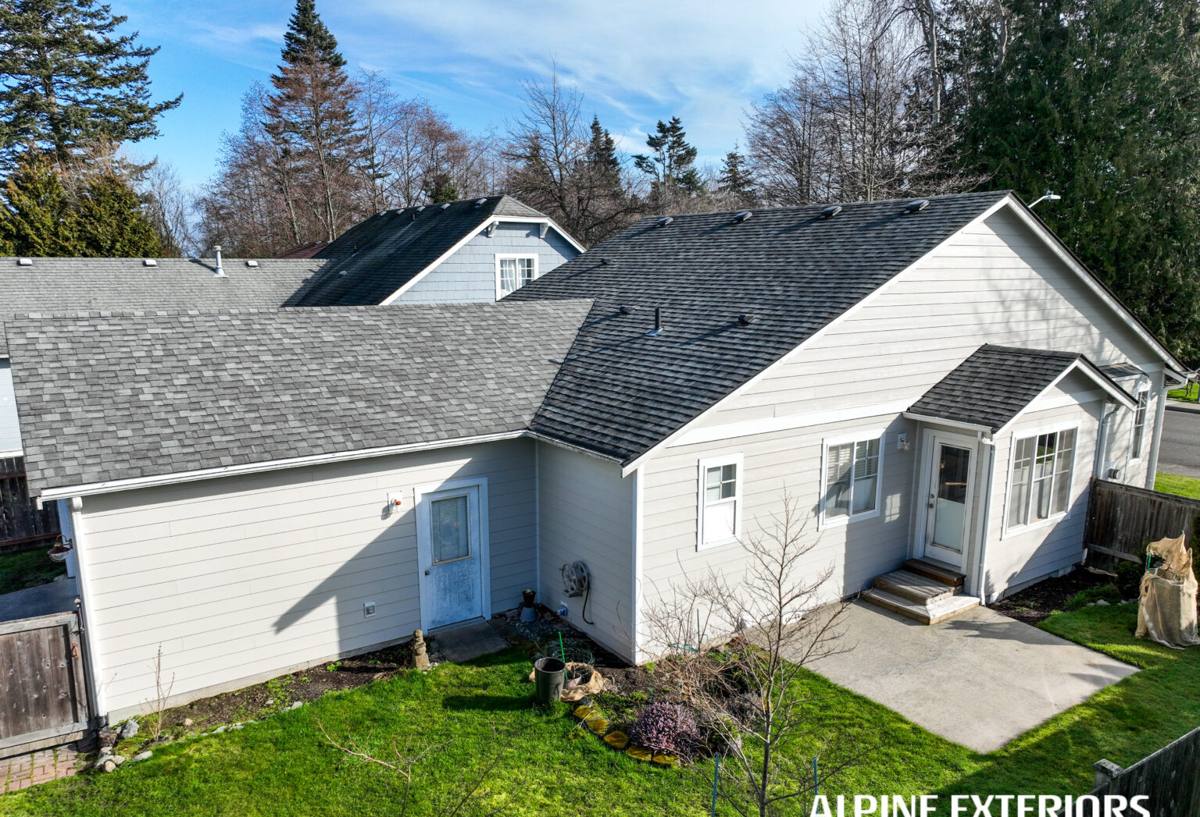
Why Salt Air, Rain, and Moss Matter More Than People Expect
Salt Air
Homes closer to the bay pick up airborne salt that settles on exterior surfaces and accelerates corrosion on fasteners, flashing, and any metal trim that isn't rated for coastal exposure. Salt also draws moisture, so surfaces near the coast tend to stay damp longer than the same surface a few miles inland — which matters a lot for anything that isn't dimensionally stable or properly sealed.
Driving Rain
Bellingham's rain doesn't just fall, it blows sideways for a good part of the year, especially with wind coming off the Sound. That means water gets driven into laps, seams, and butt joints that a calmer climate would never test. Siding systems, window flashing, and roof-to-wall transitions all need to be detailed for wind-driven rain, not just vertical drizzle.
Moss and Algae
Shaded exposures, north- and west-facing walls, and anything under tree canopy stay damp for extended stretches, which is exactly what moss, mold, and algae need to establish. Once organic growth gets a foothold on a porous or wood-based surface, it holds moisture against that surface continuously, which speeds up rot and finish failure well beyond what the rain alone would cause.
Siding: The First Line of Defense
Siding is the single biggest surface area on most homes, and it's the first thing absorbing salt exposure, wind-driven rain, and shaded moisture. We install James Hardie fiber cement siding exclusively — it's the only siding product we put on homes, and that's a deliberate standard, not a default.
Fiber cement doesn't absorb water the way wood-based products do, it doesn't swell or delaminate under repeated wet-dry cycling, and it's non-combustible, which matters given how dry Pacific Northwest summers have been trending. Hardie's ColorPlus finish is baked on at the factory under controlled conditions, which gives it better adhesion and UV resistance than field-applied paint — a real advantage in a climate where a fresh paint job can start looking tired within a few years if the substrate underneath isn't holding up its end.
Hardie also builds climate-specific product lines (their HZ5 line is engineered for regions with more moisture and freeze-thaw cycling), and the company backs correctly installed siding with a strong, transferable non-prorated warranty. We install to their published specs — proper clearances, fastening patterns, and flashing details — because in a wet climate, installation quality determines whether a good product performs like one.
What We Don't Install, and Why
- Vinyl siding: lightweight and inexpensive, but it can warp or crack in temperature swings, and its seams and profile aren't as forgiving of wind-driven rain as a properly lapped fiber cement system.
- LP SmartSide and other engineered wood products: treated to resist moisture, but they're still wood-based at the core, meaning cut edges and any breach in the coating are vulnerable points in a climate that gives moisture a lot of chances to find them.
- Primed spruce or cedar: beautiful materials with a real place in architecture, but they demand a maintenance commitment — recoating, caulking, inspection — that most homeowners underestimate until the first sections start showing wear.
- Cemplank, Allura, and other fiber cement alternatives: legitimate fiber cement products, but we've standardized on one manufacturer so our crews are fully fluent in one installation system, one warranty structure, and one color program, rather than splitting expertise across several.
Roofing: Working With Siding, Not Against It
A siding job is only as good as the roof details above it. Roof-to-wall flashing, kickout flashing at roof-siding intersections, and gutter performance all determine how much water actually reaches your siding in the first place. In a neighborhood like Barkley, where trees contribute both shade and debris, gutters that stay clear and flashing that's properly lapped make a measurable difference in how long a siding job lasts. We handle roofing work alongside siding so those transition points are designed and installed as one system instead of two contractors' work meeting in the middle and hoping it lines up.
Windows: The Other Half of the Envelope
Old or poorly flashed windows are one of the most common hidden water entry points we find when we open up a wall during a siding job. In a climate that drives rain sideways for months out of the year, window flashing has to shed water outward and downward at every layer — head, jambs, and sill — with no shortcuts. When we replace siding around existing windows, we inspect and correctly flash that transition; when windows themselves are past their service life, we can replace them as part of the same project so the whole envelope is addressed together rather than patched around.
Decks: Built for Wet-Dry Cycling
Decks in Barkley face their own version of the same problem — ledger board connections, joist tops, and any horizontal wood surface take on standing water and slow drying, especially under shade or near landscaping that keeps humidity up. We build and repair decks with attention to the same details that matter on siding: proper flashing at the ledger, drainage that doesn't trap water against structural wood, and materials chosen for how they'll actually perform through a wet Whatcom County winter, not just how they look on installation day.
Cost Factors for Barkley Exteriors
Every home is different, but these are the variables that most often move the price on siding, roofing, window, and deck projects in this area:
| Factor | Why It Matters Locally |
|---|---|
| Home size and wall complexity | More corners, dormers, and transitions mean more flashing detail and labor time |
| Existing damage behind old siding | Moisture intrusion from a prior product often means sheathing repair before new siding goes on |
| Sun/shade exposure per elevation | Shaded, moss-prone walls may need more prep or different flashing attention than sunny elevations |
| Trim and color complexity | Factory-finished ColorPlus reduces future repainting costs versus field-painted alternatives |
| Roof and gutter condition | Water management above the siding line affects how the whole system performs, not just cost |
| Access and site conditions | Mature landscaping, slopes, and tight lot lines common in established neighborhoods can affect labor and staging |
Why a Local Crew Matters Here
A crew that only knows generic installation specs will build to the letter of the manual and still get it wrong in a climate like this, because the manual doesn't know which walls in Barkley sit in permanent shade or which exposures take the worst of the wind off the bay. A local crew adjusts flashing details, fastening, and sequencing based on what actually happens to homes in this specific area over a few winters — not just what a spec sheet says should work. That local knowledge, paired with a single manufacturer's system we know inside and out, is what keeps a siding job performing a decade or two out instead of just looking good at the walkthrough.
What to Expect When You Call Us
- An on-site inspection of your current siding, trim, and any visible moisture or moss issues
- A straightforward assessment of whether repair or full replacement makes sense
- An explanation of why we recommend James Hardie fiber cement for your specific exposures
- A written estimate with no pressure to sign on the spot
- A realistic timeline that accounts for Whatcom County's weather windows
If your Barkley home is showing moss buildup, cracked or swelling siding, water stains near windows or the roofline, or a deck that's starting to feel soft in spots, it's worth having a local crew take a look before those issues spread. We offer free, no-pressure estimates for siding, roofing, window, and deck work — use the form below to get started.