 Bellingham
 Exterior Work in Sehome: A Neighborhood With Its Own Climate Challenges
Sehome sits on rolling, tree-covered terrain close to downtown Bellingham and Bellingham Bay, and that combination shapes what happens to a house's exterior over time. Homes here deal with the same marine climate as the rest of Whatcom County — long wet seasons, driving rain that comes in sideways off the water, and salt-tinged air drifting up from the bay — but Sehome's mature tree canopy and hillside lots add their own wrinkle. Shaded siding stays damp longer after a storm, north-facing walls barely see direct sun for weeks at a time in winter, and moss gets a real foothold on anything that holds moisture.
None of that is unusual for this part of Washington. It's just the reality of building and maintaining a home in a coastal, forested part of the Pacific Northwest. The siding, roofing, windows, and trim on a Sehome house are working against moisture almost year-round, and the products and installation details that hold up in a drier climate often don't hold up here.
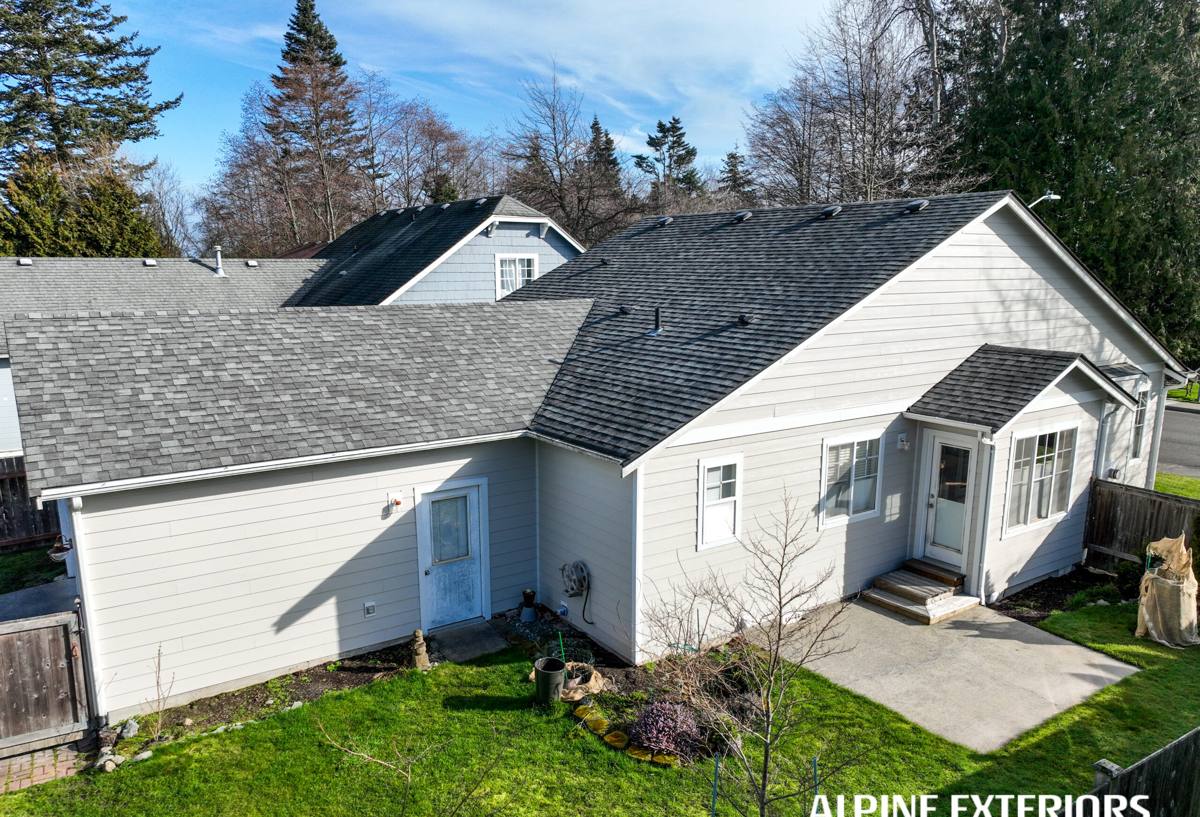
Sehome's Terrain and Tree Cover: Why Moss and Algae Show Up Fast
Sehome Hill and the wooded areas around it give the neighborhood a lot of shade, which is part of what makes it a pleasant place to live — and part of what makes exterior maintenance more demanding than it would be on an open, sunny lot. Shade means slower drying. Slower drying means siding, trim, fascia, and roofing stay wet longer after every rain event, and Whatcom County gets a lot of rain events between fall and spring.
That extended dampness is exactly what moss, algae, and mildew need to establish themselves. On some exterior materials, a persistent moss or algae layer isn't just cosmetic — it holds moisture directly against the surface, which accelerates rot in wood-based products and can degrade coatings and caulking faster than the manufacturer's warranty assumptions ever accounted for. Add in salt air off the bay, which is corrosive to fasteners and hard on paint film, and you've got a set of conditions that punishes any exterior product with a weak moisture story.
This is the backdrop for every recommendation we make on a Sehome job — not just what looks good, but what will still be doing its job in twenty years under a canopy of Douglas fir and maple with the bay a short drive away.
Full-Exterior Services for Sehome Homes
We work on the whole building envelope, not just one piece of it, because siding, roofing, windows, and decks all interact with the same moisture and drainage systems. A gap in flashing at a window can send water behind siding that's otherwise installed perfectly. A roof with poor drip-edge detailing can dump water straight onto a wall below. Treating these as one system, rather than four disconnected trades, is how problems actually get caught before they cause damage.
- Siding: Full siding replacement, repair of storm or rot damage, and trim/fascia work — James Hardie fiber cement only.
- Roofing: Roof replacement and repair with attention to the flashing, ventilation, and drip-edge details that matter most in a wet climate.
- Windows: Replacement windows installed with proper flashing and sealing at the siding interface, which is where most window-related leaks actually start.
- Decks: New deck construction and repair, built to shed water and resist the rot and moss growth that shaded, damp decks are prone to.
Why We Install Only James Hardie Fiber Cement Siding
We made a deliberate decision to install James Hardie fiber cement siding exclusively. We don't offer vinyl, LP SmartSide, Cemplank, Allura, or primed wood siding like spruce or cedar. That's not because those products have no merit — each has a reasonable case for certain climates, budgets, or design goals. It's because after years of installing and repairing exteriors in this specific climate, Hardie is the product we're confident will still be performing well decades from now on a shaded Sehome lot near the bay.
What rules out the alternatives, honestly
Vinyl siding is affordable and low-maintenance in the sense that it doesn't need painting, but it's a thin plastic product that can warp in heat, crack in cold, and fade unevenly over time — and its seams and panel movement give water more opportunities to get behind it in a climate this wet. Wood-based products, including engineered options like LP SmartSide and traditional cedar or primed spruce, offer real appeal but depend heavily on an intact factory or field-applied coating; once that coating is compromised by moisture, impact, or age, the wood substrate underneath is vulnerable to rot — and in a shaded, damp neighborhood like Sehome, coatings get tested constantly. Other fiber cement brands, like Cemplank and Allura, are legitimate cement-based products, but we standardized on one manufacturer so we can guarantee installation quality, warranty support, and color-match availability across every job we do.
What James Hardie gets right for this climate
Hardie's fiber cement is non-combustible, resists moisture-driven swelling and rot far better than wood-based sidings, and comes with a factory-applied ColorPlus finish that's baked on rather than field-painted — which means better adhesion and color consistency over time, including in shaded areas where paint on other materials tends to mildew or fade unevenly first. Hardie also engineers specific product lines (HZ5, for example) for regions that see a lot of moisture and temperature swings, which matches Whatcom County's profile. The transferable warranty backing the product is also a real factor for resale, something worth considering on a neighborhood like Sehome where turnover includes a mix of long-time owners and newer buyers.
What Correct Installation Actually Involves
Even the best siding product fails early if it's installed wrong, and fiber cement is less forgiving of shortcuts than people assume. Manufacturer specifications exist for a reason, and in a high-moisture area like Sehome, skipping them shows up as problems faster than it would somewhere drier.
| Installation Detail | Why It Matters in Sehome |
|---|---|
| Proper clearance from grade, decks, and roof lines | Prevents wicking moisture into the bottom edge of siding on shaded, slow-drying lots |
| Correct fastener type and spacing | Salt-tinged coastal air accelerates corrosion on the wrong fastener type |
| Rain-screen or drainage gap behind panels | Lets siding dry out between the frequent rain events typical of this climate |
| Flashing at windows, doors, and penetrations | The single most common source of hidden water damage behind otherwise good siding |
| Factory-cut edges sealed or primed | Field-cut edges are the most vulnerable point on any fiber cement panel |
These details rarely show up in a driveway estimate walkthrough, but they're the difference between siding that looks good for two years and siding that performs for its full service life.
Cost Factors for a Sehome Siding Project
Every home is different, and we won't quote a number without seeing the house, but a few factors consistently move the price on jobs in this neighborhood.
| Factor | How It Affects the Project |
|---|---|
| Home size and wall complexity | More corners, gables, and cutouts mean more labor and material waste |
| Existing siding removal | Tear-off of old wood or vinyl adds time and disposal cost versus a bare-wall install |
| Access and terrain | Sloped or wooded lots common in Sehome can require more staging and care |
| Hidden damage found underneath | Rot or moisture damage behind old siding, more common on shaded walls, adds repair scope |
| Trim, fascia, and window flashing scope | Bundling these with siding is more cost-effective than doing them separately later |
Choosing a Local Exterior Contractor in Sehome
Hiring for exterior work is different from most home projects because the mistakes don't show up right away — they show up as water damage two, five, or ten years later. A few questions are worth asking any contractor before you sign anything.
- Are you licensed and insured to work in Washington, and can you provide proof?
- Who is physically doing the installation — your own crew, or subcontractors you don't directly manage?
- What's your experience with fiber cement specifically, not just siding in general?
- Will you show me the flashing and drainage plan before panels go up, not just the finished look?
- What does the manufacturer's warranty actually cover, and does it require a certified installer?
- Do you handle roofing, windows, and decks too, or just one piece of the exterior?
A crew that works throughout Bellingham and Whatcom County regularly sees how homes in this specific climate age over time — which details hold up and which ones don't — and that experience is worth more than a low bid from a crew unfamiliar with coastal Pacific Northwest conditions.
Roofing, Windows, and Decks: Keeping the Whole Exterior in Sync
Siding decisions don't happen in isolation. A roof replacement is a natural time to address flashing where the roofline meets the siding. New windows need to be flashed correctly into whatever siding surrounds them, whether that's happening at the same time or years apart. Decks attached to the house create a joint where water management has to be right on both the deck framing and the adjoining wall. When we work on a Sehome home, we look at how these systems meet, because a well-installed component next to a poorly integrated one still leads to water intrusion.
Get a Free, No-Pressure Estimate
If you're weighing a siding, roofing, window, or deck project on a home in Sehome, we're happy to take a look and walk you through what we see — no obligation, no pressure. Use the form below to request a free estimate.