 Bellingham
 James Hardie Siding, Matched to What Ferndale Actually Deals With
Ferndale sits close enough to the water and to the open Nooksack lowlands that its homes take on a specific combination of exterior stress: salt-tinged marine air moving in off the Sound, rain that arrives sideways more often than straight down, and a moss season that can run most of the year on shaded or north-facing walls. That combination is common across Whatcom County, but it's especially persistent here, and it's the reason siding choice and installation quality matter more in Ferndale than they would in a drier, calmer inland town.
We install James Hardie fiber cement siding exclusively, on every job, in Ferndale and across the rest of our Bellingham-area service territory. This page is about that one product, in this one place — what local homes need from it, what a correct installation actually involves, and why a crew that already works Ferndale on a regular basis handles this job differently than one seeing the area for the first time.
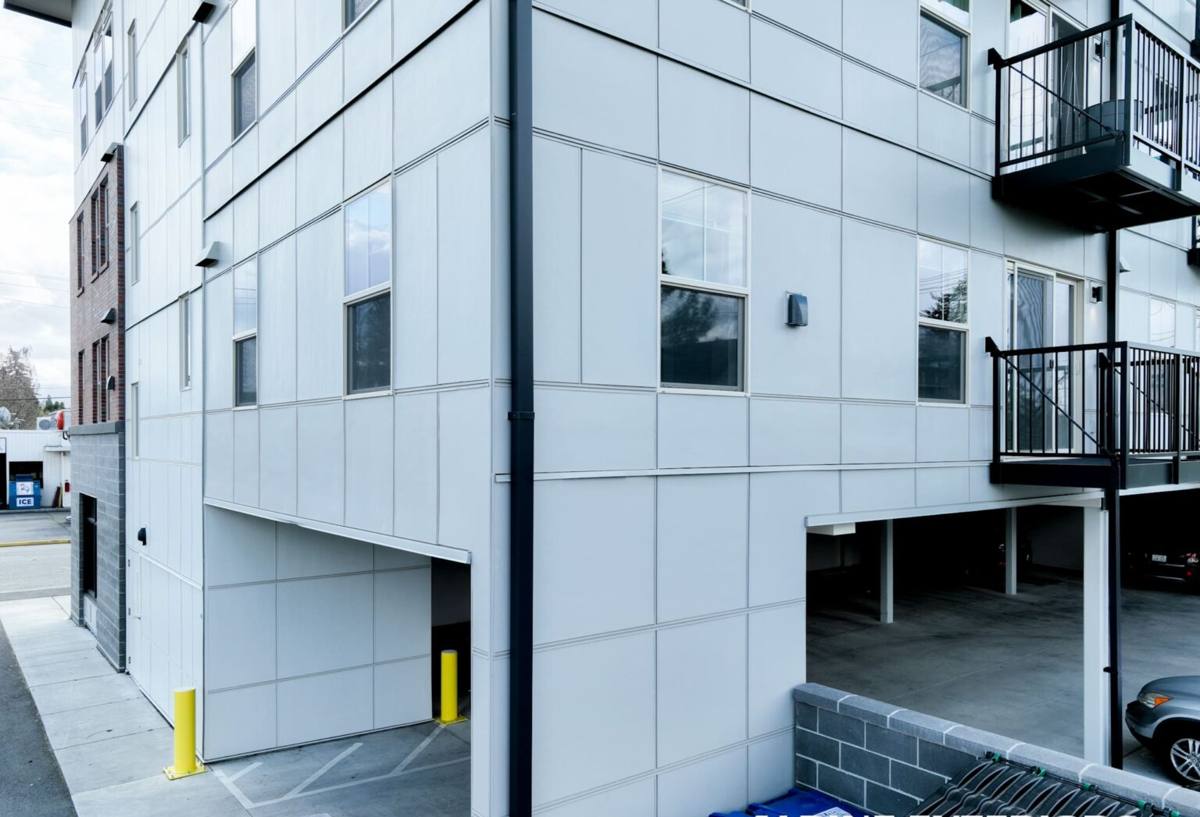
What This Climate Does to a Wall
Salt Air and Coastal Exposure
Homes in and around Ferndale don't need to sit directly on the water to feel its effects. Salt-laden air moves inland on a regular basis, and over years it accelerates corrosion in fasteners, flashing, and any exposed metal trim. It also breaks down lower-grade paint finishes faster than you'd see in a drier climate, which is one of the reasons a factory-cured finish matters more here than it might somewhere else.
Wind-Driven Rain
Annual rainfall totals don't tell the real story in this part of Whatcom County. What matters more is that rain regularly comes in at an angle, driven by wind off the water, which pushes moisture into lap joints, trim seams, and any gap in the water-resistive barrier that a calmer climate would never test. A siding system that would perform fine under straight-down rain can still fail here specifically because water is finding its way in sideways.
A Long Moss Season
Mild temperatures, consistent shade from tree cover, and near-constant moisture add up to a moss and mildew season that can run close to year-round on the wrong exposure. It shows up first on north-facing walls and anywhere shaded by trees or a neighboring structure, and it's a slow, steady stressor on any siding material that's even slightly porous.
Why James Hardie Is the Only Product We Put on a Ferndale Home
We used to install a broader range of siding products, the way most contractors in this region still do. We stopped, and the decision came from what we kept finding on tear-offs and service calls, not from a marketing pitch. In a climate that combines sustained moisture, salt exposure, and freeze-thaw swings, a handful of products we used to install quietly shifted maintenance risk onto the homeowner a few years down the road, even when they went in correctly.
We do not install LP SmartSide, vinyl siding, Cemplank, Allura, primed spruce, or cedar. Each of those has a legitimate place in the broader market and plenty of satisfied owners elsewhere. Our decision isn't a claim that they're bad products across the board — it's a professional standard we set for this specific climate, based on what holds up here over a full service life and what doesn't.
- Non-combustible core: fiber cement doesn't feed a fire the way wood-based siding products can, which matters for household safety and can factor into insurance underwriting.
- Factory-applied ColorPlus finish: color is baked on under controlled conditions rather than brushed on in the field, so it resists fading, chipping, and moisture intrusion far longer than site-applied paint.
- Climate-engineered HZ product line: Hardie's HZ5 formulation is built specifically for regions with heavy moisture exposure and freeze-thaw cycling, which describes coastal Whatcom County well.
- Dimensional stability: fiber cement doesn't swell, cup, or warp the way engineered wood siding can after repeated wet-season moisture cycles.
- Strong transferable warranty: Hardie backs its products with a robust warranty structure, provided the installation follows manufacturer spec — which is a big "provided."
The HZ5 Line: Built for This Specific Climate
James Hardie doesn't manufacture one generic board for the whole country. The company engineers different HZ (HardieZone) formulations for different climate profiles, and for the Pacific Northwest — including Ferndale and the rest of Whatcom County — that means the HZ5 line, formulated for colder, wetter conditions with real freeze-thaw exposure. That's a separate decision from color or panel style, and it's one that gets made before either of those enters the conversation. A crew unfamiliar with this region can order the wrong HZ formulation without realizing it, which is one more reason local experience matters before the first board ever gets cut.
Within the HZ5 line, Ferndale homeowners typically choose between a few panel styles, each of which reads and performs a little differently:
| Product | Profile | Where It Fits Best in Ferndale |
|---|---|---|
| HardiePlank lap siding | Horizontal overlapping boards | The most common choice on Ferndale homes; proven water-shedding profile for wind-driven rain |
| HardiePanel vertical siding | Large flat vertical sheets with battens | Often used on gables, shops, or as a modern accent; fewer horizontal joints for water to find |
| HardieShingle | Staggered or straight shingle profile | Used where a traditional or craftsman look is wanted without the upkeep of real cedar shingle |
| HardieTrim | Corner boards, fascia, window/door trim | Pairs with any of the above; keeps trim details performing at the same level as the field siding |
What a Correct Installation Involves
Material choice is only half the equation. James Hardie's own warranty terms and this climate's demands both hinge on installation details that are easy to shortcut and hard to spot after the fact — until they fail. A correct install in Ferndale involves:
Fastening and Fastener Spec
Hardie specifies fastener type, spacing, and penetration depth for a reason — get it wrong and you get cracked boards, blow-outs in wind, or corrosion streaking down the face of the siding within a few wet seasons. Given the salt exposure here, corrosion-resistant fasteners aren't optional, they're a baseline requirement.
Clearances From Grade and Roof Lines
Hardie requires minimum clearances between the bottom of the siding and grade, decks, roof lines, and other horizontal surfaces. Those clearances exist specifically to keep splashback and standing moisture away from the board's cut edges, which are more absorbent than the factory-finished face. Skipping this is one of the most common causes of early rot and swelling we find on tear-offs.
House Wrap, Flashing, and the Water-Resistive Barrier
Siding is the visible layer, but the water-resistive barrier and flashing details underneath it are what actually keep wind-driven rain out of the wall assembly. Every window, door, and penetration needs flashing that integrates correctly with the house wrap and the siding above and below it — a detail that matters far more here than in a climate where rain rarely comes in sideways.
Joint Treatment and Caulking
Butt joints, seams, and any place two boards meet need to be treated to Hardie spec — whether that's a factory-finished joint, a properly backed and caulked seam, or a flashed joint depending on the detail. Sloppy joint work is one of the most common places we find moisture intrusion starting on homes that were sided by an out-of-area or lower-bid crew.
Our Process, Start to Finish
The steps themselves aren't unusual — most reputable contractors follow a similar sequence. What matters is the attention paid at each stage, particularly around moisture management, which is where corner-cutting shows up first in this climate.
- Assessment and estimate: we walk the property, look at existing siding condition, wall orientation, shade exposure, and any signs of past moisture problems, then put together a written, no-pressure estimate.
- Tear-off and substrate check: old siding comes off and we inspect the sheathing underneath for rot or damage before anything new goes up — a step that's easy to skip but expensive to have skipped for you later.
- House wrap and flashing: a correctly lapped water-resistive barrier and properly flashed windows, doors, and penetrations go in before a single piece of Hardie siding is cut.
- Installation to manufacturer spec: correct fastening, clearances, and joint treatment, following James Hardie's published installation requirements rather than a generalized "how we've always done it" approach.
- Trim and detail work: corner boards, fascia, and window/door trim installed to match, so the finished product performs as one integrated system rather than siding plus trim as separate afterthoughts.
- Final walkthrough: we go over the finished job with you directly, not just hand you an invoice and leave.
Why a Crew That Already Works Ferndale Matters
Fiber cement siding is a forgiving product when it's installed right and an unforgiving one when it isn't, and the gap between those two outcomes shows up faster in a climate like this than it would somewhere drier and calmer. A crew that regularly works Ferndale and the surrounding Whatcom County towns has already seen how wind-driven rain behaves on this specific coastline, which walls hold moss longest, and which HZ formulation and installation details actually hold up over a full Northwest winter — not in theory, but from tear-offs and repair calls on jobs that weren't done by us the first time.
That local pattern-recognition is hard to replicate with a crew that mostly works a different climate and treats a Ferndale job as one stop on a wider regional route. Permitting, local wind exposure, and even which walls on a given lot tend to hold moisture longest are things a local crew already has a feel for before the estimate walkthrough even starts.
Cost Factors on a Ferndale Hardie Project
We don't publish fixed pricing because every home is different, but the factors that move a Ferndale Hardie estimate up or down are consistent enough to lay out honestly:
| Factor | Why It Affects Cost |
|---|---|
| Home size and wall complexity | More square footage and more corners, gables, and dormers mean more cutting, more trim, and more labor hours |
| Existing siding removal | Tear-off and disposal of old material adds labor and dump fees compared to installing over a bare or new-construction wall |
| Substrate repair | Rotted sheathing found during tear-off needs to be replaced before new siding goes on — this is common enough on older Ferndale homes to plan for |
| Panel style mix | Combining lap siding with shingle accents or vertical panel gables costs more than a single uniform profile across the whole home |
| Trim scope | Full HardieTrim replacement on corners, fascia, and window surrounds adds cost over reusing sound existing trim |
| Access and site conditions | Steep lots, limited driveway access, or tight setbacks near neighboring structures can add scaffolding or staging time |
Maintenance and What to Expect Over Time
A correctly installed James Hardie system in Ferndale is genuinely low-maintenance compared to wood-based alternatives, but "low-maintenance" doesn't mean "no maintenance" in a climate this wet. A short annual routine goes a long way:
- Rinse the siding gently once or twice a year, more often on shaded, moss-prone walls, using a garden hose rather than a pressure washer aimed directly at joints
- Check caulked joints and trim seams periodically for cracking or separation, especially after a hard winter
- Keep gutters clear and functioning so water isn't overflowing directly onto siding below
- Trim back vegetation and tree limbs that keep a wall shaded and damp longer than necessary
- Address any moss buildup early rather than letting it establish, since moss holds moisture against the surface it grows on
- Have any visible fastener corrosion or streaking looked at promptly rather than waiting for it to spread
None of that is a heavy burden, but skipping it entirely does shorten the practical service life of even a well-installed system, particularly on the shaded and water-exposed walls that are common on Ferndale lots.
Getting Started
If you're weighing a re-side or planning siding for new construction in Ferndale, we're happy to walk the property with you, look at your specific wall exposures and existing conditions, and put together a free, no-pressure estimate for a James Hardie installation built for what this climate actually demands.