 Bellingham
 Why Ferndale Roofs Age Differently
Ferndale sits close enough to the Strait of Georgia that salt-laden air is simply part of the deal, and that changes how a roof ages here compared to one twenty miles inland. Add Whatcom County's long wet season and the shaded, damp lots common on many Ferndale properties, and you get a climate that is genuinely harder on asphalt shingles than most manufacturer warranty testing accounts for.
Three things do most of the damage. Salt air speeds up corrosion on exposed metal fasteners, flashing, and vent stacks, which is often the first place a roof actually fails even when the shingles themselves still look fine. Driving rain, especially the sideways rain that comes with a good Pacific storm, finds every gap in flashing, underlayment laps, and nail patterns that a calmer climate would never expose. And moss doesn't take a season off here — on north-facing slopes and shaded sections it can establish itself for most of the year, holding moisture against the shingle mat, lifting tabs, and shortening the roof's real-world life well short of its rated years.
None of this means asphalt shingles are the wrong choice for a Ferndale home. They remain the most practical, cost-effective roofing material for the large majority of houses in this area. It means the installation details matter more here than they do in a drier climate, and shortcuts on flashing, underlayment, or ventilation show up faster on a roof exposed to Whatcom County weather.
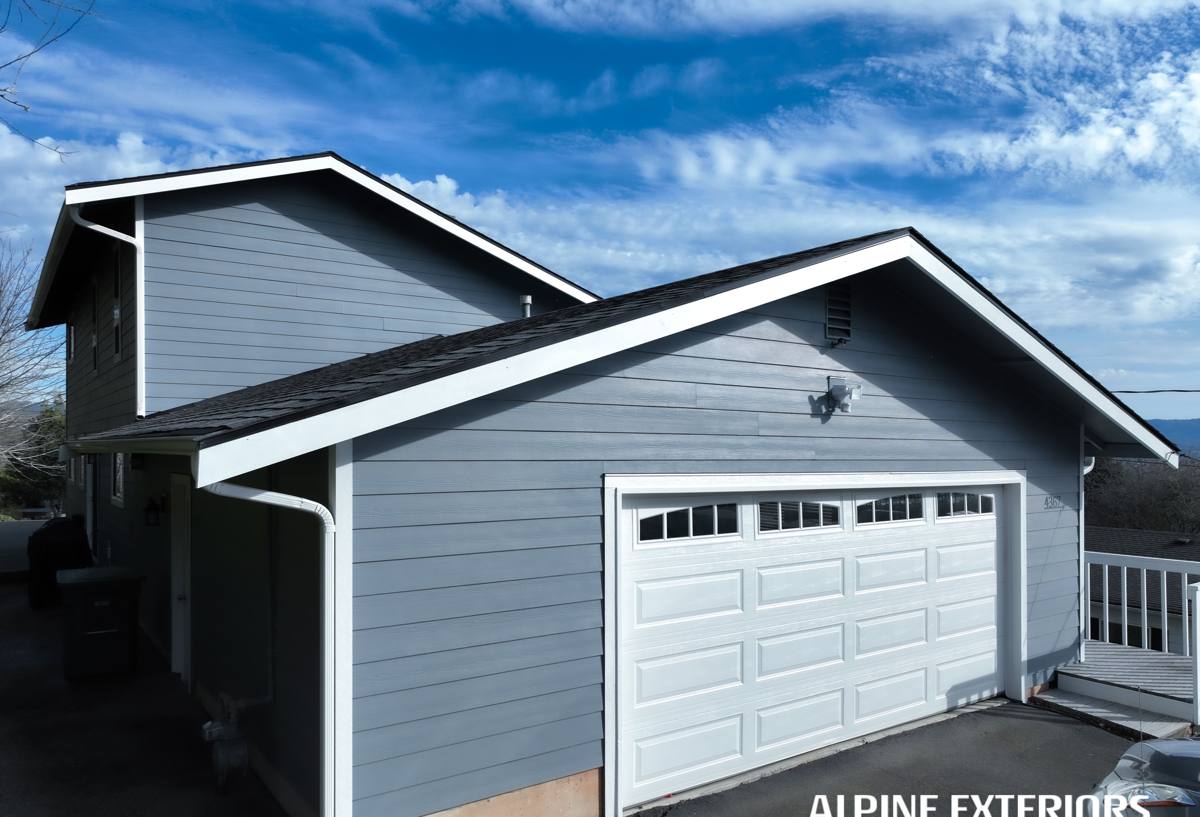
What a Correctly Built Shingle Roof Needs Here
A roof that holds up in this climate is built in layers, and every layer has a job. Skipping or downgrading any one of them is where premature leaks and moss problems usually start.
Underlayment
Synthetic underlayment has largely replaced felt paper on new installs, and for good reason in a marine climate: it resists moisture absorption and holds up better during the inevitable stretch of days between tear-off and dry-in when a storm rolls through before the shingles go on.
Ice and water shield
Self-adhering ice and water barrier belongs at eaves, valleys, and around every roof penetration, not just in the coldest parts of the state. Ferndale doesn't get heavy ice damming most winters, but wind-driven rain can push water uphill under shingles in almost the same way ice damming does, and this membrane is the backup layer that keeps that water out of the deck.
Flashing
Step flashing at walls, counter-flashing at chimneys, and properly lapped valley flashing matter more in a wet, salty climate because corrosion-prone or poorly lapped flashing fails years before the shingles around it do. We use corrosion-resistant flashing metals and install them to shed water downhill at every lap, not caulked-and-hoped-for seams.
Ventilation
Balanced intake and exhaust ventilation keeps the attic close to outdoor temperature and humidity, which reduces condensation on the underside of the deck and slows the moss and moisture cycle from the inside as well as the outside.
Shingle Options for a Marine Climate
Not every shingle line performs the same way in salt air, constant moisture, and heavy moss pressure. The table below covers the honest trade-offs between the common tiers we install.
| Shingle Type | Typical Lifespan Here | Moss/Algae Resistance | Best Fit |
|---|---|---|---|
| Standard 3-tab | 15-20 years | Low unless algae-resistant granules are specified | Budget-focused re-roofs on simple roof lines |
| Architectural / laminate | 25-30 years | Moderate to good with algae-resistant (AR) granules | Most Ferndale homes; better wind rating and dimension |
| Impact-rated / premium laminate | 30+ years | Good with AR granules; heavier mat resists granule loss | Steep or highly exposed roofs, homeowners planning to stay long-term |
Algae-resistant granules, which contain a small amount of copper, are worth specifying on almost any Ferndale roof regardless of tier. They don't make a roof moss-proof, but they measurably slow the black-streak algae staining and give moss less to grip on the shingle surface.
The Moss Problem, Specifically
Moss is the most common reason we get called out to a Ferndale roof that isn't leaking yet but is clearly heading that way. It grows fastest where a roof stays shaded and damp longest, and Whatcom County gives it plenty of opportunity to do that for most of the year.
What actually helps:
- Zinc or copper strips installed near the ridge, which release trace metal ions with every rain that inhibit new moss growth downslope
- Keeping overhanging branches trimmed back so roof sections get more sun and airflow
- Gentle, low-pressure moss removal rather than pressure washing, which strips granules and shortens shingle life faster than the moss itself would
- Good attic ventilation, which reduces the underside moisture that helps moss take hold from below as well as above
What doesn't help, long term, is scraping moss off once a year and calling it maintenance. By the time moss is thick enough to see from the ground, it has usually already lifted tabs and let water underneath. Prevention is cheaper than repeated cleanup, and a lot cheaper than the deck repair that follows a slow moss-fed leak nobody caught early.
Our Installation Process
The steps themselves aren't unusual, but the details inside each step are where a roof built for this climate is decided.
- Inspection and tear-off. Full removal down to the deck, with the deck inspected for soft spots, rot, or delamination before anything new goes down. Damaged sheathing gets replaced, not covered.
- Deck prep. Nail heads set, deck swept clean, and any low spots or gaps addressed before underlayment goes on.
- Ice and water shield. Installed at eaves, valleys, and penetrations first, so every subsequent layer laps over it correctly.
- Synthetic underlayment. Rolled and fastened per manufacturer spec across the remaining field of the roof.
- Flashing. Step flashing, counter-flashing, and valley flashing installed or replaced, never reused if there's any doubt about condition.
- Shingle installation. Correct nail placement and count for the wind exposure of the site, with starter strip and hip/ridge caps matched to the field shingle.
- Ventilation check. Intake and exhaust confirmed balanced for the attic volume, with ridge vent or equivalent installed as needed.
- Cleanup and magnetic sweep. Full site cleanup including a magnetic nail sweep of the yard and driveway.
Ventilation and Attic Health
An asphalt shingle roof and the attic underneath it work as one system, not two separate projects. In a climate as damp as Whatcom County's, an attic that can't breathe properly builds up condensation on the underside of the deck, which softens sheathing, promotes rot, and can void a shingle warranty even though the problem started below the shingles, not in them.
The fix is balanced ventilation: enough intake, usually at the soffits, to match the exhaust at or near the ridge. Too little intake and the exhaust vents just pull conditioned air from inside the house instead of the soffits, which wastes energy and doesn't solve the moisture problem. Too little exhaust and warm, moist attic air has nowhere to go. Getting this balance right is part of a correct roofing job here, not an upsell.
What Affects the Cost of a Ferndale Re-Roof
Every roof is priced on its own specifics, but the factors below are what actually move the number up or down on most Ferndale homes.
| Factor | Why It Matters |
|---|---|
| Roof pitch and access | Steeper roofs and harder access sites take longer and require more safety setup |
| Number of layers to remove | Tear-off of two existing layers takes more labor than one |
| Deck condition | Rotted or delaminated sheathing found during tear-off adds material and labor |
| Roof complexity | Valleys, dormers, chimneys, and skylights each add flashing detail and time |
| Shingle tier chosen | Standard 3-tab, architectural, and premium laminate carry different material costs |
| Ventilation upgrades needed | Adding intake or exhaust venting where none exists is additional scope, not just shingles |
We always give a written estimate that breaks these out so you know what you're paying for, not just a bottom-line number.
Maintenance Checklist for Ferndale Homeowners
A little regular attention adds years to an asphalt shingle roof in this climate. Here's what we recommend checking, or having checked, on a routine basis:
- Clear gutters and downspouts of needles and debris at least twice a year, more often under overhanging trees
- Look for moss or algae staining on north-facing and shaded slopes each spring
- Check that zinc or copper strips, if installed, are still visible and not buried under debris
- Trim back branches that shade roof sections or drop debris directly onto the roof
- Have flashing around chimneys, vents, and skylights visually checked after any major windstorm
- Watch for granules collecting in gutters, which can signal aging or storm-damaged shingles
- Schedule a professional inspection every few years, or sooner after a significant storm
Why a Crew That Already Works Ferndale Matters
Roofing crews that mostly work drier, inland climates tend to under-spec ventilation and skip the moss-prevention details because those problems don't show up as fast where they usually work. A crew that works Whatcom County roofs regularly builds those details in as standard practice, not as an add-on, because we see what happens to a roof here when they're left out.
Local experience also means knowing which flashing and fastener materials actually hold up against salt air over years, not just what passes inspection on install day, and knowing how to sequence a tear-off around the region's weather windows so your home isn't left exposed longer than it has to be. That's not something a crew passing through can match, no matter how skilled they are in general.
If you're weighing a repair against a full replacement, or just want an honest read on how much life is left in your current roof, we're happy to take a look. Reach out for a free, no-pressure estimate using the form below, and we'll give you a straight answer about what your Ferndale home actually needs.