 Bellingham
 Why Roofs in Ferndale Wear Differently Than Roofs Inland
Ferndale sits close enough to Bellingham Bay and the Strait of Georgia that homes here deal with a different weather pattern than roofs twenty or thirty miles inland. It isn't one dramatic event that wears out a Ferndale roof — it's the steady combination of salt-laden air, wind-driven rain that gets pushed sideways under flashing and shingle tabs, and a moss season that can run eight or nine months out of the year under the region's tree cover and cloud cover. None of that is unique to any one house; it's just what Whatcom County's marine climate does to a roof over time.
Salt air accelerates corrosion on exposed metal — nail heads, flashing seams, valley metal, and fasteners on ridge caps all take more of a beating here than they would in a dry inland climate. Driving rain finds the weak points in a roof system faster, especially around penetrations like vents, skylights, and chimney flashing. And moss doesn't just sit on the surface — its root structure holds moisture directly against the roofing material, which shortens the life of asphalt shingles and can rot wood decking underneath if it's left unchecked for years.
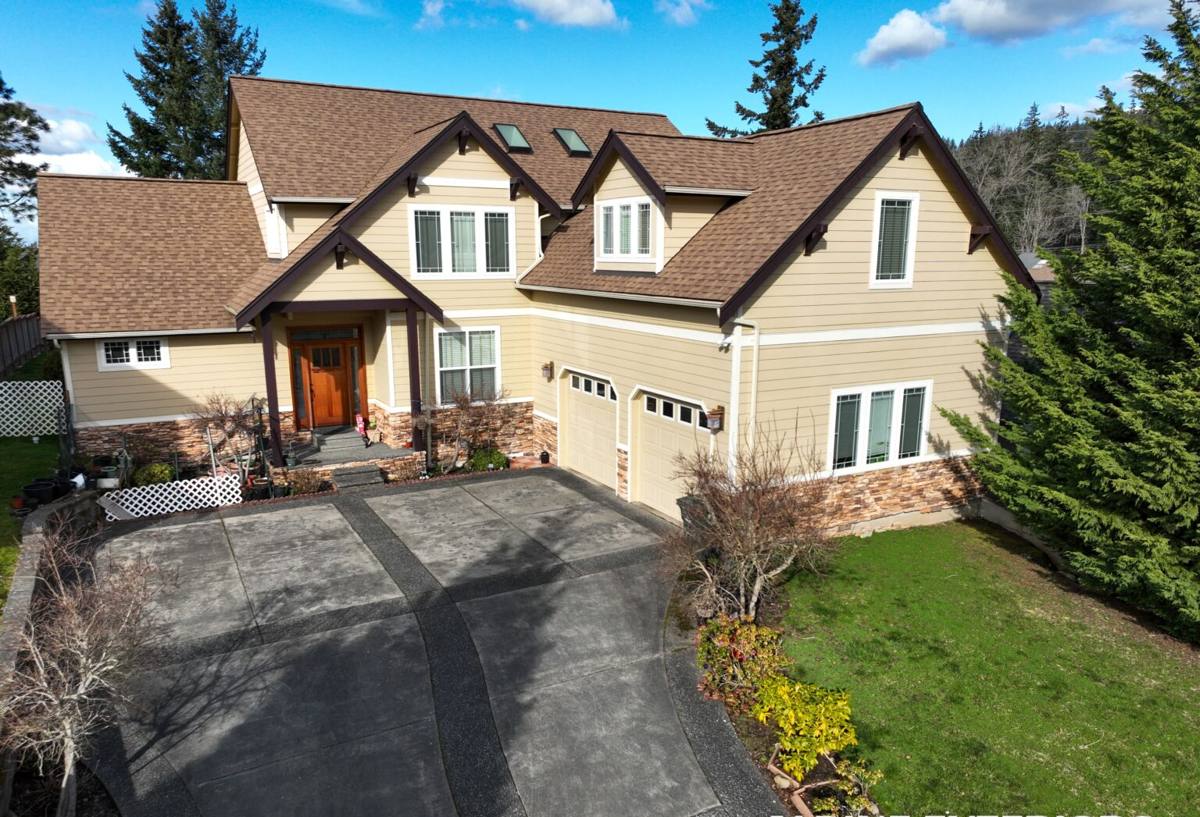
Signs a Ferndale Roof Needs Replacement, Not Just Repair
Most homeowners call about a leak, but by the time water is visibly coming through, the roof has usually been failing for a while. Some signs point clearly toward full replacement rather than a patch:
- Granule loss heavy enough that you can see bare, shiny patches on asphalt shingles, especially on south- and west-facing slopes
- Shingles that are curling, cupping, or cracking at the tabs — a sign the underlying mat has broken down
- Moss mats thick enough to hold standing moisture against the shingle surface for weeks at a time
- Soft or spongy spots underfoot when walking the roof, which usually means the deck underneath has started to rot
- Repeated leaks in different spots each winter rather than one consistent trouble area
- A roof at or past 20–25 years old, especially if algae streaking and moss growth have been ongoing rather than treated
If a roof is showing one or two of these signs in isolation, a repair may still make sense. When several show up together, replacement is usually the more honest recommendation — patching a roof that's structurally at the end of its life just delays the same conversation for another year or two.
What a Correct Roof Replacement Actually Involves
Tear-Off and Deck Inspection
A proper replacement starts with a full tear-off down to the roof deck, not an overlay on top of old material. This is the only way to actually see what's underneath — including any soft, delaminated, or rotted plywood or plank decking that needs to be replaced before new material goes down. Skipping this step, or only spot-checking the deck, is how new shingles end up failing early over a hidden problem.
Underlayment Built for a Wet Climate
In a climate that sees this much sustained rain, underlayment choice matters more than it does in drier regions. Self-adhered ice-and-water shield belongs at eaves, valleys, and around every penetration — these are the spots where wind-driven rain is most likely to work its way under the shingle line. The rest of the deck gets a synthetic or felt underlayment as a secondary water barrier beneath the shingles themselves.
Flashing and Ventilation
Flashing at chimneys, skylights, sidewalls, and valleys is where most roof leaks actually originate — not in the field of the shingles. New flashing, properly step-flashed and counter-flashed rather than just caulked over old metal, is a non-negotiable part of a correct replacement. Ventilation is the other piece that's easy to overlook: balanced intake at the eaves and exhaust at the ridge keeps moisture from building up in the attic, which matters in a climate where humid air is the norm for most of the year, not the exception.
Material Choices for a Marine Climate
There's no single "right" roofing material for every Ferndale home — it depends on the roof's exposure, the homeowner's budget, and how much long-term maintenance they're willing to take on. Here's how the common options actually compare in this specific climate:
| Material | Typical Lifespan Here | Moss/Algae Resistance | Ongoing Maintenance |
|---|---|---|---|
| Architectural asphalt shingle | 20–30 years | Moderate — algae-resistant (AR) shingles help but don't eliminate moss | Periodic moss removal, gutter clearing |
| Standing seam metal | 40–60 years | High — few horizontal surfaces for moss to root into | Low — occasional debris clearing |
| Cedar shake | 20–30 years with upkeep | Low without treatment — needs regular care | Higher — treatment and moss control needed regularly |
| 3-tab asphalt shingle | 15–20 years | Lower — thinner profile holds moisture longer | More frequent moss removal |
For most Ferndale homes, we recommend algae-resistant architectural shingles as the standard choice — they balance upfront cost with real performance against moss and streaking. Metal is worth the higher upfront investment for homeowners who want to minimize long-term maintenance and roof calls over the decades ahead. We steer clients away from untreated cedar shake in this specific climate not because it's a bad product everywhere, but because the combination of shade, moisture, and moss pressure common in Whatcom County means it demands more upkeep than most homeowners are prepared to keep up with.
How Our Roof Replacement Process Works
- On-site inspection and estimate — we walk the roof (weather permitting) and the attic, note deck condition, ventilation, and flashing issues, and give a written estimate with material options
- Material selection — we go over the tradeoffs in plain terms based on your roof's exposure and your budget, not a one-size-fits-all pitch
- Scheduling around the weather — in this climate, we work around forecasted dry windows rather than promising a fixed start date months out, since an exposed deck in a surprise downpour is bad for everyone
- Tear-off and disposal — full removal of old roofing material, hauled off-site
- Deck repair — any soft or rotted sections are replaced before new material goes down, documented so you know exactly what was found and fixed
- Installation — underlayment, flashing, and roofing material installed to manufacturer specification and local code
- Cleanup and walkthrough — magnetic sweep for nails, full site cleanup, and a walkthrough so you understand your new roof and its warranty coverage
We also dry-in a roof properly if weather turns mid-project — meaning the deck stays protected overnight or through a rain delay rather than left exposed. That's a basic standard, but it's one that matters more here than in drier parts of the state.
Moss and Algae: Long-Term Care After Replacement
A new roof doesn't stop moss from growing — the spores are in the air throughout this region regardless of what's on your roof. What changes is how well the roof sheds it and how much damage it does if left alone. A few habits extend the life of any Ferndale roof significantly:
- Trim back overhanging branches so the roof gets more sun and airflow, which slows moss and algae growth
- Clear gutters and valleys at least twice a year — clogged gutters hold water against the roof edge and are one of the most common causes of early edge rot
- Have moss physically removed (not scraped aggressively, which damages granules) rather than left to mat and hold moisture
- Consider zinc or copper strips near the ridge on asphalt roofs — rainwater washing over them helps inhibit new moss growth downslope
- Schedule a roof check every couple of years, especially after a particularly wet winter, so small issues get caught before they become deck damage
Permits and Timing for a Ferndale Project
Roof replacement permitting depends on your specific jurisdiction and the scope of work — some projects require a permit, others don't, and requirements can differ between the city and unincorporated Whatcom County. We handle the permit process as part of the job and can tell you exactly what's needed once we've assessed your roof, rather than guessing upfront. On timing, the honest reality of this climate is that roofing work happens around the weather, not on a rigid calendar. We aim for dry stretches, especially for tear-off days, and we don't leave a roof open to the elements overnight without proper protection in place.
Why a Crew That Already Works in Ferndale Matters
A roof replacement is only as good as the details most homeowners never see — how the flashing is stepped at a wall, whether the deck got a real inspection or a quick glance, whether the underlayment choice actually accounts for how much rain this area gets in a given winter. A crew that regularly works Whatcom County homes has already seen how salt air and moss behave on roofs like yours over years, not just on the day of installation. That experience shows up in fewer callbacks, fewer surprises mid-project, and a roof that's actually built for the conditions it has to survive rather than a generic installation dropped into a coastal climate.
Local presence also matters after the job is done. If a storm rolls through and you need someone to check a roof quickly, or if a warranty question comes up years down the line, working with a crew based in the area — not one that drove in from out of town for a one-off job — makes that conversation a lot simpler.
If your Ferndale roof is showing its age or you're not sure whether it needs a repair or a full replacement, we're happy to take a look and give you a straight answer. Reach out for a free, no-pressure estimate using the form below.