 Bellingham
 Siding Installation Built for Ferndale's Coastline and Farmland Climate
Ferndale sits in an unusual spot for siding wear. Homes closer to the water pick up salt air off Bellingham Bay and the Strait of Georgia, while homes further out toward the farmland catch open wind with nothing to break it up. Add in Whatcom County's long, wet winters and the moss season that follows, and you've got a climate that's genuinely tough on exterior materials — even ones marketed as low-maintenance. Siding installation here isn't just about picking a color and nailing up panels. It's about choosing a product and a install method that can actually hold up to what Ferndale throws at a house year after year.
We install exclusively James Hardie fiber cement siding, and this page walks through what that looks like specifically for a Ferndale property — the conditions your siding has to survive, what a correct installation actually involves, and how our process works from first look to final walkthrough.
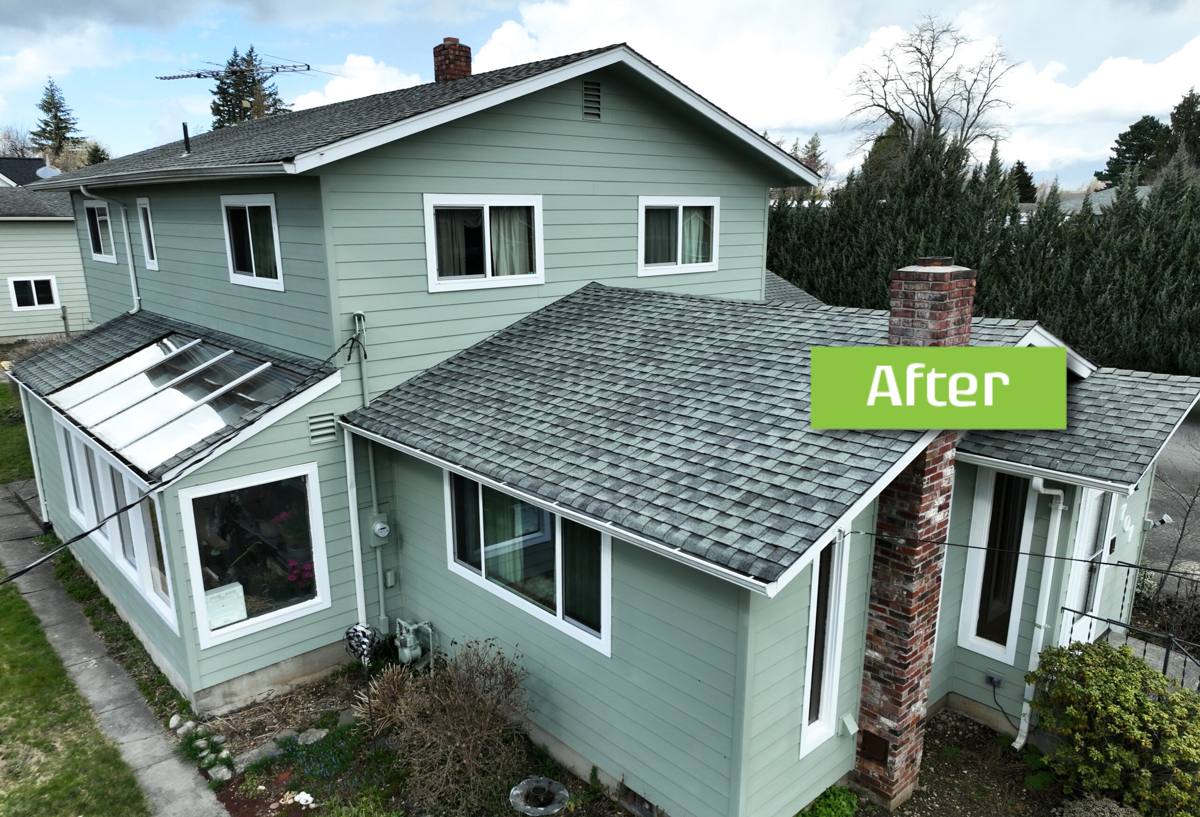
What Ferndale's Climate Does to Siding Over Time
Three things define the wear pattern on Ferndale homes:
Salt Air
Proximity to Bellingham Bay means airborne salt settles on exterior surfaces, especially on the windward side of a house. Salt is corrosive to fasteners and hardware, and it accelerates the breakdown of finishes that aren't engineered to resist it. Over years, a siding product with a weak factory finish will chalk, fade unevenly, or start showing wear at the edges and seams first — those are the spots salt-laden moisture collects and sits.
Driving Rain
Whatcom County doesn't just get a lot of rain — a good share of it comes in sideways, pushed by wind off the water. Driving rain finds every gap in a siding system: unsealed seams, poorly lapped panels, trim that wasn't flashed correctly. Once moisture gets behind the siding, it doesn't dry out quickly in our climate, and that's when rot, mold, and structural damage start, usually invisible until the problem is well established.
Extended Moss Season
Moss needs shade, moisture, and time — Ferndale offers all three for most of the year. Moss and algae growth on siding isn't just cosmetic. Trapped organic growth holds moisture against the surface, which is a slow but steady path to material breakdown, especially on wood-based or wood-composite products. The north and shaded sides of a house are usually hit hardest, and they're the sides most homeowners check least often.
Any siding installed in Ferndale needs to be evaluated against all three of these conditions together, not one at a time — a product that resists rain but not salt, or resists moss but is fussy to install correctly, still leaves a gap in your home's defense.
Why We Only Install James Hardie Fiber Cement
We made a decision a while back to standardize on one product line rather than offer a menu of options, because we'd rather install one thing extremely well than several things adequately. James Hardie fiber cement is what we chose, for reasons that line up directly with what Ferndale homes need:
- Non-combustible material — fiber cement doesn't burn, unlike wood-based sidings.
- Engineered for Pacific Northwest moisture — Hardie's HZ10 product line is specifically formulated for wetter, harsher climate zones like ours.
- Factory-applied ColorPlus finish — baked-on color with better fade and chip resistance than field-applied paint, which matters under sustained UV and salt exposure.
- Dimensionally stable — fiber cement doesn't swell, warp, or crack the way wood and some composite products can when they cycle through wet and dry conditions repeatedly.
- Strong transferable warranty — backed by Hardie when installation follows their specifications, which protects the next owner too, not just you.
We don't install LP SmartSide, vinyl, Cemplank, Allura, primed spruce, or cedar. Each of those has legitimate uses in the right context, but each also comes with a trade-off — moisture sensitivity, maintenance burden, installation forgiveness, or finish durability — that we're not willing to build our reputation on when the climate here is this unforgiving. Hardie is the one product we've found that consistently performs when installed correctly, and "installed correctly" is doing a lot of work in that sentence.
What a Correct Installation Actually Involves
Fiber cement siding is only as good as the install behind it. Hardie's own warranty is conditioned on following their installation manual, and the details most homeowners never see are exactly the ones that determine whether your siding lasts 30+ years or starts failing in 8.
Water Management Comes First
Before a single piece of siding goes up, the wall needs a proper water-resistive barrier, correctly lapped and taped, with flashing at every window, door, and horizontal trim break. In a driving-rain climate like Ferndale's, this layer is what actually keeps water out of your wall assembly — the siding is the second line of defense, not the first.
Clearances and Gaps
Hardie specifies minimum clearances from grade, roofing, decks, and other siding-adjacent surfaces. Skipping these is one of the most common corner-cuts we see on prior installs, and it's a direct path to trapped moisture at the bottom edge of the siding — exactly where rot starts.
Fastening
Corrosion-resistant fasteners, set at the correct depth and spacing, matter more in a salt-air environment than almost anywhere else. Overdriven or underdriven nails, or the wrong fastener material, will show up as problems years down the road — cracked panels, streaking, or fasteners backing out.
Joints and Caulking
Seams need proper backing and the right sealant, not just a bead of caulk over a butt joint. Poorly treated joints are a leading cause of moisture intrusion on fiber cement installs, and they're easy to spot once you know what to look for.
Painting and Field Cuts
Any field-cut edge needs to be sealed and painted to match — an exposed raw edge is a weak point in an otherwise well-protected system.
Our Process for a Ferndale Siding Install
| Step | What Happens |
|---|---|
| 1. On-site assessment | We look at your home's exposure — how much wind, rain, and shade each side gets — since that shapes both the product line and installation details we'll use. |
| 2. Scope and product selection | We walk through Hardie's board options, textures, and ColorPlus colors, and confirm the right HZ10-rated product for your specific exposure. |
| 3. Tear-off and inspection | Existing siding comes off and we inspect the sheathing underneath for any hidden moisture damage before closing the wall back up. |
| 4. Water barrier and flashing | New house wrap, flashing, and taping go in first, per Hardie's manual, before any siding is installed. |
| 5. Siding installation | Panels or lap siding go up with correct clearances, fastening, and joint treatment. |
| 6. Trim, caulking, and paint touch-up | All field cuts and joints are sealed and finished to match the factory color. |
| 7. Final walkthrough | We go over the finished work with you directly, including basic care guidance for our local climate. |
Why Hiring a Crew That Already Works Ferndale Matters
Fiber cement installation isn't the kind of job where general experience automatically transfers to local conditions. A crew that mostly works drier inland areas may not think twice about clearance gaps or flashing details that are non-negotiable here. A crew that already knows Ferndale's mix of coastal salt exposure and heavy seasonal rain builds those details in as standard practice, not an afterthought.
There's also a practical side: knowing which sides of a typical Ferndale home take the worst weather, understanding how moss and algae growth patterns show up locally, and having already worked through Whatcom County's permitting and inspection process all shave time and uncertainty off your project.
Signs Your Current Siding May Already Be Failing
- Soft or spongy spots when you press on the siding, especially near the bottom edge
- Visible gaps, cracks, or separated seams
- Persistent moss or algae that returns quickly after cleaning
- Peeling or bubbling paint, particularly on wood or composite siding
- Musty smell near exterior walls inside the home
- Warping or bowing panels
If you're seeing any of these, it's worth having someone look at the wall assembly underneath, not just the visible siding — surface repairs won't fix water damage that's already behind the wall.
What Influences Cost on a Ferndale Siding Project
| Factor | Why It Matters |
|---|---|
| Home size and complexity | More square footage, corners, and trim detail all add labor time. |
| Condition of existing sheathing | Hidden rot found during tear-off may require repair before new siding goes on. |
| Product line and texture | Hardie offers several board profiles and textures; some cost more than others. |
| Site access | Tight lots, second-story sections, and landscaping obstacles can affect labor time. |
| Extent of trim and flashing work | Full water-management upgrades cost more upfront but reduce future risk substantially. |
We don't quote broad numbers on a page like this because every home is different — the honest way to get a real figure is a site visit.
If your Ferndale home's siding is showing wear, or you're planning ahead of a problem rather than reacting to one, we're happy to take a look. The estimate is free, there's no pressure, and you'll get a straight answer about what your home actually needs — just fill out the form below.