 Bellingham
 Why Ferndale Roofs Wear Differently Than Roofs Inland
Ferndale sits close enough to Bellingham Bay and the Strait of Georgia that salt-laden air is a real factor in how roofing materials age here, not just a talking point. Add in Whatcom County's long, wet fall-through-spring stretch and the shaded, tree-heavy lots common around Ferndale, and you get a roofing environment that's tougher on materials than a lot of manufacturers' warranty language assumes. Metal fasteners corrode faster near the water. Asphalt granules wash and wear under sustained driving rain. And anywhere sunlight doesn't reach a roof plane for long stretches of the day, moss gets a foothold and starts working into the shingle mat.
None of this means Ferndale homes need exotic materials or gimmicks. It means the installation details that get skipped on an easier job — proper flashing, correct fastener choice, real ventilation — matter more here, and skipping them shows up sooner.
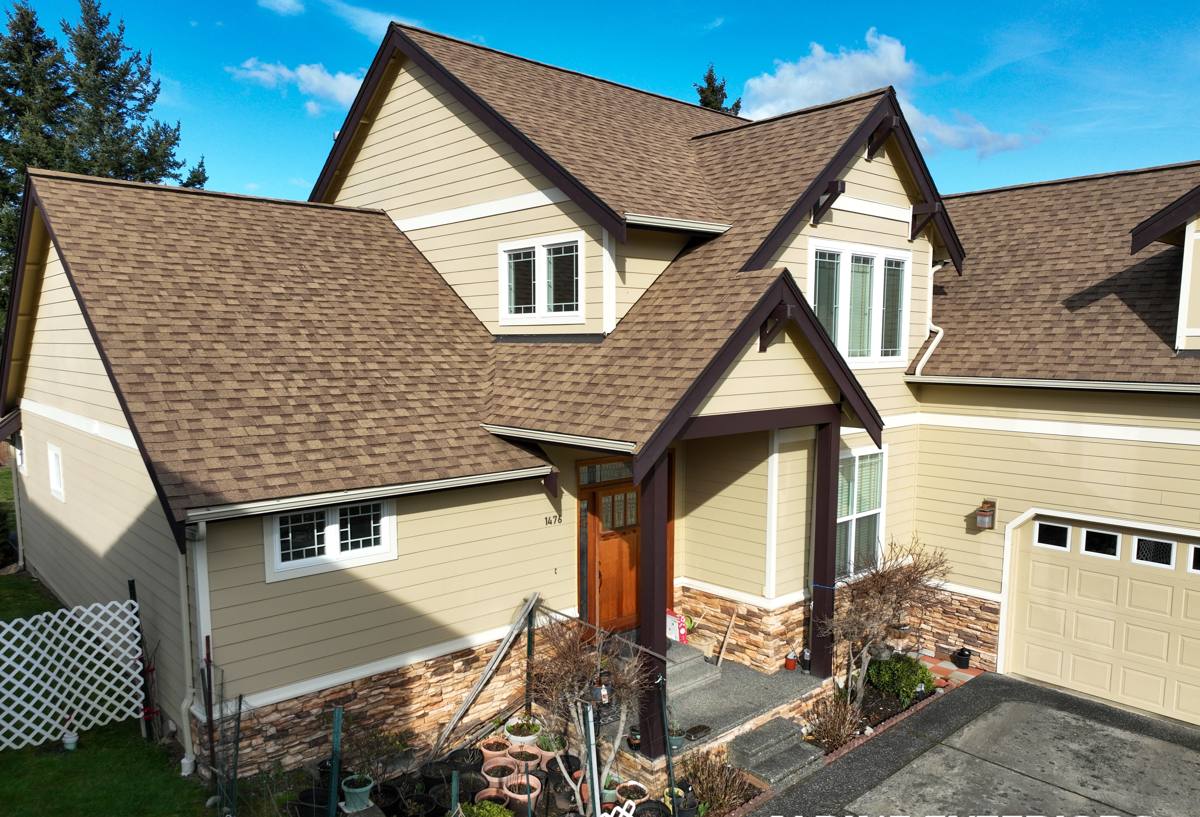
Signs a Ferndale Home Needs a New Roof, Not Another Repair
Most homeowners call us after a leak, but by the time water is visibly inside, the roof has usually been failing for a while. A straightforward inspection can usually tell you whether you're looking at a repair or a replacement. Some signs point clearly toward replacement:
- Granules collecting in gutters and downspouts, or shingles that look bald and shiny in patches
- Shingles that are cupping, curling at the edges, or cracking when you look closely from the ground
- Moss or dark algae streaking that keeps coming back within a season of being cleaned
- Soft spots in the decking you can feel underfoot, or sagging visible along the roof line
- Flashing around chimneys, vents, and skylights that's rusted, lifted, or was never sealed correctly
- A roof approaching or past 20-25 years old for asphalt shingle, regardless of how it looks from the street
- Daylight visible through the roof deck from inside the attic, or insulation that's damp or matted
If you're only seeing one or two of these and the roof is under 15 years old, a repair is often the honest answer. We'll tell you that. When several of these show up together, patching becomes a short-term fix for a system that's already failing underneath.
What a Correct New Roof Installation Actually Involves
Full Tear-Off, Not a Layover
Building code and good practice both point the same direction: strip the old roofing down to the deck rather than layering new shingles over old. A tear-off lets us actually inspect the decking, catch rot or delamination before it's covered up, and gives the new roofing system a flat, sound surface to bond to. Layering hides problems and shortens the life of the new roof.
Deck Inspection and Repair
Once the old roofing is off, we check every sheet of decking for soft spots, delamination, or water staining. Given how much moisture Whatcom County roofs deal with over a winter, it's common to find a section or two that needs replacing, especially near old flashing points or valleys where water has been sitting. This gets addressed before anything new goes down — it's not an upsell, it's the difference between a roof that lasts and one that fails from the inside.
Underlayment and Ice/Water Protection
A synthetic underlayment goes down as the roof's second line of defense, and in vulnerable areas — eaves, valleys, around penetrations — we add self-adhering ice and water membrane. Given the driving rain that comes off the water here, wind-blown moisture at the eaves and in valleys is a real risk, and this layer is what stops it from finding a way into the structure even if wind pushes rain up under the shingle tabs.
Flashing Done Right
Flashing failures cause more roof leaks than worn-out shingles do. Chimneys, sidewalls, skylights, and vent penetrations all need properly formed, correctly lapped metal flashing — not just a bead of sealant over the old piece. We replace flashing as part of every full roof install rather than reusing it, since reused flashing rarely seals as well the second time.
Ventilation
A roof needs balanced intake and exhaust ventilation to manage heat and moisture in the attic. Get this wrong and you shorten shingle life, promote condensation, and — relevant to shaded Ferndale lots — create the cool, damp conditions moss thrives in. We calculate ventilation based on the actual attic square footage rather than guessing.
Choosing a Roofing Material for a Ferndale Climate
There's no single "best" roofing material — the right choice depends on your budget, roof exposure, and how much maintenance you want to take on. Here's how the common options actually compare for a home in this climate:
| Material | Typical Lifespan | How It Handles This Climate | Maintenance |
|---|---|---|---|
| Architectural asphalt shingle | 25-30 years | Solid performance with proper ventilation and algae-resistant granules; most common choice locally | Periodic moss/debris removal, especially on shaded slopes |
| Standard 3-tab asphalt | 15-20 years | Lower upfront cost but wears faster under sustained wet-cold cycling | More frequent inspection as it ages |
| Standing seam metal | 40-50+ years | Sheds rain and moss well due to a smooth, sloped surface; needs corrosion-resistant fasteners this close to salt air | Low; occasional fastener and seam check |
| Cedar shake | 20-30 years with upkeep | Traditional look but holds moisture longer than manufactured products, making it more moss-prone here | Regular treatment and moss control required |
For most Ferndale homes, a quality architectural asphalt shingle with proper ventilation hits the right balance of cost, performance, and appearance. For homes with heavy shade, steep exposure to weather, or owners who want the lowest long-term maintenance, metal is worth pricing out even though the upfront cost is higher. We'll walk through the honest trade-offs for your specific roof rather than steering you toward whatever's easiest to install.
Our Installation Process, Start to Finish
1. Inspection and Estimate
We look at the roof from the ground and, where needed, get up on it — checking decking condition indicators, ventilation, flashing points, and overall slope and exposure. You get a clear estimate with material options, not a vague range.
2. Material Selection
We go over shingle or metal options, colors, and warranty terms so you're choosing based on real information, not a sales pitch.
3. Scheduling Around Weather
Given how much of the year sees rain in this part of Whatcom County, timing matters. We watch the forecast and schedule tear-off days when we can get the deck covered and dried in before weather moves in, protecting your home's interior throughout the job.
4. Tear-Off, Deck Repair, and Install
Old roofing comes off, decking gets inspected and repaired as needed, and the new system goes down in the sequence described above — underlayment, ice and water protection, flashing, then roofing material.
5. Site Cleanup
Nail sweeps and full debris removal are part of the job, not an afterthought. We want your yard and driveway left the way we found them.
6. Final Walkthrough
We walk the finished roof and go over what was done, including any decking repairs, so you know exactly what's under the new roofing before we consider the job complete.
Moss, Shade, and Ventilation: The Recurring Ferndale Problem
Moss isn't just cosmetic. Left alone, it holds moisture against the shingle surface, lifts tabs as it grows, and accelerates granule loss. Homes with mature trees or north-facing roof planes — common around Ferndale — are especially prone to it because those areas stay damp longer after our long moss season sets in each fall. A correct new roof install addresses this two ways: algae-resistant shingles where appropriate, and ventilation and slope detailing that lets the roof actually dry out between rain events rather than staying saturated. Trimming back overhanging branches after the install also goes a long way toward slowing regrowth.
Permits and Local Code Compliance
New roof installations in Ferndale and unincorporated Whatcom County typically require a building permit, and inspections check things like proper underlayment, ice and water shield placement in required zones, and ventilation. We handle the permit process as part of the job rather than leaving it to the homeowner, and we build to current code rather than to whatever standard was in place when the old roof went on decades ago.
Why a Crew That Already Works Ferndale Matters
A roofing crew that regularly works this part of Whatcom County already knows which details can't be skipped here — how much ice and water protection to use at the eaves given our rain patterns, which fastener types actually hold up near the water, and how much ventilation a shaded, moss-prone roof needs to stay dry. That's knowledge you don't get from a crew passing through the area for a single job. It also means someone local is available if a question comes up after the install, rather than a phone number tied to a company an hour away.
If your roof is showing its age or you just want a straight answer about repair versus replacement, we're happy to take a look. Reach out for a free, no-pressure estimate using the form below.