 Bellingham
 Deck Building for Sehome, Built for This Corner of Bellingham
Sehome sits close enough to Bellingham Bay that its homes feel the same weather patterns as the rest of the city, just with a few local wrinkles worth planning around. Between the tree cover on the hillsides, the shade that settles into yards through fall and winter, and the salt-tinged air rolling in off the water, a deck built here has to handle more than a typical backyard project in a drier climate. We build and repair decks for homeowners throughout Sehome and the surrounding Bellingham neighborhoods, and we've learned what actually holds up in this specific mix of conditions versus what looks fine for a season or two and then starts failing.
This page focuses specifically on deck building in Sehome — what the local climate does to decks here, what a properly built deck involves from the ground up, and how we approach the job so it's still solid a decade from now.
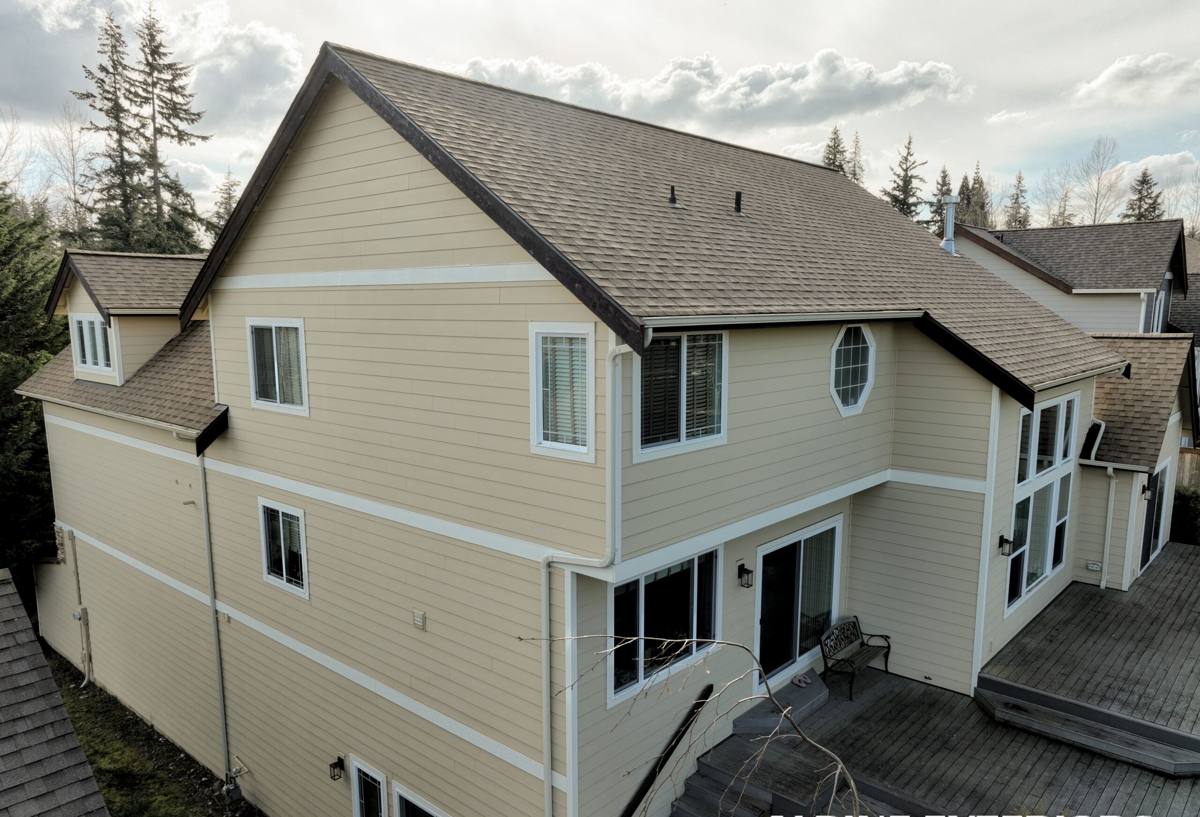
What Whatcom County's Climate Does to a Deck
Three things drive most of the deck problems we see in this area, and Sehome gets a dose of all three.
Driving Rain and Standing Moisture
Bellingham doesn't get the heaviest rainfall totals in the state, but it gets a lot of low-intensity, long-duration rain — the kind that finds its way into every joint, fastener hole, and end grain cut if a deck wasn't built with drainage and flashing in mind. Water that lingers instead of shedding is what causes rot, not a single storm.
Salt Air
Proximity to the bay means airborne salt is a real factor for fasteners and hardware, even a few miles inland. Standard interior-grade screws and brackets corrode faster here than they would in a landlocked climate, which weakens connections in ways that aren't visible until something fails.
A Long Moss Season
Shade, moisture, and mild temperatures are exactly what moss and algae need, and Whatcom County gives them all three for a good chunk of the year. On a deck, that shows up as a slick green film on boards and in the gaps between them — a slip hazard, and over time, a moisture trap that accelerates wood decay underneath the growth.
What a Correctly Built Deck Actually Involves
A deck that holds up in Sehome's conditions isn't about upgrading to the fanciest board on the shelf — it's about getting the parts nobody sees right the first time, because fixing them later means tearing the deck apart.
- Ledger attachment and flashing — where the deck meets the house is the single most common point of failure we find on older decks. Proper flashing keeps water from working its way behind the siding and into the rim joist.
- Post footings sized for the soil — Sehome's terrain varies from flat lots to sloped yards, and footing depth and sizing need to match what's actually under the ground, not a one-size-fits-all number.
- Joist spacing matched to the decking material — composite and PVC boards often need tighter joist spacing than solid wood to avoid flexing or warping over time.
- Corrosion-resistant fasteners and hardware — given the salt air here, we treat this as a baseline requirement, not an upgrade.
- Airflow underneath the deck — enclosed or low-clearance decks trap moisture and shorten the life of the framing. Ventilation matters as much as material choice.
Choosing a Decking Material for This Neighborhood
There's no universally "best" decking material — there's a best fit for your budget, how much upkeep you want to do, and how much shade and moisture your specific yard deals with. Here's how the common options actually compare in Bellingham's climate.
| Material | Moisture & Moss Behavior | Maintenance | Typical Lifespan Here |
|---|---|---|---|
| Pressure-treated lumber | Resists rot when properly sealed, but end grain and cut edges need re-treatment or they absorb moisture | Annual cleaning and periodic sealing/staining | 15–20 years with upkeep |
| Cedar | Naturally rot-resistant and handles our rain well, but softer surface holds moss film if not cleaned | Regular cleaning, staining every 2–3 years | 20–25 years with upkeep |
| Composite/PVC boards | Doesn't absorb water or rot, but surface texture matters — some profiles stay slicker under moss and algae than others | Occasional washing, no sealing or staining | 25–30+ years, manufacturer-dependent |
We're honest with clients about the trade-offs. Composite costs more upfront and some lower-grade products have had issues with fading or surface wear in wet climates, so we're selective about which lines we install. Wood costs less initially but only performs as well as the maintenance schedule behind it. Neither is objectively "wrong" — it depends on whether you'd rather spend money once or spend a weekend each year keeping it up.
Drainage, Slope, and Keeping Moss From Taking Over
Moss doesn't show up because a deck was poorly built — it shows up because water and shade were never accounted for. A few details make a real difference:
- Decking boards need a slight gap and correct spacing so water drains through instead of pooling on the surface.
- The deck surface itself should have a very slight pitch away from the house so water sheds instead of collecting at the ledger.
- Boards installed too tight to each other trap debris in the gaps, which holds moisture and feeds moss growth even on materials rated to resist it.
- Overhanging branches and heavy shade can't be eliminated on a wooded lot, but board spacing and surface texture can be chosen to reduce how much moss takes hold.
Our Process for a Sehome Deck Build
We keep the process straightforward and walk you through each stage before it happens, not after.
- On-site assessment — we look at your yard's drainage, sun/shade exposure, soil, and how the deck will attach to the house before recommending anything.
- Material and layout discussion — we go over the honest trade-offs between materials for your specific site, not a generic sales pitch.
- Permitting — we handle the paperwork required for your project so you're not chasing down inspections yourself.
- Footings and framing — built to match your soil and the load requirements of the design, with corrosion-resistant hardware throughout.
- Decking, railings, and finish work — installed with the spacing and flashing details that matter most in our climate.
- Final walkthrough — we go over basic care and what to watch for so the deck performs the way it's supposed to for years, not just for the first season.
Permits and Local Code Basics
Most deck projects in Bellingham that involve structural attachment to the house or elevation above a certain height require a permit through the City of Bellingham (or Whatcom County, depending on exact location). Requirements cover things like guardrail height, footing depth, and ledger attachment — details that matter more for safety than for appearance. We take care of the permit process as part of the job rather than leaving it for the homeowner to sort out, and we build to the code requirements that apply to your specific property.
Maintenance Checklist for a Deck That Lasts
Whatever material you choose, a little seasonal attention goes a long way in this climate. A simple routine most homeowners can handle themselves:
- Sweep debris out of board gaps regularly, especially during fall leaf drop and after windstorms
- Wash the surface at least once a year to remove the moss and algae film before it builds up
- Check fastener heads and railing connections annually for corrosion or loosening
- Inspect the ledger board area where the deck meets the house for signs of water staining
- Reseal or restain wood decking on the schedule appropriate to the product — don't wait until it's visibly gray and dry
- Confirm gutters and downspouts near the deck aren't dumping extra water onto or under it
Why a Local Crew Matters for This Job
A deck built to a generic national spec sheet can still fail in Sehome if it doesn't account for the shade patterns, rain volume, and salt exposure specific to this part of Bellingham. We work in this neighborhood regularly, which means we're not guessing at how a given material or detail performs here — we've seen it firsthand across multiple seasons. That local track record is what separates a deck that needs major repairs in eight years from one that's still solid in twenty-five.
If you're planning a new deck or replacing one that's showing its age, we're happy to take a look and give you a straightforward, no-pressure estimate. Fill out the form below and we'll get in touch to talk through what your yard and budget actually need.