 Bellingham
 Why Sehome Homes Go Through Siding Faster Than You'd Expect
Sehome sits close enough to Bellingham Bay to catch salt-laden air off the water, and close enough to Sehome Hill's tree canopy that a lot of homes in the neighborhood spend a good part of the year in shade. That combination is tough on exterior siding. Salt air accelerates corrosion on fasteners and trim metal, wind-driven rain off the Bay pushes moisture sideways into seams and laps that were never meant to take water head-on, and the shaded, tree-lined lots that make Sehome a pleasant place to live also mean siding stays damp longer after every storm. Add in Whatcom County's long, low-intensity rainy season — not flash downpours, but weeks of steady drizzle — and you get a moss and algae problem that shows up on north-facing walls and anything tucked under mature trees well before it shows up on a home out in open sun.
None of this is unique to any one house. It's a function of Bellingham's marine climate and Sehome's particular mix of tree cover and proximity to the water. What it means practically is that siding decisions here need to account for moisture cycling, not just appearance. A product or installation detail that works fine in a drier inland climate can fail here in half the time.
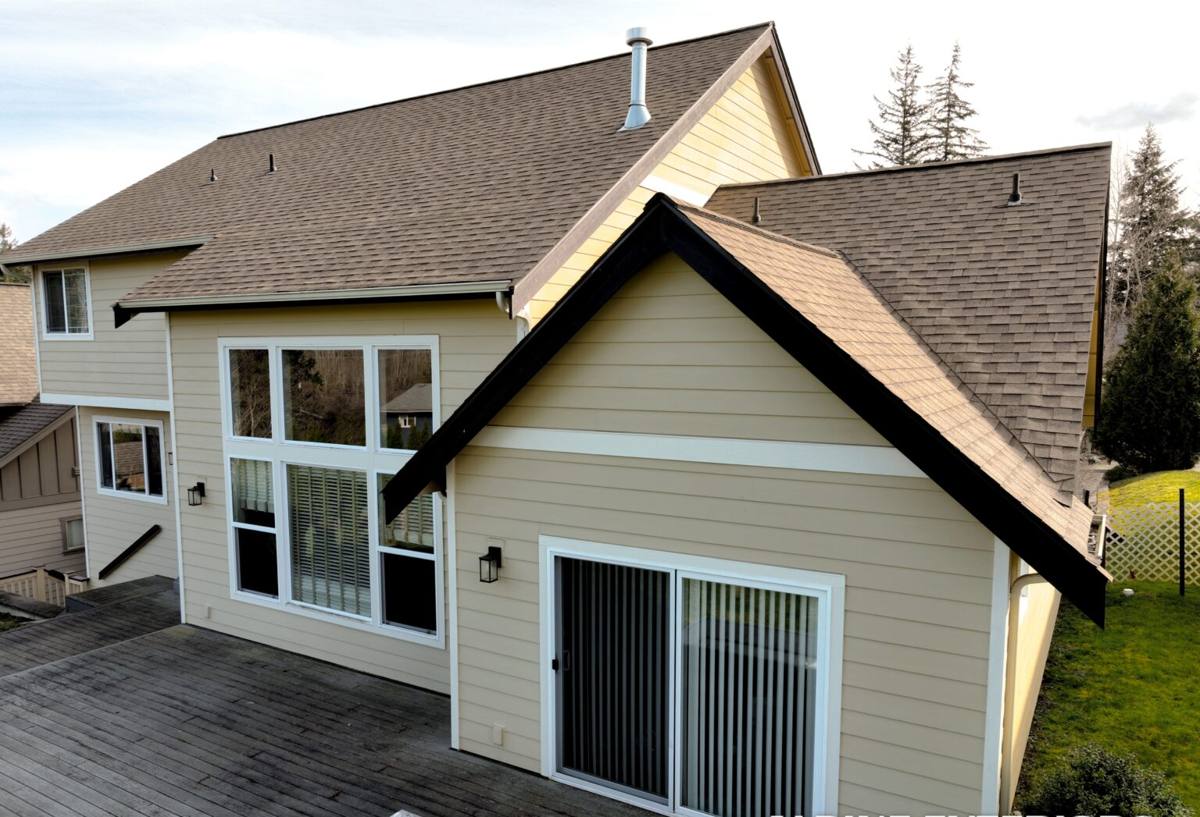
Signs a Sehome Home Needs Siding Replacement, Not Just a Repair
Homeowners often call us for a patch job and find out the underlying problem is bigger. Some signs point to replacement rather than repair:
- Soft or spongy siding when pressed, especially near the bottom courses, corners, and around window trim
- Persistent moss or dark streaking that comes back within weeks of cleaning
- Visible cupping, warping, or delamination on wood-based or engineered wood siding
- Paint that won't hold — blistering, peeling, or needing repainting more often than every 6-8 years
- Gaps opening up at seams, corner boards, or where siding meets trim
- A musty smell or visible staining on interior walls that back up to exterior siding
Any one of these can be a localized repair. Several together, especially on a home that's had siding up for 20+ years, usually means the underlying material and moisture management have both reached the end of their useful life.
What a Correct Siding Replacement Job Actually Involves
Replacing siding well is not just pulling off old boards and nailing up new ones. In a climate like Bellingham's, the work that happens before and behind the new siding matters as much as the siding itself.
Tear-off and inspection
Once the old siding is off, the sheathing underneath gets inspected for rot, soft spots, or prior water damage — this is often the first time anyone has seen the actual condition of the wall assembly in decades. Any compromised sheathing gets replaced before anything else happens.
Weather-resistive barrier and flashing
A proper water-resistive barrier goes over the sheathing, lapped correctly from bottom to top so water is always directed outward and down. Flashing at windows, doors, and any horizontal trim gets installed or replaced so water can't collect and work its way behind the cladding — this is one of the most commonly skipped or rushed details on lower-quality siding jobs, and it's usually the reason a "new" siding job starts failing in five years instead of thirty.
Ventilation and drainage
A rain screen or drainage gap behind the siding gives any moisture that does get in a path to drain and dry out, rather than sitting against the sheathing. Given how much shade and lingering dampness parts of Sehome deal with, this detail is not optional — it's the difference between siding that sheds moisture and siding that traps it.
Fastening and finishing to manufacturer spec
Fastener type, spacing, and placement all affect how siding performs over time, especially somewhere with salt-influenced air. Corner treatments, caulking at penetrations, and trim details all need to match the manufacturer's installation requirements — not just look right from the curb.
Why We Only Install James Hardie Fiber Cement
We get asked why we don't offer vinyl, LP SmartSide, cedar, or primed spruce alongside Hardie. The honest answer is that we looked at how each of those materials actually performs in a climate like ours — persistent damp, salt air, moss pressure, wind-driven rain — and standardized on the one that holds up best with the least ongoing maintenance burden.
Vinyl is inexpensive and low-maintenance in dry climates, but it can warp in temperature swings, its seams are a weak point for wind-driven rain intrusion, and it's a combustible material — a real consideration given increasing regional wildfire smoke and ember exposure in recent Pacific Northwest fire seasons. Cedar and primed spruce look great new, but they're organic materials in a climate that stays damp for months at a time; they demand a repainting and recaulking schedule that most homeowners underestimate, and moss and rot pressure here is higher than almost anywhere else in the country. Engineered wood products like LP SmartSide use resin-treated wood strands, which perform reasonably well but are still wood-based, meaning edge swelling and moisture sensitivity at cut ends and seams remain real risks if installation isn't flawless.
James Hardie fiber cement is non-combustible, doesn't expand and contract with moisture the way wood-based products do, and holds a factory-applied ColorPlus finish that's baked on rather than field-painted — meaning the color coat itself resists the fading and peeling that drives most repaint cycles on wood and engineered siding. Hardie also builds region-specific HZ product lines engineered for different climate zones, which matters in a marine environment like Bellingham's. It's not the cheapest material on the market, but it's the one we're willing to warranty and stand behind on homes that have to survive Whatcom County winters year after year.
| Material | Moisture/rot resistance | Combustibility | Maintenance in this climate |
|---|---|---|---|
| James Hardie fiber cement | High — cement-based, doesn't rot | Non-combustible | Occasional wash; ColorPlus finish resists fade/peel |
| Vinyl | Moderate — seams vulnerable to wind-driven rain | Combustible | Low, but can warp/crack over time |
| Cedar | Low-moderate — organic, moss/rot prone | Combustible | Regular repainting, staining, moss treatment |
| Primed spruce | Low — needs consistent paint film to protect | Combustible | Frequent repainting and caulking |
| LP SmartSide (engineered wood) | Moderate — resin-treated but still wood-based | Combustible | Moderate; edge/seam sealing critical |
Our Siding Replacement Process for Sehome Homes
- On-site inspection of existing siding, sheathing condition where accessible, and any moisture or ventilation red flags specific to the home's exposure and tree cover
- A written plan covering tear-off scope, sheathing repair allowance, water-resistive barrier and flashing details, and the specific Hardie product and profile recommended for the home
- Full tear-off and sheathing inspection, with any rot or damage addressed before new material goes up
- Installation of weather-resistive barrier, flashing, and drainage plane per manufacturer spec
- Hardie siding installation with correct fastening, joints, and trim detailing
- Final walk-through and punch list before we consider the job complete
Why cost varies job to job
Two homes of similar size in Sehome can land at different price points depending on what's underneath the old siding. The table below covers the main factors that move a bid up or down.
| Factor | Why it matters |
|---|---|
| Sheathing condition | Rot found during tear-off requires repair before new siding goes up |
| Number of stories and roof lines | Affects access, scaffolding, and labor time |
| Trim and architectural detail | Corner boards, window casing, and dormers add cutting and fitting time |
| Siding profile chosen | Lap width, shingle-style, or panel systems have different material and labor costs |
| Existing moisture damage | Homes with a history of leaks may need more extensive barrier and flashing work |
Why Hiring a Crew That Already Works in Sehome Matters
Siding performance in Bellingham isn't uniform city-wide — a home tucked under trees on a shaded lot near Sehome Hill deals with different moisture and moss pressure than a home a few blocks away in more open sun. A crew that already works this neighborhood has a feel for which walls dry out slowly, where moss pressure tends to build first, and how local permitting and inspection processes typically go for a full siding tear-off. That local familiarity shows up in small decisions — where extra flashing attention is worth it, which sides of the home need the most ventilation consideration — that a crew unfamiliar with the area might not think to prioritize.
It also matters for follow-up. A local crew is reachable if a question comes up after the job is done, without the runaround of dealing with a company based somewhere outside the county.
What to Ask Before You Hire a Siding Contractor
- Do you inspect and repair sheathing as part of the job, or just cover over whatever is underneath?
- What water-resistive barrier and flashing details do you use, and are they to manufacturer spec?
- Is a drainage gap or rain screen included behind the siding?
- Are you a certified or factory-trained installer for the siding brand you're proposing?
- What does the warranty actually cover — material only, or labor too — and who backs it?
- Can you explain, in plain terms, why you recommend this material for a home in this climate?
If you're weighing a siding replacement for a home in Sehome, we're happy to take a look and give you a straight read on what your current siding and sheathing are dealing with. The estimate is free, there's no pressure, and you'll get a plan specific to your home rather than a generic quote — just fill out the form below to get started.