 Bellingham
 Fiber Cement Siding Built for What Sehome's Climate Actually Does to a Wall
Sehome is one of central Bellingham's established neighborhoods, a mix of older housing stock, mid-century homes, and newer infill rising toward Sehome Hill. A lot of that housing is old enough to have already been sided once, sometimes twice, and the material choice made decades ago often shows up now as soft trim, peeling paint, or moss that won't stay off the north wall. We install fiber cement siding, James Hardie exclusively, for homeowners in Sehome who want a system built for this specific climate rather than whatever was cheapest to ship in the last siding boom.
This page is about one thing: fiber cement siding installed correctly on a Sehome home. Not a general product overview, not a full house exterior package, just what this neighborhood's climate demands from its siding, what a correct installation actually involves, and how we run the job from first look to final detail.
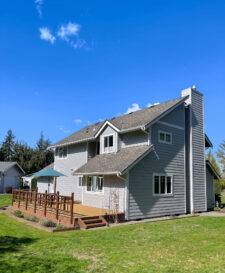
What Sehome's Climate Demands From a Siding System
Salt Air and Corrosion
Sehome sits inland of Bellingham's immediate waterfront, but it's still well within reach of the salt-laden air moving through the county off the Salish Sea. Salt speeds up corrosion in fasteners, flashing, and any exposed metal trim, and it wears down a low-grade paint film faster than it would in a drier region. That's not a reason to avoid siding replacement, it's a reason to be deliberate about the fastener and flashing hardware that goes behind the siding, since that hardware is what actually fails first when salt exposure is ignored.
Wind-Driven Rain and Water Management
Rain in this part of Washington rarely falls straight down. It comes in on a wind and gets pushed sideways into lap joints, trim seams, and anywhere a wall assembly has a gap. A siding system's real job isn't looking good when it's dry, it's managing water that's actively being pushed toward the house. That puts more weight on lap coverage, joint treatment, and flashing integration than most homeowners expect when they're comparing products on price alone.
A Long Moss Season on Shaded, Sloped Lots
Sehome's mature tree cover and its rise toward Sehome Hill mean a lot of homes here have shaded walls, and mild, moist temperatures keep those walls damp for long stretches of the year. Moss and algae take hold first on north-facing siding and anywhere airflow is limited, and once established, that growth holds even more moisture against the wall than the climate alone would. A siding material that's even slightly porous, or that holds moisture against its own substrate, becomes a growth surface. That's a material problem, not just a cleaning problem.
Why We Install Only James Hardie Fiber Cement Here
We don't offer a menu of siding brands for a Sehome job. We install James Hardie, and that's a professional standard built from years of tear-offs and service calls in this exact climate, not a supplier arrangement.
- Non-combustible, cement-based core: Hardie siding is made from portland cement, sand, and cellulose fiber, an inorganic core that doesn't swell, cup, or feed moisture damage the way wood-based siding can.
- Factory-applied ColorPlus finish: The color is baked on under controlled conditions at the factory, not brushed on in the field, so it holds up longer against fading and moisture than site-applied paint, particularly under salt-air exposure.
- HZ5 formulation for this climate: Hardie's HZ5 product line is engineered specifically for regions with heavy moisture exposure and freeze-thaw cycling, which describes Whatcom County's weather well. We spec HZ5 on Sehome jobs rather than a generic national formulation.
- Dimensional stability: The cement core doesn't warp or shift with repeated wet-season cycling, which keeps joints tight and paint lines straight for far longer than an organic substrate.
- A strong, transferable warranty: Hardie backs the product with one of the stronger warranty structures in the industry, provided installation follows their spec, which is exactly why we treat installation detail as seriously as material choice.
We don't install LP SmartSide, vinyl, Cemplank, Allura, primed spruce, or cedar. Each has a place in the broader market. Our call is that in a climate with this much sustained moisture and salt exposure, we'd rather install and stand behind one system fully than offer a cheaper option that quietly shifts maintenance risk onto the homeowner a few years down the road.
Choosing the Right Hardie Product Line for a Sehome Home
Lap Siding
Traditional horizontal lap siding is the most common choice on Sehome's older and mid-century homes, since it matches the look most of the neighborhood already has. Hardie's lap profiles range from a smooth modern reveal to a traditional cedar-grain texture, so matching or updating an existing look is usually straightforward.
Board and Batten
Vertical board and batten shows up on newer infill and on homes going for a more contemporary or farmhouse look. It reads differently on the street and can be a good way to visually distinguish an addition or accent wall from the rest of the house.
Panel Systems and Trim
Hardie panel products and matching trim boards handle gable ends, soffit returns, and accent areas cleanly, and keeping trim and field siding in the same product family avoids the mismatched expansion and weathering you sometimes see when trim comes from a different manufacturer than the siding itself.
Color Selection
ColorPlus comes in a range of factory finishes, and because the color is baked on rather than field-applied, the color you pick at selection is close to the color you'll have in ten years, not a shade that starts shifting the first wet season. We walk homeowners through physical samples rather than screen colors, since factory finish reads differently in Bellingham's overcast light than it does on a sunny sample board.
What a Correct Fiber Cement Installation Actually Involves
Fiber cement performs the way it's designed to only when the installation details are followed exactly. A good product installed carelessly can still fail early, and in a climate that pushes rain sideways into every gap, shortcuts show up fast.
Substrate and Moisture Barrier Prep
Before any new siding goes up, the wall needs a correctly lapped weather-resistant barrier, and any sheathing or framing damage found underneath old siding needs to be repaired, not covered over. On older Sehome homes, this is often where a job's real scope gets set, since decades of minor moisture intrusion behind failing siding isn't always visible until the old material comes off.
Clearances and Fastening
Hardie specifies minimum clearances from grade, roofing, and decks, along with a specific fastening pattern and fastener type. Skipping those clearances is one of the most common ways fiber cement siding starts wicking moisture at the bottom edge, and it's also one of the easiest details to get wrong on a rushed job.
Joint Treatment and Flashing
Every butt joint, window head, and penetration needs proper flashing or sealant treatment, integrated with the house wrap so water sheds outward instead of tracking behind the siding. This is the detail that matters most under Sehome's wind-driven rain, since a joint that looks fine on a dry day can still be an open path for water during a storm.
- Weather-resistant barrier lapped correctly, shingle-style, from bottom to top
- All fasteners meeting Hardie's specified type, spacing, and embedment
- Minimum clearances maintained from grade, roofing, and deck surfaces
- Flashing integrated at every window, door, and wall penetration
- Joints and butt seams sealed per manufacturer specification, not just caulked over
- Factory-cut edges primed or sealed wherever field cuts expose raw material
Our Process for a Sehome Fiber Cement Project
Inspection Before Anything Is Quoted
We walk the property first. On an older Sehome home, that means checking for soft spots, moisture staining, and how the existing siding has actually held up against the specific shade and slope of that lot, before giving a number.
Tear-Off and Substrate Repair
Full tear-off, rather than installing over existing siding, lets us see and repair any sheathing or framing damage before it's sealed behind a new wall. That's an added step, but it's the difference between fixing a moisture problem and covering one up.
Installation to Spec, Then Final Detailing
Siding goes up to Hardie's fastening, clearance, and flashing specifications, with trim and joint work finished to hold a clean line. We walk the finished job with the homeowner before calling it done, since small details like a caulk line or a trim reveal are easier to catch on install day than after the crew has packed up.
Cost Factors for Fiber Cement Siding in Sehome
| Factor | What It Affects | Sehome-Specific Consideration |
|---|---|---|
| Home size and story count | Total material and labor | Two-story homes on sloped lots often need more scaffolding and access planning |
| Tear-off vs. overlay | Labor scope and timeline | Older housing stock here often has hidden moisture damage worth uncovering |
| Substrate repair | Cost added once old siding is removed | Decades of minor leaks behind failing siding are common on pre-existing homes |
| Trim and window complexity | Labor time and joint count | More joints mean more places wind-driven rain can find a way in if not detailed correctly |
| Finish selection | Material cost | ColorPlus factory finish costs more upfront but resists salt-air fading longer than field paint |
Exact numbers depend on the home's size, condition, and the amount of substrate repair a tear-off reveals, which is why we walk each Sehome property in person before giving a real number rather than quoting off a general price list.
Signs Your Sehome Home's Siding Needs Attention
- Moss or dark staining that returns quickly after cleaning, especially on shaded or north-facing walls
- Soft or spongy siding, particularly low on the wall or around window trim
- Paint peeling or bubbling in patches rather than evenly across the wall
- Visible warping, cupping, or gapping at siding joints
- Rust staining streaking down from fasteners or trim hardware
- Rising utility bills that track with drafts near exterior walls
- Siding that was installed over old material without a tear-off, now showing signs of trapped moisture
Why a Crew That Already Works in Sehome Matters
A contractor who works across Bellingham regularly sees how salt air, wind-driven rain, and a long moss season actually behave on real houses through a full year, not just how a product performs on a spec sheet. On a Sehome job specifically, that means recognizing which older homes are likely to have hidden substrate damage before the tear-off even starts, understanding how a shaded, sloped lot changes where moss takes hold first, and knowing which flashing details are worth the extra time given this neighborhood's housing stock. A crew that only occasionally works this climate is more likely to apply generic installation details that don't quite hold up against what Whatcom County actually throws at a wall.
Get a Free, No-Pressure Estimate
If your Sehome home needs new siding, or you're weighing whether it's time to replace what's there now, we're glad to take a look and give you a straightforward assessment of what we'd recommend and why. Reach out using the form below to schedule a free estimate, no pressure and no upsell script.