 Bellingham
 Sehome's Siding Climate Challenge
Sehome sits close enough to Bellingham Bay that salt-laden air is a real factor for anything on the outside of a house — fasteners, trim, paint film, and the siding material itself. Add Whatcom County's long wet season, driving rain that comes in sideways off the water more often than people expect, and tree cover that keeps siding shaded and damp for days after a storm, and you have a climate that is genuinely hard on exterior materials. Moss and algae don't need much encouragement here; they need shade, moisture, and time, and Sehome's mix of mature landscaping and marine air supplies all three.
None of that means siding is doomed to fail. It means the material and the installation both have to be chosen with this specific climate in mind, not a generic one. That's the whole reason we standardized on James Hardie fiber cement and don't install vinyl, LP SmartSide, or wood siding anymore — we kept seeing the same climate-driven problems on those products in exactly this kind of environment.
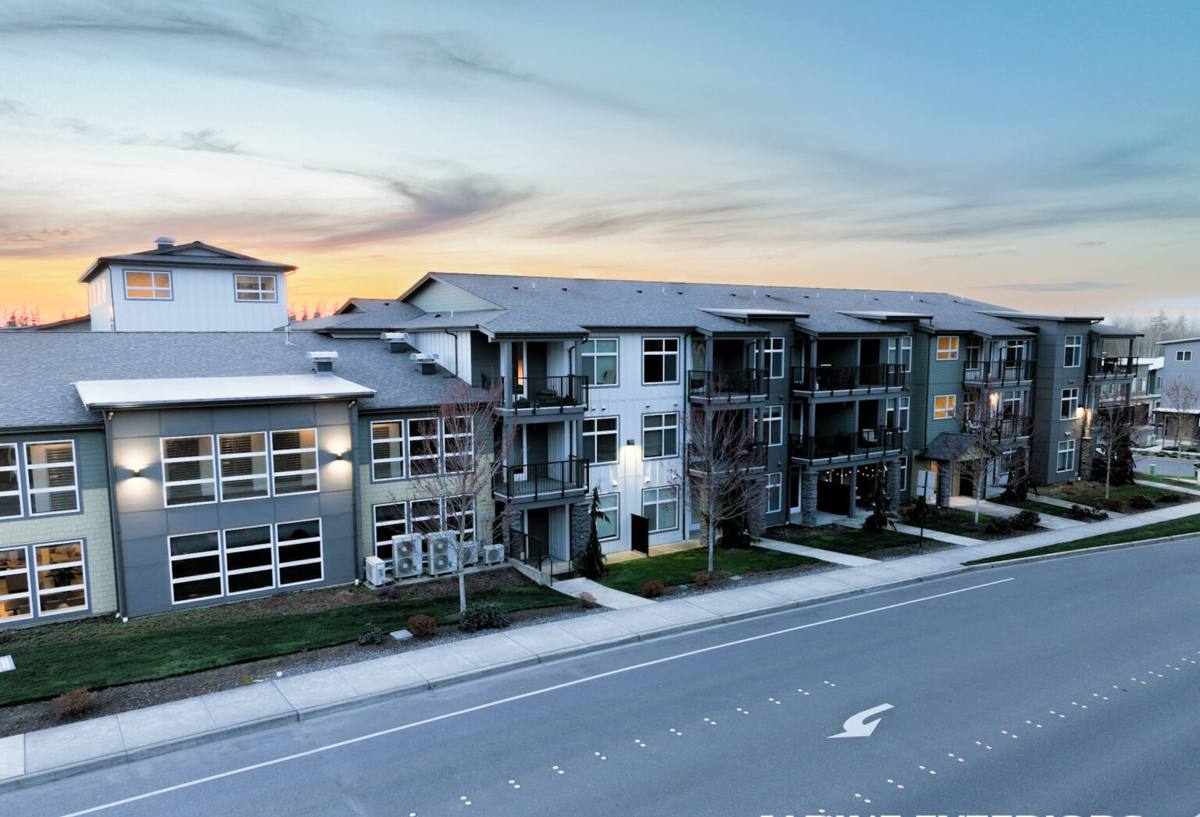
Why James Hardie Fits This Neighborhood
James Hardie fiber cement is engineered to resist moisture absorption, doesn't feed mold or fungal growth the way wood-based products can, and won't warp, crack, or rot the way wood and some engineered wood products do when they stay damp for extended periods. That last point matters a lot in a neighborhood where siding can stay wet under tree canopy long after the rain stops.
Product lines we use in Sehome
Most Sehome homes get one of these, sometimes combined for visual interest:
- HardiePlank lap siding — the standard horizontal siding look, available in several exposures and textures, used on the large majority of homes we side in this area.
- HardiePanel vertical siding — used for accent sections, gable ends, or a modern board-and-batten look.
- HardieShingle siding — used as an accent on gables or dormers where a shingle-style look fits an older Sehome home's character.
- HardieTrim — fiber cement trim boards used around windows, corners, and fascia so the whole envelope is a matched, non-wood system rather than fiber cement siding paired with wood trim that ages differently.
James Hardie also engineers its products by climate zone — what the company calls HZ10 and HZ5 formulations — with the Pacific Northwest falling into the wetter, cooler category. We spec accordingly rather than installing whatever happens to be in stock.
What a Correct Installation Involves Here
Fiber cement siding is only as good as the installation behind it, and in a damp, salt-exposed neighborhood, the details that don't show matter more than the ones that do.
Moisture management behind the siding
A correctly installed Hardie job in this climate includes a proper weather-resistive barrier, correctly lapped and taped house wrap, and — on most projects — a rainscreen gap that lets any moisture that gets behind the siding drain and dry instead of sitting against the sheathing. Skipping the rainscreen is one of the most common corners cut on fiber cement installs, and it's exactly the detail that matters most in a climate with this much sustained dampness.
Fasteners and flashing near the water
Salt air corrodes the wrong fastener over time, so we use fasteners rated for the exposure rather than whatever is cheapest. Flashing at windows, doors, and every horizontal trim transition has to be installed so water sheds outward at every layer — head flashing above windows and trim, kick-out flashing where a roofline meets a wall, and step flashing done correctly rather than papered over with caulk.
Clearances and cut-edge sealing
Hardie siding needs proper clearance from grade, roof lines, and decks so it isn't sitting in standing water or snow. Every field cut needs to be primed and sealed per Hardie's specifications, because an unsealed cut edge is one of the few ways moisture can get into the board itself. It's a five-minute step per cut that's easy to skip and easy to regret.
Hardie Compared to Other Siding in This Climate
| Factor | James Hardie Fiber Cement | Vinyl | Wood / LP-Type Engineered Wood |
|---|---|---|---|
| Moisture absorption | Very low, engineered for wet climates | Doesn't absorb, but seams and gaps let water behind it | Absorbs moisture; prone to swelling if damaged |
| Moss and algae resistance | Factory finish resists organic growth | Can host mold/mildew in shaded, damp spots | Feeds algae and moss without regular treatment |
| Salt air / corrosion exposure | Material itself doesn't corrode | Can become brittle in temperature swings | Wood fasteners and finish degrade faster near salt air |
| Finish longevity | Factory ColorPlus finish, warrantied separately from the board | Color can fade; no factory finish warranty on most lines | Needs repainting/restaining on a recurring cycle |
| Fire resistance | Non-combustible core | Combustible, can melt/deform | Combustible |
This isn't a knock on every other product on the market — vinyl and engineered wood both have legitimate uses and price points. It's why, specifically in a marine, moss-prone climate like Sehome's, we decided the trade-offs weren't ones we wanted to keep explaining to homeowners after the fact.
Our Process for Sehome Projects
- On-site assessment — we look at sun exposure, tree cover, drainage around the foundation, and the condition of the existing wall assembly before quoting anything.
- Moisture check — if there's any sign of trapped moisture or damage behind the current siding, we address that first. Covering a wet wall with new siding just hides the problem.
- Prep and weather barrier — removal of old siding, repair of any damaged sheathing, and installation of house wrap and rainscreen furring.
- Installation to spec — Hardie boards, panels, or shingles installed with correct fastener placement, seams, and clearances, following James Hardie's published installation instructions rather than shortcuts.
- Trim, flashing, and sealing — all cut edges sealed, flashing installed at every penetration and transition, caulking done at the joints Hardie specifies (and skipped where it isn't supposed to be used, since over-caulking can trap moisture).
- Final walkthrough — we go over the finished job with the homeowner, including what maintenance (if any) is actually needed going forward.
Cost Factors on a Sehome Home
Every project is different, but the same handful of factors drive most of the cost variation we see on Sehome homes:
| Factor | Why It Matters Here |
|---|---|
| Existing wall condition | Homes with hidden moisture damage from years of wet exposure need sheathing repair before siding goes on |
| Home size and complexity | Gables, dormers, and multiple stories add labor and material |
| Product mix | Combining lap siding with shingle or panel accents costs more than a single product throughout |
| Trim scope | Full fiber cement trim replacement versus reusing sound existing trim changes the budget |
| Access and site conditions | Mature landscaping, fencing, and tight lot lines common in Sehome can affect staging and labor time |
We give straightforward, itemized estimates rather than a single lump number, so homeowners can see where the money is actually going.
Living with Siding in a Moss-Prone Neighborhood
James Hardie's factory-applied ColorPlus finish is designed to resist the kind of organic growth that's common under Sehome's tree cover, but no siding is entirely maintenance-free in a climate this wet. A little routine attention keeps it looking right for decades:
- Rinse siding (garden hose pressure, not a pressure washer aimed directly at seams) once or twice a year, more often in heavily shaded areas.
- Keep gutters clear so overflow doesn't run down the siding face repeatedly.
- Trim back shrubs and low branches so siding gets some air movement and sun exposure between rains.
- Check caulking at trim joints every couple of years and have any cracked sections redone.
- Address any moss on adjacent roofing promptly, since roof runoff carrying moss spores onto siding below is a common source of staining.
Why Local Experience in Sehome Matters
A crew that already works this neighborhood knows the practical details that don't show up in a general spec sheet — how much shade a given lot really gets through the year, where salt air exposure is worse depending on how open a lot is to the Bay, and what the City of Bellingham's permitting and inspection process expects for exterior work. That familiarity shows up in fewer surprises mid-project and a finished install that's actually built for this specific micro-climate rather than a generic one.
Warranty and Long-Term Value
James Hardie backs its siding products with a non-prorated limited warranty on the substrate, and ColorPlus finished products carry a separate finish warranty covering the factory color coat. Both are transferable if the home is sold, which matters to buyers in a market where siding condition gets scrutinized closely during inspections. Correct installation is part of what keeps that warranty valid — another reason the installation details matter as much as the product choice itself.
If you're weighing a siding project in Sehome and want a straight answer about what your home actually needs, we're happy to take a look and put together a free, no-pressure estimate.