 Bellingham
 Siding in Sehome: A Hillside Neighborhood That Takes a Beating
Sehome sits close to downtown Bellingham, on rising ground near Western Washington University, with a mix of older homes and newer infill scattered across its slopes. That hillside position matters more than most homeowners realize. Elevation changes how wind-driven rain hits a wall, how long shade lingers on the north and east sides of a house, and how much moss and algae build up on siding that never fully dries out between storms. Add Bellingham's salt-tinged air off Bellingham Bay and a wet season that can stretch from October through May, and you've got a climate that is genuinely hard on exterior materials.
We install siding across Whatcom County, but Sehome jobs come with their own pattern: houses shaded by mature trees, sloped lots that concentrate runoff along foundation walls, and a real mix of construction eras — from older wood-sided homes that have been patched for decades to newer builds already showing early moisture damage from a rushed original install. Whatever the starting point, the fixes that actually work here are the same: material that doesn't rot, doesn't feed moss, and is installed with the flashing and clearances this climate demands.
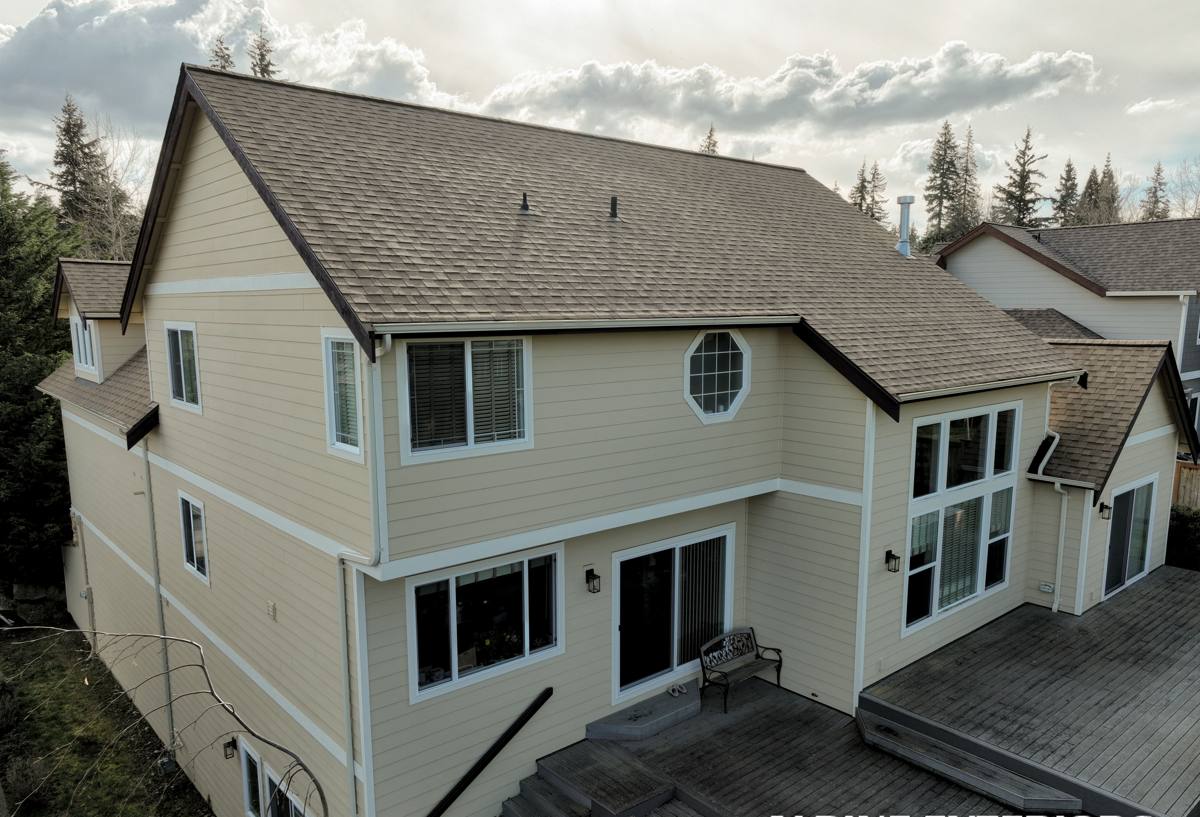
What Sehome's Climate Actually Does to Siding
Salt Air and Driving Rain
Bellingham Bay isn't far from Sehome as the crow flies, and the marine air that rolls in carries fine salt and moisture that accelerates corrosion on fasteners, trim metal, and anything with exposed raw wood. Combine that with the driving rain typical of Pacific Northwest winter storms — rain that comes in sideways, not straight down — and you get water forced into laps, seams, and butt joints that would stay dry in a calmer climate. Siding on the windward side of a Sehome home works harder than siding on a home twenty miles inland.
The Long Moss Season
Whatcom County's moss season isn't really a season — it's most of the year. Wherever siding stays shaded and damp, moss, algae, and lichen get a foothold, especially on north-facing walls, under eaves, and near mature landscaping common on Sehome's older lots. Untreated wood and some fiber cement products absorb moisture and give moss something to cling to and root into. Over years, that constant damp cycle softens wood fiber, degrades paint film, and opens the door to rot even when the siding looks fine from the street.
What a Correct Siding Job Looks Like Here
A siding installation that holds up in Sehome isn't just about swapping old panels for new ones. It's a system, and every layer matters:
- Water-resistive barrier: A continuous, correctly lapped weather barrier behind the siding, not just wrapped around openings.
- Rainscreen or drainage gap: A small air gap behind the siding lets bulk water drain and lets the wall assembly dry, instead of trapping moisture against the sheathing.
- Flashing at every penetration: Windows, doors, hose bibs, light fixtures, and vents all need proper head flashing and kick-out flashing where rooflines meet walls — a common failure point on hillside homes with multiple roof planes.
- Correct fastener placement and spacing: Manufacturer-specified nailing patterns and clearances, not "close enough," so panels don't buckle, crack, or pull loose in wind.
- Ground and roof clearance: Siding kept off grade, decks, and roof lines by the margin the manufacturer requires, so splashback and runoff don't sit against the bottom edge.
- Caulking only where it belongs: Sealant at trim joints and penetrations, not used to paper over a flashing detail that should have been done right.
Skip any one of these and you can end up with siding that looks correct on installation day but fails from behind, years later, exactly where you can't see it.
Why This Matters More for Shaded, Sloped Lots
On a flat, sun-exposed lot, a mediocre install might dry out fast enough between storms to avoid trouble for a while. On a shaded Sehome slope, that margin for error shrinks. Walls that stay damp longer punish shortcuts faster — which is exactly why the drainage gap, flashing details, and clearances above aren't optional extras. They're the difference between siding that lasts and siding that quietly rots behind a fresh coat of paint.
Why We Install James Hardie Fiber Cement — And Nothing Else
We made a deliberate decision to install only James Hardie fiber cement siding. We don't install vinyl, LP SmartSide, Cemplank, Allura, primed spruce, or cedar. That's not a marketing line — it's a standard we hold because of what we've seen these products do, and not do, in a climate like this one.
Vinyl is inexpensive and low-maintenance in a mild climate, but it's a poor match for driving rain and wind — it can flex, crack in cold snaps, and warp near heat sources, and it relies almost entirely on what's behind it to keep water out since the panels themselves aren't a true water barrier. Wood-based products like cedar and primed spruce look great initially but need ongoing maintenance — repainting, caulking, moisture checks — that most homeowners underestimate, and they're the most vulnerable to the rot and moss buildup this climate specializes in. Engineered wood siding like LP SmartSide has improved over the years, but it's still a wood-fiber product, and wood fiber that gets wet repeatedly over decades behaves like wood. Other fiber cement brands, like Cemplank and Allura, are legitimate competitors to Hardie on paper, but we don't have the same track record, factory finish system, or regional engineering with them that we have with Hardie.
James Hardie fiber cement is non-combustible, doesn't feed moss the way wood does, and holds its shape and paint line far better than vinyl in temperature swings. Hardie's ColorPlus factory finish is baked on under controlled conditions — more consistent and more fade- and chip-resistant than field-applied paint, and it comes with its own finish warranty. Hardie also makes climate-engineered HZ product lines built specifically for regions like the Pacific Northwest, and backs the product with a strong, transferable limited warranty. When it's installed to spec — the flashing, the gap, the clearances — it's the material we trust to actually perform through a Whatcom County winter, not just survive the install photos.
Comparing Siding Options for a Sehome Home
| Material | Moisture Resistance | Moss/Algae Resistance | Maintenance | Our Take |
|---|---|---|---|---|
| James Hardie Fiber Cement | Excellent when flashed and gapped correctly | High — doesn't feed moss like wood | Low — factory finish holds for years | What we install |
| Vinyl | Fair — depends heavily on barrier behind it | Moderate | Low, but can crack/warp over time | Not installed by us |
| Cedar / Primed Spruce | Poor without diligent upkeep | Low — wood fiber invites growth | High — repainting and sealing needed | Not installed by us |
| LP SmartSide | Fair — engineered wood, still wood-based | Moderate | Moderate | Not installed by us |
| Cemplank / Allura | Good — competitor fiber cement | High | Low | Not our brand of choice |
Our Process for a Sehome Siding Project
- On-site assessment: We walk the home, checking existing siding, trim, flashing, and any moisture or moss patterns tied to shading and slope.
- Scope and product selection: We recommend the Hardie product line, profile, and color that fit the home and the site's exposure.
- Tear-off and sheathing check: Old siding comes off, and we inspect the sheathing underneath for rot or damage before anything new goes on — this is where hidden problems from a prior install usually surface.
- Weather barrier and drainage plane: A continuous, correctly lapped barrier and drainage gap go in before a single piece of siding is hung.
- Flashing at every penetration: Windows, doors, and roof-to-wall intersections get flashed to actually shed water, not just look sealed.
- Installation to manufacturer spec: Correct fastener pattern, clearances from grade and roof lines, and joint treatment throughout.
- Final walkthrough: We review the finished work with you and point out anything you should keep an eye on going forward.
Why Hire a Crew That Already Works Sehome
A siding crew that regularly works Bellingham's older, hillside neighborhoods already knows to expect shaded north walls, sloped drainage, and the moisture patterns that come with mature tree cover — instead of discovering them mid-project. That familiarity shows up in fewer surprises once tear-off starts and in flashing and drainage decisions that account for the site, not just a generic install checklist. It also means a crew that understands what a marine climate with a long moss season does to a wall assembly over ten or twenty years, not just what it looks like on day one.
A Quick Homeowner Checklist Before You Commit
- Ask what's happening behind the siding — weather barrier, drainage gap, flashing — not just what the finished panels will look like.
- Confirm the fastener and clearance specs being used match the manufacturer's requirements for your product and climate zone.
- Ask how kick-out flashing will be handled at any roof-to-wall intersections on your home.
- Get the warranty terms in writing — both the manufacturer's product warranty and the installer's workmanship warranty.
- Ask how tear-off will reveal — and address — any sheathing damage found underneath the old siding.
If your Sehome home's siding is showing moss buildup, cracked or warped panels, or you're just planning ahead for a replacement, we're happy to take a look and walk you through what we'd recommend and why. Reach out for a free, no-pressure estimate using the form below.