 Bellingham
 Siding Repair in Sehome: A Different Job Than a Full Re-Side
Sehome is one of Bellingham's older, established central neighborhoods, rising toward Sehome Hill with a mix of mid-century houses and newer infill built in among them. A lot of that housing stock has already been through at least one round of exterior work, and plenty of homes are still carrying original or early-replacement siding that's held up reasonably well overall but is starting to fail in specific spots rather than across the whole wall. That's exactly the situation a siding repair call is built for: the house doesn't need a full tear-off, it needs someone to correctly diagnose which sections are actually failing and fix those without disturbing the siding that's still doing its job.
We work throughout Whatcom County and see a steady number of repair calls in Sehome specifically, shaped by a combination of hillside terrain, mature tree cover, and Bellingham's marine climate. Salt-tinged air moving in off the Salish Sea, rain that arrives sideways more often than it falls straight down, and a moss season that can run most of the year on shaded slopes all put localized stress on siding. That stress tends to show up first at seams, corners, trim joints, and the lower courses closest to grade, not evenly across the whole house, which is exactly why repair work rewards a careful eye more than a generic checklist.
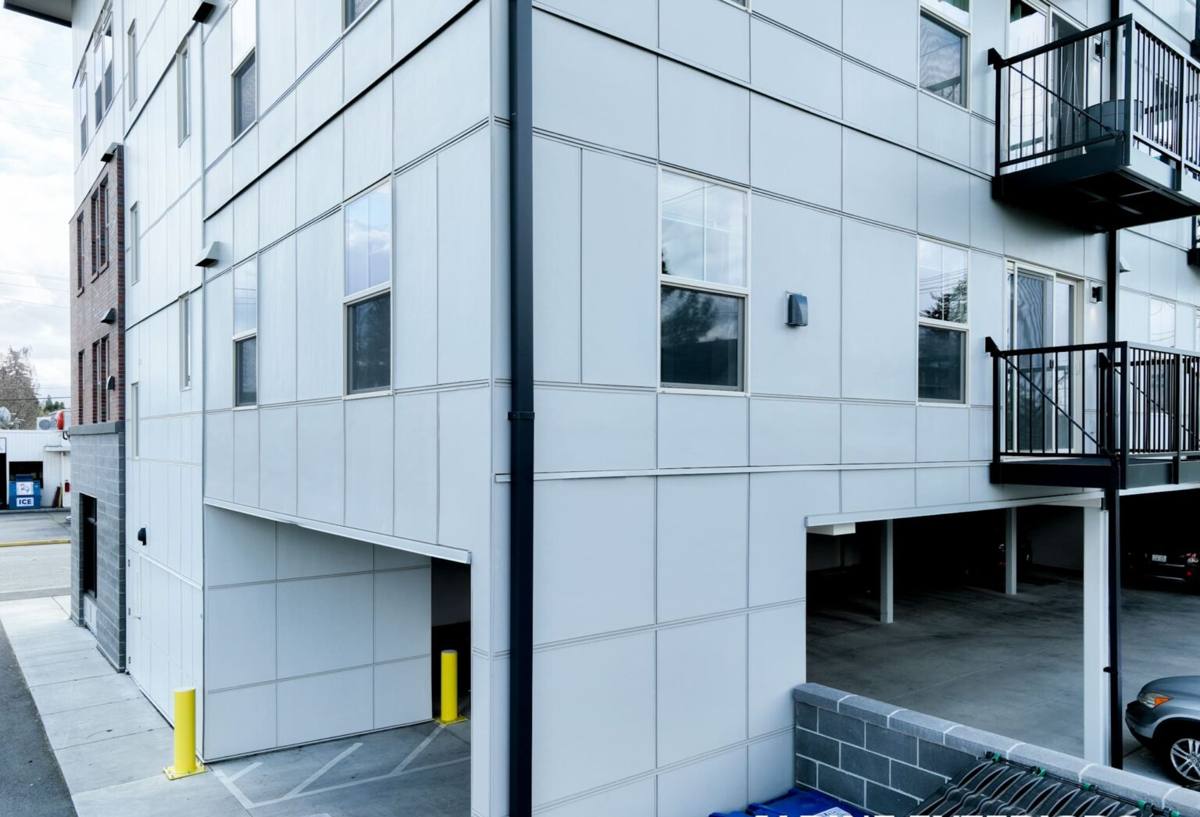
What Sends a Sehome Homeowner Looking for a Repair
Driving Rain Finding the Weak Points
Wind-driven rain doesn't test a wall evenly. It concentrates at trim joints, window and door casings, corner boards, and anywhere two pieces of siding meet, working into small gaps that a calmer, drier climate would rarely expose. A single failed caulk joint or a slightly separated lap seam can be enough to let water behind the siding during a windy Bellingham storm, even while the rest of the wall stays completely dry. Those are exactly the kinds of failures a targeted repair is meant to catch before they spread.
Shade, Slope, and a Long Moss Season
Sehome's rise toward Sehome Hill and its mature tree cover mean a lot of walls here stay damp longer than they would on an open, flat lot. Moss and mildew take hold fastest on shaded, north-facing sections, and once established, they hold moisture against the siding surface, which accelerates whatever damage is already starting underneath. Sloped lots also change how water drains around the foundation, which can concentrate moisture against the base of certain walls more than others on the same house.
Salt Air and Fastener Corrosion
Sehome sits inland of Bellingham's immediate waterfront, but it's still well within reach of the salt-laden air that moves through the whole city off the Salish Sea. That air works slowly on fasteners, flashing, and lower-grade finishes over years. A common repair call we get involves rust staining at a fastener line or a section of siding that's worked loose because the fasteners holding it have corroded past the point of holding tight.
Common Siding Repair Situations We See in Sehome
- Impact damage: Cracked or punched-through siding from a fallen branch, storm debris, or accidental impact, more common here than in newer subdivisions given how many mature trees overhang older Sehome lots.
- Moisture damage near grade: Soft or deteriorated siding along the bottom courses, often tied to grading, splashback, or a downspout that's been dumping water against the same section of wall for longer than anyone noticed.
- Failed caulk and trim joints: Cracked or missing caulking at corners, window trim, and butt joints that's let water start tracking behind an otherwise sound section of siding.
- Damage behind clogged gutters: Overflow from gutters packed with needles and leaves from Sehome's tree canopy, which saturates the siding and trim directly beneath and can go unnoticed until paint starts to fail.
- Isolated warping or delamination: Localized failure in an older or lower-grade material, even when the rest of the wall is still performing fine, common on homes with a mix of original and previously patched siding.
Repair or Replace? How We Make That Call Honestly
Not every damaged section means a bigger project is coming, and not every siding problem can be solved with a patch. We start by figuring out whether the damage is isolated to the visible siding or whether moisture has already tracked into the sheathing behind it. A cracked board with dry substrate underneath is usually a straightforward repair. Soft, spongy material that extends beyond the visible damage, or a pattern of repeated failures across multiple sections of the same wall, usually means the underlying water management, flashing, house wrap, or grading has a problem that a spot repair won't fix. In that case, we'll tell you plainly that a repair is a short-term patch rather than a real solution, and explain what a more complete fix would actually involve. We'd rather lose a quick repair sale than sell a homeowner a patch we already know won't hold.
What a Correct Siding Repair Actually Involves
A repair that's done right is more than swapping a damaged board for a new one. It starts with pulling back enough of the surrounding siding to check the condition of the house wrap, flashing, and sheathing underneath, because damage that's visible on the surface often extends further than it looks from the outside. Any compromised house wrap or flashing gets corrected as part of the repair, not left in place under new material. The replacement piece needs to be fastened correctly, lapped and sealed the way the original installation should have been, and integrated back into the surrounding wall so it sheds water the same way the rest of the house does.
Matching Existing Siding
On homes where the existing siding is James Hardie, matching a repair section is usually straightforward since Hardie's factory-finished ColorPlus colors are consistent and traceable by product line. On homes with older wood, vinyl, or engineered wood siding, an exact match can be harder to find, especially if the original product has been discontinued or has weathered unevenly over the years. In those cases we'll talk through realistic options, including whether it makes more sense to repair with the closest available match or to use the repair as a starting point for converting that section, or eventually the whole wall, to fiber cement.
Why We Handle Sehome Repairs With James Hardie Fiber Cement
We install James Hardie fiber cement exclusively, and that standard carries over into repair work as well. When a repair calls for new material, whether it's a single board or a larger section, we use Hardie's HZ5 product line, engineered for regions with heavy sustained moisture and freeze-thaw cycling, a closer match to Whatcom County's climate than a generic national spec. Fiber cement doesn't swell, cup, or warp the way wood-based products can after repeated wet-season moisture cycles, which matters as much for a repair patch as it does for a full installation, since a repair that reacts differently to moisture than the surrounding siding tends to stand out and fail again sooner.
We don't install or repair with LP SmartSide, vinyl siding, Cemplank, Allura, primed spruce, or cedar as replacement material, even when patching into an existing wall of one of those products. Those are legitimate materials and plenty of contractors work with them competently, but we've made a professional call that in a climate this consistently wet and salt-exposed, we'd rather stand behind fiber cement fully than introduce a repair material with different moisture behavior than what we trust for full installations.
Siding Repair Cost Factors in Sehome
| Factor | What It Affects | Why It Matters Here |
|---|---|---|
| Extent of hidden moisture damage | Whether sheathing or framing repair is needed before new siding goes on | Sehome's shaded, sloped lots let moisture sit longer, increasing the odds damage extends past what's visible |
| Material match and availability | Whether an exact color and profile match is possible | Older non-Hardie siding can be harder to match than factory-finished ColorPlus product lines |
| Access and site conditions | Labor time and equipment needs | Mature trees and sloped yards common in Sehome can add setup and staging time |
| Root cause correction | Whether flashing, house wrap, or grading also needs work | A repair that ignores the underlying water source tends to fail again within a season or two |
| Number and location of repair sites | Total labor and travel time across the project | Scattered damage from tree debris or gutter overflow may mean several separate repair areas rather than one |
Real numbers depend on what we find once we open up the damaged area, which is why we look at the actual condition of the wall in person before quoting rather than pricing a repair sight unseen.
Signs Your Sehome Home Needs a Siding Repair, Not Just a Cleaning
- A cracked, split, or missing section of siding, especially after a windstorm or falling branch
- Soft or spongy siding near the bottom courses or directly below a gutter or downspout
- Moss or dark staining that returns quickly after cleaning on a specific section rather than the whole wall
- Visible gaps or cracked caulking at corners, trim, or window and door casings
- Paint that's peeling or bubbling in one localized area while the rest of the wall looks fine
- Rust staining around fasteners or a section of siding that flexes or moves when pressed
- A musty smell or soft drywall on an interior wall that lines up with a specific section of exterior siding
Why Hiring a Crew That Already Works in Sehome Matters
A crew that regularly works this part of Bellingham has already seen how driving rain, shade, and salt air actually behave on Sehome's older housing stock and sloped lots, not just how a repair looks on paper. That translates into practical judgment calls on a repair visit: knowing to check the wall below a gutter line before assuming the siding itself is the problem, recognizing when a patch is genuinely enough versus when it's just delaying a bigger fix, and understanding which sections of a hillside lot tend to hold moisture longest. A contractor who only occasionally works in this specific climate is more likely to treat every repair the same way, without accounting for what actually causes damage on a Sehome home versus a house a few miles inland.
If you've got a damaged, soft, or failing section of siding on your Sehome home, or you're just not sure whether what you're looking at needs a repair or something bigger, we're glad to take a look. Reach out using the form below to schedule a free, no-pressure estimate.