 Bellingham
 Asphalt Shingle Roofing for Sunnyland Homes
Sunnyland is one of Bellingham's older, established neighborhoods, and that means a lot of its roofs are original construction or a single re-roof behind. Asphalt shingles remain the most practical choice for most of these homes — they're proven, repairable, and priced within reach of a typical remodel budget. But "asphalt shingle roofing" done right in Whatcom County looks different than the same job done in a dry inland climate. The materials, the underlayment strategy, and the ventilation all have to account for what this part of Washington actually throws at a roof year-round.
This page focuses specifically on shingle roofing for Sunnyland and the surrounding Bellingham area — what the local climate demands, what a properly built roof includes, and how we approach the work when we're on-site.
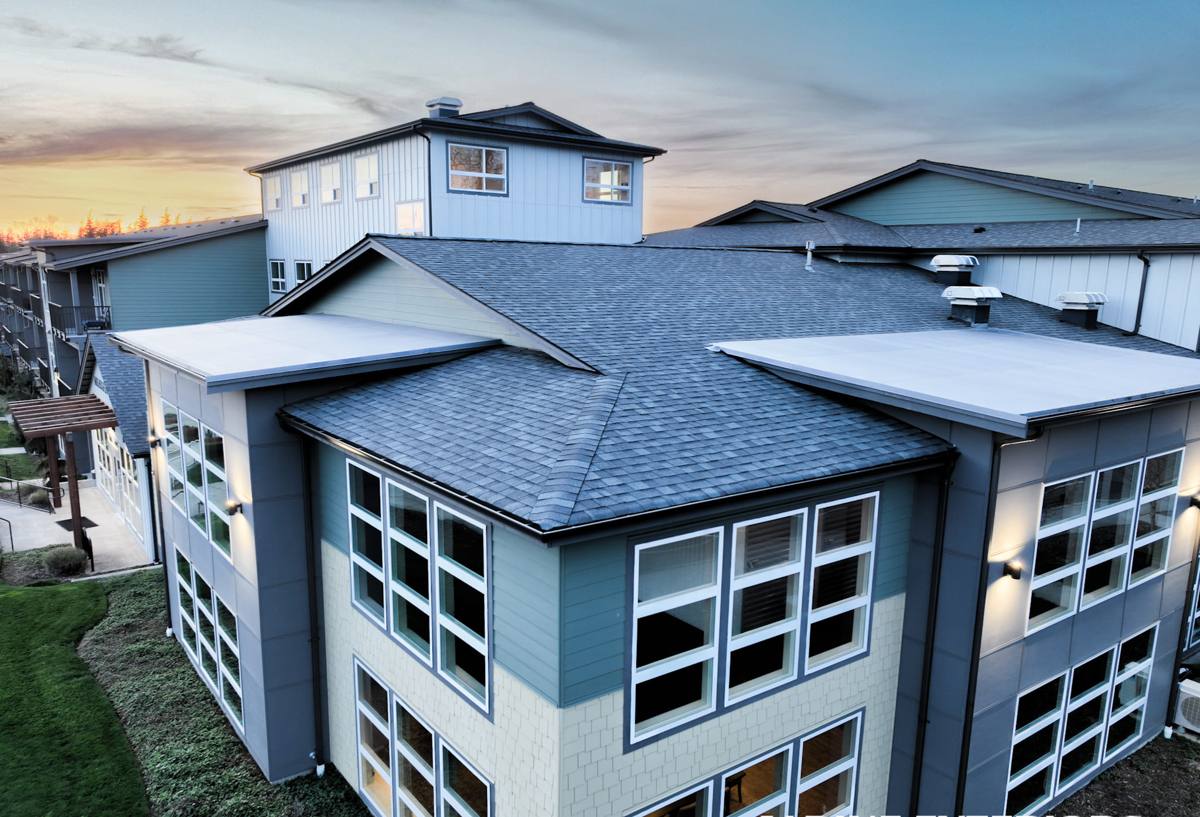
What Bellingham's Climate Does to a Shingle Roof
Whatcom County sits in a marine climate zone, and Bellingham's location near the water means homes in and around Sunnyland deal with a specific combination of stressors most inland roofing crews rarely see together on the same job:
- Salt-laden air — even homes set back from the water pick up airborne salt that accelerates corrosion on exposed metal flashing, nails, and vent components.
- Driving, wind-pushed rain — Pacific storms don't just fall straight down here; sideways rain finds every weak seam, exposed nail head, and under-lapped shingle edge.
- A long moss and algae season — mild, damp winters and shaded lots (common in older Sunnyland yards with mature trees) give moss months to establish itself on north-facing slopes and shaded valleys.
- Persistent low humidity in the attic space — without adequate ventilation, moisture from daily living gets trapped under the roof deck and condenses, which rots sheathing from the inside long before the shingles themselves fail.
None of this means asphalt shingles are a poor fit for this area — they're used successfully on the large majority of homes here. It means the installation details matter more here than they do in a drier climate, and cutting corners on those details shows up faster.
What a Correctly Built Shingle Roof Includes
A shingle roof is really a system of layers working together, not just the visible shingle course. In this climate, every layer earns its place:
Roof Deck and Sheathing
Before anything else goes down, the deck itself has to be sound. Soft spots, delaminated plywood, or water-stained sheathing get identified during tear-off and replaced — not covered up. Skipping this step is the single most common shortcut that leads to early roof failure, and it's invisible once the new shingles are on.
Underlayment and Ice-and-Water Protection
A synthetic underlayment provides the secondary water barrier beneath the shingles. In areas prone to wind-driven rain — eaves, valleys, and low-slope transitions — we use a self-adhering ice-and-water membrane that seals around fastener penetrations, which matters far more here than snow load ever will.
Flashing
Flashing around chimneys, skylights, sidewalls, and valleys is where the majority of roof leaks actually originate, not in the open field of shingles. Salt air shortens the service life of cheap or improperly sealed flashing, so we favor corrosion-resistant materials and proper step-and-counter-flashing details over caulk-dependent shortcuts.
Shingle Installation
Correct nail placement (not staples, not overdriven or underdriven nails), proper exposure and offset between courses, and manufacturer-specified nailing patterns for the wind zone all affect how long the roof holds up to Bellingham's storm patterns.
Ventilation
A balanced intake-and-exhaust ventilation system keeps the attic space close to outdoor temperature and humidity, which reduces condensation, extends shingle life, and slows moss regrowth on shaded slopes.
Common Issues We See on Sunnyland Roofs
Because we work in this neighborhood regularly, we see the same handful of problems repeat across different homes and roof ages:
| Issue | Typical Cause | Why It Matters Here |
|---|---|---|
| Moss buildup on north-facing slopes | Shade from mature trees, prolonged dampness | Moss lifts shingle edges and holds moisture against the roof deck |
| Streaking or dark algae staining | Airborne algae spores common in humid coastal climates | Cosmetic at first, but can shorten granule life over time |
| Corroded flashing or fasteners | Salt-laden air combined with standard (non-coated) metal | Leads to hidden leaks at valleys, chimneys, and vent boots |
| Leaks at eaves and low-slope areas | Missing or inadequate ice-and-water membrane | Wind-driven rain pushes water uphill under shingle edges |
| Premature shingle curling | Poor attic ventilation trapping heat and moisture | Shortens shingle lifespan well below its rated warranty |
Choosing the Right Shingle for This Climate
Not every asphalt shingle product is built with moss and algae resistance in mind, and in a neighborhood like Sunnyland — with a mix of open and tree-shaded lots — that difference matters. We generally steer homeowners toward algae-resistant (AR-rated) shingles, which use copper- or zinc-infused granules to slow biological growth on shaded slopes. We also pay attention to a shingle's wind rating, since coastal gusts during winter storms are a real consideration, not a theoretical one.
Shingle Grade Comparison
| Shingle Type | Typical Lifespan | Best Fit For |
|---|---|---|
| 3-Tab (standard) | 15–20 years | Budget-conscious re-roofs on simple rooflines |
| Architectural / Dimensional | 25–30+ years | Most Sunnyland homes; better wind and impact resistance |
| Premium / Designer | 30+ years | Homes prioritizing curb appeal and longer warranty coverage |
For most homes in this area, architectural shingles strike the right balance — they hold up better to wind and moisture cycling than 3-tab products, and the cost difference is usually modest compared to the added years of service life.
Our Installation Process
When we take on a shingle roofing project in Sunnyland, the process generally follows the same sequence:
- On-site assessment — we inspect the existing roof, attic ventilation, and any visible trouble spots before quoting anything.
- Full tear-off — we don't install new shingles over old ones; a proper tear-off lets us inspect and repair the deck underneath.
- Deck repair — any soft, delaminated, or water-damaged sheathing is replaced before underlayment goes down.
- Ice-and-water and underlayment installation — applied at eaves, valleys, and other vulnerable areas first, then across the full deck.
- Flashing installation — new flashing at chimneys, skylights, sidewalls, and valleys rather than reusing corroded or undersized pieces.
- Shingle installation — installed to manufacturer specifications for nailing pattern and exposure, matched to the local wind zone.
- Ventilation check and correction — intake and exhaust venting is verified and adjusted if the existing setup is undersized or blocked.
- Cleanup and magnetic sweep — the property is cleared of debris and checked for stray nails before we consider the job finished.
Ventilation and Moisture: The Part Homeowners Rarely See
In a climate this damp, attic ventilation deserves its own explanation. Warm, moist air generated inside the home rises and, without a clear path out, condenses against the underside of a cool roof deck during Bellingham's long wet season. Over years, this trapped moisture can rot sheathing, degrade insulation, and encourage mold — all hidden above the ceiling line. A balanced system pairs intake vents (typically at the eaves) with exhaust vents (ridge or roof-mounted) so air moves continuously through the attic space. Getting this right during a shingle re-roof is one of the most cost-effective things a homeowner can do, since it protects both the new roof and the structure underneath it.
Maintenance That Actually Extends Roof Life Here
A well-installed shingle roof still needs periodic attention in this climate, especially on shaded lots. This is the maintenance rhythm we recommend to Sunnyland homeowners:
- Have moss and debris cleared from shaded slopes before it establishes a thick mat, rather than after
- Keep gutters clear so water doesn't back up under the lower shingle courses during heavy rain
- Trim overhanging branches to reduce shade, moisture retention, and debris buildup on the roof
- Schedule a visual inspection every year or two, particularly after a hard winter storm season
- Address small flashing or fastener issues promptly — they're inexpensive to fix early and expensive once they've caused a leak
- Avoid pressure washing shingles directly, which can strip granules and shorten shingle life
Why a Local Bellingham Crew Makes a Difference
Roofing crews that work Whatcom County regularly build a working knowledge of things that don't show up in a generic install manual — which slopes in a given neighborhood tend to hold moss longest, how local wind patterns off the water stress certain rooflines, and which flashing details hold up against years of salt air rather than just passing a first inspection. That familiarity comes from doing the work here repeatedly, not from a one-time job in the area. It also means straightforward access to local permitting requirements and a crew that's easy to reach if a question comes up after the job is done, rather than a company working from out of the region.
What Affects the Cost of a Shingle Roof
Every roof is different, so we don't quote pricing sight unseen, but the main factors that drive cost on a typical Sunnyland home are consistent:
| Factor | Why It Matters |
|---|---|
| Roof size and complexity | More valleys, dormers, and penetrations mean more labor and flashing detail |
| Deck condition | Rotted or soft sheathing found during tear-off adds material and labor |
| Shingle grade selected | 3-tab, architectural, and premium products carry different material costs |
| Existing ventilation | Undersized or blocked systems may need vent additions or corrections |
| Layers to remove | Tear-off of multiple existing layers adds disposal and labor time |
We walk through these factors on-site so a homeowner understands exactly what's driving the number, rather than getting a flat estimate that doesn't reflect the actual condition of the roof.
Get a Straightforward Estimate
If your Sunnyland home is due for a roof inspection or a shingle replacement, we're happy to take a look and give you a clear, no-pressure estimate — no upsell script, just an honest read on what your roof actually needs. Use the form below to get started.