 Bellingham
 Building Decks in Sunnyland the Right Way
Sunnyland is one of Bellingham's older, established residential neighborhoods, and that means a lot of the homes here have decks that were either built decades ago under different code, or were never built with Whatcom County's specific weather in mind. When we get called out to Sunnyland for a new deck or a rebuild, the conversation almost always starts the same way: a homeowner has a deck that's gone soft in one corner, has green film that won't scrub off, or just doesn't feel solid anymore when the grandkids run across it. None of that is unusual for this part of Bellingham. It's the predictable result of building a deck for a dry climate and putting it in a wet one.
A deck built correctly for Sunnyland looks almost identical to a deck built anywhere else in the country — same basic shape, same railings, same boards. The difference is entirely in what's underneath and how it's put together. That's the part homeowners don't see until something fails, and it's the part we focus on first.
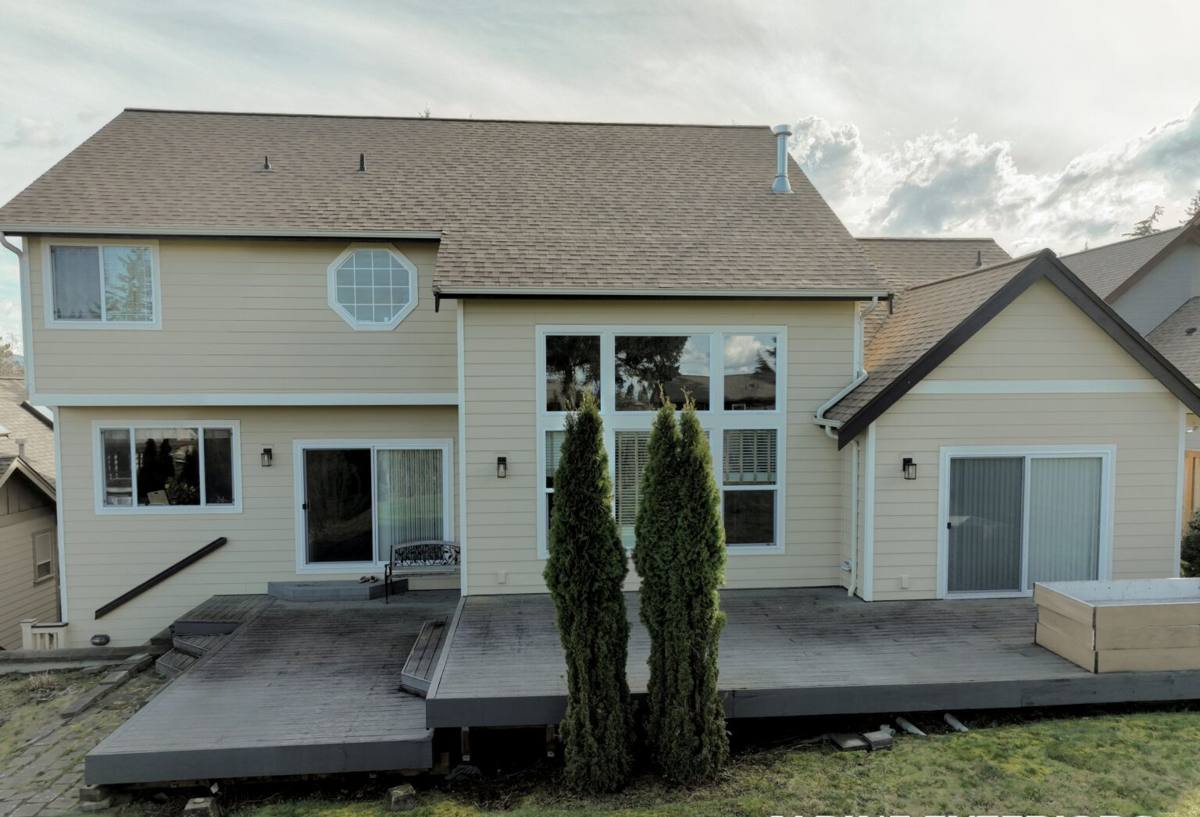
Why Bellingham's Climate Is Hard on Decks
Bellingham sits right on the water, and Sunnyland gets its share of what that means for wood and fasteners. Salt-laden air off Bellingham Bay accelerates corrosion on anything metal — nails, screws, joist hangers, bolts — long before it would rust out in a drier inland town. Combine that with Whatcom County's long, driving-rain winters and the extended gray, damp stretch from fall through spring, and a deck here is basically wet or damp for a big chunk of the year.
Add in moss. Bellingham's moss season is long, and it doesn't just grow on roofs — it colonizes any horizontal wood surface that stays shaded and damp, including deck boards, especially on the north or east side of a house where the sun doesn't reach in winter. Moss holds moisture against the wood surface, and that moisture is what actually causes rot — the moss itself is more of a symptom than the root cause.
What This Combination Actually Does to a Deck
- Fasteners and hardware corrode from the inside out, often failing before the visible wood shows damage
- Ledger board connections (where the deck attaches to the house) trap water against the house's rim joist if not flashed correctly
- Joists and beams rot from the top down where water sits on horizontal cuts and screw holes
- Decking boards cup, splinter, or grow slick with algae, especially in shaded areas
- Footings can shift if drainage around them wasn't planned for our wet soil conditions
What a Correctly Built Deck Involves
A deck is a structure, not a surface — the boards you walk on are the last 10% of the job. Everything that matters for longevity happens before a single deck board goes down.
Footings and Framing
Footings need to be sized and set to the depth required for our soil and frost conditions, not just poured to whatever looked adequate on a smaller job. Undersized or shallow footings are one of the most common problems we find when we're asked to evaluate an older Sunnyland deck — the deck was probably fine when it was new, but has slowly shifted over years of wet winters.
Ledger Board Flashing
This is the single most important detail on any deck attached to a house, and it's the detail most often skipped or done poorly on older builds. The ledger board is bolted directly to the house's rim joist, and if it isn't properly flashed with the flashing lapped correctly under the house's siding or house wrap, water works its way behind the ledger and rots the rim joist from inside — hidden damage that's expensive to fix because it involves the house structure, not just the deck.
Fasteners and Hardware
Given the salt air off the Bay, we treat corrosion-resistant hardware as a baseline requirement, not an upgrade. That means stainless or heavy-coated structural screws, joist hangers, and bolts rated for ground contact and coastal exposure — not the standard hardware that's fine in a drier climate but starts rusting within a few seasons here.
Joist Protection
Covering the tops of joists and beams with a self-adhering flashing tape before decking goes down keeps water from sitting directly on cut lumber and screw penetrations — the two spots where rot starts first. It's a relatively small step during construction that meaningfully extends the life of the frame underneath the deck.
Choosing the Right Decking Material
The decking material you choose has to hold up to shade, moss exposure, and near-constant winter dampness — not just look good on a sunny day. There's no single "correct" answer here; it depends on budget, how much upkeep you want to do, and how much sun your particular lot actually gets.
| Material | Upfront Cost | Maintenance Needed | How It Handles Moss/Moisture |
|---|---|---|---|
| Pressure-treated wood | Lowest | Annual cleaning, periodic staining/sealing | Prone to moss and mildew if not cleaned and resealed regularly |
| Cedar | Moderate | Regular sealing to maintain color and resist moisture | Naturally rot-resistant but still needs upkeep in shaded, damp spots |
| Composite decking | Higher | Occasional washing, no staining or sealing | Handles moisture well; some capped composites resist algae better than others |
| Tropical hardwoods | Highest | Periodic oiling to prevent graying and surface checking | Very dense and rot-resistant, but installation is unforgiving of mistakes |
For shaded lots or the north/east side of a house — common in a lot of Sunnyland's mature, tree-lined lots — we're honest with homeowners that low-maintenance materials like composite tend to pay for themselves in avoided upkeep. For sunnier, more open lots, a well-maintained cedar or treated wood deck can perform fine and costs less upfront. We don't push one product line over another as a rule; we walk through the trade-offs for your specific site and let you decide what maintenance level you're comfortable committing to.
Permits, Setbacks, and Guardrail Code
Most new decks and significant deck rebuilds in Bellingham require a permit, and the requirements around setbacks, footing depth, and guardrail height are set by the City of Bellingham and Whatcom County building codes. Decks above a certain height off grade need code-compliant guardrails and baluster spacing, and attached decks need engineered ledger connections. We handle the permit process as part of the job — pulling the permit, scheduling inspections, and building to what the inspector will actually sign off on — rather than leaving a homeowner to navigate that alone or, worse, building something that has to be torn out later because it wasn't permitted correctly.
Our Deck Building Process
- On-site assessment — we look at your lot's sun exposure, drainage, soil, and how the deck will attach to the house, and take note of any existing moisture or rot issues if this is a rebuild
- Design and material discussion — layout, railing style, and decking material chosen based on your budget and how much maintenance you want to take on
- Permitting — we prepare and submit what's needed for the City or County and schedule required inspections
- Footings and framing — footings set to proper depth, framing built with corrosion-resistant hardware throughout
- Ledger flashing and joist protection — the moisture-control details that don't show once the deck is finished, done correctly the first time
- Decking, railings, and finish work — installed to the manufacturer's specifications, particularly important for composite products where fastening and spacing affect the warranty
- Final walkthrough and inspection sign-off — we walk the finished deck with you and make sure everything's been inspected and closed out properly
Keeping a Sunnyland Deck Ahead of Moss and Moisture
Even a correctly built deck needs some seasonal attention in this climate. A little regular maintenance goes a long way toward avoiding the kind of hidden rot that turns into a expensive repair.
- Sweep leaves and debris off the deck surface regularly in fall — trapped organic matter holds moisture and feeds moss growth
- Clean the deck surface at least once a year with a deck-safe cleaner to remove algae and moss film before it takes hold
- Check that gaps between deck boards stay clear so water can drain through rather than pooling
- Inspect railings and stair connections annually for any looseness, which can signal fastener corrosion
- Re-seal or re-stain wood decking on the schedule recommended for that specific product — don't wait until it's visibly gray and dry
- Keep any nearby shrubs or tree branches trimmed back so more sunlight and airflow reach shaded sections of the deck
- Have the under-deck area and ledger connection checked periodically, especially on older decks, since that's where hidden rot starts
Why a Crew That Already Works Sunnyland Matters
A deck built by a crew that hasn't worked in this specific climate tends to look fine on completion day and then reveal its shortcuts two or three winters later, once the ledger flashing, hardware, or drainage details get tested by an actual Bellingham winter. We work in Sunnyland and the surrounding Bellingham neighborhoods regularly, which means we're not guessing at what holds up here — we're building to what we've seen actually survive the salt air, the rain, and the moss season, and we're building it that way from the start rather than fixing it after the fact.
That local familiarity also means a smoother permit process, since we're used to what Bellingham and Whatcom County inspectors expect to see on a deck project, and fewer surprises about soil or drainage conditions typical to this part of town.
Get a Free Estimate for Your Sunnyland Deck
Whether you're planning a new deck from scratch or dealing with an older one that's starting to show its age, we're happy to come take a look and give you an honest read on what it needs. There's no pressure and no cost for the estimate — just a straightforward conversation about your options, timeline, and budget. Use the form below to get started.