 Bellingham
 Why Sunnyland Roofs Take a Different Kind of Beating
Sunnyland sits close enough to Bellingham Bay that salt-laden air is a daily fact of life on this roof, not an occasional visitor. Add in wind that funnels off the water during winter storms, a tree canopy that keeps large sections of many roofs shaded most of the year, and a rainy season that can run for months without a real dry stretch, and you've got a roof environment that ages differently than roofs twenty miles inland. Storm damage here rarely shows up as one dramatic event. More often it's a wind gust that lifts a few shingles during a November system, followed by months of slow moisture intrusion nobody notices until there's a stain on a ceiling.
We work on roofs throughout Whatcom County, but Sunnyland's mix of mature trees, older housing stock, and proximity to the water means storm damage repair here has its own patterns. Knowing those patterns is what separates a repair that actually holds from one that fails again at the next atmospheric river.
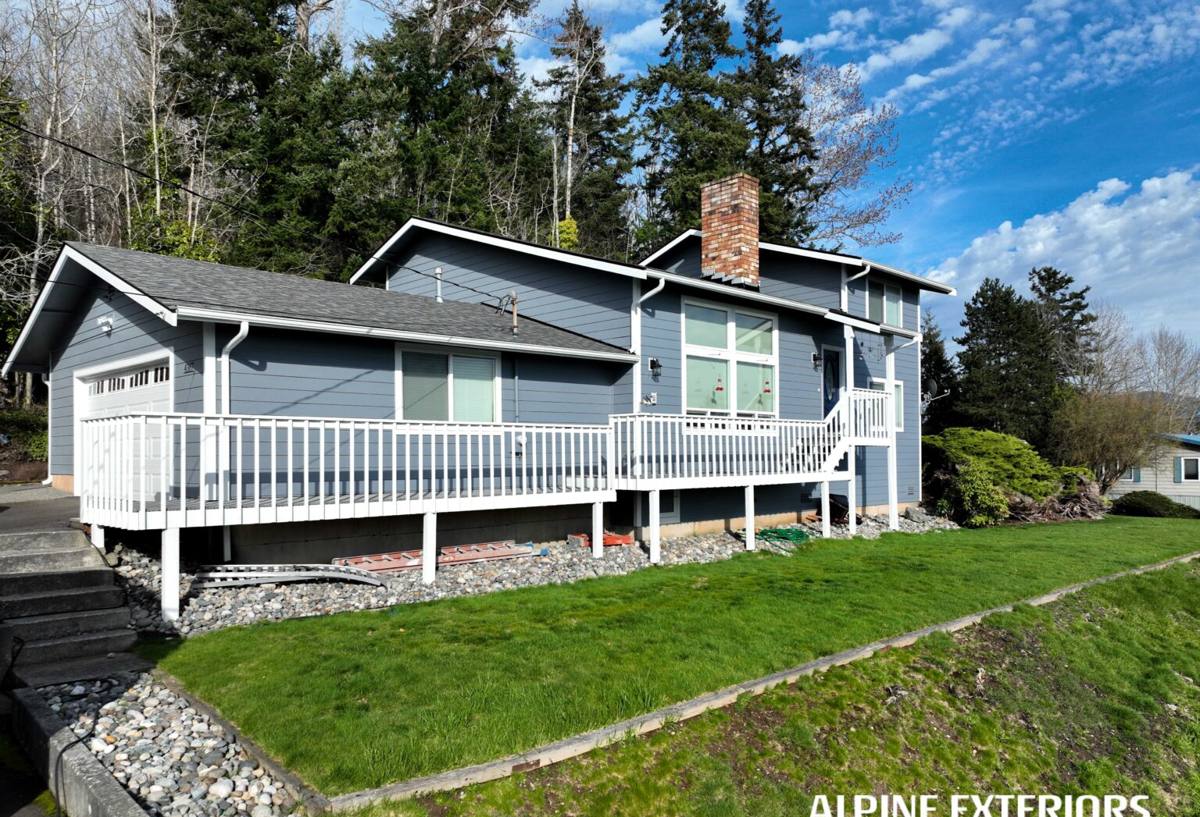
What Storm Damage Actually Looks Like on a Sunnyland Roof
Wind-Lifted and Creased Shingles
Bellingham doesn't see hurricane-force wind often, but sustained gusts off the bay combined with gusty downdrafts through tree-lined streets are enough to lift shingle tabs, crease them, or break the seal strip that keeps them locked down. A creased shingle doesn't always look dramatic from the ground. It can sit there looking mostly fine while losing its ability to shed water correctly every time it rains.
Moss, Trapped Moisture, and Slow Failures
Sunnyland's tree cover is part of what makes the neighborhood pleasant to live in, and it's also why moss season runs long here. Moss holds moisture directly against the shingle surface for weeks at a time, which softens the mat, degrades granule adhesion, and eventually works its way under tabs and around fasteners. Storm damage and moss damage often show up together on the same roof — a wind event exposes an edge that moss has already weakened, and that's where the leak starts.
Flashing, Valleys, and Hidden Leaks
Most storm-related leaks we find in this neighborhood don't start in the open field of the roof. They start at flashing — around chimneys, at wall-to-roof transitions, in valleys where two roof planes meet, and around older roof vents that have flexed and cracked over the years. Driving rain pushed sideways by wind will find any gap in that flashing far faster than it finds a gap in the shingles themselves.
What a Correct Storm Damage Repair Actually Involves
A proper repair starts above the shingles and ends below the decking, not the other way around. That means checking three layers, not one:
- Decking: Wet or delaminating plywood or OSB underneath damaged shingles has to be identified and replaced, not covered over.
- Underlayment: The water-resistant barrier beneath the shingles needs to be intact and properly lapped, especially around any area that was disturbed by wind or repair work.
- Surface material: Replacement shingles, flashing, or panels need to match the existing roof closely enough in profile and color that the repair doesn't stand out or create a new weak seam.
A repair that only addresses the visible surface layer — a bead of roofing cement over a lifted shingle, for example — tends to fail again within a season or two, especially with the freeze-thaw and constant wetting cycles typical of a Whatcom County winter. We treat storm damage repair as a chance to check the surrounding roof area for related wear, not just patch the one spot that's obviously broken.
Our Process for Sunnyland Storm Repairs
Inspection and Documentation
We start with a full roof inspection, not just a look at the damaged area. Storm damage often has a secondary problem sitting nearby — a soft spot in the decking, a cracked vent boot, a moss colony that's been quietly working on a section of the roof for a couple of seasons. We photograph and document what we find, which matters both for your own records and for any insurance claim you decide to file.
Emergency Mitigation
If a roof is actively leaking or has an exposed section of decking, stopping water intrusion comes first. That can mean a tarp, temporary flashing, or sealing an exposed edge until permanent repair materials are on hand. The goal is limiting interior damage, not a permanent fix.
The Repair
Once we know the full scope, we remove damaged material back to sound decking, replace what needs replacing, and rebuild the flashing and shingle courses to match manufacturer installation specs — correct nail placement, proper overlap, sealed penetrations. We don't stop at "no longer visibly leaking." The repair needs to shed water correctly in a driving rain, not just a light drizzle.
Cleanup and Final Walkthrough
We clear debris, check gutters and downspouts near the repair area for anything that fell during the storm or came off during the work, and walk the repair with you before we consider the job finished.
Working With Your Insurance Company
Many storm repairs in this area are covered, at least partially, by homeowners insurance — but coverage depends on your policy, your deductible, and the adjuster's assessment of cause. We can't promise a claim outcome, and we won't tell you otherwise. What we can do is provide clear photo documentation, a written scope of damage, and a repair estimate that an adjuster can work from. If you haven't filed a claim yet, it's worth having a roof assessment done first so you know what you're actually dealing with before that conversation starts.
What Affects the Cost of a Storm Damage Repair
Every roof and every storm is different, but the cost of a repair generally comes down to a handful of factors:
| Factor | Why It Matters |
|---|---|
| Extent of decking damage | Rotted or delaminated decking has to be cut out and replaced before new shingles go on, which adds labor and material beyond the surface repair |
| Roof pitch and access | Steeper roofs and roofs with limited access (tight lot lines, mature trees close to the house) take longer and require more safety setup |
| Material match | Matching an older shingle color or a discontinued profile can require sourcing effort, or a decision to accept a visible patch |
| Number of affected areas | A single lifted shingle is a small job; damage spread across a valley, a chimney, and a wall flashing is several jobs in one |
| Underlying moss or moisture damage | If moss has already compromised the area around the storm damage, the repair scope grows to address both problems together |
We give you a written estimate before any repair work starts, broken down clearly enough that you can see what you're paying for and why.
Why a Crew That Already Works in Sunnyland Matters
Roofing crews that mostly work outside this area sometimes miss the details that matter here — the way tree cover changes moss patterns block by block, the roof styles common to Bellingham's older neighborhoods, or how quickly a Whatcom County storm system can turn a small leak into a real problem if repair scheduling drags. A crew that already knows Sunnyland can usually get eyes on your roof faster after a storm, has a working sense of which materials hold up best given the salt air and shade here, and isn't guessing at how the local weather pattern will affect the repair timeline.
Familiarity with City of Bellingham permitting and inspection expectations also matters for anything beyond a straightforward repair, so the work doesn't stall waiting on paperwork nobody accounted for.
A Homeowner's Post-Storm Roof Checklist
After any significant wind or rain event, a quick check from the ground can catch problems early, before they turn into an interior leak:
- Look for shingles on the ground or in gutters near downspouts
- Scan the roofline from the yard for shingles that look lifted, curled, or a different color than the rest of the field
- Check ceilings and attic spaces for new stains, especially near chimneys, skylights, or wall lines
- Clear gutters and downspouts of storm debris so water has somewhere to go
- Note any large branches that came down near the roof, even if they didn't appear to hit it directly
- Call for an inspection if anything looks off — a small issue caught early is almost always a smaller repair
Preventing the Next Round of Storm Damage
You can't control the weather coming off the bay, but you can reduce how much damage it does. Regular moss removal and treatment keeps organic growth from weakening shingles before a storm even arrives. Trimming branches back from the roofline reduces both direct impact risk and the shade that keeps sections of the roof damp longer than they should be. Periodic flashing and vent boot checks catch small cracks before driving rain finds them. None of this eliminates storm damage entirely, but it narrows the gap between "roof handled the storm fine" and "roof needs emergency repair."
If your roof took a hit in a recent storm, or you just want a professional set of eyes on it before the next system rolls through, we're happy to take a look. Use the form below to request a free, no-pressure estimate — we'll tell you honestly what we find, what it needs, and what it doesn't.