 Bellingham
 Windows Built for Sunnyland's Weather, Not Just the Showroom
Sunnyland sits close enough to the water and to Bellingham's tree canopy that its homes take a different kind of beating than houses further inland. Salt-tinged air off the bay works on metal hardware and finishes year-round. Driving rain, pushed sideways by wind off the water, finds every gap in a poorly sealed frame. And the long moss season here — stretching from fall through spring — means anything that stays damp for weeks at a time will eventually show it, whether that's a roofline, a deck, or a window sill. Windows are one of the few building components that have to manage all three of these stresses at once while still doing their main job: keeping conditioned air in and the weather out.
A lot of window sales pitches focus on the glass — U-factor, low-E coatings, gas fills — and glass matters. But in a climate like Whatcom County's, how the window is installed and sealed against the wall matters just as much as what the window itself is made of. We've seen plenty of technically good windows fail early because the flashing and sealant details around them were done wrong. That's the part of the job that doesn't show up on a spec sheet but shows up on your energy bill and, eventually, in your wall framing.
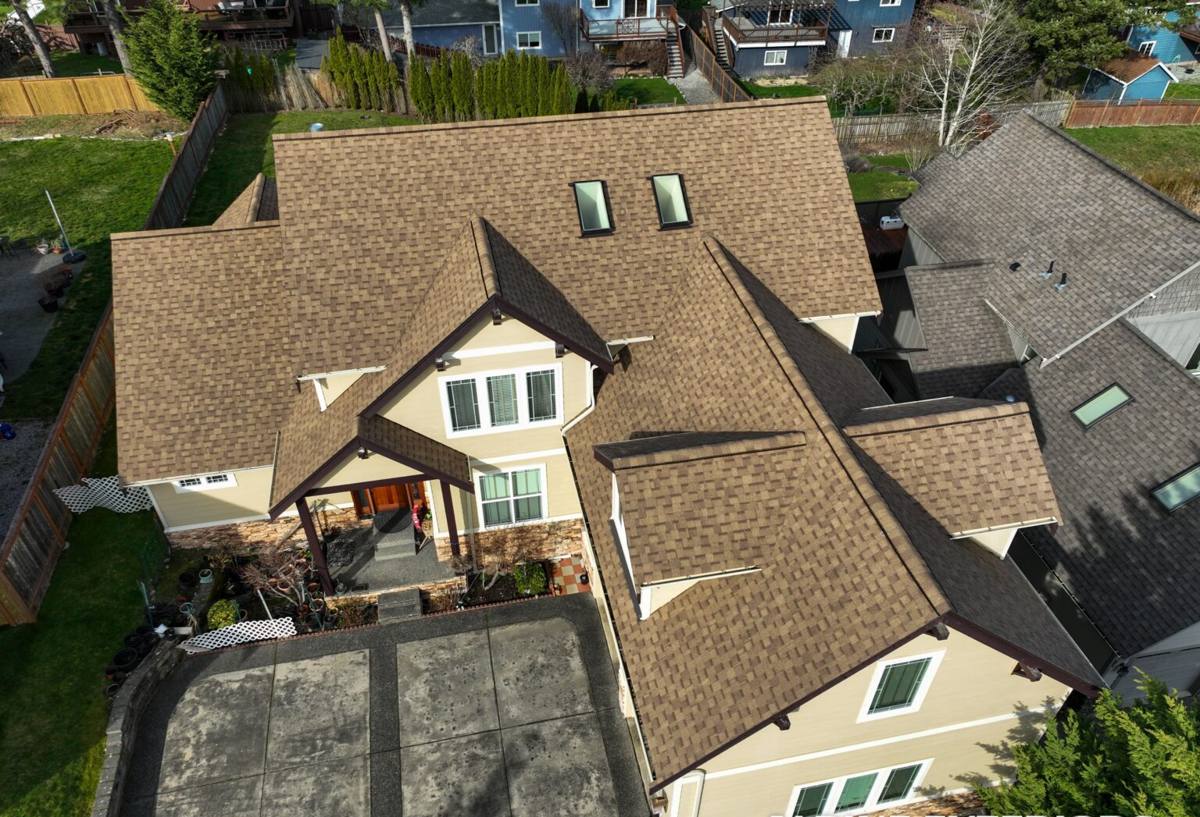
What Sunnyland Homes Actually Need From Their Windows
Moisture Management First, Efficiency Second
Efficiency ratings assume the window stays dry and the seal stays intact. In a neighborhood that sees sustained wet weather for much of the year, the first job of a window installation is keeping bulk water out of the wall cavity — proper flashing, correctly lapped house wrap, and sealant that's appropriate for the substrate. Only once that's right does the insulating value of the glass and frame actually pay off the way it's supposed to.
Hardware That Tolerates Salt Air
Cheaper window hardware — locks, hinges, balance mechanisms — can start to pit or stiffen up faster near the water than it would further inland. It's worth asking what hardware finish and material a window uses before you buy, rather than finding out five years in when a lock starts sticking.
Frames and Sills That Shed Water, Not Hold It
Moss and mildew take hold wherever water sits. Sill design, drainage weep holes, and the slope of the exterior trim around a window all affect whether water runs off or lingers. On older Sunnyland homes we often find sills that were never detailed to drain properly, which is part of why paint and caulking around older windows fail years before the glass itself does.
Signs Your Current Windows Are Losing the Fight
- Condensation forming between the panes (a sign the seal has failed, not just a humidity issue)
- Visible daylight or a draft you can feel with your hand along the frame edge
- Wood trim or sills that feel soft, discolored, or have a musty smell
- Difficulty opening, closing, or locking a window that used to operate smoothly
- Noticeably higher heating bills compared to similar-sized rooms in the house
- Moss or dark staining building up on exterior sills or trim faster than elsewhere on the house
None of these on their own mean you need full replacement — sometimes it's a resealing or hardware fix. But if you're seeing two or three of these together, especially soft trim combined with drafts, it's usually more cost-effective to replace than to keep patching.
What a Correct Window Installation Involves
Whether we're replacing one window or doing a whole house, the sequence matters more than the brand name on the box:
- Remove the old window and inspect the rough opening and framing underneath for any hidden rot or moisture damage — this is often where problems from a prior bad install show up.
- Repair or replace any damaged framing before anything new goes in. Installing a new window over compromised wood just hides the problem.
- Install flashing correctly, lapped so water is directed outward and down, never trapped behind the window.
- Set the new window plumb, level, and square, with proper shimming so the frame isn't under stress that can affect operation or seal integrity over time.
- Insulate the gap between the window frame and rough opening — not overpacked, which can bow the frame, and not left empty, which leaves a thermal gap.
- Seal and caulk the exterior with a product suited to our climate and the specific siding material involved.
- Finish interior trim and confirm smooth operation before we consider the job done.
Skipping or rushing any one of these steps is usually where premature window failures start — and it's rarely the glass unit itself that's at fault.
Comparing Window Frame Materials for This Climate
| Frame Material | How It Handles Salt Air & Rain | Maintenance | Typical Trade-Off |
|---|---|---|---|
| Vinyl | Good — won't corrode or rot, handles moisture well | Low — occasional cleaning | Limited color/finish options, can't be repainted easily |
| Fiberglass | Very good — stable in wet/dry cycling, resists warping | Low to moderate | Higher upfront cost than vinyl |
| Aluminum | Fair — needs a quality thermal break or it conducts cold and can sweat | Moderate — watch for corrosion at coastal exposure over time | Efficiency depends heavily on thermal break quality |
| Wood / Wood-Clad | Requires diligent sealing and upkeep to resist moss, rot, and moisture intrusion | High — regular inspection and refinishing | Best appearance for some homeowners, but highest maintenance burden here |
We install a mix of these depending on the home, its exposure, and the homeowner's priorities. There's no single "correct" material for every Sunnyland house — a well-installed vinyl or fiberglass window will outperform a poorly installed wood one, and vice versa. What we won't do is recommend a low-maintenance sales pitch on a product that we know needs more upkeep than most homeowners are prepared to give it in this climate. We'll tell you honestly what a given material asks of you over the next 15-20 years.
Understanding Efficiency Ratings Without the Jargon
You'll see a few numbers on window spec sheets. Here's what they actually mean for a home in this part of Washington:
- U-factor: How well the window resists heat loss. Lower is better — this is the number that matters most for our mild, heating-dominated climate.
- Solar Heat Gain Coefficient (SHGC): How much solar heat passes through the glass. Less critical here than in sunnier climates, but still worth matching to the window's sun exposure.
- Air Leakage: Lower numbers mean a tighter seal against drafts — directly tied to how well the window was installed, not just manufactured.
For most Sunnyland homes, prioritizing a strong U-factor and a well-executed installation will do more for comfort and energy bills than chasing every available upgrade on the glass package.
Why Local Installation Experience Matters Here
A window crew that mostly works drier inland areas doesn't always think about wind-driven rain the same way a crew working near the water does. We work on homes throughout Bellingham and Whatcom County, including Sunnyland, and we size up flashing details, sealant choice, and drainage the same careful way on every job because we've seen what happens when it's skipped. That's not a marketing point — it's the difference between a window that's still performing well in fifteen years and one that needs attention in five.
We also know this neighborhood's housing stock has a mix of ages and construction styles, from older homes with original wood trim to newer builds with vinyl siding. Each of those calls for slightly different flashing and trim approaches, and we adjust the install method to match rather than using one generic process on every house.
Cost Factors to Expect
Window project costs vary based on a few honest factors, and we'll walk through all of them during an estimate rather than quoting a number sight unseen:
- Number of windows and their sizes
- Frame material chosen (vinyl, fiberglass, aluminum, or wood)
- Condition of the existing framing — hidden rot or moisture damage adds repair work
- Whether it's a straightforward replacement in an existing opening or a new/resized opening
- Access and second-story or difficult-to-reach windows
- Trim and finish work required to match existing interior or exterior details
We'd rather walk your home and give you real numbers than throw out a broad range that doesn't reflect what your house actually needs.
Get a Straightforward Look at Your Windows
If your Sunnyland home has windows that are drafty, fogging, sticking, or just old enough that you're wondering whether it's time, we're glad to come take a look. We'll tell you honestly what we see — whether that's a simple reseal, a few problem windows, or a full replacement — and give you a clear, no-pressure estimate based on your actual house, not a generic quote. Reach out through the form below to schedule a free assessment.