 Bellingham
 Metal Roofing in Sunnyland: Built for This Corner of Bellingham
Sunnyland sits close enough to Bellingham Bay and Lake Whatcom that its homes take on a mix of weather most inland neighborhoods never deal with: salt-tinged air drifting up from the water, wind-driven rain off the Strait, and a shaded, moisture-heavy microclimate in the older tree-lined streets. A roof here isn't just shedding water — it's fighting corrosion, standing water, and organic growth for eight or nine months of the year. Metal roofing, installed correctly, handles all three better than almost anything else on the market. Installed poorly, it becomes a maintenance headache with panels that oil-can, fasteners that back out, and seams that trap moisture instead of shedding it.
This page covers what a metal roof needs to do specifically for a Sunnyland home, how we approach the job, and what separates a roof that lasts decades from one that causes problems in year five.
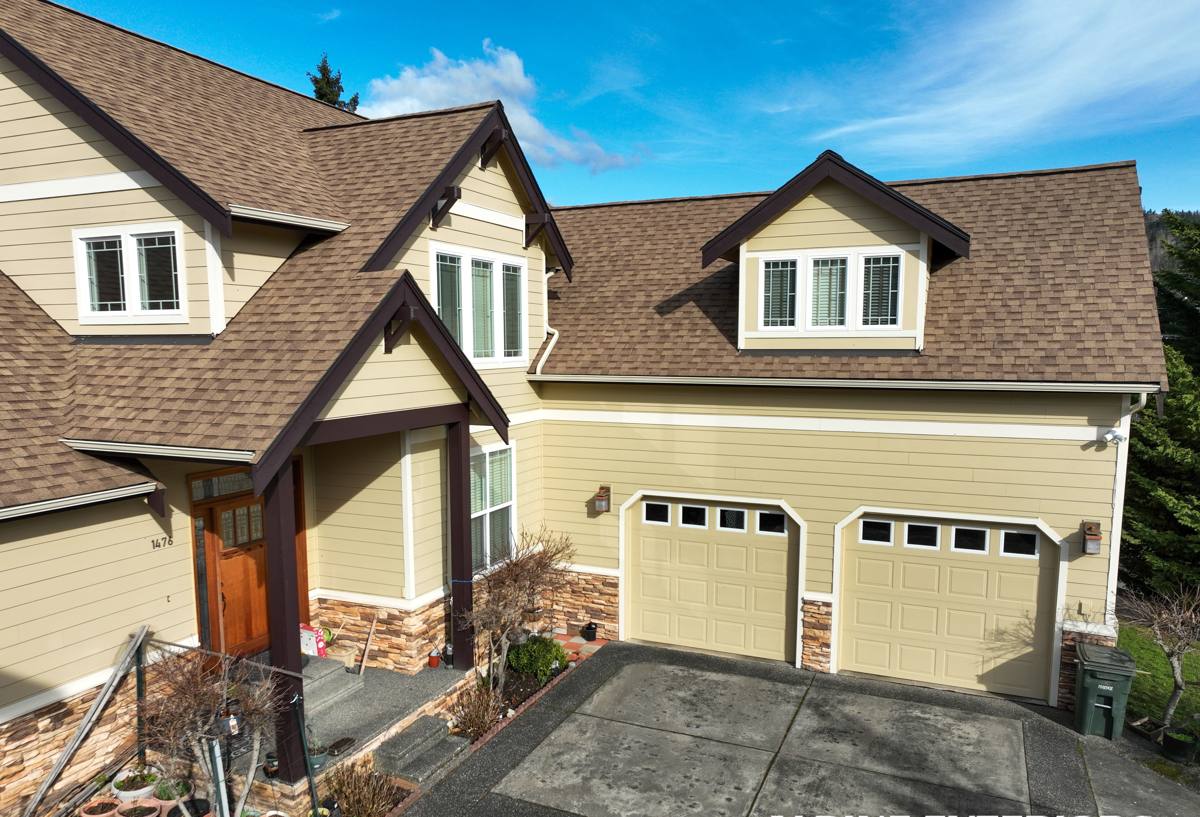
What Bellingham's Climate Actually Does to a Roof
Whatcom County doesn't get the extreme storms some regions do, but it makes up for that with duration. Rain here is frequent, low-intensity, and long-lasting, which means water sits on roof surfaces and in valleys far longer than a single hard downpour ever would. Add in:
- Salt air exposure — proximity to Bellingham Bay means airborne salt can accelerate corrosion on unprotected metal, exposed fasteners, and lower-grade coatings.
- Driving rain — wind off the water pushes rain sideways and uphill under poorly lapped flashing, which is where most leaks actually start.
- A long moss season — shade, moisture, and mild temperatures give moss and algae a wide window to establish on north-facing slopes and anywhere debris collects.
- Temperature swings — even modest daily swings cause metal to expand and contract, which is why fastening method matters as much as the panel itself.
None of these individually is dramatic, but stacked together over years, they punish roofing systems that weren't detailed with this specific climate in mind.
Why Metal Roofing Performs Well Here
Shedding water, not holding it
Metal's slick, continuous surface doesn't absorb moisture the way composite shingles can over time. Water runs off quickly instead of soaking in, which matters in a climate where roofs are wet more often than they're dry.
Resisting moss and organic growth
Moss struggles to get a foothold on a smooth metal surface the way it does on the textured surface of asphalt shingles or cedar. It's not moss-proof — debris in valleys and against dormers can still collect and hold moisture — but a metal roof gives moss far less to grab onto.
Standing up to wind and salt air — when specified correctly
Not all metal roofing handles coastal-adjacent air the same way. Panel material, coating type, and fastener quality all affect how well a system resists corrosion over 20-plus years. We factor Sunnyland's proximity to the bay into what we recommend, rather than defaulting to whatever's cheapest.
Metal Roofing Systems We Install
There isn't one "best" metal roof — there's a best fit for a given home's slope, structure, and budget. Here's how the common options compare for a Sunnyland application:
| System | Best For | Key Trade-Off |
|---|---|---|
| Standing seam (concealed fasteners) | Homes wanting maximum weathertightness and longevity | Higher upfront cost; fewer exposed fasteners means fewer future leak points |
| Exposed-fastener panel | Budget-conscious projects, outbuildings, simpler rooflines | More affordable, but fasteners need periodic inspection as gaskets age |
| Steel with a quality protective coating | Most residential roofs in this climate | Good balance of cost, durability, and corrosion resistance |
| Aluminum | Homes closest to the bay or with heavy salt air exposure | Naturally corrosion-resistant, though typically a higher material cost |
We'll walk through which of these makes sense for your specific roof, rather than steering every project toward the same product.
What a Correct Metal Roof Installation Actually Involves
Metal roofing has a reputation for being "install and forget," and that's mostly true — but only when the installation itself is done right. The panels are the easy part. The details are what determine whether the roof performs for 30 years or starts leaking in five.
Underlayment matters more than people think
Given how much wet weather this roof will see, we use underlayment rated for extended moisture exposure, not the minimum required by code. It's the backup layer that protects the deck if wind ever drives water past a seam.
Flashing is where leaks actually happen
Valleys, chimneys, skylights, and wall transitions are where driving rain finds its way in. Proper step flashing, valley flashing, and sealed penetrations matter far more to long-term performance than the panel profile you choose.
Fastening for expansion and contraction
Metal roofing expands and contracts with temperature swings. Panels need to be fastened in a way that allows for that movement — over-tightened or improperly spaced fasteners lead to oil-canning (visible waviness) and, eventually, fastener failure.
Ventilation underneath
A well-ventilated attic or roof deck prevents condensation from forming on the underside of metal panels, which is a common source of hidden moisture problems in humid coastal climates.
Moss, Algae, and Salt Air: The Maintenance Reality
Even a correctly installed metal roof isn't maintenance-free — it's low-maintenance. Sunnyland's tree cover and shaded lots mean debris still collects in valleys and against roof-wall intersections, and that debris holds moisture even on a slick metal surface. Left unaddressed, that's enough for moss and algae to establish, especially on north- and east-facing slopes that don't get much direct sun.
What we recommend for homes in this area:
- Clear valleys and gutters of needles and leaf debris at least twice a year, more often under mature conifers
- Keep overhanging branches trimmed back to reduce shade and debris load on the roof
- Rinse (never pressure-wash) visible moss or algae buildup rather than letting it accumulate
- Inspect exposed fasteners and flashing annually, particularly after the first few winters
- Address any scratched or damaged coating promptly — exposed bare metal is where salt-air corrosion starts
Our Process, From Estimate to Cleanup
We assess the existing roof structure, note problem areas like valleys and wall transitions, and talk through which metal system fits the home and the budget. From there:
- Detailed inspection of the deck, existing flashing, and ventilation before any tear-off begins
- Removal of the old roofing material and repair of any deck damage found underneath
- Installation of moisture-rated underlayment suited to this climate
- Panel installation with attention to proper fastening, expansion allowance, and clean seams
- Flashing detail work at every valley, penetration, and wall transition
- Full site cleanup, including magnetic sweep for stray fasteners
We stand behind the work and walk the finished roof with you before we consider the job done.
Cost Factors for a Sunnyland Metal Roof
Every roof is different, but the main variables that move a project's cost are consistent:
| Factor | Why It Matters |
|---|---|
| Roof size and pitch | Steeper roofs take longer to work safely and use more material for the same footprint |
| Panel and fastening system | Standing seam costs more than exposed-fastener panel, but reduces long-term leak risk |
| Existing deck condition | Rot or damage found during tear-off adds repair scope before new roofing goes on |
| Number of valleys, penetrations, and transitions | Each one needs custom flashing work, which adds labor time |
| Ventilation upgrades | Older homes often need ventilation improvements to perform well under a metal roof |
We provide a written estimate that breaks these factors down so you know exactly what you're paying for and why.
Signs Your Current Roof Needs Attention
If you're not sure whether your roof is due for a look, watch for these:
- Moss or dark streaking visible on north-facing slopes
- Granule buildup in gutters (a sign an asphalt roof is wearing down)
- Rust streaking near fasteners or flashing on an existing metal roof
- Soft spots or sagging when walked on
- Daylight visible through the attic roof deck
- Water stains on interior ceilings, especially after wind-driven rain
Why a Crew That Already Works Sunnyland Matters
A roofer who works this neighborhood regularly already understands the shade patterns, the debris load from mature trees, and how the salt air off the bay behaves here versus a few miles inland. That's not a small thing — it's the difference between a generic installation and one detailed specifically for the conditions your roof will actually face year-round. We know which slopes in this part of Bellingham tend to hold moss, which flashing details matter most in driving rain, and how to spec a system that won't need premature attention.
If your Sunnyland home is due for a new roof or you're weighing metal against other options, we're happy to take a look and give you an honest read on what it needs. Use the form below to request a free, no-pressure estimate.