 Bellingham
 Fairhaven Sits Right Where Weather Meets Wood Siding
Fairhaven is one of Bellingham's oldest neighborhoods, built up along the shoreline of Bellingham Bay, and that waterfront position is exactly what makes exterior siding decisions here different from a house a few miles inland. Homes closer to the water take on salt-laden air, wind-driven rain that hits siding at an angle instead of falling straight down, and long stretches of damp, shaded weather that keep exterior surfaces wet longer than they'd stay wet almost anywhere else in Whatcom County. Older homes in the neighborhood have often already been through one or two rounds of siding, and it shows in the patchwork of repairs, recaulked joints, and repainted trim you see block to block.
None of that is a knock on Fairhaven — it's simply the reality of a coastal, tree-shaded, older-housing-stock neighborhood. But it means the siding product and the installation details matter more here than they would in a drier, more sheltered part of town. This page walks through what that climate actually does to siding, what a correct James Hardie installation looks like for a Fairhaven home, and how our process works from first estimate to final walk-through.
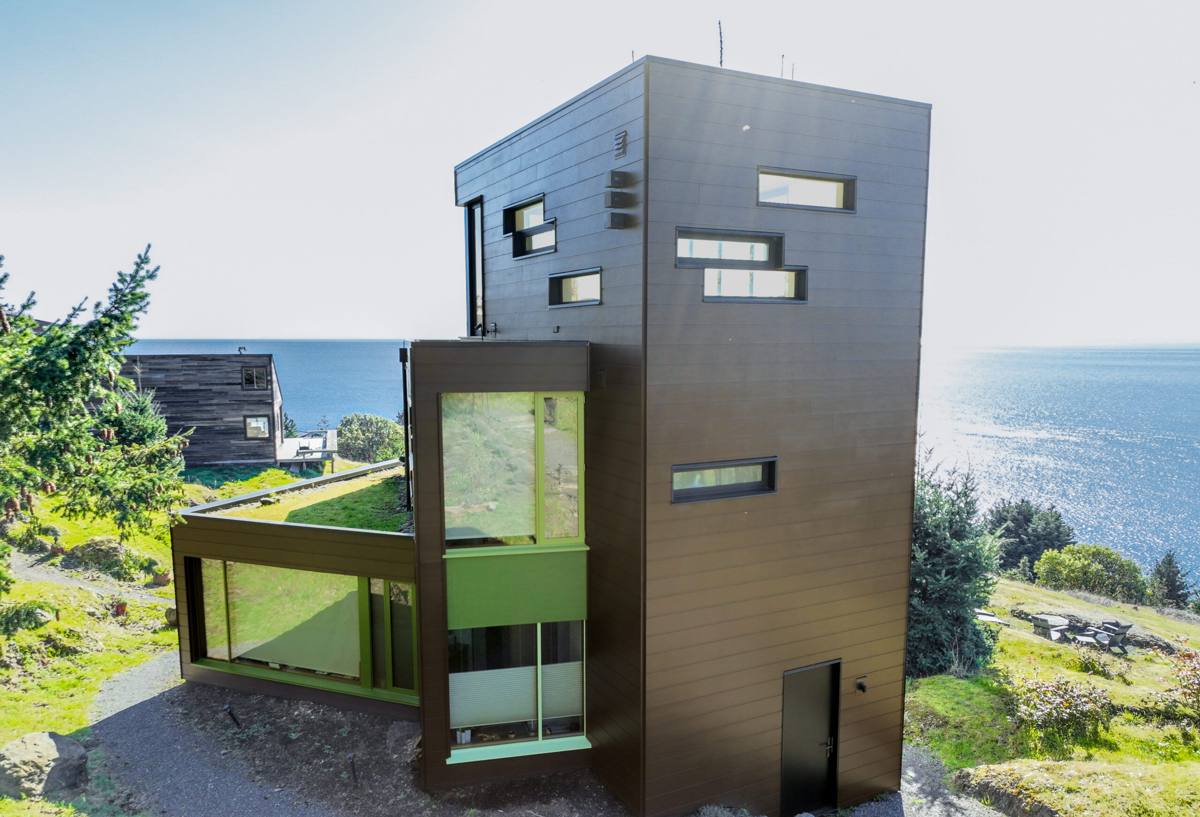
What Salt Air, Driving Rain, and Moss Season Actually Do to Siding
Salt air and moisture-driven corrosion
Proximity to Bellingham Bay means a steady, low-level exposure to salt-carrying air, especially on the sides of a house that face the water or catch prevailing wind. Salt air doesn't rot siding directly, but it accelerates corrosion of fasteners, flashing, and any exposed metal trim, and it holds moisture against surfaces longer than dry inland air would. Over years, that combination shows up as rust streaking at nail heads, failing caulk joints, and paint that chalks and fades faster than the manufacturer's coating warranty assumes.
Driving rain and wind-loaded walls
Rain in this part of Whatcom County rarely falls straight down for long. Wind off the bay pushes rain sideways into wall assemblies, which means siding here has to perform less like a shingle roof (shedding water downward) and more like a rain screen (resisting water pushed horizontally and even upward under gusts). Lap siding with tight, well-flashed joints and correct drainage behind it handles this well. Siding installed with generic caulk-and-hope detailing does not — water finds the path of least resistance and it's usually a nail hole, a butt joint, or a poorly flashed window.
Moss, algae, and the long wet season
Fairhaven's tree cover and shaded lots are part of its character, but shade plus year-round moisture is exactly what moss and algae need to take hold. On siding, moss growth isn't just cosmetic — it holds water against the surface, and on any product that can absorb or wick moisture, that's a slow path to swelling, delamination, or rot. The longer a wall surface stays damp, the more of a foothold organic growth gets, and Bellingham's wet season runs long enough that this isn't an occasional problem — it's a standing condition for shaded, water-facing walls.
Why We Install Only James Hardie Fiber Cement
We made a company-wide decision to install James Hardie fiber cement siding exclusively — not vinyl, not LP SmartSide, not Cemplank or Allura, not primed wood. That's not a marketing position, it's a practical one built around jobs like the ones we see in Fairhaven. Fiber cement is cement, sand, and cellulose fiber — it doesn't have an engineered-wood core that can swell or delaminate if a seam fails, and it's non-combustible, which matters on a wall product that's going to spend decades absorbing rain and holding up under moss and moisture. James Hardie also factory-finishes its ColorPlus products with a baked-on finish that's built to outlast field-applied paint in exactly the salt-air, high-moisture conditions Fairhaven sees — which matters when the alternative is repainting a water-facing wall every several years.
Being a single-product installer also means our crews aren't relearning a new manufacturer's install specs on every job. We know Hardie's fastening patterns, clearances, and flashing details cold, and we apply the same standard whether the job is a small addition or a full re-side.
Picking the Right Hardie Line for a Fairhaven Wall
James Hardie makes climate-engineered "HZ" product lines, and the Pacific Northwest falls in a zone built around moisture resistance rather than the freeze-thaw or high-heat concerns other regions face. For a coastal, shaded, high-rainfall neighborhood like Fairhaven, the product choice usually comes down to which wall is being covered and how exposed it is, not which line is "better" in the abstract.
| Hardie Product | Best Fit For | Why It Matters in Fairhaven |
|---|---|---|
| HardiePlank lap siding | Most exterior walls, especially street- and water-facing sides | Traditional lap profile sheds driving rain well when installed with correct overlap and flashing |
| HardieShingle | Gable ends, accent areas, homes matching Fairhaven's older architectural character | Gives the textured, historic look common in the neighborhood without the moisture risk of real wood shingle |
| HardiePanel | Modern facades, porches, accent walls | Fewer horizontal joints where water can work its way in on wind-driven walls |
| HardieTrim | Corner boards, window and door trim, fascia | Non-combustible, moisture-stable trim that won't cup or rot like painted wood trim does under constant damp |
ColorPlus factory finishes are worth the modest upgrade over primed Hardie almost everywhere, but especially here — a factory-baked finish resists the fading and chalking that salt air and UV accelerate, and it removes an entire maintenance task (repainting) from a homeowner's plate.
What a Correct Installation Actually Involves
James Hardie siding fails early almost exclusively because of installation mistakes, not product defects — and in a climate like Fairhaven's, those mistakes get exposed faster than they would somewhere drier. A correct job includes:
- A drainage plane (weather-resistant barrier plus a drainage gap or rainscreen) behind the siding, not siding nailed straight to the sheathing
- Correct nail placement and spacing per Hardie's fastening schedule — over-driven or under-driven nails are a leading cause of early cracking
- Proper minimum clearances from grade, roof lines, and decks so siding isn't sitting in standing water or snowmelt runoff
- Flashing at every window, door, and horizontal transition, lapped correctly so water is directed out and down, not behind the siding
- Factory-cut or properly sealed field cuts, since an unsealed cut edge is one of the few places fiber cement can take on water
- Correct caulking only where Hardie's install guide calls for it — over-caulking traps moisture instead of shedding it
On a shaded, water-facing wall in Fairhaven, every one of these details determines whether the siding is doing its job for thirty-plus years or whether moisture starts working its way in within the first few wet seasons.
Our Process, Start to Finish
We walk the property and look specifically at which walls face the water and prevailing wind, which sides stay shaded and damp longest, and where the existing siding or trim is already showing rot, moss buildup, or fastener corrosion. That assessment drives the product recommendation — we're not selling the same package to every house.
From there:
- Written estimate covering product line, colors, trim, and a clear scope of what's being removed and replaced
- Inspection of sheathing once old siding is off — any water damage or rot gets addressed before new siding goes up, not covered over
- Installation of the weather-resistant barrier and drainage detailing appropriate to the wall
- Hardie installation to manufacturer spec, including flashing, fastening, and clearances
- Final walk-through so the homeowner can see the completed work and ask questions before we consider the job done
Cost Factors for a Fairhaven Project
Every home is different, but the line items that actually move the price on a Fairhaven job are consistent:
| Factor | Why It Affects Cost |
|---|---|
| Condition of existing sheathing | Water-damaged sheathing found during tear-off has to be replaced before new siding goes on |
| Product line and trim package | Shingle profiles and trim-heavy facades take more labor than straight lap runs |
| ColorPlus vs. primed siding | Factory finish costs more up front but removes future repainting costs |
| Home height and access | Multi-story or tight-lot Fairhaven homes near the bluff can require more scaffolding and staging |
| Amount of trim and detail work | Older, architecturally detailed homes typically have more corners, window trim, and transitions |
We give a written, itemized estimate before any work starts, so a homeowner knows exactly what's driving the number rather than a single lump figure.
Why Hiring a Crew That Already Works in Fairhaven Matters
A siding job done to a generic national standard isn't the same as one done for a Bellingham Bay-facing wall. Crews who regularly work this neighborhood know to check which elevations take the worst of the wind-driven rain, where moss buildup signals a wall that's staying wet too long, and how much drainage detailing is actually needed versus code-minimum. That local pattern recognition is the difference between a siding job that looks right on installation day and one that's still performing correctly a decade into Whatcom County's wet seasons.
If you're weighing a re-side or a repair on a Fairhaven home, we're happy to take a look and walk you through what we're seeing and why, with no pressure to sign anything on the spot. Reach out below for a free estimate.