 Bellingham
 Fairhaven's Waterfront Climate Is Hard on Decks
Fairhaven sits close to Bellingham Bay, and that proximity to salt water shapes what a deck out here has to survive. Salt-laden air corrodes bare metal fasteners and brackets faster than it would a few miles inland, driving rain off the water gets pushed sideways into railings and ledger boards, and the long, wet moss season coats every horizontal surface in a slick, spore-heavy film for months at a time. A deck that would hold up fine in a drier part of Whatcom County can start showing problems within a few seasons if it wasn't built with this specific exposure in mind.
Composite decking is a strong fit for this environment because it doesn't rot, splinter, or need yearly staining the way wood does. But composite is not maintenance-free or install-proof — it still depends on a correctly built substructure, the right fasteners, and drainage that accounts for how much rain this part of Bellingham actually gets. Get those details wrong and you end up with a deck that looks fine on top while the framing underneath is failing.
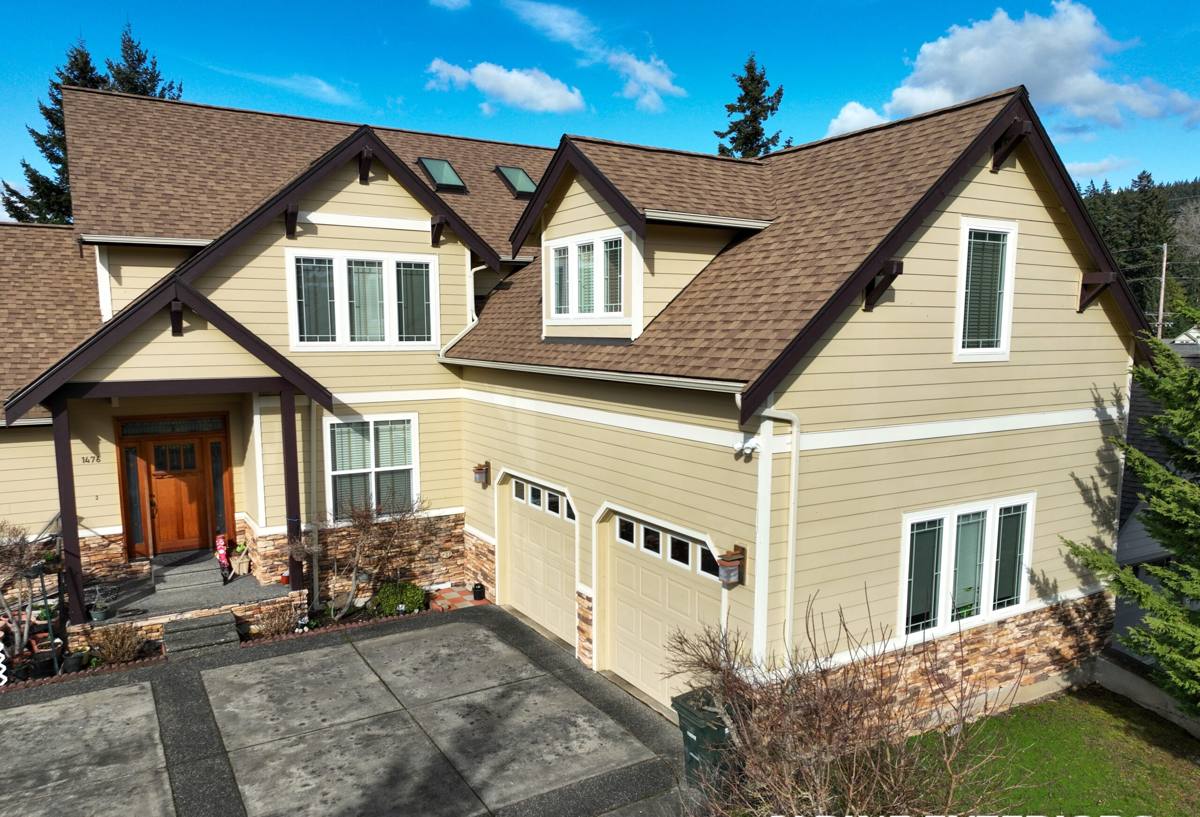
What a Deck Needs to Handle in This Specific Location
Salt Air and Metal Fatigue
Standard zinc-coated screws and brackets corrode noticeably faster near the water than they do even a short distance inland. Corroded fasteners lose holding strength quietly — you won't see it until a board starts to lift or a railing gets loose. We spec stainless or marine-grade coated fasteners and hardware on Fairhaven jobs specifically because of this.
Driving Rain and Wind-Driven Moisture
Rain in this area rarely falls straight down. Wind off the bay pushes it sideways, which means it gets behind railings, into end grain, and up under ledger boards in ways that vertical-only flashing details don't stop. Every point where a deck attaches to the house needs flashing that accounts for wind-driven water, not just gravity.
Moss, Algae, and Surface Film
Bellingham's long wet season gives moss and algae months to establish themselves on any deck surface that doesn't drain and dry quickly. On composite boards this shows up as a green or black film, usually first in shaded corners and under furniture. It's a surface issue, not a structural one, but left unchecked it makes boards dangerously slick and can stain grain-textured composite permanently if it's allowed to sit through multiple wet seasons.
Composite vs. Other Decking Materials for This Climate
| Material | How it handles salt air & rain | Moss/algae resistance | Upkeep |
|---|---|---|---|
| Wood (cedar, pressure-treated) | Absorbs moisture, prone to cupping and fastener corrosion near the bay | Low — porous surface holds spores | Annual cleaning, sealing/staining every 1-3 years |
| Composite (capped) | Non-absorbent core, resists swelling and corrosion when hardware is marine-grade | Moderate — surface film wipes off, doesn't penetrate | Periodic wash, no sealing/staining |
| PVC/Vinyl decking | Fully moisture-proof, but can feel and flex differently underfoot | Moderate to good | Low, but limited color/grain realism |
Capped composite is the middle-ground choice most Fairhaven homeowners land on: it doesn't need the annual sealing wood does, and it holds up to salt air and rain far better than uncapped boards or plain pressure-treated lumber, as long as the substructure and hardware underneath it are done right.
What a Correct Composite Deck Installation Actually Involves
The Substructure Comes First
The visible composite decking is only as good as the framing underneath it. On a marine-climate job like this, that means pressure-treated or better joists, joist tape over every joist top to keep water from wicking into the wood through fastener penetrations, and hardware rated for the exposure — not just whatever came in the standard box.
Ledger Flashing Done for Wind-Driven Rain
Where the deck meets the house, we install flashing that laps correctly and accounts for water being pushed sideways, not just draining downward. This is one of the most common places we find failures on older decks in this area — a ledger board that looked fine from the surface but had been taking on water behind the flashing for years.
Fastening System
Hidden fastener clip systems are standard on most composite installs now, and they matter more here than in a drier climate — fewer surface penetrations means fewer points where water and salt can get into the board or the joist below it. Where face-screwing is unavoidable (picture-frame borders, stair treads), we use fasteners rated for coastal exposure.
Spacing and Airflow
Composite boards need consistent gapping for drainage and to allow for thermal expansion, and the framing below needs enough clearance for air to move and moisture to evaporate. A deck built tight to the ground or against a foundation without adequate airflow will hold moisture longer through Bellingham's wet months, which is exactly the condition that lets moss and mildew take hold fastest.
How We Approach a Fairhaven Deck Project
- On-site assessment — we look at sun/shade exposure, proximity to the water, drainage patterns, and the condition of any existing structure before recommending a plan.
- Design and material selection — board profile, color, and railing system chosen for how they'll actually perform in this spot, not just how they look in a showroom.
- Permitting — where the scope requires it, we handle the permit process with the City of Bellingham so the work is documented and inspected correctly.
- Build — substructure and flashing first, then decking, railings, and any stairs or picture-frame detailing.
- Walkthrough — we go over care basics with you before we consider the job done, including what to expect during the first wet season.
Maintenance That Actually Matters Here
Composite decking cuts out staining and sealing, but it isn't a walk-away-forever material, especially this close to the bay. A simple seasonal rinse with a garden hose and a soft-bristle brush handles most moss and algae buildup if it's done before growth sets in. Avoid pressure washing directly into board seams or fastener points — high-pressure water can force moisture into places it shouldn't be and, over time, wear the capped surface layer.
It's also worth keeping gutters and downspouts near the deck clear. A lot of the moss and staining problems we get called out for aren't really a decking issue at all — they're a drainage issue, where water from the roof or an adjacent surface is draining onto the deck instead of away from it.
Common Problems We Find on Older Fairhaven Decks
- Ledger boards with hidden rot behind poorly lapped or missing flashing
- Corroded fasteners and brackets from years of salt air exposure, especially on decks facing the water
- Substructure rot under old wood decking that looked fine from the top
- Heavy moss buildup in shaded, low-airflow corners that were never resurfaced
- Railing posts loosened by wind load combined with weakened, corroded anchoring hardware
- Deck boards installed tight against siding or foundation walls with no drainage gap
Signs It's Time to Call Someone
- Boards that feel spongy, springy, or noticeably different underfoot in one area
- Visible gaps, staining, or soft wood where the deck meets the house
- Railings or stair stringers that have any give or wobble when you lean on them
- Persistent green or black film that comes back within weeks of cleaning
- Fasteners with visible rust streaks or heads that have corroded away
- Standing water on the deck surface after rain instead of draining off
Any one of these is worth a look before it turns into a bigger repair. In a climate like Bellingham's, small moisture problems tend to compound quickly rather than stay small.
Why Local Experience with This Site Matters
A deck built to a generic spec sheet doesn't account for what a Fairhaven property actually faces — the salt exposure, the wind-driven rain off the bay, and a moss season that runs longer than in drier parts of Whatcom County. Crews who work this neighborhood regularly know which details get skipped on a standard install and cause problems two or three years later: the flashing lap that's a half-inch short, the wrong-grade fastener, the drainage gap that got left out to save time. Building it right the first time, with hardware and flashing chosen for this exposure, costs less over the life of the deck than fixing rot and corrosion damage down the road.
If you're planning a new composite deck in Fairhaven, or you've got an existing deck showing some of the wear this climate causes, we're happy to take a look and give you a straightforward, no-pressure estimate. Use the form below to get started.