 Bellingham
 Deck Replacement in Fairhaven: Built for the Weather That's Actually Here
Fairhaven sits close to the water on Bellingham Bay, and that proximity shapes everything about how a deck ages here. Salt-tinged marine air moves through the neighborhood most of the year, driving rain comes in sideways as often as it falls straight down, and the tree cover and shaded lots common to Fairhaven's older residential streets keep moss and mildew active across most of the calendar. A deck that would hold up fine in a drier, inland part of Whatcom County can fail years early here if it wasn't built, or isn't being rebuilt, with this specific climate in mind.
We work in Fairhaven regularly, and we see the same failure patterns on tear-outs again and again: ledger boards rotted where they meet the house, joists softened from years of trapped moisture underneath decking that looked fine on top, and fasteners corroded well before the wood itself gave out. Replacing a deck here isn't just swapping old boards for new ones. It's an opportunity to fix the structural and moisture problems that caused the failure in the first place, so the new deck doesn't repeat the same timeline.
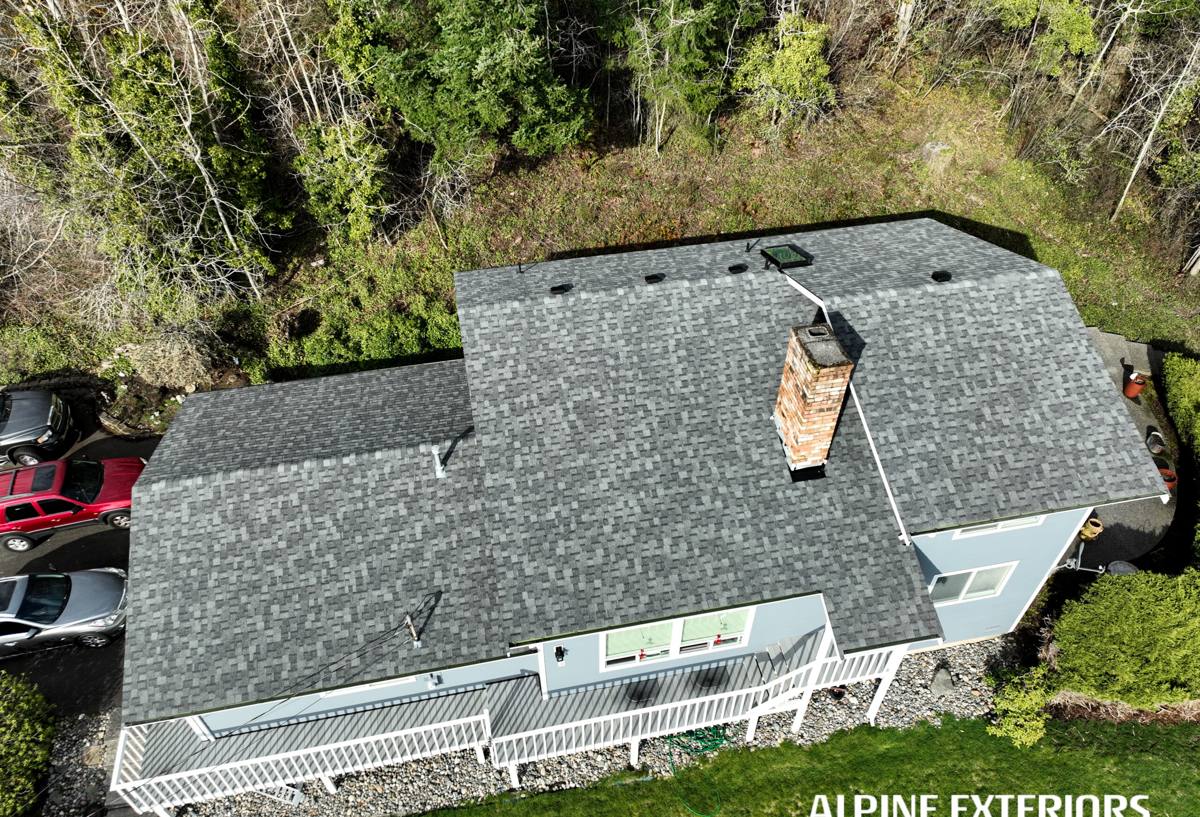
Why Decks Fail Faster in Fairhaven Than the National Averages Suggest
Salt Air and Bay Exposure
Fairhaven's closeness to the bay means fasteners, hardware, and lower-grade metal connectors take a steady, low-level beating from salt-laden air, even on days that don't feel stormy. Standard coated screws and joist hangers that would last for years inland can start corroding noticeably sooner this close to the water, and once fasteners weaken, the structural integrity of the whole deck is compromised even if the visible boards still look okay.
Wind-Driven Rain and Ledger Rot
The ledger board, where the deck attaches to the house, is the single most common point of structural failure we find on old decks in this area. Wind-driven rain gets pushed up under poorly flashed ledger connections and behind siding that wasn't properly detailed at the deck attachment point, and it sits there quietly rotting framing for years before anything shows on the surface. By the time a homeowner notices sponginess or a soft spot near the house, the damage is usually well established.
A Moss Season That Doesn't Really End
Mild temperatures, consistent dampness, and shaded lots mean moss and algae growth on deck surfaces isn't a seasonal nuisance in Fairhaven so much as a near year-round condition, especially on decks with limited sun exposure or heavy tree canopy overhead. Moss holds moisture directly against the wood surface, and on horizontal deck boards that moisture has nowhere to go but down into the grain. Over time that turns a cosmetic problem into a structural one.
What a Correct Deck Replacement Actually Involves
Pulling off old boards and screwing down new ones is the easy, visible part of a deck replacement. The parts that determine whether the new deck lasts are mostly things you won't see once it's finished.
- Full structural inspection before any decking goes down: footings, posts, beams, joists, and the ledger connection all get checked for rot, undersizing, and code compliance, not just the boards on top.
- Proper ledger flashing: the connection between deck and house is the highest-risk point for water intrusion, and it needs correct flashing integrated with the house's water-shedding layer, not just caulk and a hope.
- Corrosion-resistant hardware: in a salt-air environment, using standard fasteners instead of hot-dip galvanized or stainless-rated hardware is a shortcut that shows up as rust and weakened connections within a few years.
- Joist tape or equivalent moisture protection: covering the tops of joists so rainwater doesn't sit directly on end grain is a small step that meaningfully extends framing life in a climate this wet.
- Correct board spacing and airflow underneath: gaps that are too tight trap moisture and debris; airflow underneath the deck helps everything dry out between the region's frequent rain events instead of staying damp.
- Permit and code compliance: guardrail height, stair geometry, and footing depth all have code requirements, and skipping the permit step on a deck rebuild is a liability problem waiting to surface at resale or after an accident.
Repair vs. Full Replacement
Not every deck problem in Fairhaven means starting over. If the substructure, footings, posts, beams, and joists, is still structurally sound and the ledger connection is dry and intact, replacing just the surface decking and railings can be a reasonable, lower-cost option. But if we find rot at the ledger, undersized or corroded framing, or footings that were never adequate to begin with, patching the surface just delays a bigger, more expensive problem. We'll walk the deck with you and tell you plainly which category yours falls into before we ever talk numbers.
Decking Material Options for a Marine Climate
The material you put on top matters, but it matters less than the structure underneath. That said, in a climate this consistently wet, some decking materials are a better fit than others.
| Material | Moisture Behavior | Maintenance Burden | Notes for Fairhaven |
|---|---|---|---|
| Composite decking | Resists moisture absorption and doesn't rot | Low; periodic cleaning to keep moss and pollen from staining the surface | Generally our recommendation here given the near year-round dampness and moss pressure |
| Pressure-treated wood | Absorbs moisture readily; treatment protects against rot but not against swelling and checking | Higher; needs regular sealing to perform as intended | Lower upfront cost, but the maintenance schedule is easy to let slip in a climate this wet |
| Cedar | Naturally rot-resistant but still absorbs moisture and needs finish protection | Highest; annual or biannual sealing to maintain appearance and water resistance | Attractive natural look, but upkeep in salt air and constant moisture is a real commitment |
| PVC decking | Essentially impervious to moisture | Low | Performs well here but can look and feel less natural than composite to some homeowners |
We'll talk through these trade-offs based on your budget, how the deck will be used, and how much upkeep you actually want to take on, not push one product because it's what we happen to have on the truck.
How Our Process Works
1. On-Site Inspection
We walk the existing deck in person, check the substructure from underneath where possible, probe for soft spots at the ledger and posts, and give you an honest read on what we're dealing with before any pricing discussion happens.
2. Clear Scope and Written Estimate
You get a written estimate that spells out what's being replaced, what materials are involved, and why, so there's no ambiguity about what you're paying for.
3. Permitting
For most full deck replacements, we handle the permit process so the finished structure meets current code for guardrails, stairs, and footings, rather than inheriting whatever the original builder did decades ago.
4. Demolition and Structural Rebuild
Old decking, and any framing that's compromised, comes out. Footings, posts, beams, and joists are brought up to spec, with corrosion-resistant hardware and proper ledger flashing throughout.
5. Decking, Railing, and Finish Work
New decking goes down with correct spacing and fastening, railings are installed to code, and stairs are finished to match.
6. Final Walkthrough
We walk the finished deck with you, point out anything you should know for upkeep, and answer questions before we consider the job done.
Why Hiring a Crew That Already Works in Fairhaven Matters
A deck built to a generic national spec doesn't automatically hold up to Fairhaven's specific combination of salt exposure, wind-driven rain, and extended moss season. A crew that works this neighborhood regularly has already seen where the failures start on older Fairhaven decks, the ledger connections that were never flashed right, the framing that was undersized for the load, the fasteners that weren't rated for this air. That's not something you can fully substitute with a generic checklist. It comes from having pulled apart enough local decks to know exactly where to look.
We're also familiar with the practical realities of building in Fairhaven's older residential streets: narrower lot access on some properties, mature trees that need to be worked around rather than damaged, and homes old enough that the original deck attachment may not meet current code even if it's structurally sound otherwise.
Signs Your Fairhaven Deck Needs Attention Now
- Sponginess or give underfoot near where the deck meets the house
- Moss or dark staining that returns quickly after cleaning
- Visible gaps, cupping, or splitting in the deck boards
- Rust staining around fasteners or visible corrosion on hardware
- A railing or post that feels loose or wobbles under normal use
- Stairs that flex or creak more than they used to
- Water pooling on the deck surface instead of draining off
Any one of these on its own might be minor. Several together, especially near the ledger, usually mean it's time for a real structural look rather than another round of surface patching.
A Straightforward Path Forward
If your Fairhaven deck is showing its age, or you're just not sure whether it needs a full replacement or a smaller repair, we're happy to take a look and give you a straight answer. We'll walk the deck, explain what we find in plain terms, and put together a written estimate with no pressure to commit on the spot. Fill out the form below and we'll set up a time to come take a look.