 Bellingham
 Roof Repair Built for Fairhaven, Not Just Bellingham in General
Fairhaven sits close to the water, and that changes what a roof has to deal with compared to a house a few miles inland in East Bellingham or up toward Barkley. A repair that holds up fine on a sheltered lot can fail fast on a roof that's catching salt-laden wind off Bellingham Bay every day. When we talk about "roof repair in Fairhaven," we mean a job that's been scoped for this specific mix of moisture, wind exposure, and tree cover — not a generic patch job pulled from a manual written for a drier climate.
Fairhaven also has a real mix of housing stock: older homes with decades of roof history layered on top of each other, and newer construction with materials that behave differently in wet conditions than the asphalt shingle roofs most of Whatcom County grew up with. A good repair starts with knowing which situation you're actually in before anyone climbs a ladder.
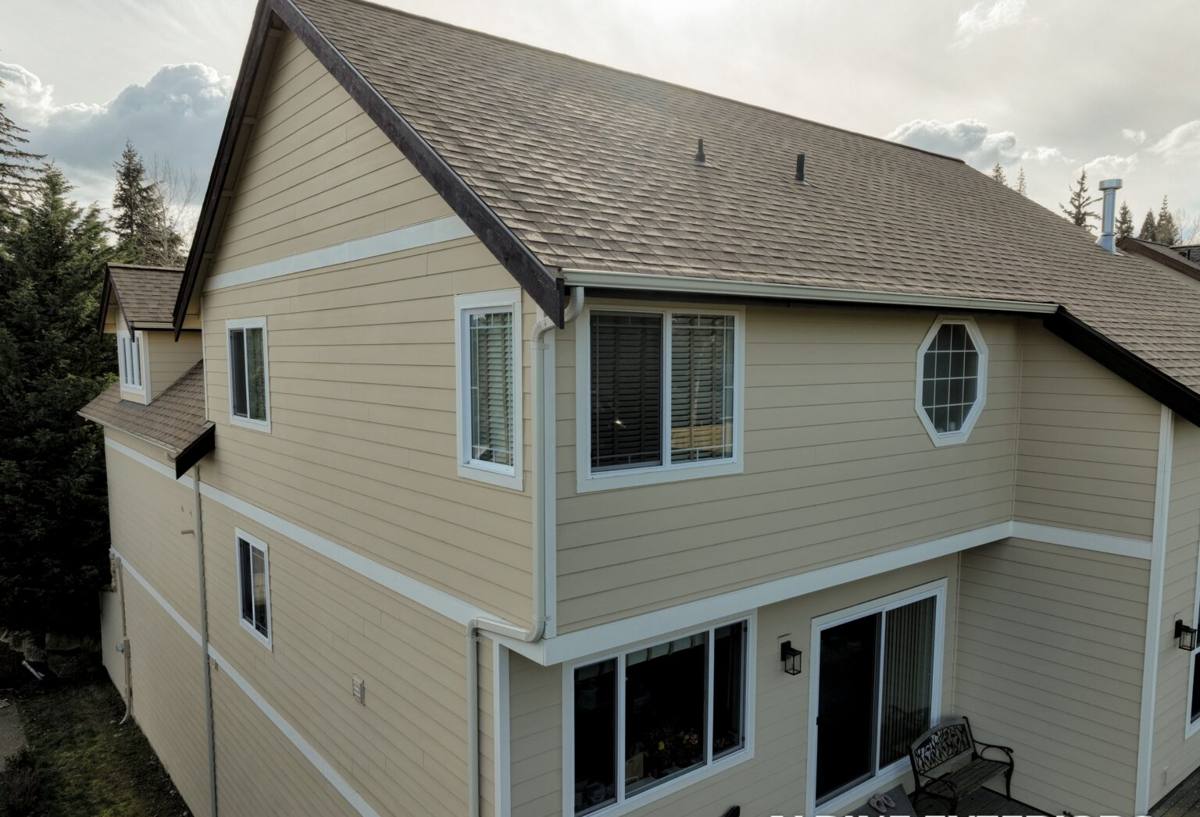
What Bellingham's Climate Actually Does to a Roof
Three things drive most of the roof repair calls we get in this part of Whatcom County, and Fairhaven gets a concentrated dose of all three because of its position near the water.
Salt Air
Homes close to Bellingham Bay take on salt-carrying wind that accelerates corrosion on exposed metal — flashing, fasteners, gutter hardware, and any exposed nail heads. Salt exposure doesn't rot a roof deck, but it eats at the metal components that are supposed to keep water out at the vulnerable points: valleys, chimneys, vent pipes, and roof-to-wall transitions. A repair that reuses corroded flashing instead of replacing it is a repair that's going to leak again within a season or two.
Driving Rain
Bellingham doesn't just get a lot of rain — it gets wind-driven rain that comes in sideways off storms moving through the Strait of Georgia and Bellingham Bay. That matters because wind-driven rain finds gaps that a straight-down rain never would. Underlayment laps, nail placement, and how shingles or panels are sealed at the edges all matter more here than they would in a calmer climate. A repair that would pass inspection somewhere drier can still leak in a Fairhaven crosswind if it wasn't detailed for driving rain.
A Long Moss Season
Tree cover, shade, and near-constant moisture give moss a long growing window in this part of Whatcom County — often most of the year on north-facing slopes or roofs shaded by mature trees, which are common on Fairhaven's older lots. Moss holds water against the roofing material, works its way under shingle edges, and lifts fasteners as it grows. Left alone, what starts as a cosmetic issue becomes a moisture problem, and moisture problems are what eventually turn into deck rot and a much bigger bill.
Common Roof Repair Needs We See in Fairhaven Homes
Every roof is different, but a few repair categories come up again and again in this neighborhood:
- Flashing failure at chimneys, skylights, and roof-to-wall intersections — usually corrosion-driven given the salt exposure, sometimes just original flashing that was never sealed correctly.
- Moss-related lifting along shaded slopes, where fasteners have backed out or shingle tabs have curled from trapped moisture.
- Valley leaks where two roof planes meet — a high-stress area in driving rain and one of the first places to check when a homeowner reports a ceiling stain.
- Damaged or missing shingles/panels from wind events, which are common enough near the water that we treat wind damage as a routine repair category, not an emergency-only one.
- Gutter and drainage issues that back water up under the roof edge rather than a roofing material failure itself — often mistaken for a roof leak when the real problem is drainage.
Getting the diagnosis right matters as much as the repair itself. We've seen roofs "repaired" three times for the same recurring leak because the actual source — often a flashing detail or a drainage issue, not the shingles themselves — was never addressed.
Signs You Need a Repair — Not a Full Replacement
Most roofs don't need to be torn off. A well-targeted repair, done right, can add years of service life to a roof that's otherwise in decent shape. Here's what tends to point toward repair rather than replacement:
- The damage is localized — one valley, one section of flashing, a handful of shingles — rather than spread across the whole roof.
- The roof deck underneath is still solid, with no soft spots, sagging, or visible rot when checked from the attic side.
- The roofing material itself still has useful life left; it's a detail failure (flashing, a fastener, a seam) rather than the material wearing out.
- There's no widespread moss undermining large sections of the roof, just isolated buildup that can be cleared and treated.
- Ceiling stains or attic moisture are traced to a single, identifiable source rather than multiple failure points.
If several of these don't hold true — deck rot in more than one area, shingles brittle and failing across the whole roof, or a roof that's already at or past its expected service life — a repair is often just delaying a replacement conversation rather than solving the problem. We'll tell you honestly which situation you're in.
What a Correct Roof Repair Actually Involves
A roof repair that's going to last through a Fairhaven winter involves more steps than most homeowners expect from a "quick patch."
- Find the real source. Water can travel along the underlayment or decking before it shows up as a stain, so the visible drip point and the actual entry point are often several feet apart. We trace it before we touch anything.
- Check the deck. Any repair over a soft or rotted deck is a repair that will fail again. If we find deck damage, we address it as part of the job, not as a surprise change order after the fact.
- Replace, don't reuse, corroded flashing. Given the salt exposure this close to the bay, flashing that shows corrosion gets replaced rather than resealed. Resealing corroded metal buys a season, not years.
- Match materials correctly. Shingles, underlayment, and fasteners all need to be compatible with what's already on the roof — mismatched materials can create new failure points instead of fixing the old one.
- Detail for wind-driven rain. Proper laps, sealed edges, and correct fastener placement matter more here than in a calmer climate — this is where a lot of lower-effort repairs cut corners that don't show up until the next big storm.
- Clear and treat moss where it contributed to the problem. If moss caused or contributed to the failure, removing it and addressing drainage or shade issues is part of the fix, not an optional add-on.
- Clean up and inspect the surrounding area. A repair isn't done until gutters, downspouts, and adjacent roof sections are checked — a leak often has a secondary cause nearby that's worth catching while we're already up there.
Repair vs. Replacement: What Actually Drives the Decision
Homeowners often ask us to just give a number without walking through what's actually driving the cost difference. Here's the honest breakdown of the factors that matter most:
| Factor | Favors Repair | Favors Replacement |
|---|---|---|
| Extent of damage | Localized — one area or detail | Spread across multiple roof sections |
| Roof deck condition | Solid, no soft spots or rot | Rot or soft decking found in one or more areas |
| Age of roofing material | Well within expected service life | At or near end of expected service life |
| Moss/moisture history | Isolated, manageable with cleanup | Long-term, widespread moss damage |
| Flashing condition | Isolated corrosion or failure points | Widespread corrosion across all flashing |
| Leak history | First occurrence or single known cause | Repeated leaks in different areas over time |
We'll walk you through where your roof lands on each of these before recommending a direction. If a repair is the honest answer, that's what we'll propose — we're not in the business of upselling a replacement a roof doesn't need yet.
Our Process, Start to Finish
1. Inspection and Diagnosis
We look at the roof from the top and, when access allows, from inside the attic. Tracing the actual water path matters more than eyeballing the surface — a stain on the ceiling rarely sits directly under the leak.
2. A Clear, Written Estimate
You'll get a straightforward explanation of what we found, what needs to happen, and what it costs — no vague line items. If we find something during the inspection that changes the scope, we tell you before doing the work, not after.
3. The Repair Itself
We work efficiently but don't skip steps to save time — especially on flashing and underlayment details, which are the parts of a repair that don't show once the shingles go back down but determine whether the fix actually lasts.
4. Cleanup and Walkthrough
We clear debris, check the work with you, and point out anything else we noticed while we were up there — a soft spot to watch, a gutter that needs attention, moss starting on an adjacent slope — so you're not surprised by it later.
Why a Crew That Already Works Fairhaven Matters
Roofing knowledge that works everywhere doesn't always work well here. A crew that's worked roofs across Whatcom County — from wind-exposed lots near the bay to shaded, moss-prone lots further from the water — knows which failure points to check first and which shortcuts don't hold up through a Bellingham winter. That's not marketing — it's the difference between a repair that gets re-done next year and one that doesn't.
It also matters for something more practical: knowing what a normal repair looks like in this specific area versus what's a sign of a bigger, systemic problem. A crew unfamiliar with coastal Whatcom County conditions might treat corroded flashing as a one-off issue instead of recognizing it as expected wear that should be checked across the whole roof while we're already there.
Keeping a Repaired Roof in Good Shape
A correct repair buys you real time, but a few habits stretch that further — especially with Bellingham's moss season being as long as it is:
- Keep gutters and downspouts clear, especially heading into fall storm season.
- Trim back tree limbs that shade roof sections and keep them damp longer than necessary.
- Have moss treated or removed before it spreads, rather than after it's lifted shingles.
- After any major windstorm off the bay, do a visual check for missing or lifted shingles.
- Get a roof looked at every couple of years even without an active leak — small issues are far cheaper to fix than the water damage they eventually cause.
If you're dealing with a leak, moss buildup, or storm damage on a Fairhaven roof, we're happy to take a look and give you a straight answer on what it needs. Reach out for a free, no-pressure estimate using the form below.