 Bellingham
 Fairhaven's Siding Problem Isn't Like Other Neighborhoods'
Fairhaven sits close to Bellingham Bay, which means homes here deal with a combination of stresses that inland Whatcom County houses don't see nearly as often: salt-laden air rolling off the water, wind-driven rain that hits walls at an angle instead of just falling straight down, and heavy tree cover that keeps north- and west-facing walls damp and shaded for weeks at a stretch. Add in Bellingham's long, gray winters and you get siding conditions that punish anything less than a genuinely water-managed, rot-proof exterior.
This isn't a page about siding in general. It's about one product — fiber cement — installed correctly on one type of building stock, in one specific part of Bellingham. If you own a home in or near Fairhaven and you're facing a siding decision, the details below are the ones that actually matter for your walls, not generic advice copied from a national siding blog.
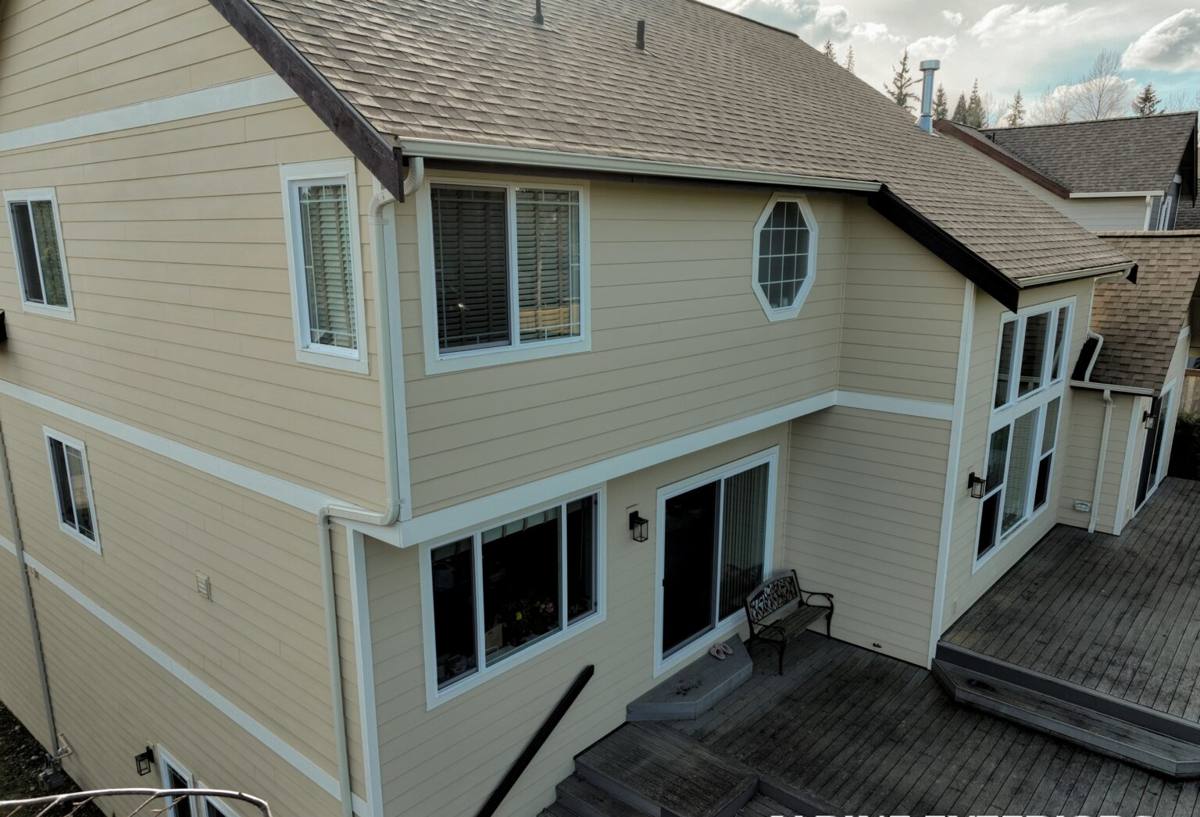
What Salt Air, Rain, and Moss Actually Do to a Wall
Salt Air
Airborne salt from the bay settles on exterior surfaces and accelerates corrosion of exposed metal fasteners, flashing, and trim. It also holds moisture against a wall longer than dry inland air would, which matters more for the material underneath the paint than the paint itself.
Driving Rain
Wind off the water doesn't just wet a wall — it drives water sideways and upward, forcing it into laps, seams, and butt joints that a straight-down rain would never reach. A siding system that isn't detailed for wind-driven rain will eventually let water behind the cladding, even if the face of the siding looks fine.
Moss Season
Bellingham's tree canopy and marine humidity create a long moss and algae season on shaded walls — often most of the year on north-facing exposures. Moss holds moisture against whatever it's growing on. On a material that can absorb water and swell, that's a slow, ongoing problem. On a material that doesn't absorb water at its core, it's a cosmetic issue you clean off, not a structural one.
Why Fiber Cement Is the Right Material for This Exposure
Fiber cement siding is made from cement, sand, and cellulose fiber, pressed and cured into planks. It doesn't rot, it isn't a food source for moss or insects, and it holds paint and factory finishes far longer than wood-based products because it doesn't move much with humidity swings the way wood, wood composite, or engineered wood siding does. For a wall that's going to spend half the year damp and shaded, that dimensional stability is the whole ballgame.
We install James Hardie fiber cement exclusively — not LP SmartSide, not Cemplank, not Allura, not vinyl, not primed spruce or cedar. That's a deliberate standard, not a sales pitch, and it's worth explaining honestly rather than just asserting it.
How James Hardie Compares to the Alternatives
| Material | Core composition | How it handles our wet, salty climate | Long-term maintenance |
|---|---|---|---|
| James Hardie fiber cement | Cement, sand, cellulose fiber | Non-combustible, dimensionally stable, doesn't absorb water into the core | Repaint or refinish on decades-long cycles; factory ColorPlus finish resists fading |
| LP SmartSide / engineered wood | Wood strand with resin binder | Wood-based core is more sensitive to sustained moisture exposure than cement | Edge and cut-end sealing is critical; more failure-sensitive to installation errors |
| Vinyl siding | PVC plastic | Doesn't rot, but expands/contracts with temperature and can warp; seams are a water-entry point | Low maintenance but limited repair options; fades and becomes brittle over time |
| Primed cedar / spruce | Solid wood | Natural material, attractive, but wood is the most moisture-sensitive option in a marine climate | Frequent repainting and sealing; highest long-term upkeep |
Every one of these products has a place somewhere. Our position is narrower: for the specific combination of salt exposure, driving rain, and long moss season that Fairhaven and the surrounding Bellingham waterfront deal with, fiber cement's moisture behavior and dimensional stability hold up better over a 30-plus-year ownership horizon than the alternatives above, and James Hardie's climate-engineered HZ product lines and factory-applied ColorPlus finish are the strongest version of that product category we've found.
What Correct Installation Actually Involves
Fiber cement siding is only as good as the water management system behind it. A wall in Fairhaven that gets driving rain and long damp shade periods needs every layer done right, not just the visible plank.
- Weather-resistive barrier: A continuous, properly lapped house wrap or building paper behind the siding, with no gaps at penetrations.
- Flashing at every horizontal transition: Windows, doors, decks, and roof-to-wall intersections all need step flashing or head flashing that directs water out and down, not into the wall assembly.
- Rainscreen gap where conditions call for it: A small air gap between the siding and the water-resistive barrier lets any moisture that does get past the face of the siding drain and dry instead of sitting against the sheathing.
- Correct fastening: Corrosion-resistant fasteners driven per manufacturer spec — under- or over-driven nails are one of the most common causes of premature siding failure, and salt air makes fastener corrosion a real consideration.
- Proper clearances: Siding held off the ground, decks, and roof surfaces per Hardie's published minimums so it isn't sitting in standing water or snow.
- Caulked and painted cut ends: Every field cut needs to be sealed before installation — an exposed cut edge is a weak point for water intrusion.
None of this is unique to Fairhaven, but the margin for error is smaller here. A wall that only gets light rain twice a month can tolerate a sloppy flashing detail for years before it shows. A wall that gets driving rain off the bay and stays shaded and damp for weeks won't hide that mistake nearly as long.
Our Process, Start to Finish
1. On-Site Assessment
We walk the exterior, check existing siding and trim condition, look at grading and drainage around the foundation, and identify problem areas — shaded walls with heavy moss, trim showing rot, areas with visible water staining.
2. Tear-Off and Sheathing Check
Old siding comes off and we inspect the sheathing underneath. This is the point where hidden moisture damage from a previous water-management failure gets found and addressed, rather than covered over.
3. Water Management Layer
House wrap, flashing, and rainscreen detailing go in before a single piece of siding is hung. This layer is what actually protects the wall — the siding on top of it is the visible, durable finish.
4. Hardie Installation to Manufacturer Spec
Planks, fasteners, and clearances installed per James Hardie's published requirements, which is also what keeps the manufacturer's warranty intact.
5. Trim, Caulk, and Touch-Up
Factory-finished ColorPlus siding needs far less field painting than raw material, but cut ends, trim joints, and any field-painted accessories get properly sealed and finished.
6. Final Walkthrough
We go over the finished job with the homeowner before calling it complete.
Living With Moss and Shade After Installation
Fiber cement doesn't feed moss or algae the way wood-based siding can, but a shaded wall in Fairhaven will still collect surface growth over time — that's a function of the tree cover and humidity, not the siding material. The difference is what that growth means for the wall underneath. On fiber cement, moss on the surface is a cleaning issue: a periodic soft wash keeps it from building up and keeps the factory finish looking right. On a moisture-sensitive material, the same moss buildup can mean sustained dampness working into the material itself. Keeping gutters clear and trimming back vegetation that keeps a wall in constant shade will extend the interval between cleanings regardless of what siding you have.
What Drives the Cost of a Fairhaven Siding Job
| Factor | Why it matters here |
|---|---|
| Home age and existing wall condition | Older homes near the waterfront more often need sheathing repair once old siding comes off |
| Wall complexity | Dormers, bays, and multiple roof-to-wall intersections all need extra flashing detail |
| Trim and accessory scope | Corner boards, window trim, and fascia work add labor beyond the flat wall area |
| Access and site conditions | Tight lots, slopes, and mature landscaping common in older Fairhaven properties can affect staging and scaffolding |
| Product line and profile | Hardie's lap, shingle, and panel profiles carry different material and labor costs |
We don't publish blanket per-square-foot pricing because these factors genuinely move the number from house to house — an accurate estimate comes from actually looking at your walls.
Why a Crew That Already Works Fairhaven Matters
Siding crews that mostly work drier, inland areas can install a technically correct product and still miss the details that matter most on a bay-exposed wall — because those details rarely come up where they normally work. A crew that regularly works Fairhaven and the rest of the Bellingham waterfront has already made the calls on rainscreen gaps, flashing sequencing around bay windows, and fastener choices for a salt-air environment, on homes facing the same exposure yours does. That's less about local knowledge as a marketing phrase and more about which mistakes a crew has already learned not to make.
Questions Worth Asking Before You Hire
- Do they install to the manufacturer's written installation instructions, and will they say so in writing?
- Do they include a rainscreen gap or drainage plane on wet-exposure walls, or just face-nail over house wrap?
- Who handles flashing at windows, doors, and roof lines — the siding crew or a separate trade?
- What happens if they find rot or moisture damage in the sheathing once old siding comes off?
- Is the warranty a manufacturer warranty backed by certified installation, or just a verbal promise?
If a contractor can't answer these clearly before the contract is signed, that's worth noticing.
If you're weighing a siding replacement on a Fairhaven or Bellingham waterfront home, we're happy to take a look and give you a straight, no-pressure estimate — what your walls actually need, not a generic package. The form below gets you started.