 Bellingham
 Window Installation Built for Happy Valley's Climate
Happy Valley sits in the hills on Bellingham's south side, close enough to Bellingham Bay that salt-laden air reaches the siding and window frames on a regular basis. Add Whatcom County's long, wet fall-through-spring stretch and the moss that comes with it, and you've got a neighborhood where windows take more abuse than the same product would see in a drier climate. A window that's a great fit in Eastern Washington can struggle here if it isn't installed with this specific climate in mind.
This page covers window installation as we do it for Happy Valley homes specifically — what the climate demands, what a correct installation actually involves, and how to tell a solid installer from one who's just setting glass in a hole and calling it done.
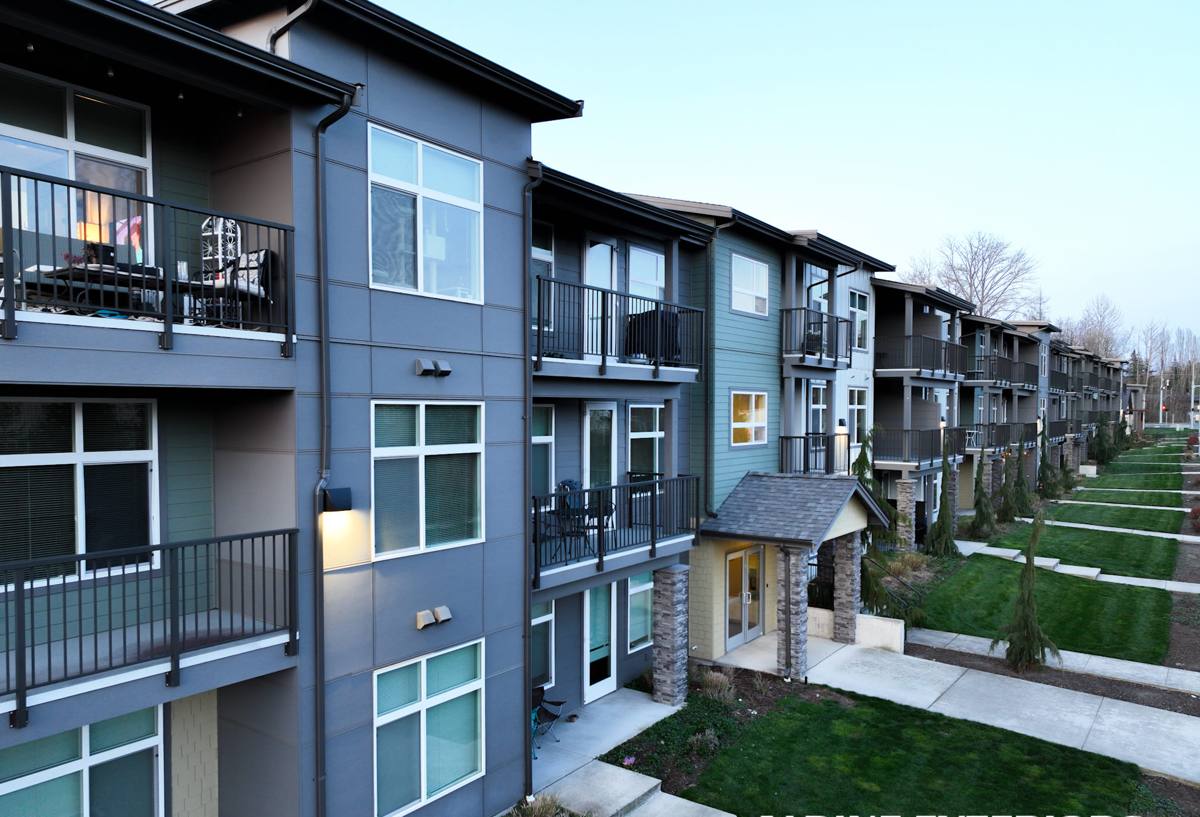
What Bellingham's Marine Climate Does to Windows Over Time
Three things wear on windows here more than almost anywhere else in the state:
Driving, Wind-Driven Rain
Rain in Bellingham rarely falls straight down. Storms off the Sound push moisture sideways and up under trim, sills, and any gap in the flashing. A window that's caulked but not properly flashed will look fine for a year or two, then start showing water staining on interior trim or soft spots in the wall below the sill — usually well after the damage has already started.
Salt Air
Proximity to Bellingham Bay means airborne salt settles on exterior surfaces, including window hardware, screens, and metal flashing. Over years, that accelerates corrosion on lower-grade hardware and can degrade certain finishes faster than the manufacturer's climate testing assumed.
Moss Season
Whatcom County's moss season runs long — often eight months or more of conditions damp enough to support growth on horizontal surfaces. Moss and organic debris hold moisture against window sills, trim, and the top of casings, which is exactly the kind of sustained dampness that rots wood trim and traps water against frames that aren't sealed correctly.
None of this means windows fail quickly in Happy Valley. It means the margin for installation error is smaller. A flashing detail that's "close enough" in a dry climate is a real liability here.
Signs Your Happy Valley Home Needs New Windows
Not every drafty window needs full replacement, but these are the signs worth taking seriously:
- Visible fogging or a permanent haze between panes — the seal has failed and the gas fill is gone
- Soft, spongy, or discolored wood trim around the window, inside or out
- Difficulty opening, closing, or locking a window that used to operate smoothly
- Cold air noticeably moving past a closed window on a windy day
- Visible gaps between the window frame and siding, or cracked/missing caulk lines
- Condensation forming on the inside of the glass regularly, even in normal weather
- Musty smell near a window that doesn't go away with cleaning
If you're seeing more than one of these, it's worth having someone look at the wall assembly, not just the window itself — in a climate this wet, a bad window is often a symptom of a bigger moisture problem, not the whole story.
Choosing the Right Window Frame Material for This Climate
Frame material matters more here than in drier parts of the state, because it determines how the window handles years of damp exposure. Here's how the common options compare for a Happy Valley home:
| Material | Moisture Behavior | Maintenance | Typical Cost Tier |
|---|---|---|---|
| Vinyl | Won't rot or corrode; performs well in wet climates | Low — occasional cleaning | Lower to mid |
| Fiberglass | Excellent moisture and temperature stability; very low expansion/contraction | Low | Mid to higher |
| Wood, unclad | Handsome but vulnerable to rot without diligent upkeep in this rainfall | High — repainting, sealing | Higher |
| Wood-clad (vinyl or aluminum exterior) | Good — exterior shell protects the wood core from weather | Low to moderate | Higher |
| Aluminum | Durable but conducts cold and can condense on interior surfaces | Low | Lower to mid |
We don't push one brand or material on every job. What we won't do is install a bare wood window on a wall that catches direct weather without a serious conversation about the maintenance commitment that comes with it — in this climate, that's a real trade-off, not a small one. For most Happy Valley homes, vinyl or fiberglass frames offer the best balance of moisture resistance and low upkeep, with wood-clad as a solid option when the look matters and the budget allows for it.
Glass Package Matters Too
Beyond the frame, double-pane low-E glass is the practical standard for this climate — it cuts heat loss and reduces interior condensation risk. Triple-pane adds further insulation value and is worth considering on north- or west-facing walls that take the brunt of winter wind, though it comes at a cost and weight premium that isn't necessary on every elevation of every house.
What a Correct Window Installation Actually Involves
This is where most of the long-term performance difference comes from — not the window itself, but how it's installed.
Removal and Inspection
Once the old window is out, we inspect the framing, sill, and sheathing before anything new goes in. In a climate this wet, it's common to find some degree of hidden moisture damage around older windows, especially at the sill. Catching that now is far cheaper than finding it after a new window is already sealed over it.
Sill Pans and Flashing
A sill pan gives any water that gets past the window a way to drain back out instead of sitting against the framing. Proper flashing tape integrates the window into the building's weather-resistive barrier so water sheds down and out, not into the wall cavity. This step is invisible once the job is finished — and it's the single biggest factor in whether a window stays dry for the next twenty years.
Insulation and Air Sealing
The gap between the new window frame and the rough opening gets sealed with a low-expansion insulating foam or backer rod, not just stuffed with fiberglass. Done right, this stops both air leakage and the kind of condensation that forms when warm interior air meets a cold, poorly sealed gap.
Exterior Finish and Caulking
Caulk is the last line of defense, not the first. We use it to finish and protect the flashing work underneath, not to compensate for a flashing detail that was skipped. Trim gets reset cleanly, and any wood trim exposed to weather gets primed and sealed on all sides before it goes back up — a step that matters a lot given how long moss season runs here.
Our Process, Start to Finish
- On-site assessment — we look at each window's exposure, the condition of the surrounding wall, and what's driving the need for replacement (comfort, moisture, appearance, or age).
- Product selection — we walk through frame material, glass package, and style options suited to that window's specific exposure, not a one-size-fits-all recommendation.
- Written estimate — clear scope, materials, and pricing before any work is scheduled.
- Removal and prep — old windows come out, framing gets inspected, and any rot or moisture issues are flagged and addressed before installation continues.
- Installation — sill pan, flashing, air sealing, and the window itself, set level, plumb, and square.
- Finish work — interior and exterior trim, caulking, and cleanup.
- Final walkthrough — every window operates smoothly and seals correctly before we call the job done.
Why Local Experience in Happy Valley Actually Matters
A crew that's worked windows across Bellingham and Whatcom County has already seen how homes in this specific area age — which elevations take the worst weather, where moss tends to build up fastest, and which older homes in this part of town are more likely to have hidden sill rot behind a window that looks fine from the street. That's not something you get from a manufacturer's install manual. It comes from doing the work here, repeatedly, and paying attention to what actually happens to windows in this climate five and ten years after installation.
It also means faster response if something needs a second look after the job is done — no long drive across the region, no scheduling around a crew that's normally working somewhere else entirely.
Caring for New Windows Through Moss Season
A well-installed window still benefits from basic upkeep in this climate:
- Clear moss and debris off horizontal trim and sills a couple of times during the wet season
- Rinse salt residue off frames and hardware periodically, especially on sides facing open exposure
- Check caulk lines annually and touch up any cracking before it becomes a leak path
- Keep gutters and downspouts clear so overflow doesn't run down onto window trim below
None of this is a heavy commitment — it's a few maintenance passes a year that meaningfully extend the life of the installation.
What Replacement Typically Costs
Pricing depends on window size, frame material, glass package, and how much repair work the opening needs once the old window is out — a straightforward swap costs less than a job that turns up rotted sheathing behind the sill. Rather than quote a number that doesn't reflect your specific windows, we'd rather walk the house, look at each opening, and give you a real written estimate.
If you're dealing with drafty, fogged, or failing windows in Happy Valley, we're happy to come take a look. There's no cost and no pressure for the estimate — just a straightforward assessment of what your windows actually need and what it would take to fix it right, using the form below.