 Bellingham
 Building New in Happy Valley Means Building for This Climate
Happy Valley sits close enough to Bellingham Bay and the surrounding waterways that salt-laden air is a real factor in how exterior materials age, not just a coastal talking point. Add Whatcom County's long wet season, driving rain that comes in sideways off Pacific storms, and the shaded, tree-heavy lots common in the area that keep surfaces damp and mossy for months at a time, and you have a set of conditions that punishes anything installed halfway. On a new-construction project, windows are one of the few components that touch every layer of the building envelope at once — framing, weather-resistive barrier, siding, interior finish — so a mistake here doesn't stay isolated. It shows up as a stain on drywall two winters later, or a soft spot in the sill that nobody notices until the trim is already painted.
New construction is actually the best time to get window installation right, because the wall is open and every layer is accessible. It's also the point where corners get cut most often, usually because window installation is squeezed between framing and siding crews on a tight schedule. We treat new-construction window work in Happy Valley as its own trade step, not an afterthought bolted onto framing.
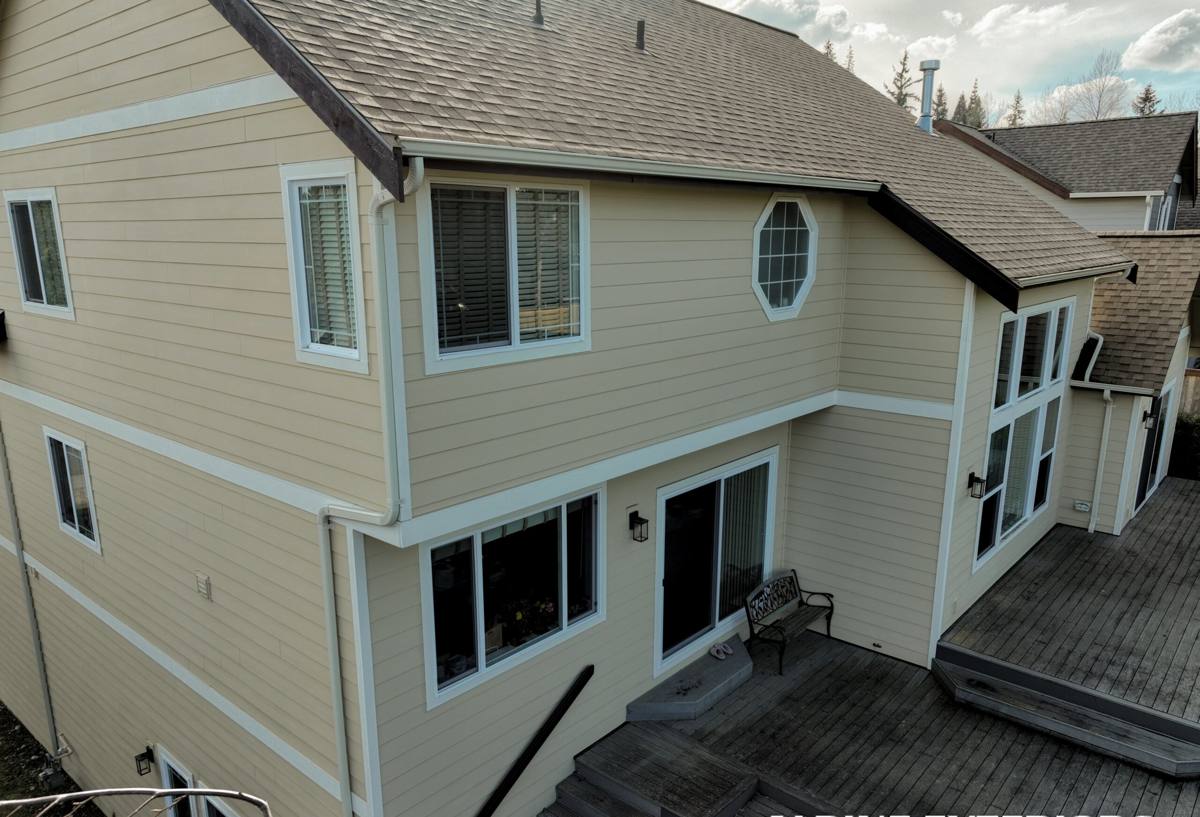
What "Correct" Installation Actually Involves
A window that looks straight and operates smoothly can still be installed wrong. The parts that matter most are the ones you can't see once the siding goes up.
Flashing and Weather-Resistive Barrier Integration
Every rough opening needs to be flashed in a specific sequence — sill first, then jambs, then head — so that water draining down the wall is always directed out and over the layer below it, never behind it. In a climate that sees this much driving rain, we don't treat flashing tape as optional trim; it's load-bearing for keeping the wall dry. The window's nailing flange has to be integrated into the house wrap in the correct shingle-lap order, with the head flashing lapped under the wrap above it, not just sealed over the top.
Sill Pans and Drainage Details
A sloped sill pan under the window gives any water that does get past the glazing or frame a path back out, instead of pooling on the rough sill and soaking into framing lumber. This is a small, inexpensive detail during new construction and a genuinely difficult repair once the wall is closed up. We install sill pans as standard practice on every new-construction opening, not as an upgrade.
Sealant and Fastening
Low-expansion foam or backer rod and sealant around the frame perimeter — never spray foam packed in tight, which can bow vinyl frames — plus fasteners driven per the manufacturer's schedule so the frame stays square and the weep holes stay clear. Weep holes matter more here than in drier climates; if they're painted over or blocked by trim, water has nowhere to go.
Choosing Windows for a New Build in This Climate
Material choice matters more in Whatcom County than in drier parts of the state, because the window spends more of the year wet, humid, or both. Here's how the common options stack up for new-construction use in a salt-air, high-moisture environment:
| Material | Moisture & Salt-Air Behavior | Maintenance | Typical Cost Position |
|---|---|---|---|
| Vinyl | Does not corrode or rot; performs well near salt air | Low — occasional cleaning | Most affordable |
| Fiberglass | Excellent — dimensionally stable, resists moisture and salt exposure | Low | Mid-to-upper |
| Wood-clad | Good if cladding and seals stay intact; exposed wood interior can be affected by long-term humidity | Higher — cladding seams and interior finish need attention | Highest |
| Aluminum | Prone to condensation and thermal transfer in cool, damp climates unless thermally broken | Moderate | Varies |
For most new builds in Happy Valley we steer homeowners toward vinyl or fiberglass frames with dual-pane, low-E glass and argon fill. That combination handles the humidity swings and salt exposure well without asking for much upkeep, and it meets Washington State Energy Code requirements without needing a specialty package. Wood-clad windows can still be the right call for a specific architectural look — we'll install them correctly if that's the direction you want — but we're honest that they carry a higher maintenance commitment in this environment, particularly where cladding seams face prevailing weather.
Our New-Construction Window Process
New-construction installs run on the builder's schedule, so coordination matters as much as craftsmanship. Here's how we approach it:
- Plan and rough opening review — we check window schedule against actual framed openings before install day, catching sizing mismatches while they're still cheap to fix.
- Opening prep — squaring, shimming as needed, and confirming the weather-resistive barrier is lapped correctly before any window goes in.
- Sill pan and flashing installation — done in sequence, per window, not batched at the end of the day.
- Window set and fastening — leveled, plumbed, and fastened to manufacturer spec, with reveal checked on all four sides.
- Head flashing and final weather barrier integration — sealed and lapped so the wall assembly stays continuous.
- Operation and seal check — every sash or casement is opened, closed, and locked before we call it done.
We coordinate directly with the builder or general contractor on sequencing so windows go in at the right point relative to siding and interior finish — not so early that they take weather damage sitting exposed, not so late that trim crews are working around us.
Mistakes We See on New Builds — and Why They Happen
Most window problems on new construction aren't installer incompetence; they're schedule pressure and poor handoffs between trades.
- Flashing installed out of sequence because the window crew and the house-wrap crew never coordinated who does what.
- Missing or flat sill pans skipped to save time, with the assumption that sealant alone will keep water out.
- Over-driven or under-driven fasteners that bow the frame slightly, enough to affect long-term seal performance even though the window still opens fine on day one.
- Weep holes caulked shut by a painting or trim crew that didn't know what they were looking at.
- Rough openings cut to fit the window instead of windows ordered to fit the framed opening, which throws off shim spacing and flashing overlap.
Every one of these is preventable with a crew that treats window installation as its own step with its own inspection, rather than something squeezed in between other trades.
Site Conditions Specific to Happy Valley
Happy Valley's mix of mature tree cover and hillier terrain affects new-construction window work in a few practical ways. Shaded lots stay damp longer after rain, which means moss and algae growth on sills and lower sashes shows up faster here than on an open, sunny lot — frame material and finish choice matter more when the window is going to spend extended periods in shade. Homes with more wind exposure, especially those higher up or more open to weather off the water, need attention paid to fastening schedule and sealant selection so the frame doesn't shift under wind-driven rain pressure. We factor site orientation into material and detail recommendations rather than installing the same way on every lot regardless of exposure.
Energy Code and Permitting
New-construction windows in Whatcom County have to meet Washington State Energy Code requirements for U-factor and, in some cases, solar heat gain coefficient depending on orientation and glazing percentage. This is typically handled at the plans and permitting stage by the builder or architect, but we confirm the window schedule matches what was actually permitted before installation — a mismatch here can hold up final inspection on the whole build. We can work directly with your builder's documentation or, if you're owner-building, help make sure the window specs you're ordering will pass.
Caring for New Windows Once You're In
New windows installed correctly need very little attention, but a few habits extend their life significantly in this climate:
- Rinse sills and tracks periodically to keep moss and algae from taking hold, especially on shaded elevations.
- Keep weep holes clear of debris, paint, and moss so drainage paths stay open.
- Check exterior sealant lines annually for cracking or separation, particularly on the elevation that takes the most wind-driven rain.
- Avoid pressure-washing directly into window seams — it can force water past seals that are otherwise sound.
- If you chose wood-clad windows, inspect cladding seams and touch up any exposed finish promptly.
Why It Matters to Hire a Crew That Already Works Happy Valley
A crew that's installed windows across Happy Valley and the rest of Bellingham knows which details actually matter here versus what's written in a generic installation manual written for a drier climate. That's the difference between a window that's technically installed and one that's installed to hold up through another Whatcom County winter of driving rain and shade-grown moss. We show up to new-construction sites already thinking about flashing sequence, sill drainage, and material behavior in salt air, because that's what the job requires in this part of Washington — not because it's an upsell.
If you're planning a new build or addition in Happy Valley and want windows installed right the first time, we're happy to walk the plans with you and give you a straightforward, no-pressure estimate. Use the form below to get started.