 Bellingham
 Storm Damage Roof Repair Built for Happy Valley
Happy Valley is close enough to Bellingham Bay that the air itself works against a roof — salt-laden moisture drifts in off the water, mixes with driving rain, and settles into a tree-shaded neighborhood where moss has all the time in the world to take hold. When a windstorm rolls through Whatcom County, the damage it leaves on a Happy Valley roof often looks different from what you'd see on a roof out in open, dry country. That's the gap this page is meant to close: what storm damage actually looks like on homes in this neighborhood, what a correct repair involves, and why it pays to hire a crew that already understands the local conditions instead of learning them on your roof.
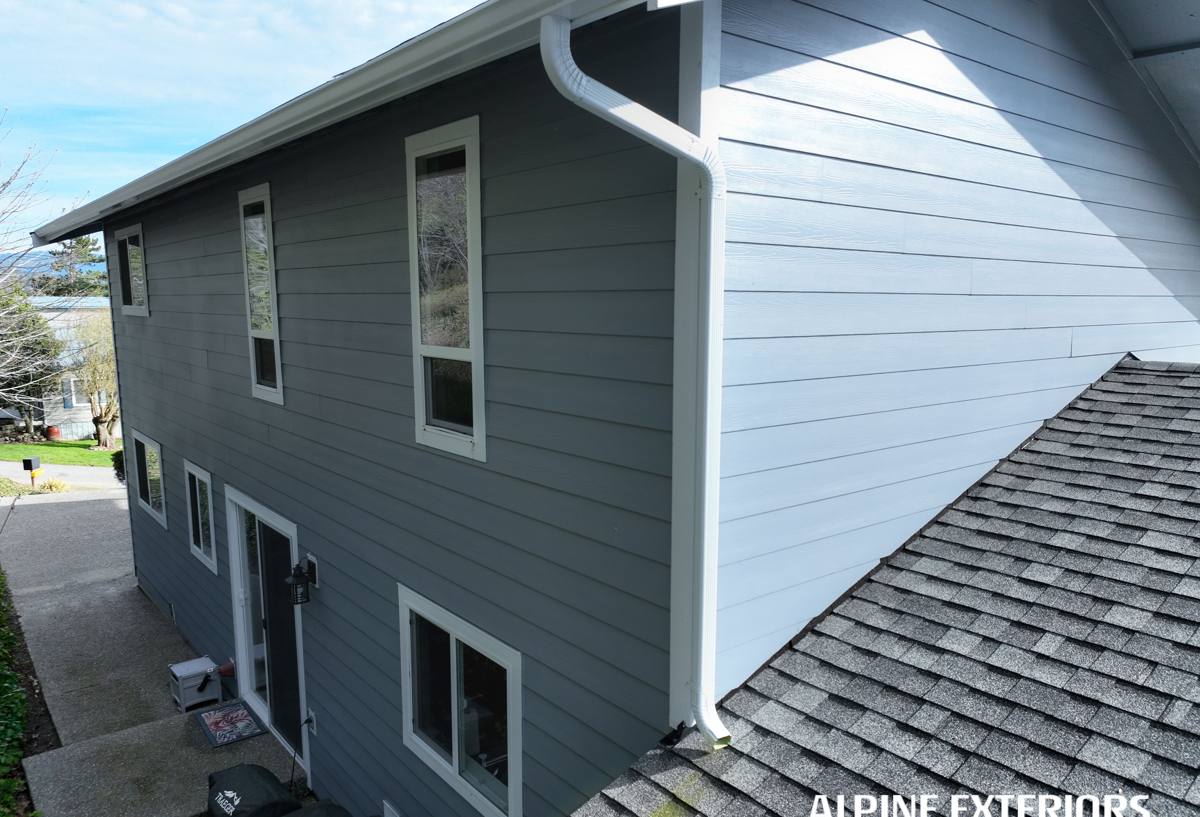
Why Happy Valley Roofs Take a Different Kind of Beating
Three things stack on top of each other here, and none of them are unique to this neighborhood on their own — it's the combination that matters.
Salt Air and Moisture
Proximity to the water means metal flashing, fasteners, and vents corrode faster than they would inland. Corrosion doesn't announce itself the way a torn-off shingle does. It works quietly at seams and nail heads until a storm finds the weak point and turns a slow problem into a leak overnight.
Driving, Wind-Driven Rain
Bellingham storms rarely deliver rain straight down. Wind pushes it sideways and up under the shingle edge, which is exactly where a roof is weakest if underlayment, flashing, or shingle seal has already started to fail. A roof that would shed a calm rain without issue can still leak in a wind-driven event.
A Long Moss Season
Tree cover and consistent moisture give moss a long growing window in this part of Whatcom County. Moss holds water against the shingle surface, lifts shingle edges as it grows, and adds weight — all of which make a roof more vulnerable the next time a storm hits, and can turn ordinary storm damage into something worse.
What Counts as Storm Damage (Even When It Isn't Obvious)
Homeowners usually call us after something dramatic — a missing shingle, a branch through the roof, a visible leak in a ceiling. Those are real, but a lot of storm damage is quieter and shows up weeks or months later as a stain, a musty smell, or a soft spot underfoot in the attic.
- Lifted or creased shingles — wind can lift a shingle enough to break its seal without tearing it off, leaving it looking almost normal from the ground.
- Granule loss — heavy, wind-driven rain and hail-like debris impact can strip the protective granules off a shingle, accelerating UV and moisture damage underneath.
- Flashing separation — around chimneys, vents, and roof-to-wall transitions, flashing can work loose in high wind and let water in without a single shingle being disturbed.
- Fastener back-out — repeated wind uplift can walk nails partway out over several storms, weakening the shingle's hold before it finally fails.
- Moss-driven lift — moss colonies growing under a shingle edge act like a wedge, and a storm can be the event that finally pries the shingle loose.
- Hidden water intrusion — water can travel along rafters or sheathing from the actual entry point before it shows up as a stain somewhere else in the house entirely.
This is why we don't just patch what's visible from the driveway. A proper storm damage inspection includes the attic side of the roof, not only the shingle side.
Our Storm Damage Repair Process
The order of operations matters, especially when a claim might be involved.
- Emergency stabilization, if needed. If there's an active leak or an open spot in the roof, the first priority is a temporary cover to stop water from getting further into the house.
- Full inspection, top and bottom. We walk the roof surface and check the attic, looking for both obvious damage and the quieter signs listed above.
- Written documentation. Photos and notes on what we find, dated and specific — the kind of record that holds up if you file an insurance claim.
- A clear repair plan. We tell you what's damaged, what caused it, and what it will take to fix — with options where they genuinely exist, not upsold ones.
- The repair itself. Matching materials where possible, proper flashing and underlayment detail work, and fastening patterns that account for the wind exposure in this area.
- Cleanup and a final walk-through. Debris removed, gutters checked, and a chance for you to see the finished work before we consider the job done.
Repair vs. Replacement: How We Decide
Not every storm-damaged roof needs to come off. But a repair that ignores the roof's overall condition just delays the real cost. Here's the honest way to think about it.
| Factor | Leans Toward Repair | Leans Toward Replacement |
|---|---|---|
| Age of roof | Well within its expected service life | Already near or past its expected lifespan |
| Extent of damage | Isolated to one area or slope | Spread across multiple slopes or the whole roof |
| Moss and granule condition | Minimal moss, granules intact elsewhere | Heavy moss history or widespread granule loss |
| Underlying decking | Sheathing is sound where inspected | Soft, stained, or rotted sheathing found |
| Flashing condition | Localized failure, easily replaced | Corrosion or failure at multiple penetrations |
| Insurance scope | Claim covers a defined repair area | Adjuster's scope already points to full replacement |
We'll walk you through where your roof lands on this table before we recommend either path — the goal is an honest answer, not the bigger invoice.
Working With Your Insurance Claim
Most storm damage repairs in this neighborhood involve an insurance claim at some point, and the process goes more smoothly when the documentation is solid from the start. We provide the kind of written and photographic record adjusters expect — dated, specific to the storm event, and tied to a cause rather than general wear. We're glad to meet an adjuster on-site and point out what we found, but the decision on coverage is always between you and your insurer; our job is to make sure the roof's actual condition is represented accurately.
One thing worth knowing going in: adjusters sometimes distinguish between storm-caused damage and pre-existing wear, including moss damage that built up over seasons. Good documentation of the specific storm event — timing, wind direction, what changed before and after — makes that conversation easier.
Materials That Hold Up to This Climate
What we install during a storm repair matters as much as how we install it. In a coastal, moss-prone, high-moisture environment like Happy Valley, we lean toward materials chosen for how they behave over years, not just how they look on installation day.
Shingles
We favor algae-resistant shingle lines in this area specifically because of the moss and algae pressure that comes with the tree cover and moisture here. It's a maintenance and longevity decision, not a cosmetic one.
Flashing
Given the salt air, we pay close attention to flashing material and fastener choice at chimneys, valleys, and wall transitions — the goal is to avoid setting up another round of corrosion-driven failure a few years down the line.
Underlayment
Because wind-driven rain can push moisture further under a shingle edge than a calm rain would, correct underlayment detailing at eaves, valleys, and penetrations is treated as essential, not optional, on every repair we do here.
Moss Season and Long-Term Roof Health
Storm damage repair and moss management aren't separate conversations in this neighborhood — they overlap. A roof that's carrying a heavy moss load going into storm season is more likely to see wind and rain turn a minor weakness into a real leak. Part of a thorough repair visit is telling you honestly whether moss is shortening your roof's remaining life, and what a reasonable maintenance schedule looks like — without pushing services you don't need.
- Moss growth is worth addressing before it lifts shingles, not after.
- Gutters clogged with moss and debris compound storm damage by backing water up under the roof edge.
- North-facing and shaded slopes typically need more frequent attention in this climate than sun-exposed slopes.
- A moss-heavy roof should be inspected for granule loss and shingle lift more often than a clean one.
What to Do Right After a Storm
How a homeowner handles the first day or two after storm damage can affect both the repair and any insurance claim.
- Photograph visible damage from the ground — don't get on the roof yourself.
- Check the attic and ceilings for staining, drips, or a musty smell.
- Note the date and general conditions of the storm for your records.
- Cover any active leak from the inside with a container or tarp if it's safe to do so.
- Call for an inspection before doing any DIY roof repair — a well-meaning patch can complicate both the fix and the claim.
- Avoid roof-mounted debris removal on a wet or sloped surface; leave that to a crew with the right footing and gear.
Why Hiring a Crew That Already Works Happy Valley Matters
A roof crew that works this neighborhood regularly already knows which slopes tend to hold moss longest, how far salt air travels off the bay, and what wind-driven rain does to flashing details that would hold up fine somewhere drier. That's not something you can shortcut with a general storm-chasing crew passing through Whatcom County after a big weather event. Local, ongoing presence also means we're around for the follow-up — checking that a repair held through the next storm, not just the day it was installed.
Get a Free, No-Pressure Estimate
If your Happy Valley home has recent storm damage, or you're not sure whether what you're seeing is storm-related or just years of moss and salt air catching up with your roof, we're happy to take a look. The estimate is free, there's no pressure to move forward, and you'll get a straight answer about what's actually going on up there. Use the form below to get started.