 Bellingham
 Windows Built for Happy Valley's Weather, Not Just Any Weather
Happy Valley sits close enough to Bellingham Bay and the surrounding waterways that homes here take a different kind of weathering than houses further inland in Whatcom County. Salt-laden air moves through on the marine breeze, driving rain comes in sideways during the fall and winter storm cycles, and the shaded, damp lots that make this neighborhood attractive also feed a long moss and mildew season that runs nearly year-round. Windows are one of the first places that shows up. Old aluminum frames pit and corrode. Wood sashes swell, stick, and eventually rot at the corners. Seals fail quietly, and by the time you notice fogging between panes or a draft at the sill, moisture has usually already been working on the framing behind the trim for a while.
Custom windows done right for this neighborhood aren't just about picking a style you like out of a catalog. It's about matching frame material, glazing, and flashing detail to a house that sits in a genuinely wet, salt-exposed corner of the county — and installing them so water has nowhere to go but out.
What "Custom" Actually Means Here
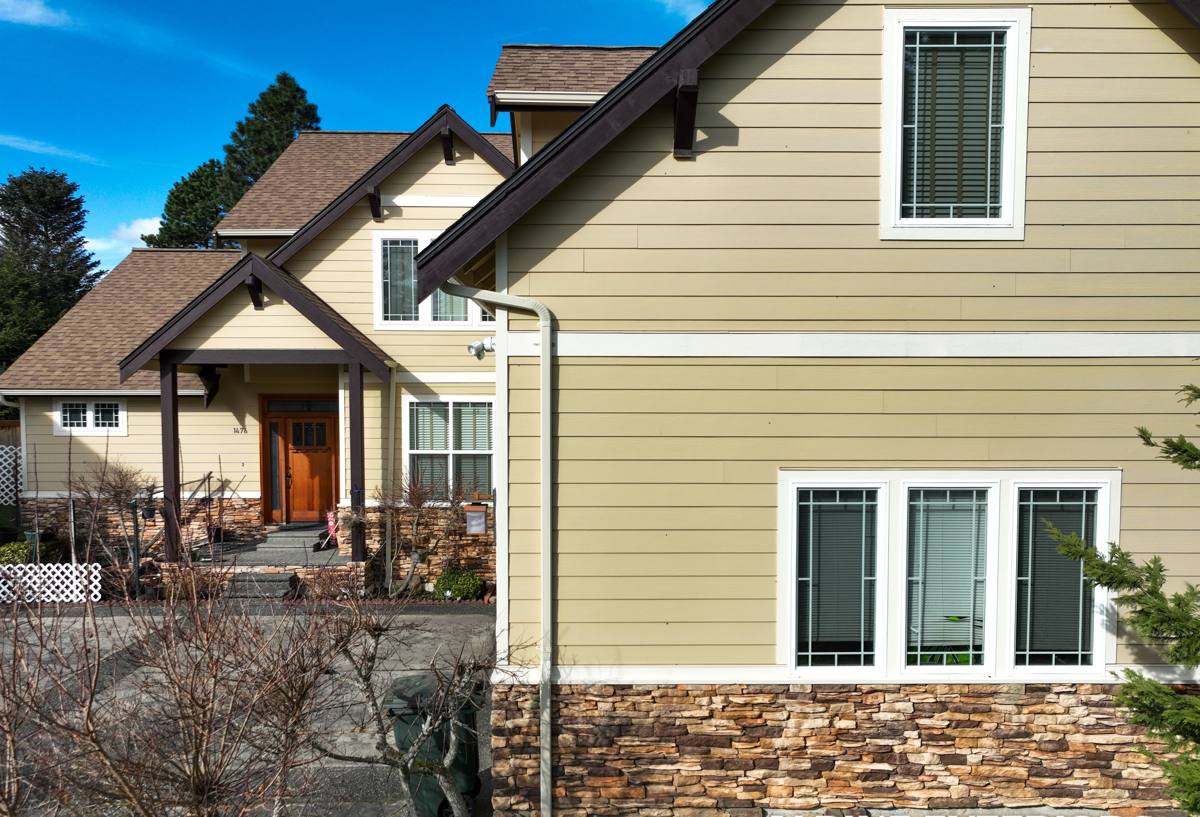
We use "custom" the way it should be used: windows sized and specified to fit your actual openings and your actual house, not a stock size with packing material stuffed around the edges. In Happy Valley that matters more than in a lot of places, because many of the homes are older builds with settled framing, slightly out-of-square openings, or additions that were tied into the original structure at odd angles. A true custom window is measured to that reality.
Common Reasons Homeowners Replace Windows Here
- Wood or aluminum frames showing rot, pitting, or corrosion from years of salt air and moisture
- Foggy or "milky" glass, which means the seal between panes has failed and the insulating gas is gone
- Windows that won't stay open, won't latch, or have become painted shut over the years
- Persistent moss or black mildew staining on sills and lower sashes that keeps coming back no matter how often it's cleaned
- Drafts or cold spots near windows in winter, and noticeably higher heating bills
- A remodel, addition, or a straightforward style update — going from small, dated openings to something that brings in more light
Frame Materials: What Holds Up in a Marine Climate
Frame choice is the single biggest decision in a custom window job, and it's where climate should actually drive the conversation rather than looks alone.
Vinyl
Vinyl is the most common choice we install in this neighborhood, and for good reason. It doesn't rust, doesn't rot, and doesn't need repainting. Good vinyl windows use welded (not just mechanically fastened) corners, which matters a lot here — a mechanically joined corner is a future leak path once caulk ages and shrinks. We look for multi-chambered frames with quality weatherstripping, since that's what actually keeps driving rain and wind-driven moisture out.
Fiberglass
Fiberglass costs more up front but expands and contracts with temperature at nearly the same rate as glass, which reduces stress on the seal over the life of the window. For larger openings or homes where the owner wants a narrower sightline with strong structural performance, it's worth the upgrade discussion.
Wood and Wood-Clad
Wood interiors with an aluminum or fiberglass exterior clad give you a traditional look inside with weather protection outside. We're honest with clients about the trade-off: clad wood windows need the cladding and flashing details done correctly at install, because any gap where moisture can get behind the cladding and reach the wood core becomes a slow, hidden rot problem — exactly the failure mode this climate is good at causing. We install these when a homeowner wants that look and understands the maintenance and installation standards involved.
Aluminum
Standard aluminum frames are the one material we steer people away from for this area specifically, and it's a straightforward physical issue: aluminum conducts heat and cold efficiently, which means condensation forms on interior frames in our wet, cool winters, and un-clad aluminum has poor resistance to salt-air corrosion over time. Thermally broken aluminum systems exist and perform better, but for a typical Happy Valley home, vinyl or fiberglass gives better long-term value for the cost.
| Frame Material | Salt/Moisture Resistance | Maintenance | Typical Fit |
|---|---|---|---|
| Vinyl | Excellent — won't rust or rot | Low — no painting needed | Most homes, best overall value |
| Fiberglass | Excellent | Low | Larger openings, long-term durability priority |
| Wood-Clad | Good if detailed correctly | Moderate — depends on cladding integrity | Traditional interior look wanted |
| Standard Aluminum | Poor in this climate | Higher — condensation, corrosion | Not recommended near the water |
Glass and Glazing: Where the Real Performance Lives
The frame gets most of the attention, but glazing is doing most of the work against Bellingham's damp, overcast climate. Double-pane, low-E glass is the practical minimum we recommend for this area — it cuts heat loss in winter and reduces the interior condensation that's common on older single-pane windows during our cold, humid mornings. For west- and south-facing openings that catch more direct sun in summer, a low-E coating tuned to reduce solar heat gain keeps rooms from overheating without sacrificing natural light, which matters on the gray days when every bit of daylight counts.
Argon gas fill between panes is standard on most quality windows now and adds a meaningful insulation boost for a small cost difference. For homes closer to road noise or with larger window walls, upgrading to a laminated or thicker outer pane can noticeably cut sound transmission too.
Installation: The Part That Actually Determines Whether It Leaks
Most window failures we get called out to inspect in Whatcom County aren't product failures — they're installation failures. A great window installed with a shortcut flashing detail will leak. A mid-grade window installed correctly, with proper flashing and sealant sequencing, will outperform it every time.
What a Correct Job Includes
- Removing the old window and inspecting the rough opening and sill for hidden rot or water damage before anything new goes in
- Repairing or replacing any compromised framing — never installing a new window over a soft or wet sill
- Installing sill pan flashing so any water that does get past the window has a way to drain back out, not into the wall
- Sequencing house wrap and flashing tape shingle-style — each layer overlapping the one below it — so water is always directed outward and down
- Setting the window plumb, level, and square, then shimming and fastening per manufacturer spec
- Sealing and insulating the gap between the frame and rough opening without over-packing, which can bow the frame
- Finishing exterior trim and caulking with a sealant rated for our climate, and interior trim to match the home
Skipping or rushing any one of those steps is how a window that looks fine on installation day turns into a moisture problem two or three winters later — often hidden inside the wall where you won't see it until the damage is significant.
Moss, Mildew, and the Long Wet Season
Happy Valley's tree cover and proximity to water mean shaded window sills stay damp longer than they would on a more exposed, sun-facing lot. That's not something a window replacement alone fixes, but it does affect the details we build in: sloped sills that shed water rather than pool it, drip caps above the window where the design calls for one, and finish materials on the trim that won't feed mildew growth the way bare wood does over time. If your current windows have a pattern of black staining or moss creeping onto the lower sash every year, that's worth mentioning during your estimate — it usually points to a drainage or sun-exposure issue we can address in how the new windows and trim are detailed, not just the windows themselves.
Why a Crew That Already Works This Neighborhood Matters
Every neighborhood in Bellingham has its own quirks, and Happy Valley's mix of home ages, lot shading, and proximity to the water is one we're familiar with because we're already doing this work here — not learning it on your project. That means we're not guessing at what flashing detail this climate calls for, we're not surprised by settled framing on an older home, and we're not showing up without a plan for the drainage issues that shaded, damp lots tend to produce. Local crews also know the practical realities: permitting through the City of Bellingham or Whatcom County depending on where your property falls, realistic scheduling around our wettest months, and what actually holds up here versus what looks good on a spec sheet from a drier climate.
What to Expect From Our Process
- An in-home walkthrough where we measure every opening individually and inspect for existing rot, drafts, or moisture damage
- A straightforward written estimate that breaks down frame material, glass package, and installation scope — no pressure, no gimmicks
- A realistic timeline that accounts for lead time on custom-sized units and our regional weather windows
- Removal and correct disposal of your old windows
- Installation following the flashing and sealing sequence outlined above, on every unit, every time
- A final walkthrough so you can see and test every window before we consider the job done
What Custom Windows Typically Cost
Pricing depends on frame material, glass package, window size and style, and how much repair work the opening needs once we get the old window out. As a general guide, standard vinyl replacement windows tend to run at the lower end of the range, fiberglass and larger custom sizes sit in the middle, and wood-clad or specialty shapes (bays, custom geometric windows, oversized units) run higher. Any home with hidden rot or framing repair will add cost, which is exactly why we inspect before quoting rather than pricing blind. We'll always show you what's driving the number, not just hand you a total.
If your windows in Happy Valley are drafty, fogged, hard to operate, or just overdue for an update, we're glad to come take a look. The estimate is free, there's no pressure to move forward, and you'll walk away with a clear, honest picture of what your home actually needs.