 Bellingham
 Asphalt Shingle Roofing Built for Happy Valley's Weather
Happy Valley sits close enough to the water and the hills around Bellingham that its roofs take a particular kind of beating. Salt-laden air drifts up from Bellingham Bay, wind-driven rain comes in sideways off winter storms, and the tree cover that gives the neighborhood its character also means shade, damp air, and moss spores settling on north-facing slopes for most of the year. An asphalt shingle roof that's installed correctly can handle all of that for decades. One that's installed with shortcuts — thin underlayment, skipped flashing details, nails driven at the wrong angle — will show problems within a few winters, usually right where you can't see them until there's a stain on the ceiling.
We work on homes in this part of Bellingham regularly, which matters more than it sounds like. A roofer who mostly works drier inland areas tends to under-build for what Whatcom County actually throws at a roof. We don't.
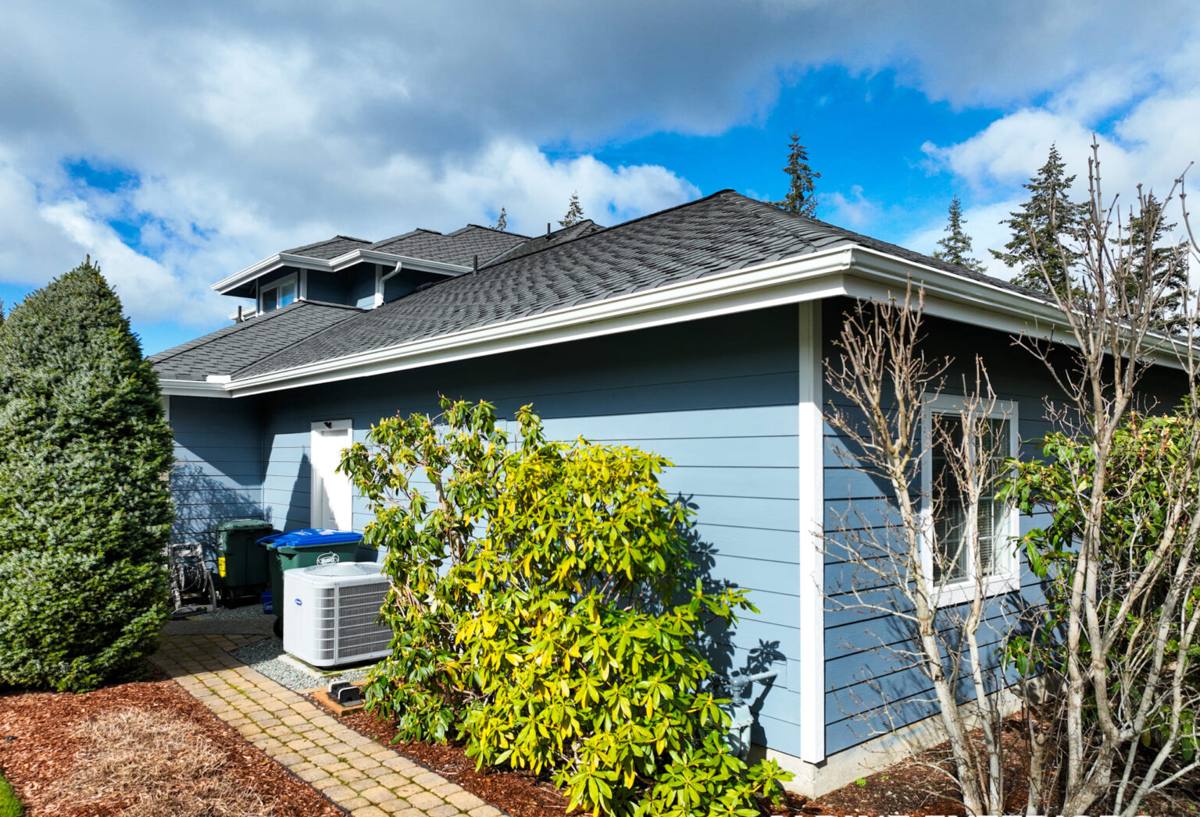
What Happy Valley's Climate Actually Does to a Roof
Moss and Organic Growth
Shaded roof sections in this neighborhood — especially north- and east-facing slopes under mature trees — stay damp longer after every rain. That moisture feeds moss, algae, and lichen. Left alone, moss doesn't just look bad: it lifts shingle edges as it grows, holds water against the granule surface, and accelerates the breakdown of the shingle mat underneath. A roof with heavy moss coverage is aging faster than its calendar age suggests.
Driving Rain and Wind-Driven Water
Storms off the Sound don't always fall straight down. When rain comes in at an angle, it tests every lap, every fastener line, and every penetration point — chimneys, plumbing vents, skylights — far harder than a calm rain does. Underlayment quality and flashing detail work matter more here than in drier, calmer climates, because the roof has to shed water that's actively being pushed uphill by wind, not just gravity-fed downhill.
Salt Air and Corrosion
Proximity to the bay means airborne salt settles on exposed metal — flashing, nail heads, vent caps, gutter hardware. Standard fasteners and lower-grade flashing corrode faster in this environment than they would twenty miles inland. It's a slow process, but it's a real one, and it's part of why we spec corrosion-resistant materials by default rather than treating it as an upgrade.
Temperature Swings and Freeze-Thaw
Bellingham doesn't get brutal winters, but it does get repeated freeze-thaw cycles — cold snaps followed by rain, followed by more cold. Any moisture that's found its way under a shingle or into a seam through a weak spot gets a chance to freeze, expand, and widen the damage. Small installation flaws that would sit dormant in a milder or drier climate get worked loose here over a few seasons.
What a Correct Asphalt Shingle Job Looks Like
Asphalt shingles are a mature, well-understood product — the quality of the outcome comes almost entirely from installation discipline, not from any single premium material choice. For a Happy Valley roof, the details we treat as non-negotiable:
- Full synthetic or high-quality felt underlayment across the whole deck, not just the field areas
- Ice-and-water shield membrane at eaves, valleys, and any low-slope transitions, since these are where wind-driven rain backs up
- Proper starter strip along all eaves and rakes — a spot that's easy to shortcut and easy for water to exploit if it's skipped
- Step flashing (not just caulk or roof cement) at every wall and chimney intersection
- Correct nailing pattern and nail placement — high-nailing is one of the most common causes of premature shingle failure and blow-offs
- Ventilation checked and corrected as needed, since a roof deck that can't breathe traps moisture from underneath, which shows up as premature aging regardless of how good the shingles themselves are
- Ridge cap installed with matching high-wind-rated shingles, not field shingles cut down
None of this is exotic. It's the difference between a roof that's built to the manufacturer's actual specification and one that's built to look right from the street.
Repair, Recover, or Full Tear-Off?
Not every roof in Happy Valley needs a full replacement, and we'll tell you honestly when it doesn't. The right call depends on the age of the existing roof, how many layers are already up there, and what condition the deck is in underneath.
| Situation | Likely Approach | What to Expect |
|---|---|---|
| Isolated leak, storm damage, or a handful of damaged shingles on an otherwise sound roof | Targeted repair | Fastest and least expensive option; only makes sense if the rest of the roof has real life left |
| Roof is one layer, deck is solid, shingles are worn but underlayment is intact | Tear-off and reroof | Standard full replacement; lets us fix flashing and ventilation issues at the same time |
| Roof already has two layers, or there's evidence of deck rot, soft spots, or long-term moss damage | Full tear-off required | Deck inspection and likely partial sheathing replacement; more involved but the only way to do it right |
| Roof is under 10 years old with isolated moss staining and no leaks | Cleaning and maintenance | Soft wash treatment and minor repair; premature to replace |
Layering a new roof over an existing one is sometimes allowed by code, but we're generally cautious about it in this climate — trapped moisture between layers is exactly the kind of slow damage that's hard to catch until it's expensive.
Our Process for Happy Valley Homes
1. On-Site Inspection
We look at the roof itself, the attic or crawlspace ventilation, and the flashing details around every penetration — not just a drive-by look from the ground. Moss coverage, granule loss, and soft decking are all things we check for directly.
2. Honest Scope and Written Estimate
You get a clear breakdown of what's actually needed — repair versus replacement, materials, and why. We don't pad scope to justify a bigger job, and we don't downplay a problem to win a lower bid.
3. Material Selection
We'll walk you through shingle class options (standard three-tab versus architectural/laminate), wind and impact ratings, and color, with the tradeoffs explained in plain terms rather than sales language.
4. Tear-Off and Deck Check
Old material comes off, and the deck gets inspected before anything new goes down. Any soft or damaged sheathing gets replaced — this is the step that gets skipped by crews trying to move fast, and it's the one that causes problems years later.
5. Installation to Spec
Underlayment, ice-and-water membrane, flashing, starter strip, field shingles, and ridge cap installed in that order, to manufacturer specification, with attention to the wind and moisture details specific to this area.
6. Final Walkthrough
We review the finished roof with you, cover warranty coverage, and give you a straight answer on what maintenance — if any — it'll need going forward.
Why Local Experience in This Neighborhood Matters
A roof crew that works Whatcom County regularly already knows which slopes in a given neighborhood tend to hold moss, which roof ages are typically hiding deck damage under the shingles, and which flashing details fail first in this specific mix of rain, wind, and salt air. That's knowledge you don't get from a general contractor bidding a job sight unseen from out of the area. It shows up in small decisions — where we add extra ice-and-water membrane, how we detail a chimney flashing, whether we flag a ventilation issue you didn't know you had — that add years to a roof's service life.
It also means we're not disappearing after the invoice. If something needs a warranty call or a follow-up down the road, we're still working in this area and can get back to your property without a long drive or a scheduling gap.
Maintaining an Asphalt Shingle Roof in This Climate
A few habits go a long way toward getting full life out of a shingle roof here:
- Keep gutters and valleys clear of needles and leaf debris, especially under tree cover — clogged water has to go somewhere, and it's often under the shingle edge
- Have moss treated before it spreads, using a soft wash approach rather than pressure washing, which can strip granules and shorten shingle life
- Trim back overhanging branches where practical to reduce shade, debris, and physical abrasion on the roof surface
- Get an inspection after any major windstorm, even if nothing looks obviously wrong from the ground
- Address small leaks immediately — in this rainfall pattern, a slow leak left over one wet season can turn into deck damage by the next
Get a Straight Answer on Your Roof
If you're dealing with moss buildup, a leak, storm damage, or just wondering how much life is left in your current roof, we're happy to take a look and give you an honest read on it. Reach out for a free, no-pressure estimate — no obligation, just a clear picture of what your Happy Valley home actually needs.