 Bellingham
 Siding Replacement in Barkley: Built for Whatcom County Weather
Barkley is one of Bellingham's newer planned neighborhoods, with a mix of townhomes, condos, and single-family houses built out over the past few decades. Newer construction doesn't mean immunity from the weather, though. Every home in Whatcom County sits in the same marine climate: salt-tinged air drifting in off Bellingham Bay, driving rain that comes in sideways more often than straight down, and a moss and mildew season that can stretch from October well into May. Siding here isn't just a cosmetic layer — it's the first line of defense against moisture intrusion, and it takes a beating year-round.
When we talk about siding replacement in Barkley specifically, we're talking about matching the product and the installation to that reality. A siding job that would hold up fine in a dry inland climate can fail within a decade here if it's the wrong material or installed without attention to water management. This page walks through what Barkley homes actually need, what a correct replacement job involves, and how our process works from first call to final walkthrough.
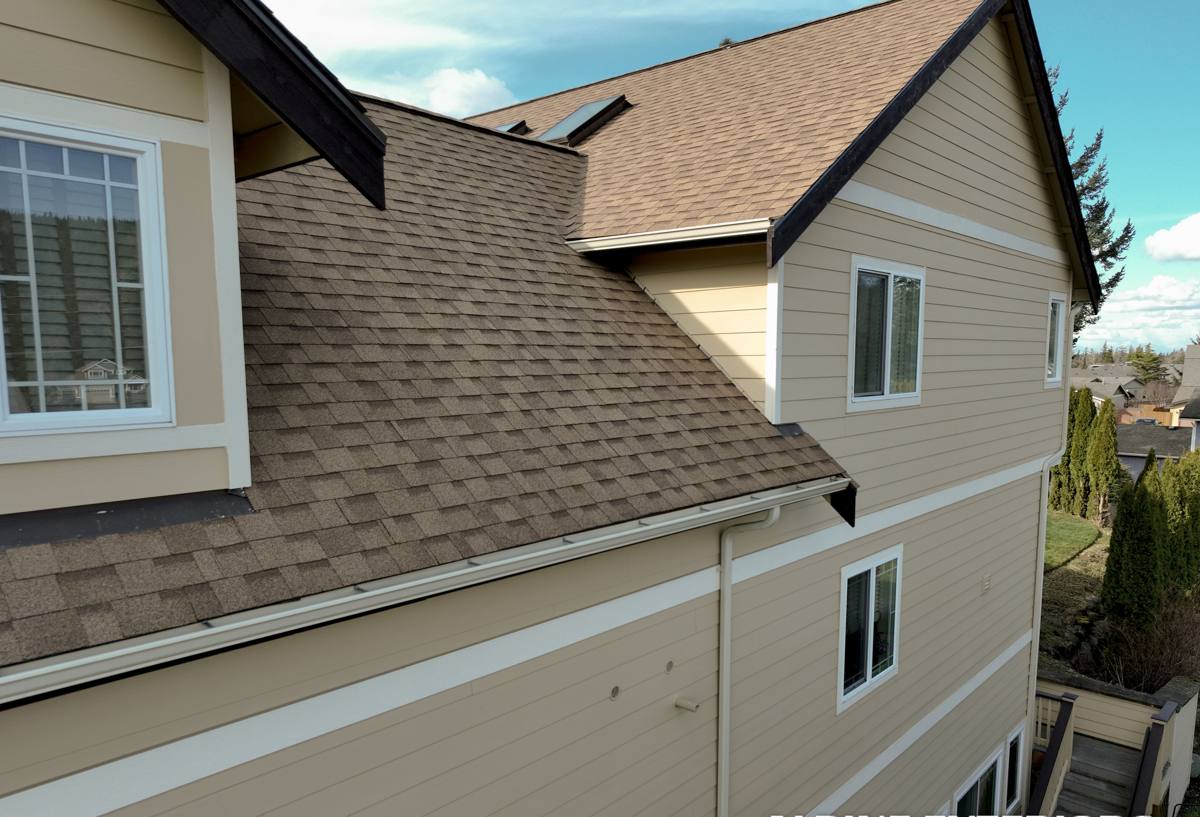
Why Barkley's Climate Is Hard on Siding
Salt Air and Corrosion
Bellingham sits on saltwater, and prevailing winds carry that salt-laden moisture inland across the whole city, including neighborhoods like Barkley that aren't directly on the waterfront. Salt air accelerates corrosion on fasteners, trim flashing, and any exposed metal components. It also speeds up the breakdown of lower-quality paint finishes and caulking, which is part of why factory-applied, baked-on finishes hold up so much better here than field-applied paint.
Driving Rain
Pacific Northwest storms rarely fall straight down. Wind-driven rain gets pushed sideways into wall assemblies, working its way behind siding through gaps, unsealed joints, and poorly lapped seams. A siding system that isn't detailed correctly at the seams, corners, and penetrations will let water in eventually — it's a matter of when, not if.
A Long Moss and Mildew Season
Whatcom County's wet season is long, and shaded or north-facing walls in Barkley stay damp for extended stretches. Organic growth — moss, algae, mildew — needs sustained moisture to take hold, and siding that doesn't dry out quickly between rain events gives it exactly that. Wood-based products are especially vulnerable because they can absorb and hold moisture inside the material itself, not just on the surface.
Signs a Barkley Home Needs Siding Replacement
Not every siding problem means a full replacement, but certain signs point toward it rather than a patch or a repaint:
- Soft or spongy spots when you press on the siding, especially near the bottom courses or below windows
- Visible warping, buckling, or bowing panels
- Paint that won't hold no matter how often it's redone
- Persistent moss or dark staining that comes right back after cleaning
- Cracking or splitting at seams, corners, or fastener points
- Rising energy bills that suggest the wall assembly is no longer sealing properly
- Visible gaps opening up between boards or panels over time
If you're seeing more than one of these, it's worth having someone look at the wall assembly itself, not just the surface — because by the time siding shows visible damage, moisture has often already reached the sheathing behind it.
What a Correct Siding Replacement Actually Involves
A siding replacement is not just swapping old boards for new ones. Done right, it's a full rebuild of the water management system on your exterior walls. That includes:
Tear-Off and Inspection
Removing the old siding down to the sheathing lets us actually see what's happening underneath — rot, mold, compromised framing, or damaged house wrap that's been hidden for years. This step is where problems get caught before they become bigger and more expensive.
Repairing the Substrate
Any rotted sheathing or framing gets replaced before new siding goes up. Covering damaged wood with new siding just hides the problem and guarantees a repeat failure.
Weather-Resistant Barrier
A properly lapped, correctly installed water-resistive barrier (house wrap) goes on the sheathing before siding. In a climate with as much driving rain as Whatcom County gets, this layer — and how carefully it's taped and sealed at penetrations — matters as much as the siding itself.
Flashing at Every Penetration
Windows, doors, vents, and anywhere else something punches through the wall need proper flashing, installed so water sheds outward and downward, never trapped behind the siding. This is one of the most common places we find failures on homes we're asked to re-side.
Correct Fastening and Clearances
Fiber cement siding has specific fastening patterns, nail penetration depths, and clearance requirements from grade, roof lines, and decks. Skipping these details voids manufacturer warranties and shortens the real-world life of the siding, regardless of how good the product is.
Why We Install Only James Hardie Fiber Cement
We standardized on James Hardie siding for every home we side, including in Barkley, and we don't install vinyl, LP SmartSide, Cemplank, Allura, or primed wood siding. That's a deliberate call based on how these products perform over time in a wet, salt-influenced climate like ours.
Vinyl is inexpensive and low-maintenance in the short term, but it's a thin plastic product that can warp in temperature swings, crack in cold snaps, and fade unevenly under UV exposure — and it's not fire-resistant. LP SmartSide and other engineered wood products use treated wood strand technology that performs reasonably well when installation is flawless, but any breach in the factory coating or field-cut edge treatment gives moisture a path into a wood-based core, which is a real risk in a region with our rainfall totals. Primed cedar and spruce look great initially but require an ongoing repainting and caulking commitment that most homeowners underestimate, and untreated cut edges are vulnerable from day one.
James Hardie fiber cement is cement, sand, and cellulose fiber — it doesn't rot, it isn't a food source for pests, and it's non-combustible. The ColorPlus factory finish is baked on under controlled conditions, which gives it far more consistent, durable color than field-applied paint, and it's specifically what stands up to the fading and chalking that salt air and UV exposure cause over time. Hardie's HZ5 product line is engineered for climates with freeze-thaw cycles and sustained moisture exposure — a good match for Whatcom County. It's not the cheapest option on day one, but it's the product we're willing to put our name behind for the long haul.
James Hardie Product Lines for Barkley Homes
| Product | Best For | Notes |
|---|---|---|
| HardiePlank Lap Siding | Most single-family homes | Traditional horizontal lap look, multiple textures and exposures |
| HardiePanel Vertical Siding | Modern builds, accent sections | Clean vertical lines, common on newer Barkley-style construction |
| HardieShingle Siding | Accent gables, dormers | Staggered or straight-edge shingle profiles for detail work |
| HardieTrim | Corners, fascia, window/door surrounds | Matches siding finish for a consistent, sealed look |
All of these are available with ColorPlus factory finishes in a range of colors engineered to hold up under UV and moisture exposure, so you're not relying on field-applied paint to protect the material.
Cost Factors for Siding Replacement
Every home is different, so we won't quote a number without seeing the house, but these are the main factors that move the price up or down:
| Factor | Why It Matters |
|---|---|
| Home size and wall complexity | More corners, gables, and cutouts mean more labor and material waste |
| Extent of substrate damage | Rot or mold discovered during tear-off adds repair scope |
| Product line and profile chosen | Lap widths, shingle accents, and trim packages vary in material cost |
| Story height and access | Multi-story homes and tight lot access require more scaffolding and time |
| Window and trim work included | Replacing or re-flashing openings during the same project adds scope but saves a second mobilization |
| Existing siding removal and disposal | Tear-off and haul-away labor for the old material |
The honest range for a full siding replacement is wide because these factors vary so much house to house — which is exactly why we walk every home in person before giving a number.
Our Process for Barkley Homeowners
- Free on-site estimate — we look at your current siding, walls, and any problem areas, and talk through what you actually need versus what would be nice to have
- Written scope and quote — a clear breakdown of product, prep work, and price, no surprise add-ons buried in fine print
- Scheduling — we plan around Whatcom County's weather windows to avoid tearing off siding right before a multi-day storm system
- Tear-off and substrate repair — old siding comes off, damaged sheathing or framing gets fixed before anything new goes up
- Water-resistive barrier and flashing — house wrap, flashing, and sealing at every penetration, done before siding installation begins
- Siding installation — Hardie product installed to manufacturer fastening and clearance specs
- Final walkthrough — we go over the finished work with you before calling the job done
What to Ask Any Contractor Before You Hire
Whether you call us or someone else, these are the questions worth asking before signing a contract:
- Are you licensed and insured to work in Washington State, and can you provide proof?
- Do you carry manufacturer certification for the specific siding product you're installing?
- What's your plan for water-resistive barrier and flashing detail, specifically?
- Will you inspect and repair sheathing before installing new siding, or just cover what's there?
- What warranty applies to labor, separate from the manufacturer's material warranty?
- Can you provide a written, itemized quote rather than a lump-sum estimate?
- Have you worked in this neighborhood or similar homes in Whatcom County before?
Why Local Experience in Barkley Matters
A crew that regularly works Bellingham and the surrounding Whatcom County area understands how the local building department handles permitting, what inspection expectations look like, and how the region's rain patterns should shape scheduling and water management decisions on site. That's different from a crew passing through on a one-off job. Local experience also means we've seen how different siding products and installation approaches actually hold up here over years, not just what a manufacturer's brochure claims — which is part of why we made the call to install James Hardie exclusively rather than offer a menu of options with very different long-term outcomes.
Barkley homeowners deserve a straight answer about what their siding needs and why, not a sales pitch. If your current siding is showing signs of wear, or you're just planning ahead, we're happy to take a look and give you a free, no-pressure estimate — use the form below to get started.