 Bellingham
 Custom Decks Built for Barkley's Weather
Barkley homeowners deal with a specific mix of conditions: steady rain for much of the year, salt-tinged air drifting in off Bellingham Bay, and long stretches of low sun that keep shaded areas of a yard damp for days after a storm passes. A deck built without those realities in mind will look fine the first summer and start showing problems by the third or fourth winter — soft spots in decking, rust bleeding through fasteners, and moss creeping across every surface that doesn't get direct sun. A deck built correctly for this neighborhood accounts for all of that from the design stage forward, not as an afterthought.
We work on decks throughout Bellingham and Whatcom County, and Barkley's mix of newer construction and established lots gives us a good cross-section of what actually holds up here versus what doesn't. This page walks through what we've learned building and repairing decks in this climate, so you know what to ask for and what to watch out for before you commit to a design or a contractor.
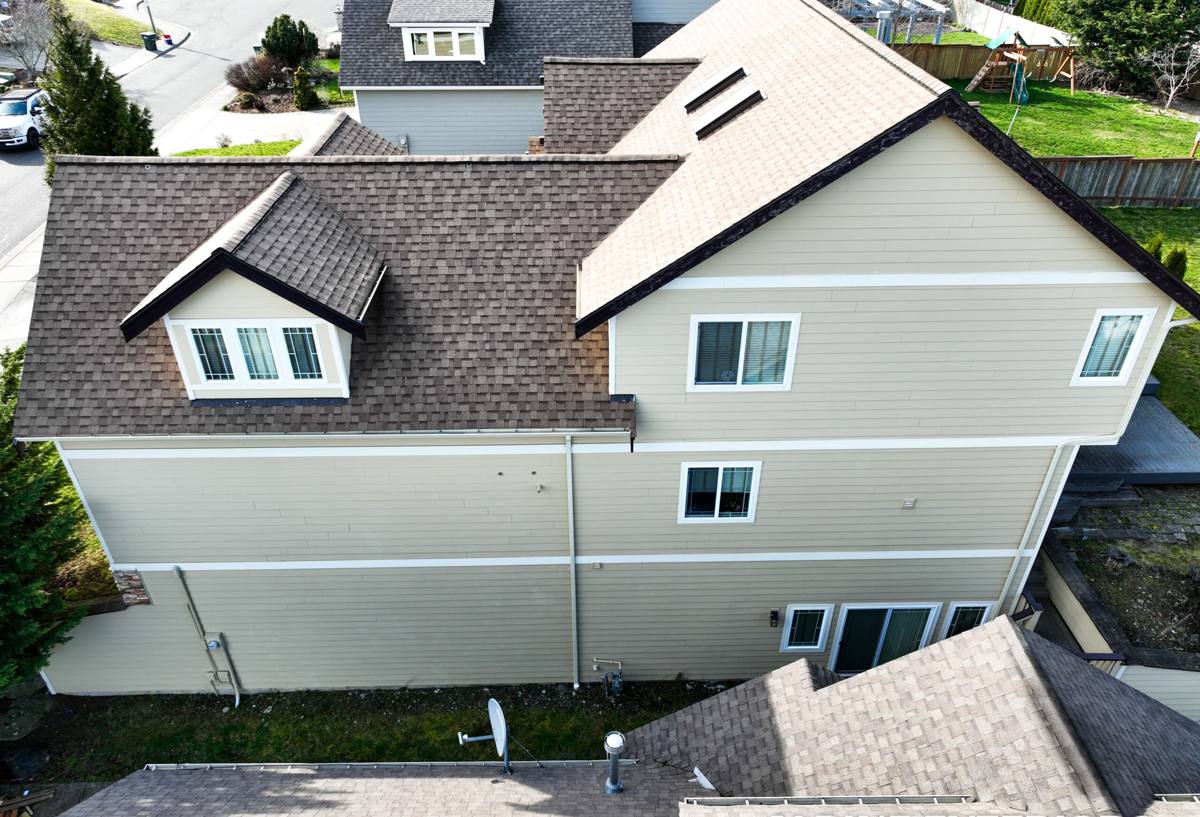
What Barkley's Climate Actually Does to a Deck
Rain and Moisture Cycling
Western Washington's rain isn't just about total volume — it's the duration. Wood and composite decking in Whatcom County spend long periods saturated, then dry out slowly under overcast skies rather than quick, hard sun. That slow dry cycle is harder on materials than an occasional downpour followed by bright sun would be. Fasteners, ledger connections, and any spot where water can pool or get trapped between boards are where problems start.
Salt Air
Proximity to the bay means airborne salt finds its way onto hardware, railings, and fastener heads even on decks that aren't waterfront. Salt accelerates corrosion on anything less than fully rated stainless or coated hardware, and once a fastener starts rusting, it can stain the surrounding decking and weaken over time.
Moss and Shade
Mature trees and long winters mean a lot of Barkley decks have at least one side that rarely sees direct sun. Moss and algae take hold fastest in those shaded, damp zones, and once established they hold moisture against the deck surface and make boards slicker and more slippery underfoot.
What a Correctly Built Deck Looks Like Here
A deck designed for this environment isn't dramatically different from one built anywhere else — but the details that get skipped in a rushed or budget build are exactly the ones that matter most in Whatcom County's climate.
- Ledger board flashed and sealed properly where it meets the house, with a drainage gap so water doesn't sit against the siding or framing
- Stainless steel or heavily coated structural hardware — joist hangers, ledger bolts, and fasteners — rated for coastal/marine exposure, not standard interior-grade hardware
- Joist tape or a similar barrier on top of framing members to keep standing water from soaking directly into the wood
- Decking material chosen with the site's sun exposure in mind — a heavily shaded deck benefits from a different material or finish than a full-sun deck
- Proper board spacing and a slight slope away from the house so water sheds instead of pooling
- Under-deck ventilation where the structure is enclosed or close to grade, so moisture doesn't get trapped underneath
Choosing Materials for This Neighborhood
There's no single "best" decking material — the right choice depends on how much shade the site gets, how much maintenance the homeowner wants to keep up with, and budget. Here's how the common options compare specifically for Barkley's conditions:
| Material | Moisture/Moss Behavior | Maintenance | Typical Lifespan Here |
|---|---|---|---|
| Pressure-treated wood | Absorbs moisture readily; needs sealing to resist moss and rot in shaded areas | Annual cleaning and re-sealing recommended | 10-15 years with upkeep |
| Cedar | Naturally rot-resistant but still needs finish maintenance in wet, shaded spots | Periodic cleaning and refinishing | 15-20 years with upkeep |
| Composite decking | Doesn't absorb water like wood, but moss and algae can still grow on the surface film in shade — needs occasional washing | Low; periodic cleaning, no sealing | 25-30+ years |
| PVC decking | Fully moisture-resistant surface; least prone to moss adhesion of the common options | Low; occasional washing | 25-30+ years |
We don't push one material as universally correct. A full-sun deck with an owner who's willing to maintain it can do very well in cedar or treated wood at a lower upfront cost. A shaded, hard-to-reach deck is usually better served by composite or PVC, where the ongoing maintenance burden is much lower even if the upfront cost is higher.
Why We're Selective About Hardware and Fasteners
We won't cut corners on structural hardware to hit a lower price, and that's worth explaining rather than just stating. Standard zinc-coated fasteners are made for general framing, not sustained exposure to salt-laden coastal air. In Barkley, we've seen decks where the decking itself was in decent shape but the hardware underneath had corroded enough to compromise the connection. Stainless or heavy hot-dip galvanized hardware costs more, but replacing a structural connection under a finished deck later costs far more — in money and in disruption.
Our Process for a Custom Deck Build
1. On-Site Assessment
We walk the property, note sun exposure and drainage patterns across the day and, where relevant, across seasons, and look at how the deck will tie into the house — siding type, existing flashing, grade, and slope.
2. Design and Material Selection
We talk through layout, railing style, and material options based on how the space will actually be used and how much upkeep the homeowner wants going forward. This is also where we flag anything about the site — a heavily shaded corner, a low spot that collects water — that should shape the design.
3. Permitting
Most deck projects in the City of Bellingham and unincorporated Whatcom County require a building permit, particularly for decks attached to the house or elevated above a certain height. We handle the permit submission and inspection scheduling as part of the project so you're not navigating that process alone.
4. Structural Build
Ledger attachment and flashing, footings, framing, and hardware installation come first, with every connection point built to the coastal-grade standard described above — not scaled back regardless of whether the deck is a few blocks from the water or further inland.
5. Decking, Railing, and Finish
Decking is installed with proper spacing and fastening for the chosen material, followed by railing and any finish work — staining, sealing, or trim.
6. Final Walkthrough
We walk the finished deck with you, cover basic maintenance for the specific material you chose, and answer questions about care going forward.
Maintenance That Actually Matters in Barkley
Whatever material you choose, a few maintenance habits go a long way in this climate specifically:
- Sweep debris and standing leaves off the deck regularly, especially in fall — trapped organic matter holds moisture and speeds up moss growth
- Wash shaded areas of the deck at least once or twice a year with a deck-safe cleaner to knock back algae and moss before it establishes
- Check fastener heads and railing hardware periodically for early rust staining, which usually shows up before a connection is actually compromised
- Keep gutters and downspouts near the deck clear so overflow isn't dumping extra water onto or under the structure
- Re-seal wood decking on the schedule appropriate to the product — skipping a cycle in this climate shows up faster than it would somewhere drier
Common Problems We See on Existing Barkley Decks
When we're called out to repair rather than build new, the issues tend to repeat: ledger boards that were never properly flashed and are now rotting where they meet the house, standard fasteners rusted through in shaded, damp corners, and decking that was installed without adequate slope so water sits and accelerates wear. Almost all of these are avoidable at the design and construction stage — they're rarely a sign that a deck was doomed from the start, just that a few details got skipped.
Why Hiring a Crew That Already Works in Barkley Matters
A contractor who mainly builds decks in drier climates may not default to marine-grade hardware, may not think about shaded moss zones in the design phase, and may not have a working relationship with local permitting offices. None of that is incompetence — it's just a different set of default assumptions. We build and repair decks throughout Bellingham and Whatcom County, so the coastal-grade details described on this page aren't upgrades we mention as an afterthought — they're our standard starting point for any deck in this area, including Barkley.
If you're planning a new deck or want a straight assessment of one you already have, we're happy to take a look. Use the form below to request a free, no-pressure estimate — there's no obligation, and we'll give you an honest read on materials and scope before any work begins.