 Bellingham
 Why Barkley Decks Wear Differently
Barkley sits inside the same weather pattern as the rest of Bellingham and Whatcom County: salt-tinged air moving in off Bellingham Bay, driving rain for a good chunk of the year, and a moss season that can stretch from October well into May. Add in the mature trees on many Barkley lots, and you get decks that stay shaded and slow to dry out even after the rain stops. That combination — moisture that lingers, plus organic growth that holds it against the wood — is what ages a deck faster than the calendar would suggest.
None of this means a deck in Barkley is doomed to fail early. It means a deck built or repaired without that climate in mind will fail early. The fixes that work in a dry inland climate — quick fastener swaps, cosmetic board replacement, a coat of stain and call it done — don't hold up here. A repair has to account for how water moves through and off the structure, not just how the deck looks when the job is finished.
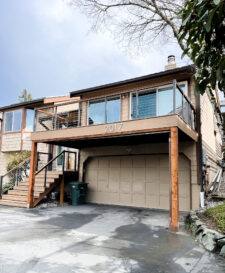
Warning Signs Worth Taking Seriously
Most deck failures don't happen suddenly. They start small and get ignored because the deck still looks fine from a few feet away. Here's what we tell Barkley homeowners to check for, ideally twice a year:
- Soft or spongy spots when you walk the deck, especially near the house or at board ends
- Green or black staining that comes back within weeks of cleaning
- Rust streaks below screw heads, joist hangers, or bolts
- Gaps opening up between the ledger board and the house siding
- Railings or stair stringers that flex or feel loose when you lean on them
- Standing water that takes more than a day to dry after a normal rain
- Visible daylight or crumbling wood where posts meet footings
Any one of these on its own might be minor. Two or three together, especially near the ledger board or a support post, usually means the problem has moved past the surface and into the structure.
What's Usually Failing First
Ledger Board and House Connection
The ledger board — the piece that bolts the deck to the house — is the most important connection on the whole structure, and it's also the part most exposed to trapped moisture. If it was installed without proper flashing, or if the flashing has failed over time, water gets between the ledger and the house framing and doesn't leave. This is the single most common serious problem we find on older decks in this area, and it's not something to patch around. It has to be opened up, inspected, and correctly flashed when it's repaired.
Fasteners and Hardware
Standard galvanized fasteners break down faster in salt-influenced, high-moisture air than most homeowners expect. Once a fastener starts rusting, it loses grip in the wood and the connection it's supposed to hold gets weaker every season. Joist hangers, post bases, and structural screws are worth checking even when the boards around them still look fine.
Decking Boards and Moss
Moss and algae aren't just a slip hazard — they hold moisture directly against the wood fiber, which accelerates rot from the surface down. Boards that stay shaded most of the day are almost always the first to need replacement, regardless of the wood species or how well the deck was built originally.
Repair or Replace? What Actually Decides It
Homeowners often assume visible damage means the whole deck needs to come out. Just as often, the opposite is true — a deck with ugly surface wear can have a sound frame, while a deck that looks fine can have a failing structure underneath. The honest answer depends on where the damage is and how far it's spread.
| Factor | Leans Toward Repair | Leans Toward Replacement |
|---|---|---|
| Ledger board condition | Solid wood, isolated flashing failure | Soft or rotted wood behind the flashing |
| Framing (joists, beams) | Localized soft spots, otherwise sound | Widespread rot or sagging across multiple joists |
| Decking boards | Scattered bad boards, frame is solid | Most boards cupping, splitting, or soft |
| Posts and footings | Posts sound, footings intact | Footing movement, post base rot |
| Age of structure | Under 15 years, built to code | Older, undersized framing, or unpermitted original build |
In a lot of Barkley homes, we find a repair candidate: the frame is sound, but the ledger flashing, a section of decking, and some hardware need attention. That's a very different job — and a very different price — than a full rebuild, and we'll tell you honestly which one you're actually looking at before any work starts.
What a Correct Repair Actually Involves
A repair that's done right isn't just about replacing what looks bad. It includes:
- Pulling boards and hardware where needed to inspect the framing underneath, not just what's visible on the surface
- Correcting ledger flashing so water sheds away from the house rather than behind the board
- Matching or upgrading fasteners and hangers to a grade suited for coastal, high-moisture conditions
- Replacing framing members that have lost structural integrity, not just capping over them
- Confirming post and footing condition before closing anything back up
- Checking that guardrails and stairs meet current safety spacing, especially on older decks built before current code
Skipping any of these to save time is how a "repaired" deck ends up with the same problem again in two or three years — except now it's hidden behind new boards.
Our Process
- Walk-through and honest assessment. We inspect the whole deck, not just the area you called about, and probe suspect wood to see how far damage has actually spread.
- Written scope and estimate. You get a clear breakdown of what needs repair, what could wait, and what a full replacement would cost by comparison — no pressure toward the bigger job.
- Repair work. Structural issues get addressed first — ledger, framing, posts — then decking, railings, and hardware.
- Code check. Anything touching structure or railings is brought up to current safety standards as part of the repair, not treated as an upsell.
- Cleanup and walkthrough. We review the finished work with you before we consider the job done.
Material Choices That Hold Up Here
What you use to repair a deck matters as much as the work itself, especially in a climate that doesn't give wood much of a break between rain events.
| Material | Where It Fits | Trade-off to Know |
|---|---|---|
| Pressure-treated lumber | Framing, joists, posts | Needs proper flashing and fastener compatibility to perform as designed |
| Cedar decking | Natural look, good rot resistance | Needs regular refinishing to keep that resistance intact |
| Composite decking | Low-maintenance surface boards | Higher upfront cost; still needs a properly built, ventilated frame underneath |
| Stainless or coated structural fasteners | Ledger, hangers, structural connections | Costs more than standard galvanized, but resists corrosion far longer in this air |
We don't push one product line as a cure-all. The right call depends on your budget, how the deck is used, and how much shade and moisture it deals with — and we'll walk through those trade-offs with you rather than just quoting the most expensive option.
Why a Crew That Already Works Barkley Matters
Deck repair isn't a one-size-fits-all trade. A crew that works across Whatcom County regularly sees how decks in this specific climate actually fail — which connections go first, which shaded spots need extra attention, which fastener grades hold up and which don't. That's different from general handyman experience or knowledge picked up in a drier region. It also means we're familiar with Bellingham's permitting and inspection process for structural deck work, so repairs that need a permit don't stall out or get flagged later.
Keeping a Repaired Deck in Good Shape
A correct repair buys you years, but a little seasonal attention buys you more. After we finish a repair, this is the maintenance rhythm we recommend:
- Clear leaves and debris from between boards before fall rains set in
- Rinse off moss and algae before it gets a foothold, rather than after it's established
- Check fasteners and hardware for rust once a year
- Reapply sealant or stain on wood decking on the manufacturer's recommended schedule, not just when it looks faded
- Keep gutters and downspouts clear so runoff isn't draining directly onto the deck
If you're seeing soft spots, rust staining, or persistent moss on a deck in Barkley, we're happy to take a look and give you a straight answer on what it actually needs. Reach out for a free, no-pressure estimate using the form below.