 Bellingham
 Windows Built for Barkley's Weather, Not Just Its Openings
Barkley sits close enough to the water and the tree cover of Bellingham that its homes take a specific kind of weathering: salty marine air moving in off Bellingham Bay, wind-driven rain that hits window walls sideways rather than falling straight down, and a long stretch of the year when moss, algae, and lichen have every reason to take hold on anything that stays damp. None of that is unique to one street or one subdivision, but it is consistent across Whatcom County's low-elevation, tree-shaded neighborhoods, and Barkley's mix of newer construction and older single-family stock means we see windows at every stage of that weathering process.
"Custom windows" doesn't mean fancy shapes or oversized glass for its own sake. It means the window is sized, flashed, and detailed to fit the actual opening in front of us and the actual exposure that opening gets — not a generic stock size forced into place with extra caulk to hide the gap. In a climate that spends a good chunk of the year wet, that fit is the difference between a window that lasts decades and one that starts leaking behind the trim in year six.
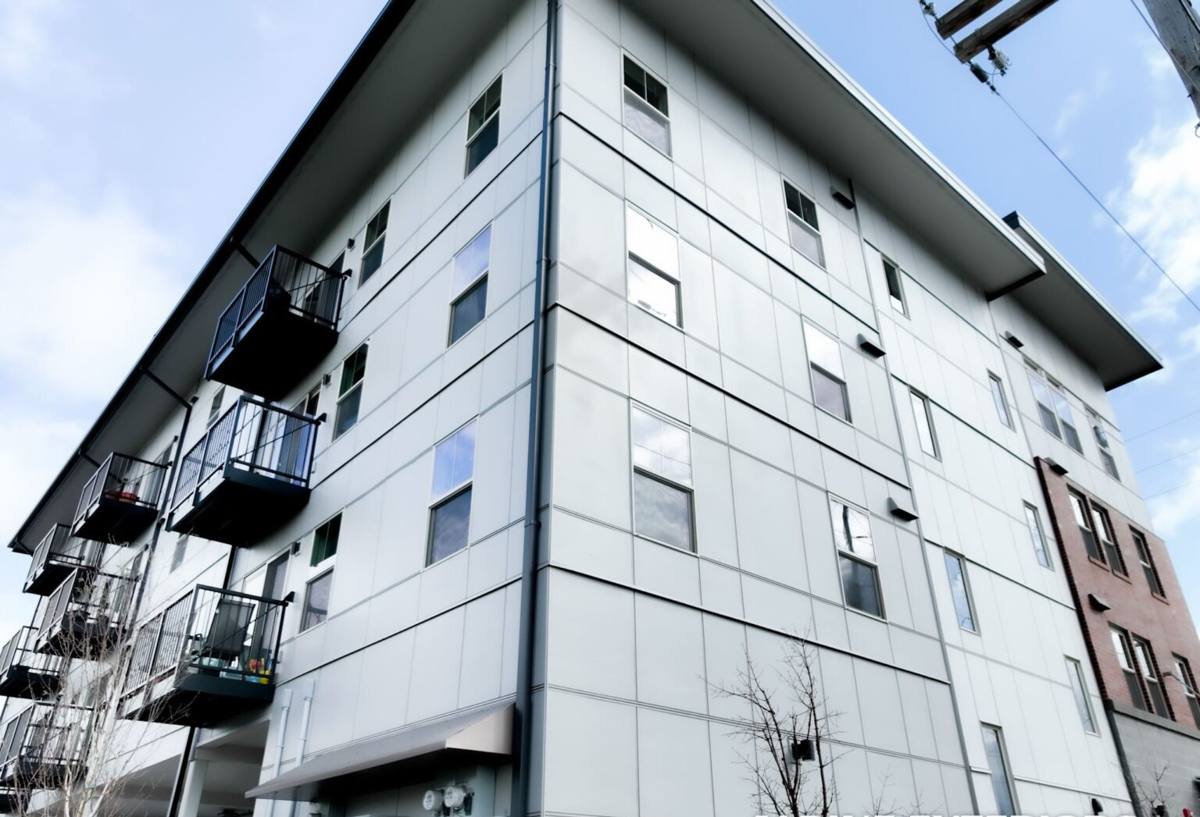
What Salt Air, Driving Rain, and Moss Season Actually Do to a Window
Salt air and hardware
Marine air carries fine salt particles that settle on exposed metal — hinges, cranks, balance systems, and lower-quality cladding fasteners. Over years, that accelerates corrosion in hardware that wasn't rated for coastal exposure, which shows up as windows that get stiff to operate, locks that stop aligning cleanly, or streaking on the frame where corroding fasteners bleed through.
Driving rain and water intrusion
Wind-driven rain doesn't just hit the glass — it gets pushed sideways into the joint between the window and the wall assembly. A window can be perfectly good and still leak if the flashing and sill pan underneath it weren't installed to shed that water back out. This is the single most common failure point we find on window replacements in this area, and it's almost never the window itself that's at fault.
Moss season and prolonged moisture
Bellingham's wet season runs long, and shaded lots — common in Barkley's more established, tree-lined blocks — stay damp longer after every rain. Moss and algae take hold on horizontal surfaces like sills and mulled joints, and if a window's drainage isn't clearing water efficiently, that moisture sits against wood trim or compromised weep systems and invites rot underneath the surface, long before it's visible from outside.
Signs Your Current Windows Are Losing the Fight
Most homeowners don't notice window failure until it's well underway, because the early signs are subtle and easy to write off as normal aging. Here's what we actually look for during an assessment:
- Soft or discolored wood trim at the sill or lower corners, even if paint looks intact on top
- Visible moss, algae, or dark streaking concentrated on the sill or bottom rail
- Windows that are noticeably harder to open, close, or lock than they used to be
- Condensation forming between the panes (a sign the seal has failed on a double- or triple-pane unit)
- A cold draft near the frame even when the window is fully latched
- Visible daylight or gaps around the frame from outside
- Interior wall or ceiling staining below or beside a window after heavy rain
- Paint that keeps bubbling or peeling near the window despite repainting
Any one of these can be minor. Two or three together, especially the wood softness or interior staining, usually mean water has been getting past the window assembly for a while — which changes the job from "replace the window" to "replace the window and address what's underneath it."
Choosing Materials That Actually Hold Up Here
There's no single "best" window material — there's a best fit for a given wall assembly, exposure, and budget. For Barkley's climate, the trade-offs that matter most are moisture behavior, maintenance load, and how the frame handles years of damp-dry cycling.
| Frame Material | Moisture Behavior | Maintenance | Typical Fit |
|---|---|---|---|
| Vinyl | Won't rot; can warp slightly with major temperature swings, which is rare here | Low — occasional cleaning, no repainting | Cost-conscious replacements, rental and spec-grade jobs |
| Fiberglass | Excellent — dimensionally stable, resists moisture-driven warping | Low to moderate | High-exposure walls, long-term hold in wet climates |
| Wood-clad (aluminum or fiberglass exterior, wood interior) | Good if cladding and flashing are correctly detailed; vulnerable where cladding is compromised | Moderate — interior wood may need periodic attention | Homes prioritizing interior wood appearance with protected exterior |
| Solid wood | Weakest in this climate unless meticulously maintained and well-protected by overhangs | High — regular repainting/sealing required | Historic-style homes where exact wood profiles matter more than upkeep |
| Aluminum | Doesn't rot but is thermally poor and prone to condensation without thermal breaks | Low | Rarely our first recommendation for residential walls here |
We're not going to tell you solid wood windows are a bad product — plenty of homes have run them for generations. Our professional standard is that in a marine, high-rainfall climate, we only recommend materials and details we're confident will perform with the level of upkeep most homeowners actually do, not the level a manufacturer's ideal-case warranty assumes.
What a Correct Custom Window Installation Actually Involves
The window unit itself is maybe a third of the job. The rest is what happens in the opening before and after it goes in:
- Precise measurement of the existing opening — including checking it for square, since older openings settle unevenly over time
- Removal of the old unit and inspection of the rough opening — sill, jack studs, and header get checked for hidden rot or moisture damage before anything new goes in
- Sill pan flashing — a sloped, sealed pan that directs any water that gets past the window back outside instead of into the wall cavity
- Setting the new window — shimmed level, plumb, and square, then fastened per the manufacturer's specified pattern (skipping fasteners to save time is a common shortcut we won't take)
- Integrating the flashing with the existing weather-resistive barrier — housewrap and flashing tape lapped correctly so water sheds down and out, following proper shingle-lap order
- Insulating the gap between frame and rough opening — enough to control air movement without over-packing, which can bow the frame
- Interior and exterior trim and sealant — sealed at the right points, and only the right points, since sealing every possible gap can trap water that needs to drain
- Final operation check — every sash and lock tested before we call it done
Step three and step five are where most of the leaks we get called to fix originated. A window can be top-of-the-line and still fail if the pan flashing was skipped or the housewrap laps were reversed.
Retrofit vs. New Construction Windows
In Barkley's older homes especially, one of the first decisions is whether a retrofit (insert) window or a full new-construction window with nailing fin is the right approach. A retrofit window fits inside the existing frame, which is faster and less invasive but relies on the old frame still being sound. A new-construction window replaces the frame down to the rough opening, which takes more work but lets us correct flashing problems that a retrofit would just seal over. When we find moisture damage during assessment, we'll tell you plainly which situation you're in — inserting a new window over a compromised frame is a short-term fix we won't present as a long-term solution.
Why a Crew That Already Works Barkley Matters
Window performance in this climate comes down to details that don't show up on a spec sheet: how a given block's tree cover affects drying time, how prior decades of construction in the area tended to handle (or mishandle) flashing, and what exposure a given wall orientation actually gets from Bellingham's prevailing weather. A crew that's worked Barkley's homes repeatedly has already seen how the neighborhood's housing stock was built and where it tends to have problems, which means less exploratory guesswork and fewer surprises once a window comes out. It also means we're a known, findable local business if a question comes up two years after installation — not a name from an out-of-town lead-gen list.
Keeping New Windows Performing Through Moss Season
A correctly installed window still benefits from basic upkeep in this climate:
- Rinse sills and tracks periodically to clear salt residue, pollen, and organic buildup before it turns into moss
- Keep weep holes (the small drainage openings along the bottom of the frame) clear of debris so water can actually exit
- Trim back vegetation that shades a window and keeps it damp longer than the rest of the house
- Operate hardware a few times a season, even on windows you don't open often, to keep mechanisms from seizing
- Check exterior caulk lines annually and have any cracked sealant addressed before the wet season sets in
None of this is complicated, but it's the kind of small, regular attention that adds years to a window's service life in a climate that doesn't give materials much of a break.
Getting a Straight Answer for Your Home
Every Barkley home carries its own combination of exposure, age, and prior workmanship, which is exactly why we don't quote windows over the phone from a description. If you're seeing early warning signs, dealing with a window that's clearly past its service life, or just planning ahead before the next wet season, we're happy to take a look and give you a straightforward assessment — what's actually going on, what it'll take to fix it right, and what it won't cost you to find out. Fill out the form below for a free, no-pressure estimate.