 Bellingham
 Building a Deck That Actually Holds Up in Puget
A deck in the Puget area of Bellingham lives a harder life than the same structure would a few hundred miles inland. It sits under a marine layer that keeps wood damp for days at a time, catches salt-laden air off the Sound, and spends a good chunk of the year growing moss faster than anyone can scrub it off. None of that means a deck is a bad idea here — decks are one of the best investments a Whatcom County homeowner can make in outdoor living space. It means the deck has to be built differently than a catalog plan assumes, with attention to drainage, fastener choice, and airflow that a lot of general contractors treat as optional.
We build and repair decks specifically for this climate. That's a different job than building a deck in Spokane or Boise, and it shows in the details — the ones that don't matter until year three, when a deck built to a generic spec starts showing soft spots, black streaking, or hardware bleeding rust down the fascia.
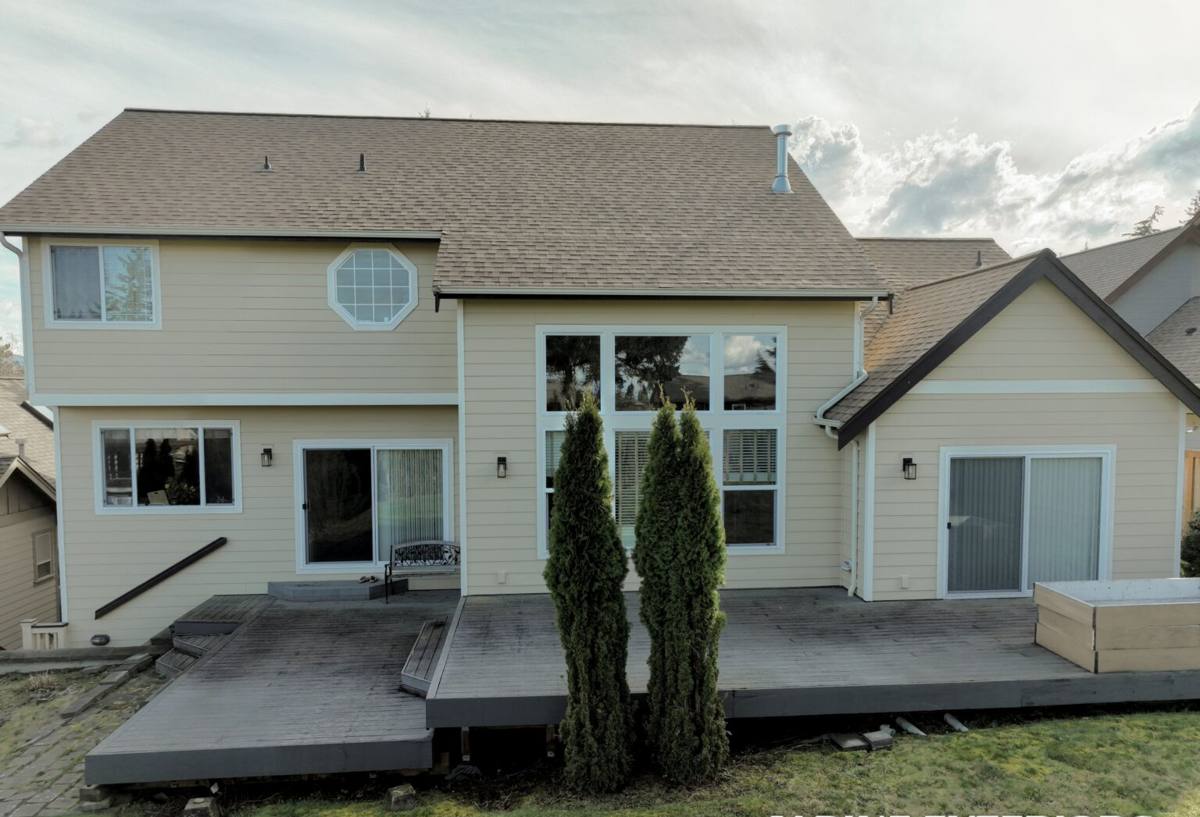
What Puget's Weather Does to a Deck Over Time
Three regional factors drive almost every deck problem we get called out for in this area:
Salt Air
Proximity to Bellingham Bay and the broader Puget Sound means airborne salt is a real factor for fasteners and metal connectors, not just for boats and railings right at the waterline. Standard electro-galvanized screws and joist hardware corrode faster here than the box label assumes, and once a fastener starts rusting, it weakens exactly where the structure needs it most.
Driving Rain
Rain here doesn't just fall — wind-driven rain gets pushed sideways into ledger connections, stair stringers, and any spot where two pieces of wood meet without a gap for water to escape. A deck built without flashing and drainage gaps in mind will trap that water instead of shedding it.
A Long Moss Season
Shaded, damp decking grows moss and algae for much of the year in this region. Moss holds moisture against the board surface, which accelerates rot in wood decking and can make composite or wood surfaces genuinely slick and dangerous underfoot — a bigger deal on stairs than most homeowners think about until it's icy or wet.
Getting the Foundation Right: Footings, Ledger, and Framing
Footings
Footing depth and sizing aren't guesswork — they're set by local frost depth and soil-bearing requirements under Whatcom County and City of Bellingham building codes, and they're inspected. Skipping or shortcutting footings is the single most common reason we see decks with noticeable bounce, racking, or posts that have started to lean.
The Ledger Board
Where a deck attaches to the house, the ledger board and its flashing are the single most important water-management detail on the whole project. Done wrong, this is the #1 source of hidden rot we find behind older decks in this region — water gets behind the ledger, has nowhere to go, and quietly damages the house's rim joist and sheathing for years before anyone notices. We flash every ledger connection to shed water away from the house, not toward it.
Framing Material and Layout
Pressure-treated framing lumber rated for ground contact is the baseline here, even for elevated decks, because of how much moisture this climate holds against framing members. Joist spacing, beam sizing, and post placement all get calculated for the actual load — a covered deck, a hot tub, or a deck built for entertaining needs a different frame than a basic platform, and that has to be decided before the first post goes in the ground, not adjusted after.
Decking Material Options for This Climate
There's no universally "best" decking material — there's a best material for a given budget, look, and maintenance appetite. Here's how the common choices actually perform in Puget's specific conditions:
| Material | How It Handles This Climate | Maintenance | Rough Lifespan |
|---|---|---|---|
| Pressure-treated wood | Handles moisture well when properly sealed and gapped; needs the framing beneath it to drain | Re-seal or stain every 1-2 years | 15-20 years with upkeep |
| Cedar | Naturally rot- and insect-resistant, but softer and more prone to surface checking under constant damp/dry cycling | Annual sealing recommended | 15-20 years with upkeep |
| Composite | Doesn't rot, but low-quality composites can stay damp longer than wood and grow surface moss/algae without airflow underneath | Periodic cleaning; no sealing | 25-30+ years |
| Tropical hardwood | Very dense and rot-resistant; expensive and installation-sensitive around fastener corrosion | Oiling every 1-2 years for color; low structural maintenance | 25+ years |
Our default recommendation for most Puget homeowners is a quality composite deck surface over pressure-treated, properly vented framing — it removes the moss-and-rot cycle from the top surface while keeping the structure itself in familiar, code-compliant lumber. That said, plenty of homeowners want the look and feel of real wood, and we build those decks properly too — it just means being upfront that the maintenance schedule is real, not optional, in this climate.
Fasteners, Hardware, and Corrosion Protection
This is the detail that separates a deck that looks fine at year one from one that's still solid at year fifteen. In a salt-air, high-moisture environment, we use fasteners and structural connectors rated for corrosion resistance appropriate to coastal and marine-influenced conditions — not the cheapest galvanized option on the shelf. That includes:
- Structural screws and bolts rated for exterior/coastal exposure, matched to the decking material's chemical treatment (some treated lumber reacts with certain metals)
- Joist hangers, post bases, and hurricane ties in a corrosion-resistant coating rated for the connector's exposure
- Stainless or coated fasteners for any hardware near ground level or within direct salt-air exposure
- Flashing tape over joists and ledger to keep fasteners from sitting in standing water
None of this is visible once the deck is finished. It's also exactly the part of the job that gets skipped when a contractor is pricing to win the lowest bid.
Drainage, Airflow, and Moss Prevention
Moss doesn't grow because a deck is "in a bad spot" — it grows because moisture sits somewhere without airflow or drainage. We build that consideration into the deck itself rather than leaving it to homeowner maintenance alone:
- Proper board spacing so water drains through rather than pooling on the surface
- A slight slope away from the house on the decking surface
- Adequate clearance and ventilation underneath the deck so the framing can actually dry out between rain events
- Stair treads and high-traffic areas considered for slip resistance, since moss and algae make smooth surfaces genuinely hazardous underfoot in wet months
- Keeping decking clear of overhanging vegetation where the design allows, since shaded, leaf-covered boards hold moisture the longest
A deck built with these details still needs periodic cleaning — nothing eliminates moss entirely in this climate — but it dramatically reduces how often and how aggressively that cleaning needs to happen.
Permits and Local Code
Most decks above a certain height or attached to the house require a permit through the City of Bellingham or Whatcom County, depending on exactly where the property sits. Permitted work means an inspector checks footings, framing, and ledger attachment before it's covered up — which is a good thing for a homeowner, not red tape to route around. We handle the permit process as part of the job rather than leaving it for the homeowner to sort out, and we build to pass inspection the first time.
Our Process From Estimate to Finished Deck
The process is straightforward, and we walk every homeowner through it before any work starts:
- On-site assessment — we look at the site, drainage, sun/shade exposure, and how the deck connects to the house
- Material and design discussion — honest trade-offs between wood, composite, and layout options for the budget
- Permit and engineering — drawings and permit submission where required
- Footings and framing — the structural work that gets inspected before decking goes down
- Decking, railing, and finish details — the visible work, done last so it stays clean through construction
- Final walkthrough — going over maintenance expectations specific to the material chosen
We don't push a single material or a single "package" on every homeowner. A deck that's right for a shaded, tree-covered lot looks different from one that's right for an open, sun-exposed spot, and the conversation starts with the site, not a sales script.
Why Hire a Crew That Already Works in Puget
A deck built to a generic national spec will usually pass inspection and look good on install day. The difference shows up two, five, and ten years in — whether the ledger stayed dry, whether the hardware held up to salt air, whether the framing drained instead of trapping moisture. We build decks in this specific corner of Whatcom County regularly enough to know which details matter here and which shortcuts cause callbacks. That's not a marketing line — it's the reason we spec corrosion-resistant hardware and vented framing as standard, not as an upsell.
If you're planning a new deck or need an honest assessment of one that's showing its age, we're glad to take a look. Request a free, no-pressure estimate using the form below and we'll walk the site with you before recommending anything.