 Bellingham
 Roofing a Home in Puget the Right Way
Puget sits close enough to the water and the tree cover that its roofs take a different kind of beating than roofs a few miles inland. Salt-laden air off the Sound corrodes fasteners and metal flashing faster than dry-climate hardware ratings assume. Driving rain, pushed sideways by wind off the water, finds every weak lap and under-driven nail. And the long, damp moss season here does more damage to a roof's lifespan than most homeowners realize until they're paying for it in a premature tear-off. A new roof installed for Puget needs to be specified and built around those three things, not just installed to a generic code minimum.
This page covers what that actually looks like: how to tell when replacement is the right call, what a correct installation involves layer by layer, how we run the job from estimate to cleanup, and why local experience in this specific pocket of Whatcom County matters more than it might seem.
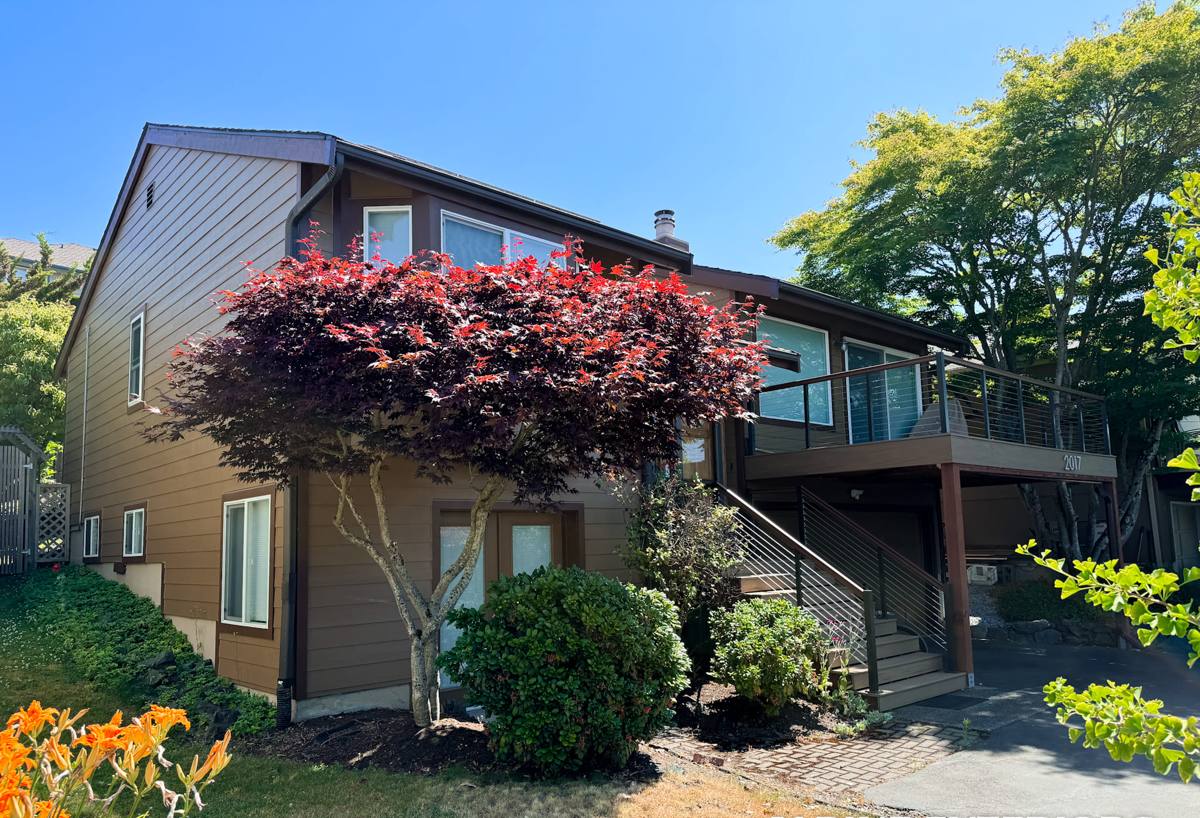
Signs a Puget Roof Needs Replacing, Not Patching
Repairs make sense when the damage is isolated and the roof underneath is still sound. Replacement makes sense once the roofing system as a whole is failing. In our experience working this area, the tell-tale signs include:
- Granule loss heavy enough that you're finding shingle grit in gutters and downspouts every season
- Moss established at the ridge and running down into the field of the roof, not just along shaded edges
- Curling, cupping, or cracked shingles, especially on south and west-facing slopes exposed to sun and wind
- Soft or spongy decking felt underfoot, or daylight visible through the attic sheathing
- Repeated leaks in different spots after storms, rather than one recurring point of failure
- A roof approaching or past the manufacturer's rated lifespan, especially if the original installation used minimal underlayment or ventilation
If you're only seeing one or two of these and the roof is otherwise young, a repair is often the honest answer — we'll tell you that directly rather than push a replacement you don't need yet.
What a Correct New Roof Installation Involves
Tear-Off and Deck Inspection
We remove the existing roofing down to the deck rather than layering over old material. That's the only way to actually see what's underneath — soft spots, rot around old flashing, or framing that's been slowly absorbing moisture without showing it inside the house. Any damaged decking gets replaced before anything new goes down; installing new roofing over compromised sheathing just hides the problem for a few more years.
Underlayment and Water Protection
This is where a Puget roof earns its keep. We use synthetic underlayment across the full deck, with self-adhering ice-and-water membrane at vulnerable transitions — eaves, valleys, around chimneys and skylights, and anywhere two roof planes meet. Given how much wind-driven rain this area sees, these details matter more here than they would on a roof further from the water.
Flashing
Flashing failure is the single most common cause of roof leaks we see on replacement jobs, not shingle wear. We install new step flashing, counter-flashing, and valley flashing rather than reusing old pieces, and we choose corrosion-resistant metals given the salt content in the air here.
Ventilation
A roof deck that can't breathe traps moisture, which accelerates rot, encourages moss growth from the underside out, and shortens shingle life from heat and humidity buildup in the attic. We balance intake at the eaves with exhaust at the ridge so the attic actually vents the way it's designed to, not just on paper.
Field Roofing Material
The visible shingles or panels are the last layer installed and the most visible decision — covered in more detail below — but they're only as good as everything underneath them.
Choosing a Roofing Material for This Climate
There's no single "best" roofing material for every home — it depends on budget, roof pitch, how much shade and moss exposure the property gets, and how long you plan to stay in the house. Here's how the common options compare for a Puget property specifically:
| Material | Moss & Moisture Resistance | Wind/Rain Performance | Typical Lifespan | Relative Cost |
|---|---|---|---|---|
| Architectural asphalt shingle | Good with proper ventilation and periodic cleaning; moss-resistant granule options available | Strong when properly nailed and sealed; rated for high wind when installed to spec | 25–30 years | $ |
| Standing seam metal | Excellent — sheds moisture fast, little surface for moss to grip | Excellent in driving rain and wind | 40–50+ years | $$$ |
| Synthetic/composite shingle | Very good; resists moisture absorption better than wood-look alternatives | Strong; engineered for wind uplift resistance | 30–50 years | $$ |
| Cedar shake | Poor without diligent, ongoing maintenance — high moss and moisture risk in this climate | Moderate; performance depends heavily on install quality and upkeep | 20–30 years with maintenance | $$$ |
We're upfront that we steer most Puget homeowners away from untreated cedar shake, not because it can't look good, but because the maintenance burden in a climate this wet and shaded is significant, and the moisture behavior over time works against the wood. If a homeowner wants the look, there are synthetic and composite products that get closer to it without that trade-off.
How Our Installation Process Works
- On-site inspection and estimate — we walk the roof and attic, note the current condition, and give you a written scope and price before any work starts.
- Material selection — we go over the options above against your budget, roof pitch, and how much moss and shade your specific property deals with.
- Scheduling around weather — we plan installs for stretches of dry weather where possible and protect the open deck if conditions shift mid-project.
- Tear-off and disposal — old roofing comes off, decking is inspected and repaired as needed, and debris is hauled off site.
- Installation — underlayment, flashing, ventilation, and field roofing go in, in that order, with attention to every penetration and transition.
- Final walkthrough — we inspect the finished roof with you, clean up the property, and go over care and warranty details.
Permits and Local Code
A full roof replacement in Bellingham and unincorporated Whatcom County generally requires a building permit, and inspections confirm the underlayment, flashing, and ventilation meet current code before the roof is closed up. We handle the permitting process as part of the job rather than leaving it for the homeowner to sort out, and we build to at least the code minimum on ventilation and water protection — often beyond it, given how hard this climate is on a roof that's built to the bare minimum.
Why Local Experience in Puget Matters
A roofing crew that already works this specific area knows things a crew from out of the county has to learn on your roof: which slopes hold moss longest because of tree cover and sun exposure, how the wind off the water tends to drive rain up under eaves on certain home orientations, and which flashing and fastener choices hold up rather than corroding early in salt air. That knowledge shows up in fewer callbacks and a roof that's genuinely built for where it sits, not just built to a generic spec sheet. It also means we're a known, reachable crew if something needs a look after a hard storm — not a name from a different region you found for one job.
Protecting Your New Roof
A new roof's lifespan depends a lot on what happens after installation. A little upkeep goes a long way in a climate like this one:
- Have gutters cleared at least twice a year so water actually drains off the roof edge instead of backing up
- Keep overhanging branches trimmed back to cut down on shade, debris, and moss-friendly conditions
- Have moss treated early, before it establishes under shingle tabs or shake courses
- Schedule a visual roof check after any major windstorm, especially for lifted or displaced shingles
- Keep attic ventilation paths (soffit vents, ridge vents) clear of insulation or debris blocking airflow
What a New Roof Costs
Pricing depends on roof size, pitch, number of layers being removed, decking condition, and material choice, so we don't publish a flat number — every roof is different, and giving a made-up figure wouldn't be honest. What we can say is that the material comparison above is a fair starting point for relative cost, and that a proper tear-off with new decking as needed, full underlayment, and correct flashing will always cost more up front than a bare-minimum install — and save you money over the life of the roof by avoiding early leaks and a second replacement.
If you're weighing repair versus replacement, or just want a straight answer on what your roof needs, we're happy to take a look. Reach out for a free, no-pressure estimate using the form below.