 Bellingham
 Roofing in Puget: A Different Set of Conditions
Puget sits close enough to the water and tree cover that its roofs age differently than roofs a few miles inland. Homes here deal with a combination that's tough on shingles and decking alike: salt-laden air drifting off the Puget Sound and Bellingham Bay, long stretches of driving rain that finds every weak seam, and a moss season that can run eight months or more thanks to shade from mature evergreens and persistent moisture. Any one of those factors is manageable on its own. Together, they shorten the useful life of a roof that wasn't built or installed with them in mind.
When we talk about roof replacement for a Puget home, we're not just swapping old shingles for new ones. We're making sure the whole system — decking, underlayment, flashing, ventilation, and the finish material — is matched to a coastal Whatcom County climate, not a generic Pacific Northwest average.
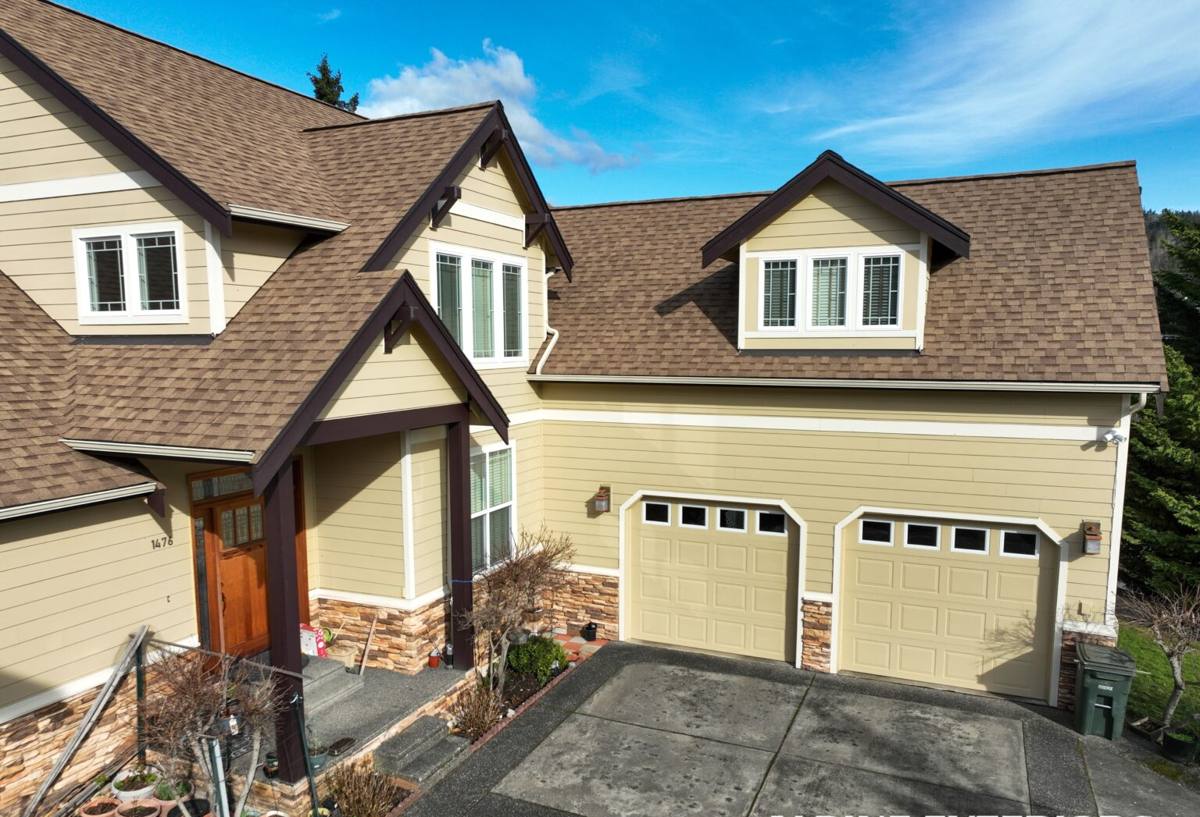
What Salt Air, Rain, and Moss Actually Do to a Roof
Salt Air and Metal Fatigue
Salt-bearing moisture accelerates corrosion on exposed fasteners, flashing, and any metal roofing components. Galvanized nails and lower-grade flashing can start showing rust streaks well before the shingles themselves are due for replacement. It's a slow process, but it's steady, and it's one of the first things we check on any Puget roof inspection.
Driving Rain and Wind-Driven Water
Bellingham's rain doesn't always fall straight down. Wind off the water pushes it sideways, which means it can work its way under shingle tabs, around vent boots, and into valleys that would shed water fine in calmer weather. Roofs here need tighter-than-average attention to underlayment overlap, valley treatment, and flashing details — the parts of the job that don't show on the surface but determine whether water actually stays outside.
Moss, Shade, and Trapped Moisture
Moss doesn't just look bad — it holds moisture against the roofing material long after a storm has passed, and its root structure can lift shingle edges over time. North-facing slopes and roof sections shaded by tall conifers are the areas we watch closest, because that's where moss establishes fastest and where granule loss and premature wear tend to show up first.
Signs a Puget Roof Is Due for Replacement
- Granules collecting in gutters or at downspout outlets
- Shingle edges curling, cupping, or lifting, especially on shaded slopes
- Persistent moss or algae staining that returns shortly after cleaning
- Rust streaking below metal flashing, vents, or exposed fasteners
- Daylight visible through the roof deck from inside the attic
- Soft or spongy spots when walked, or sagging along the ridge or eaves
- Interior water stains on ceilings after heavy wind-driven rain
- A roof approaching or past the 20-25 year mark with no major upgrades since install
Any one of these on its own might just mean a repair. Several at once, especially on a roof already past the midpoint of its expected life, usually means replacement is the more honest recommendation — patching a system that's failing in multiple places tends to cost more over a few years than doing the job right once.
What a Correct Roof Replacement Involves Here
Full Tear-Off, Not Overlay
We don't recommend installing new shingles over an existing layer in this climate. Overlaying traps moisture between layers and hides deck problems that are common on older Puget homes — problems that need to be found and fixed, not covered up. A full tear-off lets us inspect the actual decking underneath.
Deck Inspection and Repair
Once the old roofing is off, we check the sheathing for soft spots, delamination, or rot — the kind of damage driving rain and long-term moss exposure can cause underneath a roof that still looks fine from the ground. Any compromised sections get replaced before anything new goes down; installing new roofing over bad decking just resets the clock on the same failure.
Underlayment Built for Wind-Driven Rain
Given how often Bellingham rain comes in sideways, we pay close attention to underlayment overlap and fastening, plus extra protection in valleys and along eaves where water concentrates. This is the layer that saves a roof when a shingle tab eventually fails — it's cheap insurance compared to the alternative.
Flashing and Ventilation
Flashing around chimneys, skylights, and roof-to-wall intersections gets replaced, not reused, on every full replacement. Reused flashing is one of the most common sources of "mystery leaks" a year or two after a re-roof. We also confirm attic ventilation is adequate — poor airflow traps humidity, which feeds moss growth and accelerates deck rot from the inside.
Material Choices for a Puget Climate
There's no single "best" roofing material for every home — it depends on budget, roof pitch, tree cover, and how long you plan to stay in the house. Here's how the common options actually perform under Puget's specific conditions.
| Material | Moss Resistance | Salt Air / Coastal Durability | Typical Lifespan |
|---|---|---|---|
| Standard asphalt shingles | Moderate — needs periodic cleaning on shaded slopes | Good with quality fasteners and flashing | 20-25 years |
| Algae-resistant (AR) shingles | Good — copper-infused granules slow regrowth | Good | 25-30 years |
| Metal roofing | Very good — sheds moss more easily due to slick surface | Requires marine-grade or coated fasteners near the water | 40-50+ years |
| Wood shake/shingle | Poor without diligent maintenance — retains moisture | Fair; needs regular treatment | 15-25 years, maintenance-dependent |
For most Puget homes, algae-resistant asphalt shingles hit the best balance of upfront cost and moss resistance. Metal is worth the higher investment on heavily shaded lots or for homeowners planning to stay long-term, since it holds up to both moss and salt exposure with the least ongoing maintenance. We're generally cautious about wood shake in this specific microclimate — the moisture retention that gives it its look also makes it high-maintenance under Puget's shade and rain pattern, and we'll walk you through that trade-off honestly rather than just selling what looks good going in.
Cost Factors Specific to This Area
Every roof replacement quote depends on square footage and pitch, but a few Puget-specific factors tend to move the number more than homeowners expect:
- Tree cover and access: Mature trees common in this area can mean more debris cleanup and sometimes limbing back branches before work starts
- Deck condition: Homes with a history of moss or slow leaks are more likely to need sheathing replacement, which is a per-sheet cost that's hard to estimate until tear-off
- Flashing complexity: Roofs with multiple valleys, dormers, or chimney penetrations need more detail work in the areas most exposed to wind-driven rain
- Ventilation upgrades: Older homes sometimes need added intake or exhaust venting to meet current moisture-control standards
- Material upgrade: Moving from standard to algae-resistant shingles or to metal changes material cost but can reduce maintenance and cleaning bills for decades
We give a written, itemized estimate before any work starts, so you can see exactly what's driving the number rather than a single lump-sum figure.
Our Process for a Puget Roof Replacement
1. On-Site Inspection
We walk the roof and the attic, check for the moss, staining, and granule loss patterns specific to this area, and photograph anything that needs a closer look.
2. Written Estimate and Material Options
You get a clear breakdown of scope, material choices, and cost factors — including any deck repair contingencies — before committing to anything.
3. Tear-Off and Deck Check
Old roofing comes off in full, decking gets inspected and repaired as needed, and we flag anything unexpected before covering it back up.
4. Underlayment, Flashing, and New Roofing
Installed to standards built around wind-driven rain and long moss seasons, not a generic dry-climate spec.
5. Final Walkthrough
We review the finished roof, ventilation, and cleanup with you before calling the job done.
Why Local Experience with Puget Homes Matters
A crew that only occasionally works this side of Bellingham can still install a roof correctly by the book. But a crew that regularly works Puget knows which slopes on this kind of terrain hold moss longest, which older homes in the area tend to have deck issues from a specific building era, and how far wind-driven rain typically pushes water in a valley during a real Whatcom County storm — not just a textbook one. That familiarity shows up in fewer callbacks and a roof that's built for the conditions it actually faces, not the conditions on a spec sheet.
Get a Free, No-Pressure Estimate
If your roof is showing moss buildup, granule loss, or you're just past the point of trusting it through another Bellingham winter, we're happy to take a look. The estimate is free, there's no pressure to commit on the spot, and you'll get a straight answer about whether replacement, or just targeted repair, is the right call for your home. Use the form below to get started.